Media Mix, June 19, 2011

Daishin Kashimoto

Here’s this week’s Media Mix, which is about Yutaka Sado’s conducting debut with the Berlin Philharmonic. Originally, I was going to write a review of the programs themselves but changed my mind when I found that certain prejudices related to the “inferiority complex” point started creeping into my analysis. The coverage seemed to emphasize the difficulties that Sado faced when he confronted the orchestra during rehearsals, and I read too much into it. Though there was obviously some problems in terms of communication, Sado’s German sounds perfectly adequate to get his points across. Many conductors work with orchestras whose mother tongue isn’t their own and they get by through the so-called universal language of music. My partner once worked as a kind of freelance road manager for visiting classical musicians (her input into this particular column was invaluable), and she says that a lot of conductors don’t even bother talking to the orchestras. A few words that everybody knows, a lot of gestures, and mostly mimicking of the kind of sounds/phrasing/accents/etc. that the conductor wants are enough. From what she’ told me, too much is made of a conductor’s control over an orchestra. Usually, it’s a matter of both sides reaching a happy medium, finding a compromise, and the orchestra in the end usually has more to do with the overall interpretation.

One thing I didn’t mention in the column was that the Berlin Philharmonic’s concert master is actually Japanese, which in its own way is more remarkable than Sado’s being asked to guest conduct. Guest conductors, even of subscription concerts, are as much about PR as they are about extending the orchestra’s creative reach. If a conductor isn’t up to the task, he simply isn’t asked back, and in the Aera article Sado said as much: That being asked to conduct once means less to him than being asked to conduct a second or third time, since that would mean he passed the audition, as it were. Daishin Kashimoto, however, is a permanent member of the orchestra; and not just a permanent member, but the concert master, the first violin, first chair, who is the second most important person on stage. Obviously, he passed a much more rigorous audition, and in an interview in the NHK special he revealed something most insiders know but rarely talk about: When an orchestra doesn’t understand what a conductor wants or disagrees with his interpretation, they block him out and play what they want. It was apparent that this didn’t happen with Sado–the orchestra members seemed quite engaged with his directions, and he managed a breakthrough when he asked during the Shostakovich that a cello solo be “red” while the rest of the ensemble stick to “black-and-white”–but Kashimoto’s statement indicated that to a certain degree the Berlin Philharmonic does what it pleases. I’ve heard the same about the NHK Symphony, whose veteran players tend to opt out of performances with guest conductors they feel are beneath them. The fact is, you don’t have to be Japanese to suffer an inferiority complex in the world of professional classical music.


Posted in Media, Music | Tagged , , , , , , | Leave a comment

June 2011 movies

Here are the movie reviews I wrote for the June 2011 issue of EL Magazine, which came out yesterday in Tokyo. These films are being released in Japan from late May to mid-June.

127 Hours
The story of Aron Ralston, the American rock climber who cut off his arm after he was pinned by a boulder in a Colorado canyon, doesn’t sound like the sort of thing that would interest Danny Boyle, a director whose signature kinetic style made Trainspotting and Slumdog Millionaire rock like a Jay-Z video. This is basically a movie about one man who is trapped at the bottom of a crevice for the titular length of time while pondering his life and the universe. Nevertheless, Boyle gives it all he’s got, opening the film with a split-screen montage showing, on the one hand, the rat race of the world at large (stock exchanges, urban commuters), and on the other, Ralston’s hyperactive preparations for his solitary hike, all scored to A.R. Rahman’s pounding dance music. We get the point, though it isn’t hard to form the idea that Boyle is simply thinking up some way to jazz up the material, and inadvertently shortchanges James Franco’s contribution, which is as central to the film’s effectiveness as Boyle’s direction. This is, after all, essentially a one-man show, and by the evidence on the screen Franco could have carried it by himself if Boyle hadn’t felt the need to open up the drama with all this manic visual business. Obviously, it’s vital to understand Ralston’s peculiar personality in order to also understand how he could have done what he did, and the director and the actor compete with each other to convey what’s going on in the young man’s head. Prior to the accident, he’s leaping and running over gorgeous, sun-drenched rocky terrain and meets up with a pair of female hikers whom he talks into exploring an underground lake. This sequence sets up Ralston as a carefree loner who picks up on the girls’ natural attraction to him but seems too locked up in his own head to care; a trait that’s transmitted better by Franco’s silly smiles than Boyle’s careful camera angles. Later, after Ralston falls down the crevice and the rock pins his arm against the wall, he realizes that it’s this self-absorption–he didn’t tell anyone where he was going this weekend–that may spell his doom; but Doyle’s impressionistic flashbacks are less convincing than Franco’s blackly comic asides and sudden eruptions of despair. “Don’t lose it,” he keeps saying, and once we comprehend that Ralston has a background in engineering, his choices make more sense. If Boyle’s own choices seem more distracting than enlightening some may find that welcome. As Ralston runs out of water and starts drinking his own urine, and then almost impulsively decides he can do without the arm, the impressionistic stuff becomes so graphic–like the drug-taking scenes in Trainspotting–that it almost makes you laugh. Almost. (photo: Twentieth Century Fox) Continue reading

Posted in Movies | Tagged , , , , , , , , , , , , , | Leave a comment

June 2011 albums

Here are the album reviews from the June 2011 issue of EL Magazine, which went on sale in Tokyo today.
So Beautiful or So What
-Paul Simon (Hear/Universal)
Helplessness Blues
-Fleet Foxes (Sub Pop/P-Vine)
This year Bob Dylan and Paul Simon turn 70, and if the two former folkies had little in common during their heyday they now share a view of the abyss. Dylan remains mercurial in his outlook on life; if anything old age has proven to be a legitimation of his contrary sensibility. Simon, on the other hand, has always acted his age, and on his best album in two decades he contemplates the end with the resignation you’d expect from a man who appreciates religion for all the things it’s done for music. The infectious gospel shuffle of “Getting Ready for Christmas Day” sells the idea of everybody’s favorite holiday as being something you can’t wait for; and if the high-life cooker “The Afterlife” makes fun of the myths that surround death (“you gotta fill out a form first, and then wait in the line”) it doesn’t deny that it leads to something else, maybe something better. But So Beautiful is less about mortality than eternity, and while God has a role to play (he shows up in several songs), Simon is adamant that one’s place in the universe is a personal matter. It explains the title of the album and the album’s best song, a bluesy rocker that parses the difference between savoring the moment and suffering the future; which isn’t to say you should foul your nest, only that “life is what you make of it.” Simon has made more of his than many of us could ever hope to make of ours, which makes his pronouncement sound haughty until you listen carefully to “Love and Hard Times,” a return to the simple craftsmanship of his early solo albums, and you realize the ability to forge acute insight from careful observation is not an accident of birth. It’s something you work at. No one would accuse Fleet Foxes of not working hard. Younger and more earnest than Paul Simon, Robin Pecknold shares with the august singer-songwriter a fondness for the impressionistic phrase, though stylistically he has more in common with Brian Wilson. Apropos its title, his group’s second album, Helplessness Blues, is less sunny than the debut, the rich harmonies recalling choirs rather than beach boys. If anything, the album sounds more like Simon’s original gig, especially the title cut, a passionate pledge to change ways, set to a fiercely strummed acoustic guitar. The echoey ambience that suffuses the album betrays nostalgia for an era Pecknold mostly knows through his parents’ record collection, but he now understands that music more for what it said that what it represented. There’s still too much showcasing of the group’s debt to the post-hippie era, especially in the long instrumental passages, but Pecknold has incorporated his love for that music into a worldview he can now call his own. For those of us who lived through it firsthand, it makes for music that’s more moving than it has a right to be. Continue reading

Posted in Music | Tagged , , , , , , , , , , , | Leave a comment

Media Mix, May 22, 2011

Kashiwazaki-Kariya in Niigata, reportedly the biggest nuclear plant in the world

Here’s this week’s Media Mix, which is about the development of Japan’s nuclear energy policy. As I mentioned in the beginning of the piece most of the information was obtained from the TV Asahi discussion and in-depth report. None of this stuff is new and I found similar information in Aera and other magazines. Though the headline plays up the media role in Japan nuke policy, what I mainly learned from the TV Asahi show was that the maintenance of this policy has less to do with securing a stable energy source than with setting up a self-perpetuating public works program. The result of this public works program is that there are too many people whose interests are directly tied to the continuance of nuclear power. This point was not explicitly laid out in the TV Asahi show but seemed pretty obvious, especially when they interviewed local government officials, both former and current, who have been involved in their respective communities’ nuclear power plant negotiations. They gave the impression that once a nuke was built in their area, it took over the life of the community because so much money was involved. TV Asahi only hinted at the kind of internal strife this might cause. The program mentioned local protests against nuke plants, implying that they were instigated by older radicals from the student movement days, but I’ve read elsewhere that proposed reactor construction often split communities, causing animosities that destroyed life-long friendships. When the Fukushima crisis was first developing and people from the vicinity of the crippled reactors were moved to evacuation centers, I wondered about the atmosphere in those centers: People who supported the building of the plants living cheek-to-jowl with people who opposed them, both suffering equally for their existence.

Note: Due to an editing error that I missed in the proofing stage, there’s a significantly misplaced comma in the eleventh paragraph, which currently reads “due to depreciation tax, revenues decrease over time.” It should read: “due to depreciation, tax revenues decrease over time.” As far as I know, there’s no such thing as a “depreciation tax.” Since I’m not an administrator at the JT website, I’ll have to wait a day to have it corrected.

Posted in Media | Tagged , , , , | Leave a comment

Media Mix, May 8, 2011

L-R: Nagatsuka, Matsuzaka, Kuninaka, Katsumura

Here’s this week’s Media Mix, which is about the NHK drama, Madonna Verde. In the beginning of the column I mentioned that there is no sex in the drama, but in Gene Waltz Rie has an affair—or, at least, goes to bed with—Dr. Kiyokawa, her supervisor at the university and the man who operated on her uterine cancer. This slant on their story adds tension to the relationship once Kiyokawa (Masanobu Katsumura) starts looking into the surrogacy situation at the clinic; however, it isn’t even mentioned in Madonna Verde. The relationship seems to be completely that of sempai-kohai, albeit a bit more strained owing to Rie’s supposed rebellious professional attitude. This curious lack of sexual subtext extends to the other main male characters. Maruyama (Kyozo Nagatsuka), the retired journalist who develops a crush on Midori and learns of her secret after stalking her (!), is the person who declares her a “madonna.” He literally puts her on a pedestal and agrees to pretend to be the father of the child, a subterfuge that carries with it conjugal suggestions that aren’t even played for laughs. He’s even more selfless than Midori. But the character who’s the furthest from real life is Rie’s husband Shinichi (Jin Katagiri), a geeky mathematician studying game theory at a Massachusetts university who is so wrapped up in his research that he has no time to think of babies and seems hardly concerned about Rie’s operation or the whole surrogacy scheme, which is communicated to him by Midori, not Rie. In fact, at the end of the most recent episode, Rie and Shinichi have obtained a divorce in the U.S., seemingly in less time than it takes to say “in vitro fertilization.” In Japan, that’s possible; if both parties agree, all they have to do is go to their city hall and fill out the proper documents. But is there such a thing as a quickie divorce in Massachusetts? (photo: NHK)

Posted in Media | Tagged , , , , , | Leave a comment

Media Mix, May 1, 2011

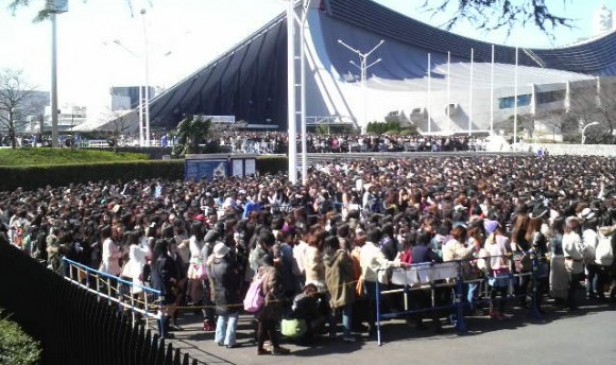
Here’s this week’s Media Mix, which is about coverage of celebrity relief efforts in the disaster regions up north. I didn’t mention it in the column (though I did tweet about it), Johnny’s Jimusho attracted more than 400,000 fans to a charity drive at Yoyogi Gym in March. A line of people backed up all the way to Omote Sando waiting to shake hands with various Johnny’s idols and give what they could. That’s an astounding number, but as much as I’ve searched I can’t find any report that reveals how much money was collected that day. I’m not saying that Johnny’s did anything wrong, only that it seems strange that no media have asked for a figure.

Posted in Media | Tagged , , , , | Leave a comment

Seidensticker’s Tokyo, and ours

Several years ago while writing a column about life in Tokyo I realized how little I really knew about the history of the city I had lived in since 1994 and worked in since 1986. On Amazon I sought Edward Seidensticker‘s two books about Tokyo, Low City, High City, first published in 1984, and Tokyo Rising, which came out in 1990. Though there are other histories of the city, I was more familiar with these two because they were both published while I was still learning about Japan and Seidensticker was a familiar name to me as a translator. I was surprised to see that both books had been out of print for some time, and was discouraged at the lack of books in English that dealt with what Seidensticker provided: A general social history of the city. Then, not long afterwards, the author himself, who it turned out lived Yushima, not far from where I live, died after injuring his head in a fall during one of his walks around Shinobazu Pond, in Ueno. He was in a coma for four months before succumbing to his injury.

When a noted person dies his work is often rediscovered, and in this case Tuttle decided to rerelease both of Seidensticker’s books about Tokyo in one volume, which was finally published last December as Tokyo: From Edo to Showa 1967-1989. The subtitle is “The Emergence of the World’s Greatest City,” something I’m sure Seidensticker never said. According to his Wikipedia page, he did once call Tokyo “the world’s most consistently interesting city,” but after having read the books I doubt if he was the type of person who would call anything “the world’s greatest.” Continue reading

Posted in Me | Tagged , , , , , , , , , | 4 Comments

May 2011 movies

Here are the movie reviews I wrote for the May 2011 issue of EL Magazine, which came out in Tokyo last Monday. These movies are being released in Tokyo from late April to mid-May.

Black Swan
Though Darren Aronofsky’s newest outrage seems like a 180-degree turn away from the earthy style and subject matter of his last film, The Wrestler, the two movies have at least two things in common: The ritual fetishism of the professional, and a penchant for sleazy story-telling. Like Mickey Rourke’s over-the-hill fighter, Natalie Portman’s ballet ingenue Nina Sayers has no other life than the one she’s dedicated to her craft. The difference is that Rourke’s lack of choices was based on economic certainty, while for Nina it’s obsession pure and simple. Driven by a mother (Barbara Hershey) whose own dreams of dance greatness were preempted by pregnancy and preternaturally paranoid to begin with, Nina is anxious, delusional, repressed, and acutely masochistic. The intensity required to pull off such a character is what won Portman an Oscar over Annette Bening’s more movingly human portrait of a suburban breadwinner in crisis mode, and for what it’s worth it’s a literally stunning performance, regardless of whether or not Portman did her own dancing. However, Nina is only one extreme character in a movie that’s filled with them. In addition to Hershey’s mother, who is made up to look like one of Tim Burton’s scarier cartoon creations, there is Thomas (Vincent Cassel), the imperious, conceited French director of the New York-based ballet company where Nina slaves, hoping to land ballet’s big double whammy, the lead role in Swan Lake, where she would play both the virginal white swan and the evil black swan. This split personality theme allows Aronofsky to dust off his DVD copy of Repulsion and adapt all of Polanski’s genre-creating horror ideas for his own use. Nina is stalked by doppelgangers, tortured by an itching compulsion that leaves her nails bleeding, and subject to hallucinations involving a rival (Mina Kunis) who is infinitely more outgoing, both sexually and socially, than she is. And when Nina does land the part with a hilariously outrageous gambit worthy of the poison pen of Gore Vidal her psychological state only worsens, as does Aronofsky’s command of the material. As he proved in Requiem for a Dream, nobody does drug experiences like Aronofsky, but while Nina’s indulgence with ecstasy is fun (for the audience) while it lasts, the rest of her waking fever dreams are pure Grand Guignol and thus more appropriate to the music of Andrew Lloyd Webber than that of Tchaikovsky, whose familiar strains are strained to the breaking point by Clint Mansell’s score. Nothing is done by halfs here, and as the movie reaches its climax during the actual performance of the ballet you can be forgiven for laughing at the wacky horror of it all. The weird thing is, Aronofsky would probably be flattered. (Photo: Twentieth Century Fox) Continue reading

Posted in Movies | Tagged , , , , , , , , , , , , , , , , , , , , , , , | Leave a comment

May 2011 albums

Here are the album reviews from the May 2011 issue of EL Magazine, which was distributed throughout Tokyo today.

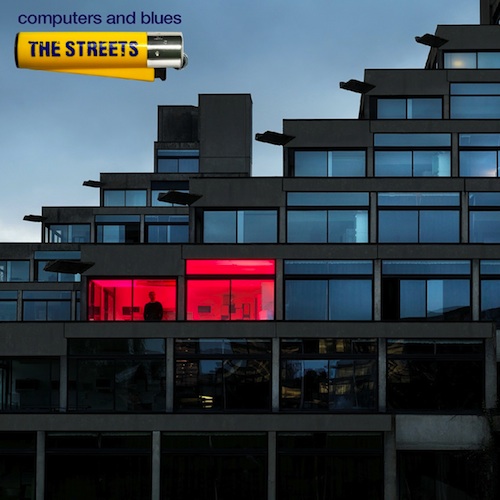
Computers and Blues
-The Streets (679/Warner)
Lasers
-Lupe Fiasco (Atlantic/Warner)
There’s something irresistibly intriguing about an artist who quits at the top of his game, probably because almost nobody ever really does it. Mike Skinner has announced that Computers and Blues will be the last Streets album, which probably means his next project will be released under his own name. Since Skinner is, for all intents and purposes, The Streets, it sounds more like a PR move. Detractors will claim that he hit his creative peak on his second album, but all of his releases have been hits in the literal sense in his native England. As Skinner became more of a cultural presence, the changes in his material circumstances were reflected in his output, from the hard-scrabble public-housing getting-by themes of Original Pirate Material to the disillusioned-with-celebrity tantrums of The Hardest Way to Make an Easy Living, but what remained constant was Skinner’s uniquely evocative flow, a dialectically challenging conversation with himself that went beyond confessional rapping to storytelling with a deep psychoanalytical purpose. Computers attempts to wrap it all up in a strangely clinical way, as if the self-analysis were a means to a thesis. Skinner’s strength as an MC was his casual tone and personal vocabulary. Here he sounds as if he’s purposely reading from a script. As a stylistic decision it’s impossible to explain except that maybe Skinner wants us to see him as embracing a more general persona, but on a cut like “A Blip on a Screen,” which is about his seeing his baby on an ultrasound monitor, it comes across as generic documentary. This conventional narrative approach clashes with the musical component, which is livelier and louder than his usual dancefloor garbage cleanup. The energy is infectious, which makes the raps seem even more canned. Chicago rapper Lupe Fiasco has been around for an even shorter time than Skinner, and for a while at least it was reported that he was quitting the game after two well-received albums. Lasers emphatically declares that he’s around for the long haul. It sounds expensive, as if it were an investment. As with most dance pop these days, the production has priority and the raps are dropped in like CARE packages: something to help them survive. The lines in “Words I Never Said” are hardly an easy fit. The pounding synths throw Lupe around like a ragdoll in a dryer. He sounds as if he never had a chance. The record’s title plays up its arena ambitions, which appear to have little use for Lupe’s thematic eccentricities or his love of left-field indie music. If anything of this new direction is refreshing it’s that it occasionally allows Lupe to try something a bit simpler, like the nursery rhyme cadences of “Till I Get There,” an usually happy tune and one that brings out his childishness. Heavy? Hardly. But if he’s in this rap thing for good he’d better start assuming the right attitude. Continue reading

Posted in Music | Tagged , , , , , , , , , , , , , , , , | Leave a comment

Media Mix, Apr. 24, 2011

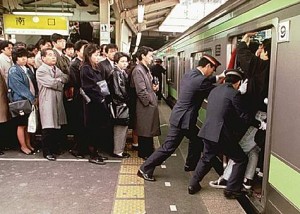
Here’s this week’s Media Mix, which is about the revival of resolve to decentralize Tokyo in response to the Mar. 11 earthquake. Most of the article deals with the macro aspects of moving the capital and/or relocating corporations. At the micro level, such a development would, of course, alter Tokyo’s special character considerably. I’m not talking so much about neighborhoods, but rather the relationship between the center of the city and its outlying residential communities, and if a good portion of the businesses that make their headquarters in central Tokyo move elsewhere, “commuting hell,” as it’s still often called, could become merely a memory, another subject for nostalgic reveries thirty years from now. Just as so many TV variety shows now gain entertainment mileage out of reminiscences of the bubble era of the 80s (which wasn’t so great), maybe three decades hence we (or, more exactly, you–I may not be around) will be fondly recalling Tokyo when it was the center of the universe and we had to endure one hour-plus commutes on packed trains twice a day. Though property values in Tokyo and surrounding areas haven’t risen substantially over the past twenty years, the city center will likely still remain expensive for middle class and those of lesser means, but it seems just as likely that with the exodus of a good portion of the workforce closer bedroom communities such as those on the Tokyo-Saitama and Chiba-Saitama borders will become downright affordable. One could even predict a surplus of vacant properties since the population is already dropping. Such a development might wreak havoc on the economy but by now most homeowners have probably realized that they’re never going to get back what they paid for their properties anyway, even if relocation doesn’t happen. The quality and the demand just aren’t there. But the possibilities in terms of city planning and social impact are certainly fascinating.

Posted in Media | Tagged , , , , | 1 Comment