Review: A Working Man

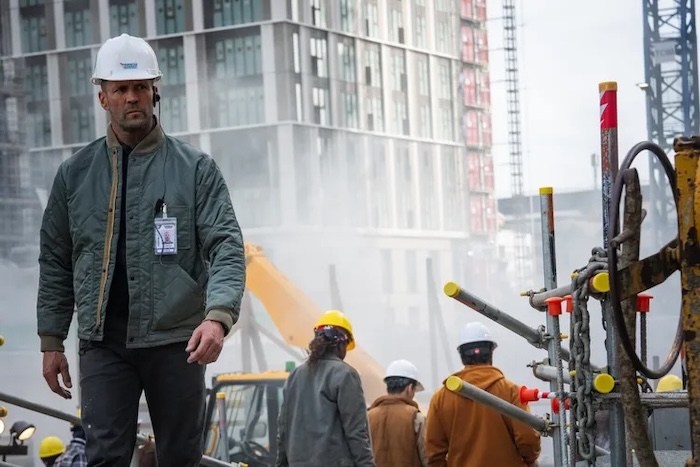
If it’s New Years, you can bet the latest Jason Statham movie will be opening in Japan. One of our more reliable action heroes, Statham can generally carry a lame script just with the cut of his scowl, and this particular vehicle was produced and co-written by Sylvester Stallone, based on a novel, so it held some promise when it first came to my attention. (David Ayer is the co-writer and director.) As the title suggests, Statham plays a blue collar bloke named Levon Cade, who’s the foreman for a struggling family-owned contruction company in Chicago. The opening credits fill us in on his background: a career soldier in what appears to be a joint British-American commando unit. Further exposition tells us his wife died by her own hand and that his rich ex-father-in-law (Richard Heap) blames him for her death because he thinks Levon can’t overcome his violent nature, and thus tries to keep his daughter from him. The script doesn’t necessarily refute this assertion because Levon himself confesses that the construction company CEO (Michael Pena) saved his life by giving him a job despite his “untreated PTSD.” Such personal struggles are thrown out the window when the boss’s daughter (Arianna Rivas) is kidnapped by a sex trafficking ring and Levon straps on his guns and knives in order to bring her back.

So far, so perfectly formulaic for a Jason Statham movie, but the implausibilities that usually come with the territory are never addressed as such and so just pile up in a jumble of confusing cross purposes, draining A Working Man (remove the indefinite article from the title and it could have been mistaken for a superhero movie) of the tension that’s necessary for this kind of vigilante film. Early on we’re introduced to Levon’s fighting capabilities when a group of Spanish-speaking goons harrasses one of his workers for reasons never revealed, and so we wait in vain for the other shoe to drop, which it never does. Then there’s Levon’s sudden resourcefulness. In the beginning we’re told he’s broke because of the lawyers’ fees needed to regain custody of his daughter (he sleeps in his truck), but once he has a “mission” he’s suddenly got all this cash and expensive tech and weaponry. Is it because of his network of commando vets, including David Harbour as a blind gun hoarder living in the woods? These questions just hang in the air and never evaporate.

Even the fight scenes are a coin toss. An early confrontation in a biker bar is so incoherently choreographed that you lose track of who’s beating who; but a little bitlater, there’s a more carefully shot two-on-one brawl in the back of a van that hits every note perfectly. Unfortunately, once the search turns serious and a whole extended family of Russian gangsters gets involved, it’s all gunplay. I don’t ask for surprises in my Jason Statham movies, but I would have thought Stallone knew something about the basic requirements of a violent action thriller.

Now playing in Tokyo at Shinjuku Wald 9 (03-5369-4955).

A Working Man home page in Japanese

photo (c) 2025 Cadence Productions Limited

Posted in Movies | Tagged , | Leave a comment

Review: In the Lost Lands

There’s obviously some guarantee of box office success in the husband-wife team of director Paul W.S. Anderson and actor Milla Jovovich that’s based on their long-running game adaptation series Resident Evil. Now that the series is reportedly finished, their dwindling star could get a recharge here with the adaptation of a not entirely different kind, namely that of a story by Game of Thrones creator George R.R. Martin. Similar to what she did in Resident Evil, Jovovich plays the kickass action lead, though in this case she’s a kind of rebel witch named Gray Alys who’s being sought by the religious authoritarians who rule this post-apocalyptic world. We first meet her as she’s ready to be hanged for apostasy, or what passes for apostasy in this place, as well as inciting the toiling masses to resist their overlords. She uses her hallucinatory powers to escape. One of Gray Alys’s peculiar personality traits—or maybe it’s some sort of innate quality of witches that Anderson fails to sufficiently explain—is that she can’t refuse a request for help, and so when a woman asks her to go to the Lost Lands to kill something called the Shapeshifter, she has to go. Along the way, she hooks up with a cowboy named Boyce (Dave Bautista) who uses twin-headed rattlesnakes as a weapon. As it turns out, Boyce, a lone wolf for hire, is snogging the queen, whose husband is old and decrepit and fixing to die without a male heir, so when the queen announces her miracle pregnancy all bets are off.

It says something about the story’s conception that every plot development feels arbitrary and made up on the spot. Anderson tries to mask this flaw with witty dialogue that immediately falls flat (“I never saw a man get emotional about a snake”), and he counts too much on the characters’ status as fantasy figures, which gives the actors little to work with. Jovovich is so stiff and monotonal that she sounds half asleep half the time. And it’s weird that Anderson and/or Martin doesn’t play up Gray Alys’s revolutionary bent until the last scene, when it comes across as an afterthought. It should have been central to the story in order to make it more compelling. Otherwise, it’s just the same random supernatural noise. 

Opens Jan. 1 in Tokyo at Toho Cinemas Nihonbashi (050-6868-5060), Toho Cinemas Hibiya (050-6868-5068), Toho Cinemas Shinjuku (050-6868-5063), Kino Cinema Shinjuku )03-5315-0978), Toho Cinemas Roppongi Hills (050-6868-5024).

In the Lost Lands home page in Japanese

photo (c) 2024 Constantin Film Produktion GmbH, Spark Productions AG

Posted in Movies | Tagged , , | Leave a comment

Best albums 2025

Since I typically wait until the last minute to compile this list I get to see other people’s beforehand, and the most common comment I read in the last month was that this was one of the best years for music ever. Given that it was a pretty shitty year in general, I interpreted this sunny outlook as an expression of over-compensation—good music made up for all that depressing stuff in the news. And though I did hear a lot of good music this year, when I later relistened to a lot of records I liked initially I found that much of it just washed over me; so I’m not refuting the above-mentioned consensus, just checking it against a critical sensibility that isn’t as rigorous as it used to be. There is, of course, no accounting for taste, but that probably has more to do with a declining attention span than with any drop-off in quality out there. There’s just so much to listen to, and I’m at the age where I can pretty much decide whether I will like an album as soon as I hear one song, or even half a song. The days of discovering an album’s charms over the long-term are gone, which is sort of a shame since now that I’m semi-retired I actually have more time to listen to music. But I don’t want to work at it any more. Almost all the albums on my list were ones that I liked immediately and still found interesting at the end of the year, meaning there were no ringers or surprises in the last month except for one or two records that were released late. But if I don’t necessarily follow the crowd with regard to how great music was this year, I definitely jumped on the bandwagon with my selections, since almost all of them were critical hits, so to speak. Not too sure what that says about my taste any more except that in my dotage I’ve probably become more impressionable than I’d like to think I am.

Continue reading
Posted in Music | Tagged , , , , , , | Leave a comment

Best movies 2025

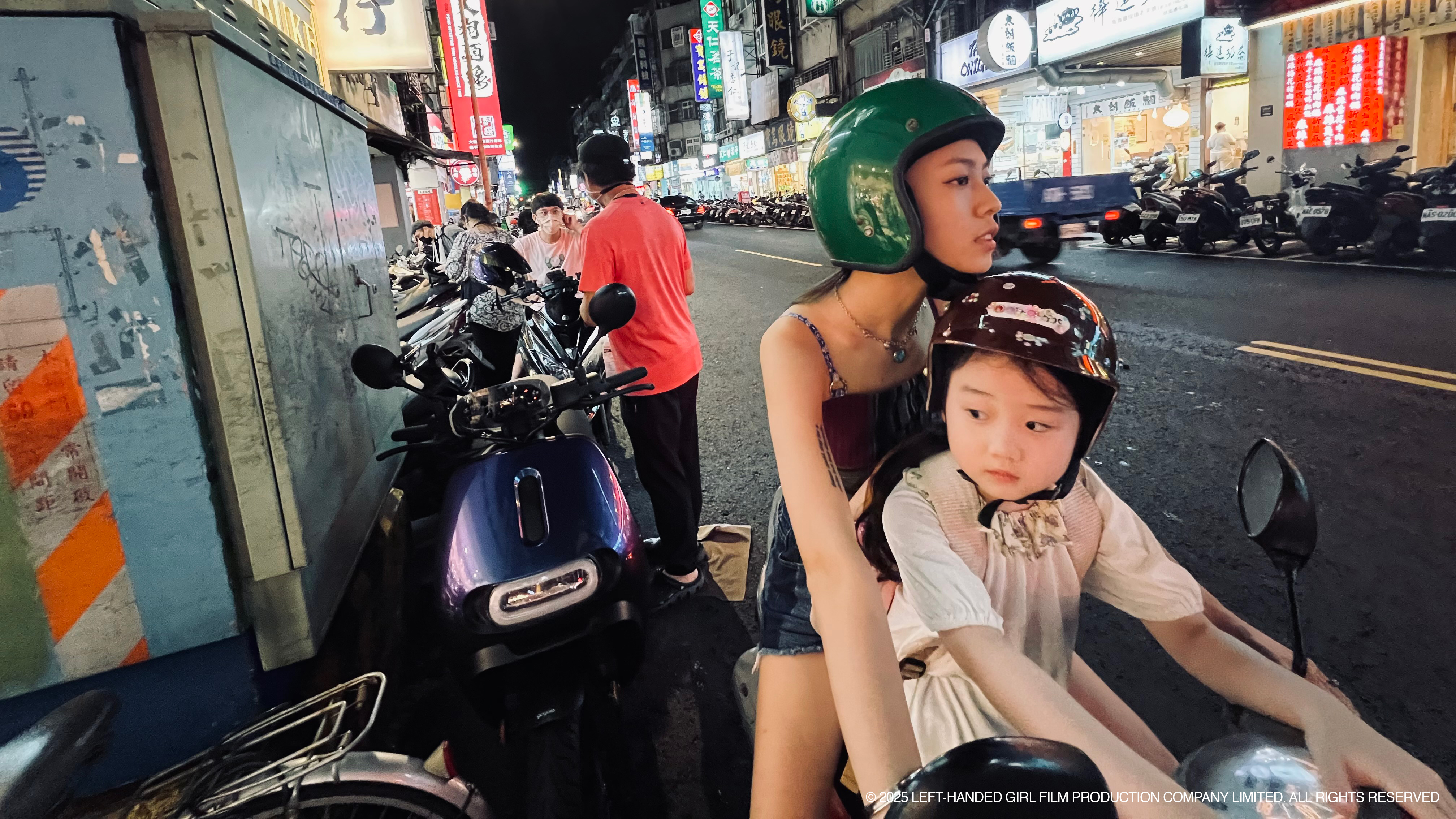
With each passing year it gets more difficult to adhere to the qualifications for this list. It used to be simple: Any movie released theatrically in Japan for the first time. At some point I started eliminating films that were released for the first time in Japan but released elsewhere a long time ago. Japan tends to have a long lag time for releasing foreign films compared to other countries, so if a movie was released elsewhere two or even three years before, it qualified, but if it was, like, more than ten years it didn’t. That wasn’t a difficult change to make. But when streaming went big, some major motion pictures started being released simultaneously in theaters and online—and then later online almost exclusively. That’s not the part that made it difficult. What made it difficult is the combination of the above two exceptions to the original rule. If all new movies produced by streamers were released everywhere in the world at the same time, that would be fine, but they aren’t, owing to different licensing deals for different territories. What brought this awkward development to my attention this year was the Taiwanese movie Left-handed Girl, which I saw at the Busan International Film Festival in October and was one of the best things I saw this year. It was also screened at Tokyo Filmex in November, and has won a number of awards at other festivals, but film festival appearances don’t qualify for this list. When I searched around for a Japanese distributor, I discovered that Left-handed Girl was already being streamed overseas in some markets on Netflix. Since it was not being streamed by Netflix in Japan I assumed it would be picked up for theatrical release by a local distributor—after all, it was made by the same team that produced the most recent Best Picture Oscar winner, Anora. No luck. According to the rules, I shouldn’t include it on this year’s list, but I’m not sure when it will be released in Japan and if it goes straight to streaming instead, what should I do? In any case, if you get a chance to see it, do. It’s better than Anora

Continue reading
Posted in Movies | Tagged , , , , , , , | Leave a comment

Review: Sew Torn

Yet another acclaimed short subject expanded into a feature, Freddy Macdonald’s crime comedy definitely feels over-extended, but its main problem is that it’s weird for no good reason. First of all, it takes place in a small Swiss village where all the characters speak English with various Anglo accents. Second of all, the protagonist is a “mobile seamstress” whose skills with needle and thread are supposed to be the selling point of the movie. And thirdly, the plot structure is split into three what-if possibilities that never cohere in a way that justifies the conceit. 

Barbara (Eve Connolly) has inherited the business from her late mother, who died under extremely tragic circumstances it seems. She’s a depressive soul who makes talking portraits: needlepoint tapestry recreations of photos of her and her mother backed by chip-recorded loops of their conversations. She’s going out of business because, well, who these days really requires a mobile seamstress? One nasty customer, a middle aged woman who is getting married, harries Barbara relentlessly to get her wedding dress repaired in time for the ceremony, and Barbara butter-fingers it, thus requiring a return to the shop to get a new button. Along the way she happens upon a road accident involving two motorcycles, two badly injured men, two guns, some packages of what looks like heroin/cocaine, and a briefcase of cash. Immediately she sizes up the possibilities: should she a) pull off the “perfect crime,” b) call the police, or c) drive away? Macdonald explores all three possibilities in witty ways, all involving Barbara’s facility with darning and knot-making so as to solve immediate problems. She’s like the Rube Goldberg of colored rayon thread. As any fan of this genre of crime movie will tell you, a little of this kind of thing goes a long way, and here we get three instances of Barbara’s ingenuity that don’t differ enough in substance to make any of them more interesting than the last one, so by the end of the movie you may be needled out. 

More significantly, the crime under scrutiny is trite, as if Macdonald had studied a bunch of B-movies about drug deals gone wrong and distilled them, resulting in a flavorless concoction. Though there are a few good jokes—the old lady who acts as the village’s resident police chief and justice-of-the-peace is a hoot-and-a-half—most of the comedy is subsumed in the complications of Barbara’s inventions, thus rendering it inert. Since I haven’t seen the original short subject, I can’t comment on it, but I imagine its economy is what made it interesting, and funny.

Now playing in Tokyo at Cinema Qualite Shinjuku (03-3352-5645), Human Trust Cinema Yurakucho (03-6259-8608). 

Sew Torn home page in Japanese

photo (c) Sew Torn, LLC

Posted in Movies | Leave a comment

Review: Magazine Dreams

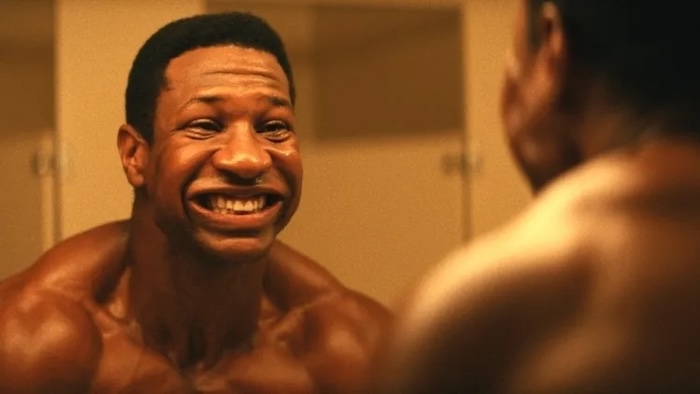
Though a bona fide indie, this sophomore feature by Elijah Bynum comes across as a fairly big production owing to its star, Jonathan Majors, who at the time it was made was riding high as box office contender, having scored critical raves in various features and a central ongoing role in the MCU. Since then, Majors has been accused of domestic abuse and his light has gone out, so Magazine Dreams could be his last leading part for a while—or forever. Since subtext is everything these days, it’s impossible not to read what happened to him (or what he did to himself) into this tale of a bodybuilder with self-image problems who explodes into violence when pressure gets to be too much. Story-wise, it sticks conventionally to movies about self-absorbed men who live on the margins, the kind of thing that Paul Schrader has made into a cottage industry, and Byrum often seems to be checking the boxes along the way, as if there were a manual for this kind of theme. But he’s got one element that distinguishes the film from its ilk: Killian Maddox’s race, which Byrum incorporates skillfully and, at first, subtly into the development.

The movie starts full bore, with Maddox already manifesting violent tendencies as his state-ordered therapist/social worker (Harriet Sansom Harris) tries to get him to admit to his darker impulses. Like a petulant child, he refuses to acknowledge them. At home he is obsessed with bodybuilding, his walls festooned with the magazine cover photos of his hero, a white guy named Brad Vanderhorn (real-life bodybuilder Mike O’Hearn). He lives with his grandfather, a retired, disabled Vietnam veteran (Harrison Page) who needs a certain level of care that only adds to Maddox’s guilt trip. He works at a supermarket where he scares the customers, though at one point he makes a date with a shy, white cashier, whom he later freaks out when they go out to dinner and he orders about 6,000 calories worth of food. The idea is that he’s just being himself, but being himself is off-putting to others, especially if they’re white. The first instance of acting out is a doozy. He calls a company that painted his grandfather’s house to complain that they did a bad job, and when they blow him off unceremoniously, he stomps down to the store and trashes the place. Later, of course, the store manager and some goons show up to give Maddox a proper beating, yelling racial slurs in the process. Byrum suggests that Maddox’s liberal steroid use only adds to his rage, but Majors is very good at telegraphing Maddox’s inherent insecurities through vocal inflections and changes in posture. 

Magazine Dreams is a very difficult movie to watch, since Maddox’s self-induced humiliations are so relentless and inevitable. No one, not even his therapist, attempts to connect with him on his level, and he picks up on these slights with the sensitivity of an exposed nerve ending. The cognitive dissonance remains intense because of Majors’ incredible physique, which adds immeasurably to the unfortunate subtext: another actor who went through a lot of pain just for a movie (though he reportedly was already bulked up, having just completed one of the Creed sequels). It takes nothing away from the performance, but in the end it takes something away from the movie, which is accomplished and dramatically affecting but depressing without being redemptive.

Now playing in Tokyo at Human Trust Cinema Shibuya (03-5468-5551), Cinemart Shinjuku (03-5369-2831). 

 Magazine Dreams home page in Japanese

photo (c) 2023 LAMF Magazine Dreams LLC

Posted in Movies | Tagged | Leave a comment

Review: A Big Bold Beautiful Journey

I would normally advise filmmakers to steer away from ironic movie titles unless their movies were explicitly comedies, but I’m really not sure if the title of Korean-American director Kogonada’s romantic fantasy is supposed to be ironic. Certainly there are comic elements at play, mainly in the whole premise of a would-be couple being Shanghaied by their respective rental cars’ GPS into taking trips to the past to uncover the Freudian sources of their difficulties in committing to long-lasting relationships. If the title is not meant to be ironic, then it will likely repel a certain group of moviegoers who actually might appreciate its storytelling craft and witty dialogue, but, in the end, it peddles exactly the kind of New Age didacticism that you fear it would.

Kogonada gets more help than he probably deserves from his high-wattage leads. Colin Farrell is David, a resident of an unidentified big East Coast city, probably New York, who is about to drive to a wedding when he discovers his car has been wheel-locked due to a parking violation. A helpful flyer on a wall facing his car advertises a mysterious car rental agency located in a cavernous, abandoned garage and manned by two very ironic employees, one of whom is played by Phoebe Waller-Bridge sporting a weird German accent. Despite David’s initial protestations, these two insist he take the GPS option, whose AI voice not only soothingly gets him to the church on time, so to speak, but gives him unsolicited advice for living. It also seems to control the weather. At the wedding, he is introduced to Sarah (Margot Robbie), a meeting that is obviously supposed to mean something, but neither seems sufficiently interested in the other to seek an extension of their acquaintanceship, so they part following the reception only to be reunited by their nosey GPS trackers—yes, Sarah rented her care from the same company. The GPS then leads them into weird doorways in remote, gorgeously lit locations that act as portals to episodes in their past that had some seminal effect on molding their personalities, which the movie tells us in no uncertain terms are damaged by trauma and heartbreak—in David’s case an almost fatal health condition and the quashing of his professional dreams, and in Sarah’s the death of her mother. Though none of these episodes really clarify the deficiencies they’re meant to clarify, isolated from the overall movie they provide more in the way of entertainment, especially Farrell’s game and very accomplished stab at the lead in How to Succeed in Business Without Even Trying, which he once played in a high school production. 

It’s difficult to know how to read these episodes because they don’t provide any meaningful reflections, only building blocks to a kind of amorphous plot. The point seems to be that our two would-be lovers missed the real significance of these experiences the first time and are now being given the chance to appreciate them for what they were, but the situations themselves are so hackneyed as edification that they don’t make much of an impression. Consequently, there’s no buildup of dramatic tension that would make the inevitable connection between David and Sarah satisfying. It’s all inertia, which is sort of what you would expect from a love affair brought about by your car’s GPS system; meaning, it should have been funnier.

Opens Dec. 19 in Tokyo at Toho Cinemas Chanter Hibiya (050-6868-5001), Toho Cinemas Shinjuku (050-6868-5063), Kino Cinema Shinjuku (03-5315-0978), Toho Cinemas Roppongi Hills (050-6868-5024). 

A Big Bold Beautiful Journey home page in Japanese

Posted in Movies | Tagged , , | Leave a comment

The Passion of Shiori Ito

I first saw Shiori Ito’s documentary, Black Box Diaries, about her struggle to bring the man who raped her to some kind of justice, in Oct. 2024 at the Busan International Film Festival. At the opening night reception, the American producer of the film, Eric Nyari, introduced me to Ito, who seemed to be on top of the world. Her movie had premiered at Sundance earlier in the year and had already played several film festivals. At BIFF she exuded the attitude of a total winner. During the opening ceremony, she literally danced down the red carpet, whooping it up along the way. This behavior contrasted starkly with the tone of Black Box Diaries, which is overcast with frustration and, at times, acute depression due to the obstacles Ito faced in trying to get others, in particular the Japanese authorities, to take her accusations against her rapist seriously. It’s only through sheer tenacity that she gets anyone to listen to her because in Japan (and many other places in the world, I imagine) it’s just not considered polite to talk about these matters in public. Consequently, the cognitive dissonance I experienced upon encountering her in person was strong, and immediately I checked myself, because Shiori Ito is many things and “victim” is one that she would probably prefer to minimize. But over the past year, as her movie has failed to find distribution in her native Japan despite already being nominated for an Academy Award and winning a Peabody, it seemed obvious to me that many people in Japan think she should follow the decorum appropriate for a victim, or worse.

The image she has been most keen to project is that of a journalist, which she is, at least in terms of professional aspiration. It’s been this image that has proved most contentious among a certain group of critics in Japan who accuse her of sidestepping journalistic ethics in order to achieve the agenda attempted by the documentary. This criticism has been one of the main stumbling blocks that’s prevented the movie from being shown in Japan. During the press conference at the Foreign Correspondents Club of Japan on Dec. 15, where the newly edited version of Black Box Diaries was shown to the press, Nyari mentioned that after Sundance foreign distribution came fairly easily, but he knew Japan might be more of a problem because of distributors’ “fear of authorities,” since, in the movie, Ito suggests that the arrest of her rapist was quashed by “higher-ups.” The accused rapist, veteran reporter Noriyuki Yamaguchi, wrote an authorized biography of late Prime Minister Shinzo Abe that was about to be published when the arrest was initially supposed to take place. However, when Ito’s lawyer, Yoko Nishihiro, said that Ito had not properly sought permission from several sources in the documentary and used CCTV footage from the hotel the night of her rape without the hotel’s authorization, the original release date was postponed indefinitely. As condemnation of Ito’s methods rose the release went into limbo.

Continue reading
Posted in Media | Tagged , | 1 Comment

Review: By the Stream

It’s such a delight to see Kim Min-hee again in a leading role. Though everyone knows that Kim is filmmaker Hong Sangsoo’s partner in both life and commerce, she’s also one of Korea’s best actors, and since becoming Hong’s most important behind-the-scenes facilitator she hasn’t done much in front of the camera. In By the Stream she plays an art teacher, Jeonim, at a women’s college who has been pushed into a hard place by her superiors. The school is having a drama festival and another instructor (Ha Seong-guk), a man, was directing a sketch when it is discovered that he was perhaps romantically involved with several of the students under his direction. Jeonim has been assigned to take his place and since she is mainly a visual artist she doesn’t think she has what it takes to direct actors, so she calls up her uncle, Chu Sieon (Kwon Hae-hyo), who was once a noted actor and director to assist. He seems only too happy to help.

That’s because some years before he himself was involved in a scandal that effectively ended his career, though in his case the scandal was political in nature. He now runs a bookstore in another town but apparently has a lot of time, and Jeonim gives him free rein with the students who are creating and performing the sketch. Though Hong shows us the rehearsals and some of the brainstorming that goes into the production, as usual he’s more interested in observing how these characters interact in more casual settings, whether drinking in a restaurant, hanging out in the teachers’ rooms, or just chatting by the titular stream, which seems to be Jeonim’s favorite place to think. In these conversations we pick up on Jeonim’s misgivings about asking her uncle to get involved in her work, mainly because he seems to have attracted the attention of her professional mentor, Jeong (Cho Yun-hee), who, despite the fact that Sieon’s reputation as a trouble-maker has preceded him, finds him charming in what Jeonim thinks is an unwholesome way. Meanwhile, the sketch may be headed toward the same kind of backlash that made Sieon persona non grata in the world of professsional drama. 

This is a lot of plot for a Hong Sangsoo movie, but as with the participation of Kim Min-hee the potboiler nature of the writing is quite refreshing, even if Hong isn’t the most reliable storyteller. He never explains the details of Sieon’s fall from grace and many of the plot developments happen either off-screen or in overheard conversations. These tactics nevertheless make By the Stream one of Hong’s most emotionally tense movies, even as his characters constantly set themselves up, almost hilariously, for behavioral pratfalls. When the disgraced teacher shows up to check on how the sketch is going, Sieon patronizes him and unwisely tries to bring him back into the production, if only tangentially. He’s not being perverse. If anything, he’s magnanimous, but it only goes to show, as with any male character in a Hong movie, that he’ll never learn. 

In Korean. Now playing in Tokyo at Euro Space Shibuya (03-3461-0211).

By the Stream home page in Japanese

photo (c) 2024 Jeonwonsa Film Co. 

Posted in Movies | Tagged , , | Leave a comment

Review: Eddington

A lot of critics have labeled Ari Aster’s latest provocation a modern Western owing to certain superficial signifiers—cowboy hats, a desert-adjacent setting—but to me it’s closer in spirit to Breaking Bad, and not just because the titular town is in New Mexico. Aster successfully conjures up a place that feels untethered, as if it had been built yesterday, its faux-suburban facade struggling to pass itself off as genuine small town America. Breaking Bad, which presented Albuquerque as a city whose economic identity is built on criminal activity, had a similar vibe that affected every facet of the story and characters. One of the subplots of Eddington has the local Indian residents complaining about how their land has been repurposed without their permission, mainly by a big tech company that’s building a huge data center on the outskirts of Eddington. So when COVID comes to town, it just further undermines an already shaky foundation.

The conflict is between the town’s sherriff, Joe Cross (Joaquin Phoenix), and the town’s mayor, Ted Garcia (Pedro Pascal). Garcia has implemented mandatory social distancing and mask regulations, while Cross thinks they’re overkill and isn’t keen on enforcing them. When push comes literally to shove in a local supermarket, Cross decides to run against Garcia in the next election for mayor, and Aster, whose comic smarts were not really exercised to their fullest in his previous films, sets up Cross’s campaign as supreme farce. As it soon becomes clear, Cross’s gripe with Garcia is personal, which makes the enmity that much more difficult to mitigate and inflates the nominally political battle into something more deadly. Complicating Cross’s ambitions is his emotionally troubled wife, Louise (Emma Stone), who, confined to home due to lockdown, falls under the spell of her conspiracy-addled mother (Dierdre O’Connell), who hooks her up with a charismatic motivational speaker (Austin Butler). Other controversies-of-the-moment affecting the mayoral campaign include the Black Lives Matter and #MeToo movements. As Phoenix plays him, Cross is a monumentally insecure man who finds himself in a public position that calls for a kind of hyper-masculine assertiveness, and in trying to fit that image he runs off the rails in an extremely reckless manner. 

Aster has never been afraid of taking his premises to their wildest conclusions, and he does a neat job of bringing all the various elements together in a climactic showdown that has to be seen to be believed—even if its narrative endpoints are not believable at all. Aster’s idea is that America is at the tipping point of senselessness in its civic integrity. He doesn’t bother distinguishing between ideologies or political preferences. Everyone has had a hand in driving the democratic experiment off a cliff, and he’s just there to film the wreck in slow motion. 

Now playing in Tokyo at Toho Cinemas Nihonbashi (050-6868-5060), Toho Cinemas Hibiya (050-6868-5068), 109 Cinemas Premium Shinjuku (0570-060-109), Shinjuku Piccadilly (050-6861-3011), Toho Cinemas Shinjuku (050-6868-5063), Human Trust Cinema Shibuya (03-5468-5551), Toho Cinemas Roppongi Hills (050-6868-5024).

Eddington home page in Japanese

photo (c) 2025 Joe Cross For Mayor Rights LLC

Posted in Movies | Tagged , , , , | Leave a comment