

Gochipo, the mascot of the American pork exporters association
Here’s this week’s Media Mix about animal welfare, a topic we’ve written about before but usually in the context of cultural perception. What makes the subject particularly perplexing in Japan is the cognitive dissonance created when the cavalier and often cruel treatment of livestock is contrasted with the image of farm animals, especially those raised for meat, as being almost giddy about their own fate. Japanese advertisers have no problem with portraying these animals as being simultaneously delicious and cute. But it gets weirder. The other day I saw a tweet, by a non-Japanese person, I believe, about an advertisement the person saw on a Tokyo subway. The advertiser was American pork exporters and the ad was a drawing of cartoon pigs enjoying a barbecue of pork products. It was essentially a kind of cartoony Hieronymous Bosch pastisch of cannibalism. Regardless of the exporters association determination to penetrate the Japanese market, I am positive they didn’t come up with the idea of the ad. It was surely the work of the Japanese advertising company they hired, beause I’ve seen these kinds of ads before in Japan, though never as horrifically blatant. One smiling pig in the panorama was even wearing what looked like a sausage necklace.
The disconnect is not limited to advertising and the public arts. The column mentions the NHK drama “Natsu-zora,” about a dairy farm in Hokkaido in the 1940s and 50s. The milk cows are not just resources; they’re portrayed as part of the family. This happens on dairy farms in many countries, but in Japan this sort of communion with livestock extends to animals fated to be butchered at a young age. After the Fukushima nuclear meltdown in 2011, there were many stories about cattle ranchers abandoning their animals, with tearful farmers expressing bottomless remorse about how they had to leave the animals they’d grown so attached to to fend for themselves. Most Japanese people took this remorse at face value, and the media got a lot of sentimental, melodramatic mileage out of it, but I just felt confusion. Even if these cows were dosed with radiation, they’d live longer on their own. Had the accident not occurred, they’d be on their way to the slaughterhouse as soon as they were big enough. The emotional outpouring doesn’t make any sense. When I’ve expressed this confusion to others, some have replied that it’s a kind of Buddhist thing: You appreciate the sacrifice that an animal makes for you, so there’s no real paradox here. Whales are a fairly good example. Japan kills whales for food and sets up memorials in whaling towns to the sea mammals themselves. The sailors pray for their souls at temples and such. Then they go out and harpoon them in the most brutal ways. Sorry if I sound culturally indifferent, but it seems to me that these sailors and farmers just want their capitalist cake and eat it too.
 The flaw in the X-Men saga that outsiders can’t quite get past is the mutant pretense that is its whole reason for being. Though the idea of mutants being social outcasts despite their super powers and tendency to use them for good is a powerful one, the kind of poetic license exerted in describing those powers becomes strictly arbitrary after you sample a few characters. It’s as if the creators simply make up an ability that fits whatever story they wanted to tell, and after a while you have so many super powers that there seems little point in extrapolating on them.
 Here’s
  Young people in Japanese and Korean indies often evince a distinct cognitive dissonance, purposely rubbing against the stereotype of the good son or daughter in the Confucian tradition. Those of us who are not Japanese or Korean may feel cut off: Adolescent disaffection is universal and perhaps more acute in a social milieu that distinctly places greater value on family cohesion, but there’s usually the feeling that the filmmaker is trying to make their point by exaggerating certain attributes. Hikari, the narrator of Makoto Nagahisa’s debut feature, is a 13-year old video game addict who has just lost both parents in a bus accident and feels nothing. Actually, scratch that. He betrays some relief, because he obviously didn’t love his parents, and the sentiment may have been mutual—to call Hikari an unreliable narrator would be an understatement.
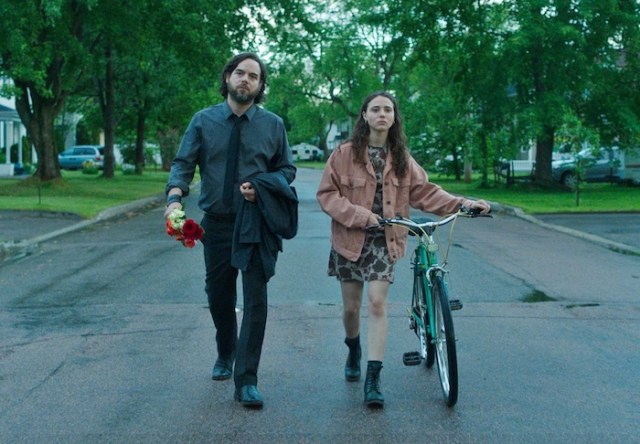 Disaffected youth is a currency that filmmakers never tire of trying to exchange in hopes of finding a theme that suits their world view. Everybody was young once, and if experience counts for a lot when telling a story, the coming-of-age tale has built-in advantages. In this small Canadian film, the director is a man and the protagonist an 18-year-old girl living through that magic hour of adolescence, from the last month of high school through to the end of the subsequent summer. Leonie (Karelle Tremblay) is typically skeptical about everything in the ways of cinematic teen heroines. She bristles whenever an adult confronts her with her future. “I’m only 18,” she spits back. “I have plenty of time to decide.” Her bad attitude is manifest right off the bat when she bails on a restaurant meal in her honor hosted by her mother (Marie-France Marcotte) and stepfather (Francois Papineau). She pretends to use the rest room and then walks out the door and catches a bus.
 Disney’s latest live action—or, more precisely, CGI-assisted—remake of a beloved animated classic hits perhaps too close to home in my case. The original Aladdin was the first movie I reviewed for a print publication, albeit in capsule form, and the memory of seeing it at my first-ever press screening is indelible, though that movie was so overwhelmed by Robin Williams’ participation that, other than the simple, crowd-pleasing plot, little of the film itself made much of an impression. Seeing the new version, I now attribute this perceptive gap less to the passage of time than to Disney’s generic storytelling style. Suddenly, all the things I liked and disliked about the original but had forgotten about came flooding back, but it was a weird kind of nostalgia. Except for Williams, have things changed so little since 1992?
 There’s something refreshingly irreverent about Hiroshi Okuyama’s debut feature, but it’s not in the Japanese title, which translates directly as “I hate Jesus.” Appropriately small-scale in both production values and ideas, the movie posits Christianity as an object of curiosity. People of faith will find it quaint at best, while the rest of us may think it’s grandly pulling a leg or two, though in spots it reveals a disarming seriousness. If, in the end, it doesn’t say much about organized religion, it does say something interesting about the cult of Christ.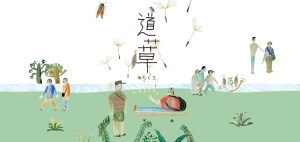
 At one point at the beginning of Frederick Wiseman’s monumental documentary about the New York Public Library, someone basically calls it a holy place for secular people. That’s a fair description of any library, but New York’s is special in that it not only provides the largest research resource collection of almost any institution in the world, it actively involves its users in the life of the city’s vast culture. Entering the huge, beautiful main branch at 5th Avenue and 42nd Street, with its famous marble lions and elegant wood paneling, is like entering the city’s soul—the good ecumenical soul that should be at the heart of every great city’s endeavor.
 Though it doesn’t really amount to much in the end, director Bart Layton’s decision to claim up front that his heist movie is a bona fide “true story”—as opposed to a movie “inspired” by one—is a fairly bold step, and compels him to add inserts wherein the actual people involved in the caper provide details, albeit from inside prison, thus letting us know rather soon how the heist turns out. It’s not really much of a spoiler, because despite unerring confidence in their criminal skills, the two masterminds behind the robbery, art student Spencer (Barry Keoghan) and his less savvy pal Warren (Evan Peters), who’s the beneficiary of a sports scholarship, don’t really give the impression that they know what they’re really getting into.
