Review: Creed II

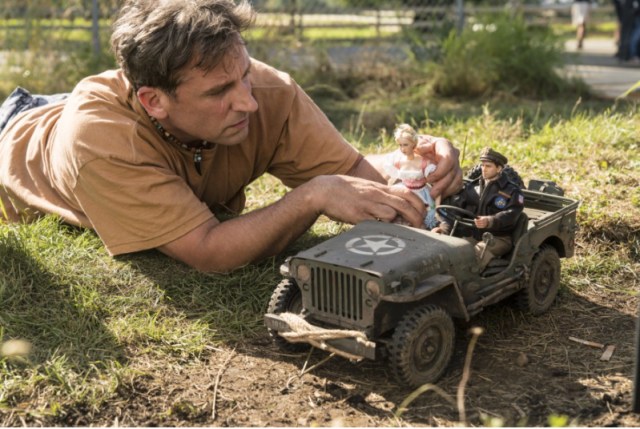
As a gambit to legitimize the reboot of a franchise that should have been put to rest years ago, this sequel to the potently effective Creed works surprisingly well, but probably for the wrong reasons. Though it continues the story of fighter Adonis Creed (Michael B. Jordan), the illegitimate son of Apollo Creed, the early nemesis and then BFF of Rocky Balboa (Sylvester Stallone), who has made his own name as a professional boxer thanks to the ministrations of Rocky, it flatters moviegoers with long memories, since it basically revisits the original Rocky series’ most gaga installment, Rocky IV, in which Apollo Creed was killed in the ring by the Soviet-engineered bruiser Ivan Drago (Dolph Lundgren), who then had to fight Rocky in what everybody understood was a revenge match. In Creed II, Adonis, who has recently won the heavyweight title, is pretty much forced to fight Drago’s son, Viktor (Florian Munteau), to defend that title.

Though Ryan Coogler, who wrote and directed the first Creed, is installed in the credits as a producer, the sequel is directed by Steven Caple Jr. and written by Stallone and Juel Taylor, and as such it returns with shameless aplomb to the original Rocky style—long on elliptical montages, short on rich character development, ripe with feelings that aren’t earned. That said, Caple is the equal of Coogler when it comes to action set pieces, and the boxing segments are as brutally absorbing as they need to be. More to the point, Adonis’s relationship with his girlfriend, a singer named Bianca (Tessa Thompson) with a genetic hearing problem, is fleshed out in ways that makes the romantic subplot so much more affecting than the Rocky-Adrian relationship in the original series. Moving into marriage and then fatherhood while his life is thrown for a loop due to celebrity, money, and the attendant need to prove himself as a symbol of modern American masculinity, Adonis approaches his new responsibilities with understandable trepidation, and Jordan and Thompson’s chemistry in this light is visceral to the point of painful. If Creed II succeeds as anything, it’s as a mature love story that doesn’t avoid the ugly truths.

But that isn’t what the movie is selling. It’s selling the legacy fight between Adonis and Viktor, who is trained by his father in the Ukraine for one purpose only, to seek vengeance on Rocky for Ivan’s own humiliating defeat years ago, which destroyed his marriage and made him an exile in his own country—even after the breakup of the Soviet Union. An opportunistic American promoter (Russell Hornsby) seeks out the Dragos, knowing it’s what they want, to propose a fight with the newly crowned Adonis. Rocky is against it for reasons that make sense only within the parameters of Rocky movies, but those reasons manifest unfortunately when Adonis is beaten badly and almost dies. Of course, there is going to be a rematch, and the movie is nothing if not honorably realistic about the time frame, but during the year of his recovery and rehabilitation there is plenty of time for babymaking and those montages, not to mention patching up Adonis’s relationship with Rocky, which was shattered with the loss.

Creed II thankfully avoids the jingoistic hyperbole of Rocky IV (which some saw as satire). The US-Russia relationship in the movie is strictly focused on Drago’s desire for payback, and the movie’s cleverest comeuppance in this regard is bringing back Brigitte Nielsen as Drago’s ex-wife (as well as Stallone’s) to taunt him as a loser in order to spur him to greater things. How Ukrainian this is, I’m not sure, and I certainly don’t think Ivan has much love to lose for the Russians in his corner. In a way, it’s a lost opportunity, since Drago is potentially the most interesting character in Creed II (Viktor, as played by the neophyte Munteau, is a lunkhead nonentity). Which is to say the movie has too many things going on for its own good. It could have been a contender. As it stands, it’s just another good boxing movie.

Now playing in Tokyo at Toho Cinemas Nihonbashi (050-6868-5060), Toho Cinemas Hibiya (050-6868-5068), Marunouchi Picadilly (03-3201-2881), Shinjuku Wald 9 (03-5369-4955), Toho Cinemas Shinjuku (050-6868-5063), Shibuya Toei (03-5467-5773), Toho Cinemas Roppongi Hills (050-6868-5024), Cinema Sunshine Ikebukuro (03-3982-6388), Toho Cinemas Ueno (050-6868-5066).

Creed II home page in Japanese.

photo (c) 2018 Metro Goldwyn Mayer Pictures Inc. and Warner Brothers Entertainment Inc.

Posted in Movies | Tagged , , | Leave a comment

Review: The Looming Storm

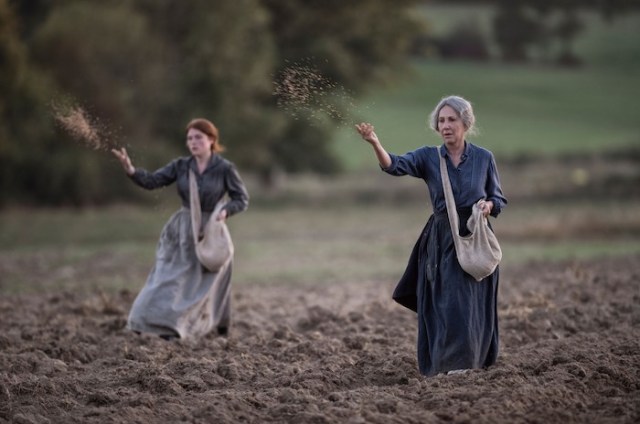
Film noir is defined as much by atmosphere as by any other visual or narrative attribute. The first film by director Dong Yue, a noted cinematographer, is drenched in heavy weather per the title. Ostensibly a murder mystery, The Looming Storm tries to say many things about its milieu—a factory town that’s slowly dying—and how it affects people who have perhaps had their hopes elevated too high.

The story is set in 1997, the year Deng Xiaopeng died and Hong Kong reverted to Chinese authority. As part of these stunning changes a large factory complex in a rural burg is being gradually decommissioned. Yu (Duan Yihong), the security chief for the factory who tends to cruise through his job by catching (framing?) the occasional thieving employee, is anxious about his own position, but he tends to act as if there’s nothing to worry about. As the movie progresses ever downward, Yu’s fate becomes inextricably tied to the fortunes of the town.

The incident that launches his downfall is the gruesome murder of a woman, the fourth in a series that follows a creepy pattern. Naturally, the town’s police are on the case, and they question Yu about workers who might be suspects. Yu plays up his importance in the investigation in the hopes that sucking up to the right people and impressing them with his own police skills will get him a job with the constabulary, but his own gumshoe techniques turn out to be severely wanting, and it hardly helps that his closest assistant, Xiao (Zheng Wei), is as dumb as a doornail. His desperation leads him to a shadowy figure and a chase that, at first, feels gratuitous in terms of length and complexity, and when he fails to catch his quarry he decides to use a prostitute-cum-beautician (Jiang Yiyan) with whom he has struck up a listless romance as bait without her knowing it.

So far, The Looming Storm has all the required elements of a potent noir, and then the movie shifts gears, heading into territory as murky as the rain-drenched mise-en-scene. It becomes increasingly difficult to tell what’s real, what’s plausible, and what’s illusion. What started as an intriguing allegory about the beginning of the end of Chinese optimism ends up as yet another stylish, Lynchian descent into garbled fantasy. You’ll leave the movie feeling as gray as the landscape.

In Mandarin. Now playing in Tokyo at Shinjuku Musashinokan (03-3354-5670), Human Trust Cinema Yurakucho (03-6259-8608).

The Looming Storm home page in Japanese.

photo (c) 2017 Century Fortune Pictures Corp. Ltd.

Posted in Movies | Leave a comment

Media Mix, Jan. 6, 2019

Here’s this week’s Media Mix about right-wing internet trolls. In the introductory paragraphs I described journalist Koichi Yasuda’s comparison of classic rightists with the newer, anonymous internet type. Yasuda tends to think that classic rightists have more integrity than internet rightists because they at least have a patriotic agenda that they understand and stick to. Classic rightists would have protested American forces in Japan, because they want Japan to beef up its own defense by itself, but internet rightists support American bases simply because they’re opposed by Okinawans and “liberals.”

Yasuda also says that classic rightists would never denigrate Koreans and other “marginal” types, mainly because they consider themselves fringe-dwellers, but that seems to be a debatable point. Counter-racism activist Yasumichi Noma, also referenced in the column and Yasuda’s discussion partner on the web program No Hate TV, had said that classic rightists tend to be bigots even if they don’t always manifest their bigotry in their speech. In truth, classic right wing organizations contained many members who were ethnic Koreans, chiefly because those organization gave them a chance to belong to something, even if it was a group that often targeted foreign elements as undermining the purity of Japanese society. (For similar reasons, ethnic Koreans can often be found in yakuza organizations) The point is that Yasuda’s theory about the difference between classic right wingers and internet rightists isn’t quite so clear cut. In the end, they both hate anyone who’s to the left of them, so they still have a lot in common.

Posted in Media | Tagged | Leave a comment

Review: My Generation

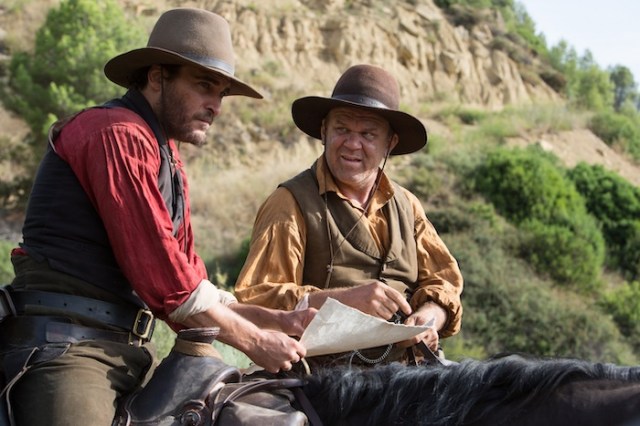
There’s nothing like a cleverly made documentary to bring up the obvious and somehow make you believe you’re hearing it for the first time. The general purport of David Batty’s nostalgic romp through 1960s Swinging London is that the milieu announced the triumph of the working class over the gentility that dominated British culture up until that point. As their mouthpiece, Batty and screenwriter Dick Clement and Ian L Frenais use Michael Caine, who’s more than game to make the case that he and his Cockney-inflected cohort changed England for the better and forever. No one who has owned a pulse for the past fifty years is going to argue with that, and while the film’s visual design and pacing makes for lively discourse, the narrative rushes through so many sub-themes—pirate radio, sexual liberation, revolutionary fashion photography—in its brief 85 minutes that you wonder why they just didn’t make a TV series out of it. Actually, maybe they did, given how ubiquitous feel-good 60s nostalgia is at the moment…for the third or fourth time.

What’s memorable are the details as conveyed through Caine’s “you had to be there” form of rhetoric, in particular his transitional ploy of trying to prove that the undermining of Britain’s supposedly inviolate class structure was premised on trained actors in films using their natural accents rather than the generic posh diction that had always ruled onscreen. We also hear from contemporaries like Twiggy and Mary Quant about the transgressive effect of fashion that blurred gender boundaries, though, except for some winking asides related to the ascendancy of Vidal Sassoon’s unisex hairstyles, not much of it is related to LGBT issues, which would become more of a political matter in the 1970s, but, still, it seems like a glaring omission. The Beatles are copiously mentioned, but, thankfully, the film doesn’t make them out to be the be-all-and-end-all of the British renaissance. If anything, The Who (whose Roger Daltrey comments almost as much as Caine does and which provides the movie with its title) and The Kinks seem more closely attuned to the spirit of the moment than either The Beatles or The Stones.

It’s all good fun, and might possibly enlighten youngsters who’ve heard some good tunes (the soundtrack is impeccable) and might want to know more about 60s music and fashion. However, I’m not sure if they will come out of the movie feeling any more respect for boomers, who continue to take a deserved drubbing in Western civilization for what they’ve left behind to their grandchildren. My Generation makes a strong case for the cultural progress achieved in the 60s, but Caine’s unmediated tone is smug and slightly off-putting, and consequently justifies that opinion which says boomers are too full of themselves to own up to their failures as bearers of that legacy. After all, what has Michael Caine done for us lately except Alfred in Batman?

Now playing in Tokyo at Bunkamura Le Cinema Shibuya (03-3477-9264).

My Generation home page in Japanese.

photo (c) Raymi Hero Productions 2017

Posted in Movies | Tagged | Leave a comment

Best Albums 2018

The album as a delivery device for music has been dying for more than a decade now, or, at least, that’s what the pundits say. What struck me more than anything about the way new music was presented this past year is how the album form was adapted to the way streaming has changed our mode of listening. This is only partially due to technological changes. The idea of the album as a unified work of art that developed in the late 60s changed organically over the years as the sheer volume of available music has grown exponentially. Two of the “albums” on my list would, under old rules, be categorized as EPs, but were nonetheless presented to the public as albums in the sense that they were designed to be heard in one sitting. The fact that they’re brief could be taken as a sop to the shorter attention spans brought about by online lifestyles, but I’d like to think they turned out the way they did because of a particular vision.

By the same token, several of the releases on this list clock in at around 30 minutes, making them albums in accordance with time scales common in the 1960s but less robust price-performance-wise had they been released in the 1990s, when CDs were king. CDs are not only no longer king, they are becoming increasingly difficult to find. So the album as an integrated unit of musical performance has little relationship to cost for consumers any more because they can stream anything for one monthly fee or purchase invidual songs. Or they can download/share stuff illegally, which is still a thing and probably always will be. But the shorter album lengths may, inadvertently or not, keep the album format viable for at least a bit longer, and that makes me happy. There’s still nothing more satisfying that sitting down for forty minutes and absorbing a set of songs united by theme and sensibility. I just wish I had as much time to do that as I used to. Continue reading

Posted in Music | Tagged , , , , , , , | Leave a comment

Best Movies 2018

I lost my last paying gig as a movie reviewer this year, which means I now watch movies for free, in every sense of the term. I still get invited to press screenings, and attend one or two a week, but writing about them has become more or less a hobby, though publicists and distributors seem to pay attention when I post the reviews on this blog. What’s that worth, I’m not sure, other than the notion that they’ll keep me on their mailing lists. Maybe they’re just being polite. God knows, I feel sort of silly if I tweet links to movie reviews. I have no idea who’s reading them, and haven’t really checked to see how many people are.

Consequently, I only see movies I think I’ll like, or films that people are discussing so that I can see what all the fuss is about. I missed a few that might have ended up on this list if I had had more presence of mind, so it’s hardly comprehensive in that regard. I don’t have as much of an option to watch films after they’ve been released, because there’s only one theater complex near where I live and they mostly show major films. The only movie on this list I didn’t see at a press screening was The Lost City of Z, which didn’t have a press screening and played for only two weeks at a small theater in Tokyo. I had wanted to see it, so I actually made the time to.

As always, the movies on this list were released in Tokyo during the 2018 calendar year in theaters. I subscribe to Netflix and Amazon Prime but I haven’t included any streamed movies here because I’m still doctrinnaire about these kinds of lists. In any case, I didn’t see any on TV that I would have included. I have yet to watch Roma, which didn’t play at any theaters in Tokyo before being streamed, unless you count its one screening at the Tokyo International Film Festival, which I also missed. Maybe next year, I’ll start including streamed movies here, but for now I’ll stick with being old-fashioned. Continue reading

Posted in Movies | Tagged , , , , , , , , , | Leave a comment

Review: A Star Is Born

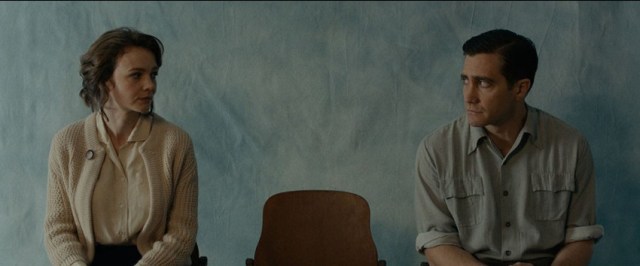
It didn’t take much to make the latest iteration of A Star Is Born better than its immediate precedent, the Streisand-Kristofferson vehicle, which has become something of a camp classic while retaining its critical rep as a dog. Nevertheless, there are parallels worth exploring, the most obvious being the provenance of their four respective leads. In 1976, Kristofferson was probably better known to the general public as an actor than he was as the singer-songwriter that first brought him fame. Casting him as an arena rocker seemed predicated on his particular hirsute handsomeness, but his naturally gruff amateurism made the character, if not the performance, more sympathetic than it should have been. Streisand, on the other hand, was playing as furiously against type as her own immediate forebear, Judy Garland, had been in the 1954 remake: one of the hugest stars of the moment pretending to be an ingenue. This push-pull between her image and Kristofferson’s at the height of rock’s ascendance in pop culture was ridiculous to behold, despite a script by Joan Didion and John Gregory Dunne that turned the melodrama back on itself.

Lady Gaga is arguably on the same plane of career development that Streisand was at, but here she has the advantage of no acting experience. More to the point, her popular image as a chameleon whose appeal is at least partially credited to makeup and wardrobe and stage spectacle has been discarded for a disarming naturalism that makes her character, Ally, much more sympathetic than Streisand could ever be. Like Kristofferson, Bradley Cooper, as the country-rock star Jackson Maine, is going against his grain by singing and writing his own songs for the first time in a movie. In a sense, both Gaga and Cooper, who also directed, feel fresh, and that makes their romance on screen feel appropriate and believable.

But this sort of distinction only works for so long, especially in a movie whose story everyone knows pretty well. The differences are in the details—Maine first eyes Ally in a drag bar where he’s retired post-gig to nurse his alcohol jones, Ally is motherless but the apple of her limo driver dad’s eye (Andrew Dice Clay, being nice for once)—and the interesting addition of Maine’s older brother, Bobby (Sam Elliott), a failed musician who raised Jackson after their elderly father died and basically turned him into the musician he became. Though Bobby is the most blatant melodramatic device in the film, Cooper handles the dynamic with an eye on the development of the story as a tragedy that gives the overall contour of the plot more room to work its sad magic. Consequently, the chemistry between Gaga and Cooper is much more convincing than it was between Streisand and Kristofferson or, for that matter, between Garland and James Mason. The songs are also a hell of a lot better than the schlock in the 1976 version.

So why is that the movie felt flat in the end? Whatever my reservations about the miscasting of Kristofferson and Mason in roles that were out of their wheelhouses, they transcended their respective cliches by not trying too hard. Their tragedies were that their love was strong but their characters weak, and both actors recognized that once you are resigned to that truth, there’s only one resolution. Despite Bobby’s sage blandishments, Jackson never seemed to get this part—he might as well have been despairing over the tinnitus that threatened to stop his career. And Cooper underplays so skillfully that when he does the terrible deed you almost feel you’ve missed it. Ally’s grief is poignant without being particularly deep, and the big musical finish feels as gratuitously corny as it did when Streisand did it, except that Streisand is expected to be brassy and obvious. Gaga can’t be faulted for doing what she’s told, but she seemed strangely diminished.

Now playing in Tokyo at Toho Cinemas Nihonbashi (050-6868-5060), Toho Cinemas Hibiya (050-6868-5068), Marunouchi Picadilly (03-3201-2881), Shinjuku Wald 9 (03-5369-4955), Shinjuku Picadilly (050-6861-3011), Toho Cinemas Shinjuku (050-6868-5063), Human Trust Cinema Shibuya (03-5468-5551), Toho Cinemas Roppongi Hills (050-6868-5024).

A Star Is Born home page in Japanese.

photo (c) 2018 Warner Bros. Entertainment

Posted in Movies | Tagged , | Leave a comment

Review: Ralph Breaks the Internet

I’m probably not the first person to think that Ralph Wrecks the Internet would have been a better title for this sequel to the Disney hit Wreck-It Ralph, since it would have taken better advantage of familiarity with the original. However, these days people know more about a Disney-related film before it’s released than after, and having enjoyed Wreck-It Ralph without necessarily being invested in it—the digital video games it referenced had no traction on my life back in the day—the possibility that the main characters—the lamebrained, sentimental, muscle-bound title character (John C. Reilly) and the sweet-voiced, diminutive, super competitive race car driver Vanellope (Sarah Silverman)—would be moving out of the circumscribed universe of arcade games into the infinite possibilities of the Internet—a world, for better or worse, that I am invested it—was immediately intriguing.

As with the Toy Story franchise and other contemporary fictional animated milieus, Ralph Breaks the Internet uses our proximity to actual pop culture in its favor. It’s not just the real games in the arcade, many of which are known to me only in passing, but the huge tech companies represented in the Internet world that Ralph and Vanellope pass into in their decidedly analog quest for a discontinued steering column for the game that is Vanellope’s whole reason for being. Both characters have no real concept of what the Internet entails, thus allowing the filmmakers to make of it what they want, and the analogies go beyond the clever and convenient into the realm of the sublime. Though at first the Internet’s landscape resembles a vintage version of a World’s Fair Futureworld on steroids, the way the various apps interact is brilliantly realized, and though people with little practical experience with Internet protocols might be lost, do such people still exist? (Or, more precisely, are people unfamiliar with Internet protocols going to see this movie?) Unschooled in the ways of capitalism, Ralph and Vanellope innocently bid up the price of the coveted steering wheel at an eBay auction, thus pricing themselves way out of their league and necessitating a visit to a YouTube high priestess (Taraji P. Henson) who will help them raise the needed credits to buy the part through meme-generating videos starring the clumsy Ralph. Meanwhile, Vanellope has become enamored of another racer (Gal Gadot) who exists in a Grand Theft Auto type game where the stakes are higher and more dangerous, thus opening her up to greater possibilities for honing—and showing off—her native skills.

There’s more, including a hilarious takeoff on Disney’s own princess legacy brand where Vanellope, a kind of princess herself, turns Snow White, Cinderella, and other royal denizens of a Disney website on to the joys of loose clothes and not having to pin your hopes on Princes. But as with the Toy Story movies, Ralph Breaks the Internet uses its clevel cultural references to make a larger point about connections that transcend the everyday needs of commerce. It’s a story about friendship and what friendship entails. Though cartoonishly simple at the outset, Ralph and Vanellope develop into complex beings whose emotional needs veer off in different directions, the result being the catastrophe indicated in the title. In that regard, Ralph Breaks the Internet comes the closest that a purely Disney animated film has to a Pixar movie, and joins Toy Story and Wall-E (but not Cars) as an effective vehicle for using non-sentient entities to reveal in a moving way the limits of our hold on humanity in an attempt to make us more human. It succeeds.

Opens in Tokyo on Dec. 21 in subtitled and dubbed versions at Toho Cinemas Hibiya (050-6868-5068), Toho Cinemas Nihonbashi (050-6868-5060), Toho Cinemas Roppongi Hills (050-6868-5024), Toho Cinemas Ueno (050-6868-5066), Toho Cinemas Shinjuku (050-6868-5063), Shinjuku Wald 9 (03-5369-4955), Shinjuku Picadilly (03-5367-1144), Toho Cinemas Shibuya (050-6868-5002).

Ralph Breaks the Internet home page in Japanese.

photo (c) 2018 Disney

Posted in Movies | Tagged | Leave a comment

Review: The Grinch

It seems, well, almost Grinch-like to complain about a new Christmas movie while we’re smack dab in the middle of the Christmas season, but, then again, The Grinch isn’t new. This is the third film iteration of the beloved Dr. Suess holiday story and people my age who grew up with the half-hour TV special will probably tell you that was good enough for them, especially when compared to the 2000 live-action feature film version starring Jim Carrey at his most scene-chewing obnoxiousness. Both that version and the latest one, a CGI animated creation by Illumination Studios, require a lot of padding to make a feature and Theodore Geisel had nothing to do with the script, so you sort of get what you might expect when Hollywood takes a classically idiosyncratic piece of art and tries to stretch it out.

The new Grinch‘s main selling point, in this regard, is that it gives the lead character, a green-furred grump who lives by himself above Who-ville, where everyone is preternaturally cheerful and would prefer Christmas come once every hour rather than once every year, a back story, meaning a reason for his grumpiness. This act of appropriation describes everything wrong with current pop culture. We have no need to know the Freudian damage visited on little Grinch in an orphanage, where his fear-hatred of Christmas was instilled. In a sense, everyone with a whiff of misanthropy—and that includes children—has always had a soft spot for Mr. Grinch (Benedict Cumberbatch), whose attitude toward the sentimental overkill of the Christmas Spirit is practically inspired. Similarly, the ostensibly sympathetic character of the little girl Cindy Lou (Cameron Seely), whose friendliness puts the Grinch’s teeth on edge, is custom built for first-time disappointment, which is why the ending of the original book is so powerful. The Grinch is simply converted by a purity of feeling he could never understand until it was revealed in all its extremity. Here, it’s all explained by Cindy Lou’s desire to bring some happiness to her overworked single mother, Donna Lou (Rashida Jones). Her only wish is to bring her mom some peace of mind for Christmas, which is a pretty wishy-washy thing for a kid to wish for.

The only thing you can really say in favor of the new film is that because it changes so many of the details—this Grinch seems to be a coffee addict, for one thing—it has some surprises, one of which is the Grinch’s dog, Max, who is no less cute than his progenitors but he gets more screen time to elaborate on his clever adorableness. And with Pharrell Williams narrating and Tyler, the Creator, providing the closing theme song, there’s a bit more street to the sensibility on display, a decision I will ask others to explain. The fact that it all sounds like crass commercial calculation to me obviously means I have my own Grinch-like tendencies to contend with.

Now playing in Tokyo in both dubbed and subtitled versions at Toho Cinemas Nihonbashi (050-6868-5060), Toho Cinemas Hibiya (050-6868-5068), Shinjuku Wald 9 (03-5369-4955), Shinjuku Picadilly (050-6861-3011), Toho Cinemas Shinjuku (050-6868-5063), Toho Cinemas Shibuya (050-6868-5002), Toho Cinemas Roppongi Hills (050-6868-5024), Ikebukuro Humax Cinemas (03-5979-1660), Toho Cinemas Ueno (050-6868-5066).

The Grinch home page in Japanese.

photo (c) 2018 Universal Studios

Posted in Movies | Tagged , | Leave a comment

Media Mix, Dec. 9, 2018

Here’s this week’s Media Mix about the local press reaction to the two South Korean Supreme Court verdicts that found in favor of workers who sued Japanese companies for mistreatment during World War II. The main thrust of the column is that both the Japanese government and the Japanese media have condemned these rulings because they violate the 1965 treaty between Japan and South Korea, which says that all wartime claims against Japan had been settled finally and completely. By sticking to this presumably airtight rationalization Japan gets to avoid talking about the legality of its colonial rule over the Korean peninsula. The Japanese scholars and experts cited in the column make legal arguments that say the treaty does not preclude an individual Korean’s right to sue a private company in Japan for something that occurred during the war, but, more to the point, these men say that it is morally beholden on the defendants to compensate their former Korean workers for the indignities they suffered under their employ.

Though the connection hasn’t been made by any media so far that I have seen, the debate over the Supreme Court rulings has special resonance now in light of the more immediate matter of allowing a greater number of foreign workers into Japan. Regardless of all the hair-splitting involved in determining which of the Korean workers during the war were “forced” to toil in factories and mines, it is obvious that the majority, if not all, were misled before they started work and mistreated afterwards. One of the few media pieces I saw that seems to have provoked feelings of wholesale remorse among Japanese readers was a letter from a 90-year-old Japanese man published in Tokyo Shimbun explaining his adolescence living in a mining community on Sakhalin in 1944. He describes Korean workers rummaging through sewage for scraps of food that were thrown out, and how the image has haunted him ever since. During the nine months he lived there, he saw many Koreans die of starvation and exposure, and nobody cared. The situations at other mines or factories may not have been as dire, but there are enough stories like this, told by both Koreans and Japanese, to convince anyone that Koreans were at best second-class citizens despite the fact that the Japanese authorities considered the peninsula part of Japan. In fact, Yasuto Takeuchi, a scholar cited in the Asahi article, said that one of the ways recruiters convinced Koreans to come to Japan to work was by telling them they’d “become the Emperor’s subjects” if they took these jobs, the implication being that they would remain inferior to native Japanese if they didn’t.

A similar attitude informs the acceptance of foreign laborers into Japan right now. Though the conditions are not as terrible as those suffered by Koreans during the war, there have been many cases of technical trainees not being paid and having their passports withheld by employers in order to keep them under control. And after it was reported last week that several dozen trainees died during their working stints in Japan, Prime Minister Shinzo Abe refused to even discuss the matter, much in the same way that the administration he represents doesn’t want to talk at all about Korean laborers during the war. Foreign workers will presumably now be treated better, but by refusing to acknowledge their rights as members of the community and, by extension, their human rights as individuals, the Japanese government absolves itself of responsibility in the long run. The media harps on the “popular” belief that these foreign workers will not be accepted by the average Japanese person and/or will not be willing to assimilate, a presumption that would appear to be self-fulfilling. In any case, things don’t seem to have changed as much as you might expect after 70 years.

Posted in Media | Tagged | Leave a comment