
 Charlize Theron’s second feature with director Jason Reitman and writer Diablo Cody is more sentimental than Young Adult but every bit as irreverent, which may sound like a contradiction in terms. Theron plays Marlo, the pregnant mother of an autistic kindergarden-age son, Jonah (Asher Miles Fallica), and a nine-year-old daughter, Sarah (Lia Frankland). Her devotion to her children is unconditional and almost tragic in the contours of the difficulties she faces. Marlo knows that Jonah causes problems for the staff at the school he attends and is guiltily thankful they even accepted him—that is, until the principal brings up the possibility that he might be better served somewhere else. This early in the story you can see her slow meltdown begin, and though Cody cagily deflects our attention from the real issue a pattern is set that keeps the viewer off balance.
As usual, Cody’s dialogue is clever and pointed, but her past movies dealt in characters with flaws of their own making. Marlo has her personality problems, but she is mainly a victim of her surroundings, no matter how supportive those surroundings can be. Her husband, Drew (Ron Livingston), is mostly removed from the parenting sphere since he’s busy running a business that was set up for him by his wealthy brother, Craig (Mark Duplass). In other words, he has his own challenges, and for some reason Cody and Reitman give him a pass. He loves his wife and his kids, and he helps when he can, but given the magnitude of Marlo’s slow descent into self-doubt, he seems almost willfully clueless about her situation.
Oddly, and, more to the point, tellingly, it’s Craig who offers a solution. He’ll pay for a “night nanny” named Tully (Mackenzie Davis) after the new baby is born who will watch the kids while Marlo takes time to collect her wits and unwind—maybe even have some unguarded sex with her husband (an episode that Cody treats with her usual measure of cynical humor). Predictably, Marlo and Tully bond to the exclusion of almost every other character in the movie. Some will say Tully, who is cheerful, resourceful, and infinitely patient, is too good to be true, a quality that Reitman plays up too much, deepening the predictability of the story arc as it veers toward something ominous and not funny at all.
Reitman manages to keep these thorny issues in line, but as a writer Cody isn’t rounded enough to do bittersweet. It’s one or the other with her, and while the film isn’t sour, it can be inadvertently manipulative. Tully is one of the more thoughtful takes on modern motherhood as a state of mind separated from it natal primacy. It’s all about expectations, but by concentrating only on two sensibilities’ approach to the issue, it’s limiting to the point of claustrophobia.
Now playing in Tokyo at Toho Cinemas Chanter (050-6868-5001).
Tully home page in Japanese.
photo (c) 2017 Tully Productions LLC
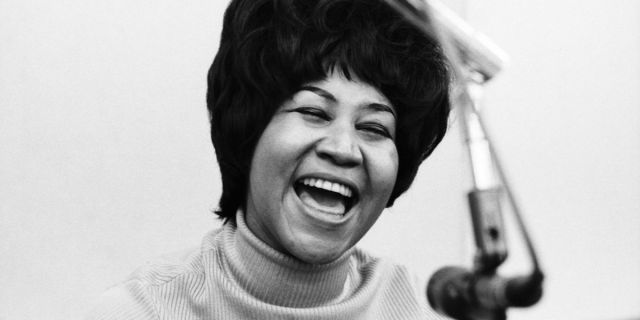 I first heard Aretha Franklin when I was 11 years old, listening clandestinely to my small transistor radio tuned to WABC (or was it WMCA?), which was tucked under my pillow as I was supposed to be sleeping. Like my mother I was an insomniac, though unlike my mother I would eventually outgrow it. We had strict bedtimes and it always took me several hours to fall asleep, so I would put my radio under the pillow and listen to music, or to Jean Shepherd tell stories on WOR.
 Given the casting of Hugh Bonneville in the role of Lord Louis “Dickie” Mountbatten, the last British viceroy of India before independence, it’s easy to guess that the producers wanted direct comparisons between this dramatic recreation of the summer of 1947 and Downton Abbey, though it more rightly resembles Upstairs/Downstairs in its contrast between the political machinations of the British overlords and the romantic goings-on among the servants in the titular establishment.
 Christopher McQuarrie returns to direct the sixth installment of Tom Cruise’s vanity project, which he has every right to be proud of, and not just because it continuously breaks box office records internationally. For what it’s worth, the Mission: Impossible franchise is the most seaworthy of action vessels, but that reliability is only partly due to its watertight premise based on the famous 1960s TV series about a secret organization that tackles cases too difficult for the usual U.S. government intelligence bodies. What generally keeps the series afloat is Cruise’s unflappable penchant for his own impossible stunts and scripts that are not built to be taken seriously by anyone.
 Though Francois Ozon has made an enviable reputation for himself by being both prolific and consistently engaging, his best movies are throwbacks to enduring styles that have never really benefited from being updated. Double Lover falls into this category. It’s the kind of psychological thriller that Hitchcock not only invented in cinematic terms but seemed to have perfected before anyone else tried to recreate it. Though relatively free of shock value and suspense, the movie nevertheless casts a queasy spell that lasts well after the lights go up.
 Here’s
 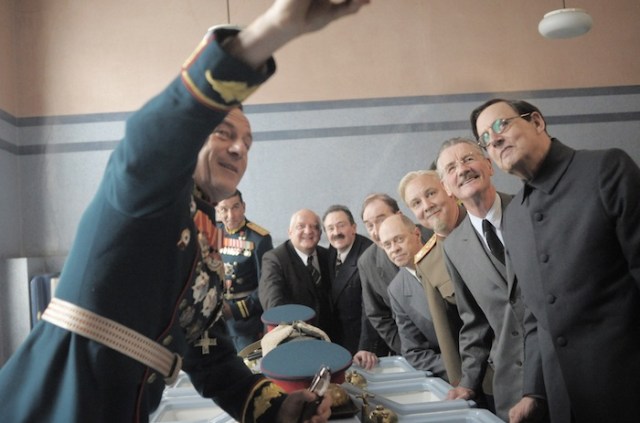 As he proved with the 2009 political satire, In the Loop, director Armando Iannucci is not afraid to delve deep into the curdled souls of ambitious men and women for comedy that smarts more than it entertains. He is the reason a wholly offensive TV show like Veep works as well as it does, and his reimagination of the inner-Kremlin machinations following the sudden death of Joseph Stalin in 1953 is funny for the same wincing reasons, but it offers something even more subversive: History you can use and laugh at at the same time.
 Though Pixar and Marvel are two separate production companies, both are distributed by Disney, a context that becomes problematic as the sequel to one of the best Pixar movies ever begins. The superhero Parr family battles a villain called the Underminer in Metroville and in the process destroys the city in order to save it. That is the same plot device that activated one of the Avengers movies, so you accept that fact as either a comment on Marvel or a shameless simulation of the studio style.

