Media Mix, June 25, 2017

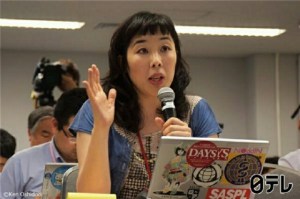
Isoko Mochizuki

Here’s this week’s Media Mix about access journalism in Japan. In the column I try to make the case that most mainstream reporting in Japan is about gaining and maintaining access to people in power, which necessitates a cautious approach to what is actually reported, since any information that compromises that access is discouraged. At the end of the piece I mention the Tokyo Shimbun reporter Isoko Mochizuki, the exception that proves the rule. Mochizuki is a dogged interviewer, and her line of inquiry at a recent cabinet news conference assured that she wouldn’t be invited back to that particular venue again. The point was that she isn’t a member of the cabinet press club, so she had nothing to lose by pissing off Chief Cabinet Secretary Yoshihide Suga, which just goes to show that the rest of the press club (or, at least, those who are called upon to ask questions there) falls into line when it comes to the government’s wishes.

Of course, real journalsim means being a relentless asker of questions, regardless of how much it annoys the interlocutor. Perhaps not surprisingly, Mochizuki has suddenly become a star, at least within the media sphere. (A lot of Japanese reporters tweeted photos of her when she unexpectedly showed up at former vice education minister Kihei Maekawa’s news conference on June 23) She’s been interviewed and profiled by various publications and websites since her cabinet news conference “performance” for essentially doing the job she’s supposed to do. By rights, that performance shouldn’t have been extraordinary, but everyone is treating her like some kind of superhero. As mentioned in the column, Mochizuki has been working for Tokyo Shimbun since 2000, mainly as a reporter-at-large, her main beats being the prosecutors office and crime. She’s also written a very well-regarded book on arms exports and did an expose in 2004 of improper political donations made by the Japan Dentists Association. What this wide range of interests shows is that Mochizuki doesn’t get stuck in one area where she could form associations that might compromise her investigations. Her professional attitude proves that the normal mass media protocol of assigning journalists to fixed venues, such as this press club or that one, makes for bad journalism. Beyond that, Mochizuki’s performance also showed how much ground a reporter can cover when she does her homework. She had obviously studied the Kake scandal in detail and her questions to Suga were sincere attempts to fill in the holes in her understanding. They were not the rote queries that most press club reporters pose. They had genuine purpose.
Posted in Media | Tagged , , | Leave a comment

Media Mix, June 11, 2017

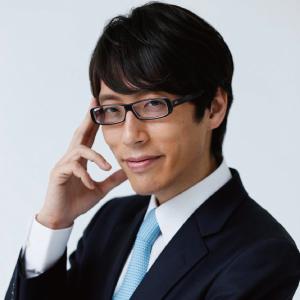
Tsuneyasu Takeda

Here’s this week’s Media Mix about the press’s take on the female imperial succession issue. As pointed out in the column, there are people involved in the discussion who think one solution to the problem of not enough imperial family members to carry out “tasks” is to reinstate branches that were dropped after World War II. These forces don’t address the notion that the work of the imperial family is basically a postwar invention; that when the emperor was a god he didn’t bother going out into the world for purposes of diplomacy, offering solace to his subjects, etc. Nevertheless, these forces are indubitably conservative. Who else would countenance, in the 21st century, the idea that people within the same extended family should intermarry? Because that’s what it comes down to. These forces want to have their mochi and eat it too: more imperial “civil servants” and a pure blood line.

One of the more vocal advocates of this position literally has skin in the game. Tsuneyasu Takeda is a great-great grandchild of Emperor Meiji and, interestingly enough, a constitutional scholar. He has also managed to spin these twin circumstances into a lucrative side career as a pundit and TV personality. Takeda’s family, which, apropos this week’s column, was descended from the wife of Emperor Meiji, meaning the female line of the prewar imperial family, (note, however, that Emperor Taisho, who succeeded Meiji, was the issue of a concubine) was one of those branches banned by GHQ in 1947, so if in the very unlikely chance that these branches are reinstated in order to boost imperial heirs, he would be back in the palace, so to speak, something he has implied he would like very much. But in a real sense, he’s already there. He wouldn’t be in the public eye if he were merely a constitutional scholar. It’s his connection with the old imperial family that has made him a star. He’s an important member of the Japan Olympic Committee because his father was an important member of the Japan Olympic Committee owing to his lineage. The overriding consideration for public exposure in Japan remains blood, whether the family is/was royalty in fact or in metaphor (show business, sports, politics). This also means that Takeda’s opinions about the imperial succession issue have more weight, and he’s said that the only reason the public cares about the abdication law is because they like the emperor as a person. If he were a real emperor, meaning someone who didn’t have a public profile but simply lingered behind the scenes in a purely ceremonial capacity, the people’s opinion wouldn’t matter, because there wouldn’t be any. And this is the real challenge of any “symbolic emperor” from now on: He has to follow the current emperor’s precedent of being a likable character. Regardless of what conservative groups like Nippon Kaigi want–and they would like nothing better than to revise the Constitution to revert the emperor’s status to what it was before the war–Japan is now saddled with a people’s emperor, someone who is good at gaming the media and projecting an image of a nice guy. Just in that regard, Takeda himself would be disqualified, because for all his fame as someone whose ancestors were in the imperial family, he comes off as something of a jerk on TV–smug, clueless, defensive. What self-respecting female member of the imperial family would want to marry him?

Posted in Media | Tagged , , | Leave a comment

June 2017 albums

Here are the album reviews I wrote for the June issue of EL Magazine, which was distributed in Tokyo last week.

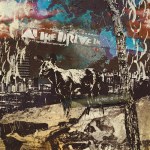
In-ter a-li-a
-At the Drive In (Rise/Hostess)
Slowdive
(Dead Oceans/Hostess)
It probably says more about At the Drive In’s place in post-millennial music that no one really compares them to the follow-up band the two main members—vocalist Cedric Bixler-Zavala and guitarist Omar Rodriguez-Lopez—dissolved in 2013. Of course, Mars Volta was a progressive rock band whereas ATDI was closer to punk, but they had much more in common than people gave them credit for, in particular a manic, deliberate energy that felt unique. Thirteen years after their last album, ADTI might appear to be taking up exactly where they left off, but only if you ignore Mars Volta, which, for all their operatic excess, really were progressive. In-ter a-li-a isn’t. It revives the gymnastic excitement of the group’s peerless interactivity but sounds even more dated than 90s pop punk: That train left the station for the last time. It’s also very much Bixler-Zavala’s album whereas their masterpiece, Relationship of Command, was a thoroughly group effort. The lyrics, which reference up-to-the-minute issues such as the Korean standoff and that Oklahoma police officer who raped all those women, are meant to mean something and as such are more distracting than enlightening, because whatever talents Bixler-Zavala has demonstrated as a performer he’s famous for his incoherence. It’s what made ADTI exciting in their day. For sure, the guitars still sound like God is tuning them, and the funky undercurrents pulse like crazy, but there’s a feeling of playing it safe, as if this is what’s expected of them and they’re now older, wiser, and more receptive to what their fans want. Which is sort of a shame, because I was finally getting to like what Mars Volta was trying to do. The British shoegaze band, Slowdive, has taken even longer to follow up their last album—22 years—and their self-titled return to recording actually sounds as if they’ve been spending all that time wondering how to approach it. Like In-ter a-li-a, Slowdive sounds methodical, calculated, but for a band that is mostly about textures and dynamic subtleties that’s the way it should be. Shoegaze is by definition not very spontaneous. It’s thoughtful. It’s also pop by any other name, and I would like to think that, unlike Kevin Shields, who also spent an inordinate amount of time coming up with a successor to Loveless, the members of Slowdive spent their long summer vacation working on tunes, because that’s what immediately grabs you, not the textures or the dynamics. The guitar work, especially on the single, “Star Roving,” is riff rock at its most potent in 2017, meaning music made by adults who knew what they liked when they were younger and are still able to recall those feelings and translate them into affecting music. What’s surprising is that they’ve been able to keep the polish without losing the personality. At the Drive In would have benefited from such restraint, though it’s so contrary to their form. Continue reading

Posted in Music | Tagged , , , , , , , | Leave a comment

June 2017 movies

Here are the movie reviews I wrote for the June issue of EL Magazine, which was distributed in Tokyo last week.

Afterimage
Andrzej Wajda’s final movie is a fitting study of an artist under pressure, a role Wajda himself has played throughout his career, often in a self-conscious way. The subject is Wladyslaw Strzeminski (Boguslaw Linda), a Polish avant garde painter who lost an arm and a leg in WWI and was trained in the Soviet Union. By the end of WWII he is a respected artist whose work is admired by the cognoscenti and whose theories are worshipped by his students at the School of Visual Arts in Lodz. But in the postwar chill, as Stalin’s grip on Eastern Europe becomes tighter, the authorities no longer have any use for abstract art, and demand only Social Realism. Strzeminski refuses to recant his theories or his methods, and as a result loses his job and his access to supplies. He died starving and homeless. Though this sort of tragedy is right up Wajda’s alley, there’s not a lot of dramatic balance to the story. The peripheral characters adhere to types that do little to engage our sympathies, either for Strzeminski or his plight, as dire as it is. In Polish. (photo: Akson Studio Sp. z.o.o, Telewijza Polska S.A. EC1-Lodz Miasto Kultury, Narodowy Intyutut Audiowizualny, Festiwal Filmowy Camerimage Fundacja Tumult) Continue reading

Posted in Movies | Tagged , , , , , , , , , , , | Leave a comment

“From the Journals of Jean Seberg” and “Jean Seberg: American Actress,” Nov. 1999

I recently realized that almost all of the movie reviews I wrote for the Asahi Shimbun in the 90s and early 00s are not available on the Internet, so I will remedy that by slowly, methodically posting them here on my blog. I have not edited these, so all the prejudices and dumb assessments remain. Enjoy. Continue reading

Posted in Movies | Tagged , | Leave a comment

Media Mix, April 23, 2017

Here’s this week’s Media Mix, which is about the documentary, Nihon to Saisei, on the feasability of renewable energy in Japan. As I said in the column, the movie is a polemic, strongly in favor of renewables, that does not make a big deal out of the dangers associated with nuclear power. Instead, the filmmakers make their case that renewables are more practical and economical than either nuclear or thermal power using fossil fuels. The main obstacle is the will to make renewables work on a large scale, something the major regional utilities and their allies in the government and business are against. The examples the movie presents for success with renewables overseas all involve local governments, because renewables work best on the local level. The major power companies in Japan are invested in centralized power sources, since that gives them ultimate control over production and transmission. Once that control is dispersed, they no longer have a reason to exist, which is why, according to the film, they are so stingy about allowing new power companies use of their power lines.

But another way that the utilities, and major companies in general, retain their hold on the economic narrative is by pushing new technologies that are presented as being vanguard. By rights, renewables should be presented as cutting edge, but nuclear fission has been the “future power source” for so long it’s become a cliche, even as most countries in the world have abandoned it as such. The government and the media, according to the film, maintain a false belief that renewables are never going to be able to satisfy all of Japan’s needs, a story that denies renewables’ status as a vanguard technology. The problem for the utilities is that it isn’t a technology that will make them a lot of money. An apt analogy would be with the maglev train now being built between Tokyo and Nagoya. When it is finished it will shorten the time it takes to travel between the two cities, but considering the enormous cost, is it really worth it? Those who support the maglev point to its status as a future-oriented technology, and while it is impressive in that regard, it isn’t really practical for the use it’s being built for. JR Tokai can never hope to recoup the money it (and the government) will spend on it because not enough people will patronize it for various reasons (the price of tickets compared to conventional bullet trains; the lack of novelty effect, since 80 percent is underground). In another context–say, between Dallas and Houston, which is flat and mostly uninhabited–the maglev could work very well. But in Japan it is being built simply because it is cutting edge, not because it is needed. A similar sort of thinking is behind the government’s rationalization for keeping nuclear power, and the media goes along with it.

Posted in Media | Tagged , | Leave a comment

April 2017 albums

Here are the album reviews I wrote for the April issue of EL Magazine, which was distributed in Tokyo last month.

SweetSexySavage
-Kehlani (Atlantic/Warner)
Ensen
-Emel (Partisan/Hostess)
The question posed by Kehlani Parrish is, How could someone so young sound so experienced? Though SweetSexySavage is her major label debut and, as such, considered the point from which we will take her seriously, she’s been around the block a number of times and on each revolution learned something new and valuable. Her reportedly bitter experience on “America’s Got Talent” gave her some idea of how the business works. The subsequent mixtape and indie album gave her a chance to explore her sound on record and learn how to write. Though the new album has its slickness issues and occasionally veers toward the trite side of female-empowered R&B, the voice is amazing. Conversational and musical at the same time, youthful in timbre but mature in tone, Kehlani’s instrument is one of the biggest stories in pop music at the moment, though it wouldn’t mean as much if what came out of her mouth weren’t so penetrating. What made the classic soul singers great was their ability to channel feelings directly, but modern R&B takes that ability and turns it around: it’s the calculation that first strikes you. Kehlani turns it back around. Hooks abound, but the deep appeal of the album is the way it conveys specific emotional situations. “Are you down to be a distraction?” she asks, and then wonders what she might think of the guy years down the road. The production holds back just enough to give her room, and she controls everything—the rhythm of the song, the temperature of the arrangement—just with her singing. Not since Mary J. Blige has a new R&B vocalist seemed so on top of her material. Emel Mathlouthi has been on top of her material for more than a decade, which is essential since she’s from Tunisia, where women aren’t often allowed to be on top of anything. Probably by necessity she’s known as a protest singer, and her songs were banned on the radio until 2010. During the Arab Spring, her work took on new meaning, and she was asked to sing at a ceremony for the Nobel Peace Prize in Oslo last year. Working with Icelandic producer Valgeir Sigurosson, she finally breaks the international market with Ensen, a canny mix of native tropes and towering beats, but like Kehlani it’s that distinctive voice, soft but insistent, that makes the music so immediately arresting. Her Wikipedia page lists a dozen or so Western influences, from Baez to Zeppelin to Fuck Buttons, and, actually, you can hear them all on this album, which refigures the natural propulsion of North African music for a rock audience. Sigurosson separates the native instruments and stresses their distinctive qualities in contrast to one another, vivifying the drama inherent in the music and the vocals. Though it might lose the tribal element so vital to Middle Eastern music, it works as both pop and polemic. Continue reading

Posted in Music | Tagged , , , , , , , , , | Leave a comment

Media Mix, April 2, 2017

Yasunori Kagoike

Here is this week’s Media Mix, which is about the unofficial “Nippon Sugoi!” campaign. “Nippon Sugoi!” is usually translated as “Great Japan!”, though I think “Amazing Japan!” is closer to the vernacular meaning, since “sugoi!” is so commonly used as an exclamation of pleasant surprise. As I wrote the column over the last week, a few other English language writers covered the same or similar topics, especially with regard to sudden media attention to the concept of sontaku, which is explained near the end of the article. Because of Kagoike’s use of the word the Japanese press practically fell over themselves trying to explain its significance, and I thought it was interesting while watching the feed of Kagoike’s FCCJ news conference that several reporters didn’t seem to grasp what he was suggesting about the huge discount he received for the land he bought. So Tetsuo Jimbo’s comments were useful in that regard, but a lot of commentators have made the point that sontaku isn’t unique to Japan, that underlings all over the world constantly try to second guess their superiors in order to curry favor with them. And while that’s true, I think the Japanese version is special in that it’s been systematized, especially by the bureaucracy, as Gohara points out in his blog post. The most obvious form of this systematization, however, is self-restraint on the part of the media themselves. Much has been made in recent years of how the press has muffled itself so as not to incur the wrath of the powers-that-be, who it is assumed will retaliate for any perceived reportorial slight by withholding access. They do this without any actual threat being held over their heads, and thus the act of self-restraint, at first reflexive, becomes part of the business model.

Posted in Media | Tagged , | Leave a comment

April 2017 movies

Here are the movie reviews I wrote for the April issue of EL Magazine, which was distributed in Tokyo on March 25.

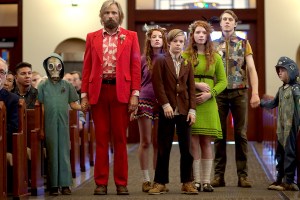
Captain Fantastic
Road trips vivify the great American indie movie, and while Matt Ross’s feature is light as a travelogue, it successfully shows the U.S. in all its ambivalence. Ben (Viggo Mortensen) and his wife are raising their six children off the grid in the mountains of the Pacific Northwest and while visiting her parents to treat her depression she kills herself. Ben packs the brood into a refurbished school bus and heads to New Mexico for the funeral, to which his father-in-law (Frank Langella) has not invited them. Along the way we learn what kind of person Ben is—not just a radical leftist, but an intelligent man with a chip on his shoulder that he attempts to hoist onto his oldest son (George McKay), who wants a “normal” life. The kids know more about Plato and the Bill of Rights than anyone else their age, but these gifts are presented as blunt objects to pound the bourgeoisie, and while there’s an honest appeal to Mortensen’s performance, the character and the situations don’t add up to anything believable or affecting. (photo: Captain Fantastic Productions LLC) Continue reading

Posted in Movies | Tagged , , , , , , , , , , , , , , , , , | 4 Comments

Media Mix, March 19, 2017

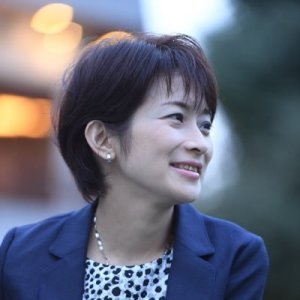
Mako Oshidori

Here’s this week’s Media Mix about the press’s inability—or unwillingness—to question the government’s rush to repopulate the evacuation zone around the Fukushima No. 1 nuclear facility. Of the examples I gave of media who have questioned this move, Mako Oshidori’s peculiar means of going about her task relates to the larger picture of media complacency in Japan, and it’s interesting that so much subtext was evident on the NTV documentary. NTV, it should be noted, is part of the Yomiuri media juggernaut, one of Japan’s more conservative entities, but “NNN Document” has always had a reputation for independence, mainly because each episode is produced by a different independent production company. NTV, I presume, just buys them without changing them too much. Since they tend to be broadcast either in the middle of the night on the main terrestrial channels, or on NTV’s satellite station, they don’t receive as much attention as NTV’s regular news.

So I was pleasantly surprised at how openly Mako was able to talk about the mainstream media. Her attitude, which informs her knockabout comedy style, is casual to a fault, so she’s just talking off the top of her head when she describes a director for TV Asahi (now dead, apparently) coming to her and confessing that his news show purposely did not air footage of people fleeing Tokyo after the Fukushima meltdown despite the fact that they had sent camera crews to main train stations and airports to film such movements. He told her that this sort of neglect was a “cross the Japanese media would have to bear forever,” which sounds a bit melodramatic but nevertheless emphasizes the notion that reporters and editors knew what was required of them as journalists. Mako also pointed out that whenever she attended press conferences with members of the government or Tepco, she could easily tell which reporters were following the wishes of the authorities and which ones weren’t, but that such distinctions were lost on TV or in the newspapers. She realized that so many reporters would habitually ask unimportant or redundant questions so that they could curry favor with the powers-that-be and thus could always have access to them. Mako knew that by continually asking tough questions she would annoy those powers-that-be and probably make herself persona non grata. And that’s basically what happened, but since she was so persistent she gained something through the sheer quantity of her reporting. Whatever else the NTV documentary about the Oshidoris revealed, these insights into how the mainstream media really work were invaluable.

Posted in Media | Tagged , | Leave a comment