Media Mix, Oct. 30, 2016

Road-building in South Sudan

Road-building in South Sudan

Here’s this week’s Media Mix about the status of Japan’s Self-Defense Forces when they’re dispatched overseas to participate in peacekeeping missions. What’s odd about the obfuscation carried out by the government is that, by all accounts, the public seems to want the SDF to take on a more proactive role in matters like this. The ruling party definitely wants the SDF to someday become a real standing army but they never talk openly about it because they think the public isn’t ready for it. For that reason they want to amend the Constitution first in order to allow for a broader range of military activities, and the media puts this across as an attempt to do an end-run around public opinion. But while it’s not completely clear how much the average Japanese person will accept in terms of military deployment, some recent surveys have shown that a good portion of respondents say they want the SDF to carry out rescue missions abroad, and would accept the use of force in such cases, especially if Japanese people are the ones being rescued. As pointed out in the column, South Sudan’s situation is special in that even if the SDF already were authorized to carry out such rescues they would be violating some laws if they found themselves in conflict with government forces, who seem to be responsible for a good part of the violence in the country targeting civilians. But the point is that the public may not be as squeamish about the matter as the government thinks it is.

Kenji Isezaki, the former UN official mentioned in the column, is perhaps the most cogent media personality voicing this sentiment. He is all for amending the Constitution to clarify the SDF’s role and even expanding it to cover overseas postings, though mainly it has to do with legally limiting the government’s options with regard to waging war. He has also said a number of times that he believes the government would like nothing better than for an SDF member to be killed in the line of duty, since that would galvanize the Japanese public, who would then call for more action with regards to allowing the SDF leeway to defend itself and be more aggressive when it is dispatched to conflict areas–something they aren’t allowed to do now. That may sound cynical and macabre, but the government has so far only shown that they’d prefer moving forward in their schemes by moving sideways in their methodology.

Posted in Media | Tagged , | Leave a comment

Media Mix, Oct. 23, 2016

Fine Line Media

Fine Line Media

Here’s this week’s Media Mix about the new documentary, A Whale of a Tale, which looks at the people of Taiji, Wakayama Prefecture, who were profiled in the Oscar-winning documentary, The Cove. For the record, I liked The Cove, though perhaps more as a movie than as an exercise in persuasion. I didn’t need much persuasion to think that dolphins shouldn’t be hacked to death, even for food, but what I found interesting about the film was its atmosphere of intrigue, of a secret that was being kept from the world and the filmmakers’ dedication to getting it out there at any cost.

A Whale of a Tale doesn’t necessarily contradict that impression, but it does provide enough of a corrective response to make me think that the makers of The Cove edited their material in such a way as to demonize the people of Taiji. The director of Whale, Megumi Sasaki, thought it necessary to give them a chance to give their side of the story, and in a culturally-intensive controversy like this one they probably aren’t going to persuade anyone who’s already put off by the dolphin cull that what they’re doing is justifiable from any standpoint. But it does at least make them look like human beings.

However, Whale did bring up one aspect of the issue, albeit very briefly, that always bothered me about The Cove, namely it’s use of the mercury content of dolphin meat to make its case against the killing. To me, the power of The Cove‘s argument was inherent in its footage of the drive hunt, and the charge that Taiji was feeding its residents meat tainted with mercury seemed beside the point. Though it could have been used as a powerful footnote, instead it was relegated to its own debate point. It was as if the filmmakers were saying, “If you don’t think killing dolphins for any reason is immoral, then what about this poison thing? Isn’t that enough of a reason to ban drive hunts?” Mercury poisoning is a larger issue that deserves its own investigation, and making it a corollary to a thesis that is mostly moral/emotional in impact seemed a bit desperate.

Whale makes the case that while researchers have found above-normal levels of mercury in the meat of dolphins and whales sold as food in Taiji (and, presumably, elsewhere in Japan), there is absolutely no evidence that anyone in the town has suffered health problems because of it. In fact, as one researcher says (and, in order to point up his objectivity, the doc clearly states that he doesn’t eat whale or dolphin because he just doesn’t like it), life expectancy of residents of Taiji tends to be longer than that of Japanese people in general, and Japanese people are famous for having the longest life expectancy in the world. As with the issue of killing dolphins, this added information about mercury is not likely to convince people who already think any chemical contamination is bad for you, but it does put things in a clearer perspective.

Posted in Media | Tagged , , | 1 Comment

“Ken Park,” September 2003

I recently realized that almost all of the music reviews I wrote for the Japan Times in the 90s and the movie reviews I wrote for the Asahi Shimbun during the same decade are not available on the Internet, so I will remedy that by slowly, methodically posting them here on my blog. I have not edited these, so all the prejudices and dumb assessments remain. Enjoy. Continue reading

Posted in Movies | Tagged , | Leave a comment

October 2016 albums

Here are the album reviews for the October issue of EL Magazine, which was distributed in Tokyo at the end of September.

Group Love - November detail 1 008bastille-wild-worldBig Mess
-Grouplove (Atlantic/Warner)
Wild World
-Bastille (Virgin/Universal)
The title of Grouplove’s third album neatly sums up their appeal, though it’s surprising the record still doesn’t include the song, even as a bonus track, they wrote for the Netflix animated series BoJack Horseman, which characterizes their sound almost better than anything else they’ve done: fragile, hazy, just short of hysterical. Big Mess isn’t really that messy. The production is the cleanest and brightest it’s ever been and the songs are distinguished by their breezy pop skills. Married vocalists Christian Zucconi and Hannah Hooper make an attempt to complement each other, whereas in the past they squawked and hooted without much concern about what was happening around them. A little of that sort of thing went a long way, and this new attention to rigor is probably the most disarmingly positive thing about the album. The craziness is reined in just enough to make it comprehensible. In particular, big, booming songs like “Do You Love Someone” and “Good Morning” qualify as dance rock of the highest quality in that they’re designed to get everyone off, not just those who happen to be on the same narrow wavelength as Zucconi and Hooper. Twenty years ago you’d categorize this as indie pop, but Grouplove has never released an LP on an indie label, and one of their members (also their producer) is the son of a member of Yes. What was once indie is now mainstream in a big way, and what’s charming about Grouplove is how natural they sound playing outside the sandbox. They’re the most unmediated rock group recording for a major label. “Unmediated” is the last word you’d use to describe the product of the London-based synth-rock group Bastille, whose second album is already a certified global smash. They’re as calculated as you would imagine for a band whose touchstones are 80s stadium rock, but they do have something in common with the L.A. group reviewed above: hooks up the wazoo. Hooks are always a good thing, but in a year when Beatlemania is again a commercial imperative, it’s getting harder to find any you haven’t heard before. Three years ago, when Bastille had a hit with “Pompeii,” you could almost feel the oxygen get sucked out of the pop charts. No one could touch that chorus for pure appeal except Carly Rae Jepsen, though she existed on an entirely different demographic plane. Wild World doesn’t contain anything so entrancing, but it does open the group’s sonic folder without giving up the big gestures. As far as mediation goes, it seems obvious that slow numbers like “Two Evils” were encouraged by bizzer types because that’s how bizzer types envision albums, but the group doesn’t sound like their hearts are in it, or, at least, not as into it as they are into expanding on the promise of Coldplay. Yeah, not much of an ambition, but once you’ve sucked the oxygen out of the room, you have to refill it with something. Continue reading

Posted in Music | Tagged , , , , , , , , , , | Leave a comment

Media Mix, Oct. 2, 2016

ce700b52Here’s this week’s Media Mix about the coverage of a government survey on sex, marriage, and procreation. The main point of the column is that, contrary to the media’s interpretation of the study, sexual activity probably hasn’t changed all that much in the past 30 years, though sexual attitudes have. It should be stressed, however, that this change in attitude seems more pronounced among men than among women. The main bone of contention that social critic Maki Fukasawa brings up is the definition of kosai aite, the “partner” that one “interacts with,” presumably in a romantic or sexual manner, though the survey question isn’t clear about it. Thirty years ago, men may have checked the box for “friend” next to the question about who was their “partner” (multiple answers are allowed). Though I didn’t mention it in the column, this point caused more than a little consternation among the people in the studio when Fukasawa explained it on the Bunka Hoso program “Golden Radio.” Fellow writer and TV personality Sawako Agawa couldn’t quite get her head around it, and initially argued that maybe the confusion was different from that which Fukasawa had delineated: that maybe the men taking the survey thought “kosai” wasn’t necessarily limited to sex but could also mean “interaction” of a more general type, like, say, drinking buddies.

It took a few minutes, but Fukasawa eventually made her point more understandable, and mostly by describing her experiences. “Thirty years ago I had male friends who were not lovers,” she said, but nevertheless thought this feeling was not reciprocal. Though she didn’t elaborate, the implication is that her male friends still looked upon her in terms of her sexual desirability. But if they were friends, it was because those men—who, according to the portion of the survey she was discussing, were aged 18-34—had decided she wasn’t worth pursuing as a possible sexual partner. Nowadays, however, men in that age group do have female friends whom they look upon only as friends. As a way of illustrating this contrast, she pointed out that she and her female acquaintances never went drinking with men in the 80s unless it was on a date, but now men and women go out drinking together all the time with no overt or even covert purpose of hooking up. She also thinks that Japan in the late 80s—the notoriously swinging “bubble years”—gave rise to a kind of over-confidence that young men expressed sexually, even if they weren’t getting any. In other words, the men who answered the survey questions may have overstated their sexual experience, which is perfectly possible but very difficult to prove at this late date.

Posted in Media | Tagged , | Leave a comment

October 2016 movies

Here are the movies I reviewed for the October issue of EL Magazine, which was distributed in Tokyo last week.

THE BFGThe BFG
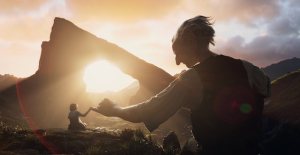
The title of this Spielberg-blessed fantasy will obviously provide hours of off-color entertainment for nasty-minded adolescents, but it stands for “big friendly giant,” a phrase whose cheerful tone belies the kind of dark humor favored by its author, Roald Dahl. Suffice it to say that it was obviously penned in a spirit of irony, though with Spielberg at the controls the sentimentality is bound to be more pronounced. In the land where the BFG (Mark Rylance) resides, his gentler nature is ridiculed by other giants who aren’t so friendly. They’re, in fact, bigger, stronger, and generally more unpleasant in the way bullies tend to be. They also eat people, which they refer to as “human beans.” The BFG appears to be a prototypical vegan. He’s also something of a voyeur, and the most magical scene comes right at the beginning, when we see him stalking the night streets of London and peering in windows, listening to children’s heartbeats and sucking out their dreams for future uses. When human contact seems imminent, he effortlessly blends into the shadows and, despite his size, disappears from sight. One night, Sophie (Ruby Barnhill), an orphan living in a dormitory, can’t sleep and wanders the halls of the orphanage. She spots the BFG from her balcony, and, in a panic, he scoops her up and brings her back to his lair in the land of the giants. Spielberg’s peculiar genius is realized in such scenes, a combination of borderline terror and magic wonder at the effortless way he presents this abduction. It doesn’t take long, however, for Sophie to figure out she’s not in danger, and their relationship warms to a glowing ember of trust, even love. Though much is made of the BFG’s simple diet of snozzberries and his weird command of English (“Often I is left instead of right”), there isn’t much in the way of plot development to this long establishing passage, and the viewer gets the feeling that Spielberg is less interested in Dahl’s story than he is in luxuriating in a world he fell for thirty years ago, when the book was first published. Eventually, however, action calls, and the BFG’s tormentors show up to sniff out Sophie, and at about this point Spielberg loses the thread. Though the action set pieces are thrilling and comprehensible, their relationship to the concluding situation—a meeting with the queen to destroy the human-gobbling giants once and for all—feels as if it were imported from a different movie. One can imagine Dahl getting off on the spectacle of the queen of England battling monsters, but the way it’s handled here is more ludicrous than charming. Speilberg should have stayed in Giant Country. (photo: Storyteller Distribution Co. LLC and Disney Enterprises) Continue reading

Posted in Movies | Tagged , , , , , , , , , , , , , , , | Leave a comment

Aerosmith, Tokyo Dome, March 1998

I recently realized that almost all of the music reviews I wrote for the Japan Times in the 90s and the movie reviews I wrote for the Asahi Shimbun during the same decade are not available on the Internet, so I will remedy that by slowly, methodically posting them here on my blog. I have not edited these, so all the prejudices and dumb assessments remain. Enjoy. Continue reading

Posted in Music | Tagged , , , | Leave a comment

Media Mix, Sept. 4, 2016

Hiroshi Kume

Hiroshi Kume

Here’s this week’s Media Mix about Rokusuke Ei and Kyosen Ohashi, both of whom died in July. The column is mainly about their pacifist leanings owing to the fact that they lived through the war, but in terms of their impact as broadcasters, an interview with veteran announcer Hiroshi Kume, also part of that cited Asahi Shimbun tribute series to Ei, was particularly enlightening.

Kume was hired by TBS as an announcer in 1967, and was later assigned to Ei’s radio show, “Doyo Wide,” which was broadcast live every Saturday from 9 in the morning to 5 in the afternoon. Kume was a field reporter, providing dispatches from the street. He got on well with Ei, who vouched for him and helped him get jobs within the company as an emcee for various variety shows. His big break was “The Best Ten,” a music program that made him a star. Then, in 1985, after becoming an independent contractor, he started his ground-breaking stint as the host of “News Station” on TV Asahi. Whether you appreciate Kume’s motor-mouthed, opinionated interview style, “News Station” revolutionized Japanese TV news by injecting the personalities of its reporters and news readers into the mix. Kume said he got the idea from “11 PM,” Ohashi’s equally ground-breaking late night talk show that premiered in the 1960s and lasted through the end of the 80s. Continue reading

Posted in Media | Tagged , , , | Leave a comment

Media Mix, Aug. 28, 2016

108205_1Here’s this week’s Media Mix about the fate of Japanese zoos. In the piece I didn’t talk very much about the media’s role in the way zoos are presented to and perceived by the public, mainly because we’ve covered that angle several times before, but it’s important to point out that the kind of attitude characterized by people’s open affection for Hanako while denying her terrible situation is reinforced by media stories about how effective animals are in “healing” the troubled souls of humans. It’s also important to point out that this attitude is by no means shared by all Japanese people–a good portion of the individuals who signed the petition to send Hanako back to Thailand were Japanese. The point is that because the media tends to be purposely even-handed in its coverage, whatever realities they uncover with regards to the inherent cruelties of captivity are more than offset by the delight that otherwise unknowing “average people” derive from just observing wild animals in the flesh. The articles we cited in the column all contained hard truths about the substandard conditions at most public zoos (the ones with better conditions are obviously few and far between), but also balancing notes about things that are meant to be heartwarming. The Yahoo story about the small zoo in Komoro, Nagano Prefecture, also mentioned a popular show feature wherein its penguins are lined up along a water slide to feed on mackerel that goes zipping by. Observers laugh and cheer, but objectively speaking the penguins look pretty desperate trying to grab a bite. The article made the show feature out to be an act of ingenuity since it attracted more visitors without adding anything to the zoo’s budget.

This situation has less to do with that stereotyped idea of the Japanese affection for “cuteness” than it does with a reluctance to face up to reality. The people who still want to be entertained by zoos have never had their assumptions challenged by the media and educational institutions. As mentioned in the column, sometimes this has to do with business–for-profit zoos, aquariums, and marine parks have to make a living. But that sort of justification–though unsupportable to many people–doesn’t hold for public zoos. There, the only explanation is that the zoo was conceived as a public good, a recreational venue for everyone. That idea automatically implies that the animals are there for our pleasure, and so while they may be living in situations that are unnatural, even miserable, it’s seen as a worthy sort of sacrifice.

Posted in Media | Tagged , | Leave a comment

August 2016 albums

Here are the album reviews I wrote for the August issue of EL Magazine, which was distributed in Tokyo July 25.

avalanchesaphex16Wildflower
-The Avalanches (Universal)
Cheetah EP
-Aphex Twin (Warp/Beat)
The Avalanches’ first and, until last week, only album has become a legendary recording not so much because of its quality or popularity but because it perfectly encapsulates an era in music that no longer seems relevant. Made up of hundreds of samples that were lovingly assembled into “tracks” that could pass as distinct songs but were best appreciated as one long DJ session, Since I Left You was certainly a bear to create, which probably explains why it took the group sixteen years to produce a followup—in addition to finding and editing the tracks they also had to get permission to use them. Some people complain that you can’t rightfully call the Avalanches musicians because they didn’t play any music, which is a fair charge but beside the point, because if you listen and enjoy, it’s simply a direct extension of the Avalanches’ own experience with these song fragments. They just decided to do something creative with that experience. Wildflower has something more, though: numerous guest vocalists who sing above the samples, as well as added orchestrations, thus giving the album an extra layer of originality. Unlike real DJ sets, the Avalanches aren’t overly concerned with the dance floor—there’s little in the way of break beats or tension-and-release. For the most part they’re into summery pop, and while the tempos change from time to time, there’s not much that could be called dramatic. The hip-hop component, though not overwhelming, is more apparent, and the group seems to have placed special emphasis on contrasting indie pop with rap. As collage music goes it isn’t as adventurous as Since I Left You simply because it’s impossible to be that adventurous when everyone can do this sort of thing without spending a lot of money. So half the enjoyment of Wildflower is in the impression you get: These guys work hard. Richard D. James is one of those DJ/techno artists who tries to make it all seem like not much work; meaning if you like what he does you chalk it up to talent. But having spent more than a decade away from the Aphex Twin moniker and its attendant art-dance music, he seems to have retreated to zero. His latest is a long EP that explores beats and melody in a fairly straightforward way without spoiling the danceability of the tracks. In fact, rather than improvise harmonically, he fiddles with the tempos in small ways to vary their swing and propulsive force. As usual, his track titles are completely functional. Several include the word “Cheetah,” which reportedly is a kind of electronic instrument manufactured in the 80s and 90s and we will assume was used in the making of the album. One could almost call the EP a kind of test record for tech freaks, and PR material includes a lot of jargon. We’ll take their word for it, because simplicity like this can be addicting. Continue reading

Posted in Music | Tagged , , , , , , , , , , , | Leave a comment