Media Mix, Nov. 10, 2013

Joji Nishida

Joji Nishida

Here’s this week’s Media Mix, which is about how media coverage of people considered outside the mainstream may contribute to their continuing social marginalization. The headline in the JT says “minorities,” which is technically correct in the context of the column but may be misleading for the average person, who will be reminded of racial or ethnic minorities. I’m mainly talking about people whose status in society is determined by socioeconomic factors—on the one hand, children born out of wedlock, who are the subject of institutional discrimination because of civil registration laws, as well as couples who may not get married because they want to keep their names; and on the other hand people who are receiving or trying to receive public assistance. There is overlap among these different groups, and some may belong to ethnic minorities, but it isn’t the point I’m trying to make. The point is that discrimination is intensified for any group when the media treats the people in that group as being “special” because of the way their minority status impacts their daily lives. For those on welfare, this is probably true as far as it goes because if you’re poor it affects every aspect of your life. If you’re “illegitimate” or cohabiting with a partner for whatever reason, those factors probably play a smaller part in your daily life, so there is that distinction, but in the media scheme of things it all comes under the same heading of “being different.”

As mentioned in the first part of the column, some members of the ruling Liberal Democratic Party want to maintain these social differences for the purpose of encouraging people to form traditional families, which they’ve never bothered to define but we can assume it means a married couple and offspring that are connected to both spouses biologically. Their logic is of the negative suggestion kind: make illegitimacy and “living in sin” unacceptable phenomena so as to discourage their proliferation, a type of social engineering that ignores not only people’s choices but also the way real life is lived. After the Supreme Court in September ruled unconstitutional the Civil Code stipulation that illegitimate offspring receive half the inheritance of a legitimate heir, this group of lawmakers said they would study the matter, presumably to make a case against the government changing the law accordingly. This is mostly just posing, since there’s enough support to change the law among the remaining LDP Diet members. Moreover, there’s something arcane about the law in the first place: it has no effect on the majority of citizens, who couldn’t care less about illegitimacy. Besides, there is still a legal designation of illegitimacy attached to the birth certificate and the family register, so it’s not as if the stigma will be gone over night.

Still, it was a bit of a shock when I heard that the LDP’s deputy secretary general, Joji Nishida, referred to the “making” of “proper children” (chanto shita kodomo) as being essential to increasing national strength. By “proper children” he was referring explicitly to legitimate children, since, according to journalist Satetsu Takeda in the Huffington Post, he made the remark on the Fuji TV show “Hodo 2001” during a discussion of the Supreme Court decision, which he opposed. Of course, it doesn’t take a big leap of imagination to assume that since legitimate children are “proper,” illegitimate children are “improper.” Many people have a problem with the term “illegitimate” in the first place, which is understandable since it has a negative meaning, but it’s become a more or less standard legal term for children born out of wedlock. There’s no mistaking the purposefully negative cast of “improper,” so there’s also no mistaking Nishida’s position. He clearly believes children born out of wedlock are not full citizens. Maybe he even thinks they’re not full human beings. It’s difficult to tell because the media didn’t pick up on the remark at all. No major newspaper or TV network or even weekly magazine commented on a phrase that would have certainly occasioned outrage if it had been uttered by a politician in the U.S. or Europe. Maybe it’s because “Hodo 2001” is on BS Fuji and no one watches news shows on satellite TV? Or, more likely, maybe the media cares even less they let on.


Posted in Media | Tagged , , | Leave a comment

Media Mix, Nov. 3, 2013

etoileHere’s this week’s Media Mix about the Hankyu Hanshin Hotels scandal involving restaurant menus that misrepresent the food that’s actually served. In the days since I filed the column several more hotels have come out and admitted to goosing their restaurant menus with false claims about the ingredients they use. As with many Japanese news stories that involve embarrassing revelations of commercial misdemeanors, it’s not completely clear how the misdemeanor was revealed. Apparently, a similar scandal came to light last June at restaurants operated by Prince Hotels, which prompted Hankyu Hanshin to look at its own restaurants to see if any “misrepresentations” were going on there as well. They found out that there were and reported the “mistakes” to the Consumer Affairs Agency. On the surface, this sounds responsible and also admirable, despite the fact that, as several media have pointed out, employees of the hotel have known for years that exaggerations of ingredient quality, so to speak, is a common practice at the hotels. The truth is probably a bit more complicated. In a similar story of misrepresentation, the organizer of the Japan Fine Arts Exhibition cancelled its selection of prizes for this year because the Asahi Shimbun revealed that at least one elite member of the art community strong-armed jury members to select works by specific schools. Though the mechanics of the revelation themselves weren’t revealed, my understanding of the process is that a reporter found out about the arm-twisting, confronted Nitten, as the exhibition is popularly known, with evidence, and then when Nitten did nothing to counter the claim published his or her story. It’s not difficult to imagine something like that happening with the Hankyu Hanshin item. When faced with the knowledge that a media outlet knew of the subterfuge, the hotel chain decided to preempt any scoop and reported the mislabeling itself to the CAA. Consequently, the offending company gets to save a bit of face by confessing its wrongs before those wrongs are exposed by the press. It’s a PR calculation whose deleterious effects lessen with each subsequent revelation, which is why more hotels have now admitted to gaming their menus even though no outside parties made known accusations about them beforehand. The thinking is that it’s better to nip the possible story in the bud, but in a way it’s also good publicity. With the Hankyu Hanshin revelation, everybody is under the impression that menu inflation is an industry-wide practice, so anyone who voluntarily comes out and says they did it too receives not only a get-out-of-jail card but some free press. As too many people have already said, in today’s media environment there’s no such thing as bad publicity.

Posted in Media | Tagged , | Leave a comment

November 2013 albums

Here are the album reviews I wrote for the November issue of EL Magazine, which was distributed in Tokyo last week.

bodyheadcoverimagehighresLee Ranaldo-Last Night On EarthComing Apart
-Body/Head (Matador/Hostess)
Last Night On Earth
-Lee Ranaldo and the Dust (Matador/Hostess)
Sonic Youth was the last great original American band in the sense that no other rock group since then has forged a sensibility with such a sweeping effect on all that came after. When they broke up early last year the shock was palpable, not just because it seemed as if they’d been around forever, but because it really did feel like the end of something monumental, namely an approach to music that never got stale. Bassist Kim Gordon’s first recording since the split is a project with guiltarist Bill Nace whose name describes obliquely the SY dialectic, or at least the way the band successfully split the difference between the heady rush of art noise and the visceral allure of hard rock. But there’s actually little “rock” here. The 77-minute album is made up of ten tracks that are improvised on two guitars, with Gordon’s prosaic, mostly declaimed vocals prominent throughout. Lyrically, the material is more notable for its mantra-like insistence than for any messages the words might convey, though everything has a cumulative effect. Three songs in succession have titles that reference female cognates—”Murdress,” “Last Mistress,” “Actress”—words that extend the opening song’s plaint that “I can’t hold you in the abstract.” Since the music is notable for its shifting textures—clear tones give way to fuzzy miasmas of noise and staccato bursts of fake melodies—it’s impossible to get an emotional purchase on the words’ meanings, though Gordon often sounds so wrapped up in the process you wonder what she’s on. There’s very little body to Body/Head, though Gordon seems to be “coming apart.” The second solo album since the breakup by her former bandmate Lee Ranaldo shares with Coming Apart a fondness for long song forms, but that’s all. Prior to the split, Ranaldo’s solo work was the most impressionistic, but since then he seems bent on carrying on the work of R.E.M. Last Night On Earth is positioned as more of a band effort, but the differences with his last album, Between the Times and Tides, are trivial. With Steve Shelley on drums, one would expect more of the kind of searing stuff that SY perfected, but this is standard 70s West Coast rock, melodically safe for extended jamming. Much has been made of Ranaldo’s championing of vintage Grateful Dead live recordings lately, and one of the things SY accomplished during its own long strange trip was interpolating the conventional jam band dynamic of buildup-vs-stasis into purely sonic terms: growth-vs-decay. On songs like “Blackt Out” and “The Rising Tide” Ranaldo honors this tradition only half-heartedly, but in any case its those guitar freakouts the occur in the middle of songs that make the album its own long strange trip, or, more precisely, a series of them. It’s a shame the songs themselves aren’t up to the standard he maintained on the last record. Sonic Youth would have insisted on it. Continue reading

Posted in Music | Tagged , , , , , , , , , , , , , | Leave a comment

Lou Reed (and Yo La Tengo) in Oct. 2000

reed241006_wideweb__470x312,0from The Japan Times

A rock musician flaunts his intellect at his own peril, which is why Lou Reed is more of a survivor than his tired rep as the droning voice of the New York demimonde would have you believe. It’s been almost 20 years since he started heads a’scratchin’ with his ode to Delmore Schwarz, who he claimed haunted a house he lived in. People were perplexed not because Reed was identifying himself with a dead poet, but because he seemed to imply that he believed in ghosts.

Reed’s rep these days is that of a churlish rock star with literary affectations who is happy to open his veins on his recordings but would just as soon put his cigarette out in a journalist’s lap as tell him anything he’d really like to know. In a sense, then, things haven’t changed; except, of course, the records, which have actually become more musically primal as they’ve become more lyrically baroque. On his new album, Ecstasy — his 19th solo effort — he tries to make his pronouncements on marriage and aging sound like subjects that no other rocker would dare explore, and while he succeeds up to a point you know you’ve heard it before — on The Blue Mask, on Legendary Hearts, on Magic and Loss. Lou Reed has been growing old for an awfully long time. Continue reading

Posted in Music | Tagged , , , , | 1 Comment

November 2013 movies

Here are the movie reviews I wrote for the November issue of EL Magazine, which was distributed in Tokyo last Friday.

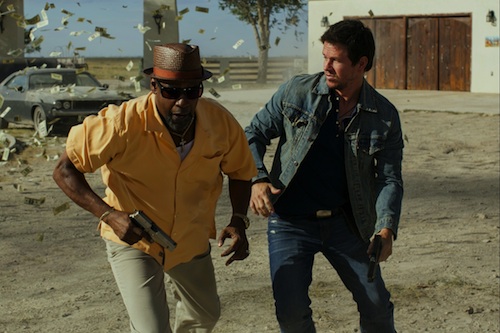
2guns-main2 Guns
The Lethal Weapon series has a lot to answer for. Or is it 48 Hours? Either way, the biracial crime buddy movie is a subgenre of questionable value, even as a means of satirizing America’s foibles regarding race relations. The basic idea is that, working together in order to accomplish a shared task, which is to solve a case or bring someone to justice, a white cop and a black cop transcend whatever cultural differences might arise if they were interacting socially. Along the way if they learn to get along, it’s just gravy, but everyone knows its a rigged game in the movies. In this post-Obama buddy comedy, racial differences are mostly beside the point. Bobby (Denzel Washington) and Stig (Mark Wahlberg) are undercover government agents who pretend to be partners in crime, which is funny because each one doesn’t know the other is a fed, probably because they work for different organizations (Bobby DEA, Stig NCIS). They also don’t know that the guy they’re after on their own, a Mexican drug lord (Edward James Olmos), is an informer for the CIA. There are other people involved who aren’t on the up-and-up either, but by the time our two heroes figure this all out they’re protecting $43 million in cash they stole from a New Mexico bank, mainly from their own superiors, who turn out to be just as corrupt as the nominal bad guys. The convolutions of the plot will only bother those who think that cop-buddy movies are adolescent hokum in the first place, but they’re not going to see this movie anyway, which means it’s better for your peace of mind if you don’t think too carefully about the story and just enjoy the action set pieces and the wise-guy banter, which isn’t stingy with the offhanded racial put-downs, all at Stig’s expense. “Are those your people?” Bobby says about some dangerous hombres, and you’re not sure if he means NCIS goons or white folk. There’s a certain subtextual satisfaction to the knowledge that it’s Wahlberg who is on the receiving end of these wisecracks because of his history of race-baiting when he was a white-boy rapper, but who among this movie’s target demographic remembers that? Thanks to his stature as a star, Washington gets away with a lot he shouldn’t, such as the poorly conceived romantic dalliance that Bobby carries out with a fellow DEA agent (Paula Patton). It’s not the age difference that grates but rather the need to have Washington do a sex scene he doesn’t seem to enjoy for no purpose other than boosting a betrayal subplot, which is already off the meter. It’s only fun to see so many people blown away when there are clear boundaries, and 2 Guns never bothers to erect any. (photo: Columbia Pictures) Continue reading

Posted in Movies | Tagged , , , , , , , , , , , , , | Leave a comment

In memory of Takashi Yanase

imagesTakashi Yanase, who created the beloved manga and anime “Anpanman,” died last week. His creation was the subject of the first Media Mix column I wrote, and I’ve reproduced it here.

Media Mix, Jan. 19, 1995

Faster than a speeding Pop Tart

A woman who works as an interpreter for visiting performers once told me about a stagehand with a Canadian ballet troupe who bought a toaster at Akihabara and asked her to translate the instructions for him. As she explained the part about what not to do, he studied the illustrations accompanying the text and said, “I get it. Just don’t make the toaster cry.”

Anthropomorphism certainly isn’t unique to Japan: the Walt Disney Company has cornered the market on singing-and-dancing household implements. The Japanese are more flexible in their use of it, though, and more shameless. In one particular animated television show, it has become an end in itself: “Sore Ike! Anpanman” (Nippon TV, Mondays, 5 p.m.) may be the only cartoon where almost every character is an inanimate object.

Anpanman is a superhero whose head is an anpan, the Japanese confection of soft bread filled with sweet red-bean paste. He does the usual superhero things, but his special trait isn’t about “power” in the usual superhero sense. When Anpanman encounters someone who is hungry, he allows the poor soul to eat his face, even though it saps his strength. In order to regain his strength, his friend the baker (Jamu Ojisan, or–George Clinton fans, take note–“Uncle Jam”) has to provide him with a new face. Anpanman’s selling point as a superhero is not his ability to fly or fight, but his selflessness. Continue reading

Posted in Media | Tagged , , | Leave a comment

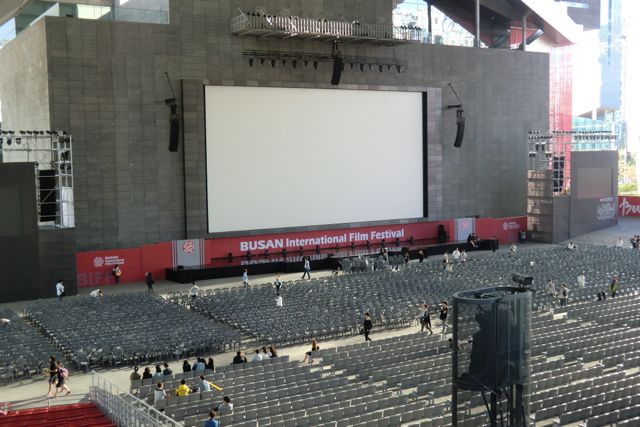
BIFF Day 5

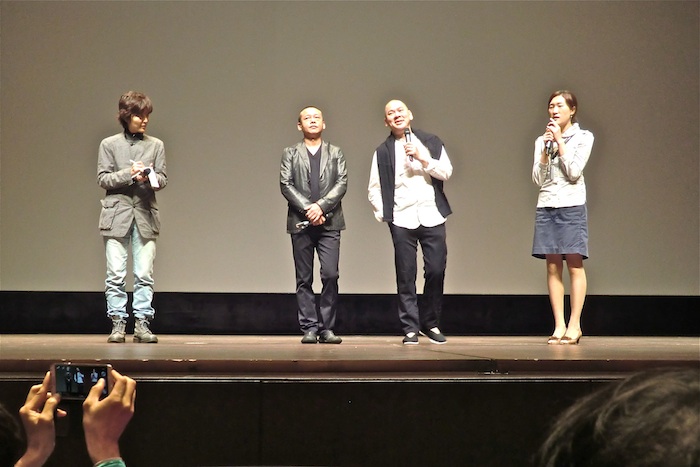
tsaiIt was unexpectedly a nostalgic day for me at the festival, and bittersweet, as well, though I suppose nostalgia is always bittersweet. The last screening I attended today was Tsai Ming Liang’s “Stray Dogs,” and afterwards the director and his constant lead actor, Lee Kang Sheng, took the stage for a Q&A. At one point during the conversation Ming mentioned that his most recent films have not been shown in Korean, or even at BIFF, which I found surprising. I knew about his films before I came to BIFF for the first time in 2001, but it was here that I first saw him in person doing one of these Q&As, which, I have to say, he’s somewhat brilliant at. Regardless of the obviousness of the question he manages to turn it around and say something incisive about his work and its place in Asian cinema, and it seems whenever I came to BIFF, even when it was PIFF, he was always here. You would just see him walking around, talking animatedly with whichever Korean person he was with. I guess I’ve just missed his last several films, because if they had been shown here I’m sure I would have seen them.

But then he said something I found very moving. “If you look carefully, you’ll realize that my films are getting slower and slower,” he remarked. “That’s because I’m getting slower and slower.” And I could see it; not so much that aspect of his films, but his general appearance, as well as Lee’s. When I first encountered this pair in the 90s, mainly through their masterpiece, “The River,” they epitomized the youthful potential of Asian progressive cinema. Now they’re well into middle age and look it. “Stray Dogs” reflects this change cosmetically. Lee plays a family man, albeit a homeless one, who sleeps with his two young children in abandoned buildings in Taipei while doing scut work as a sign holder for, of all things, luxury real estate. His wife has left him and for some reason Tsai has cast three different women to play her, which is very confusing given his usually vague narrative methodology. Also, one of the women is played by Lu Yi Ching, another Tsai regular who has played Lee’s mother numerous times in the past, so the passage of time is felt in more ways than one. In a sense, Tsai’s and Lee’s appearance this evening made me feel acutely the passage of years at BIFF. Continue reading

Posted in Movies | Tagged , , , | Leave a comment

BIFF Day 4

CIMG2807Sunday turned out to be Philippine Day for me. As a kind of companion piece to “Ilo Ilo,” there’s “Transit,” a first feature by Hannah Espia about migrant workers in Israel, more specifically the ones who are determined to stay–which seems to be all of them, according to the film. Though I imagine it’s not a problem exclusive to Israel, children of migrant workers, even if born in the country, are not guaranteed residence. They can be deported before the age of five if the parents don’t have the proper work permits. (Could this be true, in principle, in Japan, too? Probably) The movie revolves around one household containing two adult Filipinos, one male, one female, who have been in Israel for a while, and their respective children, who were born in the country. Four-year-old Joshua has already absorbed the survival mindset, wearing a scarf to look “invisible” whenever outside and avoiding figures of authority at all cost. The topic itself is forcefully presented but Espia’s structural means are a bit annoying. She basically tells the same set of stories through the eyes of each of the characters in succession, which means we have to sit through the same plot developments several times. I’m sure there’s a more graceful way of doing it, and since this is Espia’s first film I’ll assume she’ll learn how to avoid these kinds of basic technical issues. Continue reading

Posted in Movies | Tagged , , | Leave a comment

BIFF Day 3

Supposedly a typhoon is on its way. It’s been windy and overcast since yesterday morning, but strangely warm, too; warm enough for T-shirts. And last night there was a brief squall, but luckily I was inside at the time. Though the festival is not exactly a well-oiled machine, it would seriously be disrupted by a major weather front.

“Ceylon,” which I saw yesterday morning at a press screening, is about the Sri Lankan civil war of 2009. It’s one of those well-meaning films that doesn’t take a side, per se (though the government soldiers come off much worse than the rebels), but condemns war in general. It was directed by Santosh Sivan, an Indian, who made “Malli,” one of the best films I’ve ever seen about terrorism. That was a fairly internal film, diving into the mind of the girl who was selected to be a suicide bomber. Since then Sivan has become more commercial, so to speak, though he continues in the same vein. “Ceylon” tries to take in too much while offering something that can also be considered entertaining. It takes place on a beautiful island where a bunch of young people orphaned by the civil war live in a commune run by a kind but strict middle aged woman. Eventually, the war comes to the island with terrible consequences, but it’s not particularly affecting. Sivan seems enamored of Terrence Malick, or maybe it’s just that any movie shot on a tropical island beset by war looks like “The Thin Red Line.” Continue reading

Posted in Movies | Tagged , , , | Leave a comment

BIFF Day 2

CIMG2806The festival put me in the Seacloud Hotel this year rather than the Grand, where I usually stay. I stayed at the Seacloud once when it first opened and liked its efficiency rooms with a sink, stovetop, and even a washer. I also liked the wood floors and the somewhat antiseptic decor–the bathroom was a frosted-glass cubicle sitting in the middle of an enormous space. Times have changed. The room I got this time is much smaller and the efficiency functions are turned off unless you ask them to turn them on. More discouraging is that the area where the Seacloud is located has been built up, so the view out my window is the wall of the building next door, about three meters away. I miss the Grand, not only its more conventional “luxury” features, but its convenience (most of the press functions are there), though the Seacloud is closer to the subway station and the Megabox multiplex. Continue reading

Posted in Movies | Tagged , , | Leave a comment