Here are the album reviews I wrote for the February issue of EL Magazine, which was distributed in Tokyo yesterday.

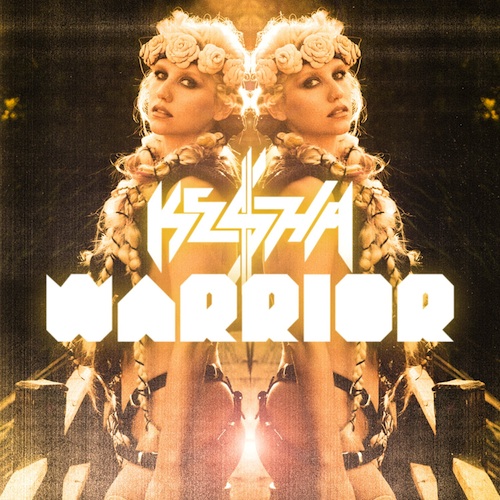
 Warrior
-Ke$ha (RCA/Sony)
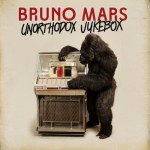
Unorthodox Jukebox
-Bruno Mars (Atlantic/Warner)
P!nk opens her latest record with “R We All We R,” an obvious response to fellow pop punctuation diva Ke$ha’s hit of 2011, “We R Who We R,” which was a statement of purpose if ever there was one. Ke$ha’s identification with club-crashing white trash is complete and unabashed, and P!nk, who’s been there and done that, would like to point out the downside of the 24-hour debauch, especially for females, and while some will consider the gesture (which kicks ass, BTW) patronizing, Ke$ha on her second album seems to have gotten the message, from P!nk and others who find her philistinism distressing if not downright phoney. With all that major label pop weight behind her, there was no way the follow-up to Animal was going to be anything less than a steamroller, and the title cut is a manifesto that equates partying with revolution, so take that, Andrew W.K. Rather than simply characterize the drinking and dancing and non-stop snogging as the prerogatives of overburdened youth, she posits them as some sort of social statement: free your libidos and your mind will follow. And if the debut’s melodic template was the rock anthem, she’s added a martial component that makes the pleasure more assertive. “I hear your heart beat to the beat of the drums,” she declares somewhat redundantly on “Die Young,” and it sounds like marching orders. With her exaggerated diphthongs and Auto Tune the cartoon quality of Ke$ha’s singing becomes even more pronounced, especially since every song has that up-down rhythmic thrust: Get in line or die (young). When she introduces Iggy Pop on “Dirty Love” you expect something grittier, more mortal, but despite topical references to Afghanistan and Rick Santorum, Iggy sounds even more like an animated character. Once you’ve entered Ke$ha’s realm, everything’s different; still fun, but as far from real life as commercial porn. Bruno Mars is too much of a pop traditionalist to cop to the porny predilections that most singers bring to the kind of R&B he plies, but his own sophomore effort implies that such a stylistic decision may have been forced upon him. Or maybe he just thinks, like Ke$ha, that decadence and aggression sell better. Whether despairing over the temptations of jail bait, pondering those women who only care about his money, or getting rough in bed with his current paramour, Mars sees the sexual transaction as fraught with hazard to both person and pocketbook, which is very different from the sentimental grind of “Just the Way You Are,” even if the music is equally catchy. In fact, the catchiness reminds you that Mars was initially lauded for his tunesmithing, which while not particularly fresh was certainly accomplished. Unorthodox Jukebox is a step forward since it takes the content for granted and boosts Mars as a bold star worthy of tabloid attention. I wouldn’t call that unorthodox, just smart. Continue reading →






 In a year during which my consumption of live music declined considerably I found myself more attuned to the peculiar decisions that musicians make on their recordings. Logistics were the main reason for my not attending as many shows as I used to, but there was the aging thing, too. Though I still appreciate a good performance, my capacity for distraction has grown, especially when trying to get into an act I may not be that familiar with—and I don’t even own a smart phone! As I mentioned in this space last year, much of my listening has transferred over to the space between my ears rather than outside of them. During my sunset-evening walks through the fields of Inzai I tend to focus more on my iPod, and at least two of the albums on the following list rose considerably in my estimation thanks to this ambulatory auditing mode and probably wouldn’t have made as much of an impression if I had only listened to them on speakers in my office, which comes with its own distractions. As far as my number one pick goes, much of the enthusiasm I developed for the album was second-hand. When I received the advance copy in the mail, Masako snatched it up immediately, having been a stone P!nk fan ever since Missundaztood, and during her nightly teeth-brushing ritual she’d be hopping up and down in front of the mirror, earbuds secured for the ride, yelling out all the lyrics she could understand. (Based on the vociferousness of the delivery, her favorite couplet was “I want to hug you/I want to wrap my hands around your neck,” which I’d like to think explains the resilience of our marriage) I liked the album just fine, but M’s enthusiasm was contagious if only because she’s normally rather blase about this sort of Western pop music. It’s P!nk’s fundamentally spunky attitude that appeals to her sense of independence, and while I think P!nk is much more intelligent than she’s given credit for, that appeal is almost anti-intellectual. Rebelliousness can be a con, especially when it comes to entertainment, but M’s reaction to the record made me listen more carefully to the choices I mentioned above because I knew how hard-won M’s own personal independence has been. Under such scrutiny, the record just became irresistible.

 Koi No Yokan
 philipbrasor.com