Little Barrie, in case you care

Japan Times asked me to write a preview of the upcoming Little Barrie shows a few weeks ago. I’d interviewed Barrie Cadogan, the leader, in 2006, but I’m not sure that’s why they asked me; not even sure why they wanted a preview. In any case, I wrote it and had it in by the deadline, meaning one week prior to publication; then that afternoon received an email from the record co. saying that Barrie had canceled. Not surprising. Everyone’s canceling now. But I had to write something new, so more work. Turns out Barrie hadn’t canceled, or changed his mind, or whatever, but in any case he’s playing this week as scheduled but it’s too late to run the preview in the JT. So here it is for you Little Barrie fans, both of you. Waste not want not.

Little Barrie
In 2005 Scottish pop guru Edwyn Collins called Barrie Cadogan “the best guitarist of his generation,” a compliment that would have meant more had it been quoted in the 70s, when technique was valued above all else. Since then the music called “rock” has atomized into so many sub-particles that chops have become secondary to originality of vision.

Cadogan’s music with his power trio Little Barrie doesn’t strive for much in the way of the new, even if he writes all their songs. When he first started playing in the northern English town of Nottingham, his material was old psychedelia and rhythm-and-blues. He absorbed these styles so completely that by the time he moved to London he had become exactly what Collins claimed he was. To make ends meet, Cadogan worked in a vintage guitar store, which is where he met not only Collins, the former leader of the 80s pop group Orange Juice, but other members of the British rock establishment. In England, at least, Cadogan is more famous as the tour axe man for Morrissey, Paul Weller, and Primal Scream.

Collins produced Little Barrie’s raucous 2005 debut album, We Are Little Barrie, which made the most of Cadogan’s personal idea of what dance music should sound like: “soul records with a rock n roll attitude.” Collins suffered a stroke while finishing up the album and wasn’t available for the sophomore effort, recorded in New York with hip-hop beatmaker Dan the Automator and Russell Simins of the Jon Spencer Blues Explosion, but he’s recovered enough to helm the newest long-player, King of the Waves, a title whose double meaning does a good job of selling its blend of surf guitar and radio-ready R&B.

Cadogan’s rep as a front man seems to have more traction in Japan. Waves was released here in December but has yet to see the light of day anywhere else. In fact, his upcoming Japan dates mark Little Barrie’s second trip to these shores in the last five months. And if that’s not enough, he’ll be here in August when Primal Scream presents its most famous work, Screamadelica, at Summer Sonic. Being the best guitarist of your generation may not mean as much as it used to, but it sure can keep you busy.

Little Barrie plays Shinsaibashi Club Quattro in Osaka on April 14 (7 p.m.; [06]6281-8181) and Ebisu Liquidroom in Tokyo on April 15 (7 p.m.; [03]3462-6969). Both shows cost ¥5,500 in advance.

Posted in Music | Tagged , , | Leave a comment

Media Mix, April 10, 2011

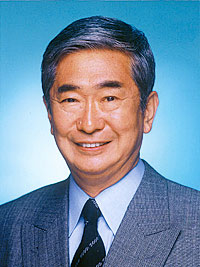
Here’s this week’s Media Mix about the Tokyo gubernatorial race, a topic that will be dated as soon as 8:00 pm rolls around and Shintaro Ishihara is declared the winner. If he isn’t then the column will be worse than dated. It’ll be wrong. Obviously a lot of people were looking forward to Ishihara being out of the driver’s seat after 12 years of reckless driving, and when he unexpectedly (to the media, anyway) announced on Mar. 11 that he would seek a fourth term, there was a lot of predictable derision in the blogosphere, some of which is probably disingenuous. Though we all love to hate the guy, having him around is convenient since he epitomizes much of what we outsiders resent about Japan’s so-called insular mindset. Actually, Ishihara is a piece of work, meaning he’s more or less a true original. And that’s even more comforting to have around, especially for people like me who make part of their living assessing the status quo. The punching bag will be around for another four years. The real challenge will be to ignore him.

Posted in Media | Tagged , | Leave a comment

Media Mix, Apr. 3, 2011

Here’s this week’s Media Mix, which is a more thorough investigation into the subject I wrote about in this space last week: The absence of the anti-nuke movement in the Japanese media. The strong feelings on both sides of the nuclear energy controversy have seemingly rendered the controversy off-limits if for no other reason than that the media isn’t comfortable with such heated debates in the first place. Add to that the fact that the government has declared nuclear energy a national policy and the major power companies are huge advertisers (even though they don’t really have to be since they are essentially monopolies) and there’s nothing to discuss. However, as I found out, the anti-nuke faction is fairly dogmatic, which is why the pro-nuke faction refuses to talk to them about safety matters. This intransigence has, in turn, led to the perverse defensiveness that brought about the current disaster in Fukushima.

Despite the seriousness of the catastrophe, the divide seems to be widening. The debate now encompasses questions about “sensationalism.” One side says the media overplays the dangers of the reactor disaster, while the other side doesn’t trust the authorities to tell them the truth and thus feels the media isn’t reporting the hazards sufficiently. Those of us who occupy some sort of middle ground just hope that it isn’t as bad as the one side says it is, but nevertheless hardly think that Tepco and its enablers can be trusted with anything like an objective opinion. It has nothing to do with science and everything to do with feeling royally betrayed. Moreover, it isn’t a question of whether nuclear power is safe or the only “clean” energy that’s practical, even if I believe it isn’t. It has to do with the realization that the people in charge of Japan’s nuclear power industry have proved they aren’t up to the task.

Posted in Media | Tagged , , , , , , | 2 Comments

April 2011 movies

Here are the movie reviews I wrote for the April 2011 issue of EL Magazine, covering films released in Tokyo from late March to mid-April. Two of the movies printed in the magazine, Battle: Los Angeles and Countdown to Zero, had their release dates postponed after the issue went to the printer, both for reasons having to do with the earthquake/tsunami/nuke accident. Battle: Los Angeles I can sort of understand. Given the trauma of the last three weeks, no one will probably want to see a movie in which Southern California is decimated, even if it’s by extraterrestrials. Countdown to Zero, however, is a different story. Presumably it was pulled because of its nuclear theme, but it’s about atomic weapons, not atomic energy. In any case, Uplink is actually moving up the release of its doc Into Eternity, which is about atomic energy.

Away We Go
“No one’s in love like us,” sweet-hearted Burt (John Krasinski) says to his pregnant girlfriend Verona (Maya Rudolph) as they set out across North America to find a community that will have them after Burt’s parents (Jeff Daniels, Catherine O’Hara) impulsively decide to move to Belgium on the eve of the baby’s birth. Dave Eggers’ and Vendela Vida’s script is a series of sitcom-ready tableaux infused with the kind of off-kilter humor Eggers is famous for. In Arizona they visit an old colleague (Allison Janney) whose middle class existence has turned her into a raging cynic. A cousin of Burt’s in Wisconsin (Maggie Gyllenhaal) is so attuned to her cosmic earth mother lifestyle that she’s become a fascist. As it turns out, there is no one in love quite like Burt and Verona, which ultimately makes for a pointless movie, even one as funny as this occasionally is. Sam Mendes again proves he has a fine eye for the niceties of the American landscape, but he can’t do much with the stop-and-go quality of the screenplay. (Photo: Focus Features LLC) Continue reading

Posted in Movies | Tagged , , , , , , , , , , , , | 3 Comments

Media Mix, Mar. 27, 2011

Article in Apr. 4 issue of AERA about nuclear power

Here’s this week’s Media Mix, which is about the “fourth disaster” of the current crisis. In the piece I mainly talk about rumors and the lack of credibility surrounding pronouncements from officials, and in the end remark that nobody knows what to believe any more. I purposely avoided talking about the coverage by the non-Japanese press because I talked about it briefly last week and also because I didn’t feel I had anything constructive to add to the already overheated discussion on the subject. Though the Japanese media’s coverage of the nuclear disaster has been circumscribed by too much reliance on “experts” who have a stake in Japan’s nuke industry, I don’t have much use for the opinion of many non-Japanese who say that even the foreign press’s “sensational” coverage is preferable since it’s better to be safe than sorry. If the foreign press’s coverage is preferable, it is because the bulk of it actually hasn’t been sensational. America’s two papers of record, the New York Times and the Washington Post, to name just two foreign media, have done an excellent job of relating the situation at the Fukushima reactor and the relief efforts in the stricken areas. Though the exodus of foreigners from Tokyo and Japan in general was “blamed” on sensational TV reports by the likes of CNN, since then the coverage by both foreign and domestic news outlets has started to reach an equilibrium. I still believe the foreign press more on the subject of Fukushima and the attendant radiation effects, but it seems that the local press has finally started to realize that they have to take every announcement from various official bodies with a grain of salt. This morning on one of the news talk shows, economist Noriko Hama said something the Japanese media should take to heart: The only way that Japan will be able to overcome the crisis of confidence that the disaster has caused is for the authorities to share everything they know about the situation as events unfold. In other words, the patronizing tone of the announcements, as well as that of the expert analysis, is only succeeding in alienating people. What she didn’t say, but which was implicit in the remark, is that it’s the media’s job to hold the authorities accountable to this sort of transparency. A small but important way to start would be to acknowledge that there are people in Japan who have always been against nuclear power. Though I harbor certain doubts about the effectiveness of these kinds of advocacy groups, the very fact that they have been persona non grata as far as the mainstream media is concerned seems to be part of the problem. Realistically speaking, there has been no debate over the wisdom of Japan’s nuclear energy policy in the media, and thus these anti-nuke groups operate in a vacuum where their ideas are not challenged sufficiently, just as the nuclear power industry itself operates in an environment where they can basically say whatever they want without being opposed. It is up to the media to moderate their divergent opinions so that the public has an idea not only of what they get from nuclear power, but what they lose as well.

As I said in last week’s column, maybe now is the wrong time to start the debate. But since yesterday, I’ve seen two reports on Japanese TV about anti-nuclear rallies in Germany in response to the Fukushima disaster. No allusion was made to any similar-minded movements in Japan, though maybe there will be tomorrow: Anti-nuke marches in various Japanese cities are scheduled for today. Or course, anyone who watches such a news report has to wonder if there isn’t a similar movement in Japan, which may be the point. And I was encouraged to see that in this morning’s issue of the Asahi Shimbun-related weekly AERA, there is an article where several advocates of nuclear power are questioned alongside several anti-nuclear power advocates. One such advocate was even interviewed in the Asahi Shimbun yesterday. It may be the first time I’ve seen such opinions expressed in mainstream publications.

Posted in Media | Tagged , , | 3 Comments

April 2011 albums

Here are the album reviews from the April 2011 issue of EL Magazine, which was distributed in Tokyo yesterday.

21
-Adele (XL/Hostess)
Seasons of My Soul
-Rumer (Atlantic/Warner)
By now we’re way past the point where new pop artists recycle the music of the 60s-70s because that’s the music they grew up with. If they did grow up with it, it’s because it was their parents’ music. I’m not sure if this is the case with Adele, whose second album, like her first, broadcasts her age in the title. Logically, her parents’ music was probably made in the 1980s, while her first record traded in the pan-British R&B tradition associated with Amy Winehouse. 21 is more personal in that the songwriting is every bit as distinctive as Adele’s gospel vocal style, and gospel is the operative word here, the kind of gospel that inspired singer-songwriters like Judee Sill. Though God doesn’t appear in Adele’s songs, emotions are cast in the kind of cataclysmic-redemptive power you only get in deeply felt church music. And whereas 19 was built around acoustic guitars, the new record takes advantage of Adele’s personal brand of star power with rich, intelligent arrangements. Though the highly charged “Rolling in the Deep” seems to blow the album’s emotional wad right in the very first track, it’s followed by “Rumour Has It” (as in “I’m the one you’re leaving her for”), a shape-shifting demon of a soul ditty. Pianos and strings are used to excellent bombastic effect on the back-to-back ballads “Don’t You Remember” and “Set Fire to the Rain.” Some will say that Adele can get away with this purple melodrama because of her age, but such a canard assumes young people have less intellectual distance from their feelings. When it comes to making music, the shorter the distance the better. Leave the intellectual mediation to producers. Fellow Brit chanteuse Rumer (real name Sarah Joyce) is equally beholden to arrangers (in her case, Steve Brown) to bring out the full potential of her own songwriting, which is also steeped in the music of the 60s and 70s, though it owes less to gritty gospel and R&B than to show tunes and the twisty pop of Laura Nyro and Burt Bacharach (who has already given her his approbation). She even includes a totally unironic version of David Gates’ “Goodbye Girl” on her debut. Effecting an MOR-styled velvet fog rather than Adele’s tortured soul singing and keeping the tempos uniformly liesurely, Rumer isn’t in the business of setting hearts on fire, but the honesty of the presentation combined with a worldly outlook that transcends the kind of lyrical frivolousness usually associated with so-called soft rock can still bring a lump to your throat. The tribute to Aretha Franklin is told within the framework of a teenage girl’s reliance on the music of the greatest pop singer of all time to get her through a difficult adolescence. And since she’s already been a denizen of the workaday world, Rumer has more to say about real life than does Adele, who is only worried about love. That’s another prerogative of youth. Continue reading

Posted in Music | Tagged , , , , , , , , , , , , , , , , | 2 Comments

Media Mix, Mar. 20, 2011

Here’s this week’s Media Mix, which is ostensibly about Japanese commercial TV coverage of the disaster, though it mainly addresses the lack of debate surrounding Japan’s nuclear energy policy. As I say near the end, now is not the time for such a debate, though I notice that the latest issue AERA, published yesterday, does contain a long article about the current state of Japan’s nuclear power industry that goes beyond simply advocating for greater safety. An editorial piece in The Economist last week for the most part supported Japan’s nuclear power policy because Japan doesn’t have much in the way of natural resources and, as it stands, nuclear is the only “clean” energy the country can afford. Though I’m not an expert on the issue, the nature of the crisis still ongoing in Fukushima had to do with Tokyo Electric Power Company’s placing profits above the public good. That may sound tritely anti-capitalist, but private companies who operate public utilities (especially as a monopoly, as TEPCO does) cannot realistically be expected to act any differently. The Sunday Mainichi article I mentioned in the column is more or less a cynical bit of reporting, but I believe there is some truth in the idea that TEPCO’s “threat” of rolling blackouts was formulated as a form of negative PR. The public has to be shown how inconvenient their lives are without those nuclear reactors. They did the same thing in 2003 when a safety scandal forced them to shut down some reactors during the peak air conditioning season in summer, and they said that if people didn’t cut back they would be forced to cut power themselves. What’s ironic here is that “the public” = “customers.” Normally, if a profit-making company wants to control demand, they simply adjust the price. But in the long run TEPCO don’t want people to use less, because they have to make money. The company gives a lot of lip service to “conserving energy,” but only at those times, like these, when it suits their purposes. For sure, the people of Tohoku need energy and they need it as soon as possible. But as soon as things are back to normal, TEPCO will again be promoting greater electricity usage through “all-electric” houses and such. And profit motives will continue to discourage them from pursuing more sustainable means of producing energy. The smart grid, which controls output and use of electric power more efficiently, is one of the most encouraging technologies to come out of the energy and IT fields in recent years, but implementing it would necessarily dilute the power companies’ individual monopolies over distribution of electricity. Obviously, you can’t expect them to do the implementing themselves.

Addendum (3/20, 17:20): The web, and presumably other forums, is filled with derision about the AERA issue I mentioned above. Many Japanese feel it is sensationalist and, as one Tweeter said in English, “fear-mongering,”  and while that cover photo of  a man in a gas mask is certainly over-the-top, especially when combined with a single headline that states “Radiation is Coming,” the article contained therein is relatively sober. But as I also stated above, it brings up a corrective to much of the mainstream media’s accepting coverage of Japan’s nuclear industry. From what I can gather, the Fukushima crisis will likely be contained, but that doesn’t necessarily mean the people living around the plant will be able to go back to their lives the way they were. A real debate about Japan’s nuclear power policy must be carried out, and the media can no longer “accept” that policy as is simply because it is the national policy; though, in truth, their acceptance probably has more to do with the fact that the power companies have always been huge advertisers. If this sort of “sensationalism” kicks the debate into gear, then bring it on.

Posted in Media, Money | Tagged , , , | 1 Comment

Media Mix, Mar. 6, 2011

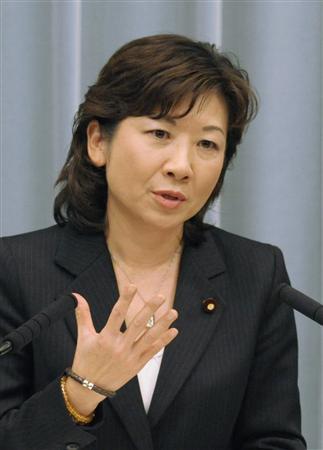
Seiko Noda

Here’s this week’s Media Mix, which is a survey of recent news stories related to the issue of illegitimate children, a term that has mostly been abandoned in the West since it bears a negative stigma. “Out-of-wedlock” is more neutral sounding but also more awkward to use from a stylistic perspective. My preference for “illegitimate” isn’t just because it’s easier to utilize in a sentence, but because that negative stigma is built into its use in Japan. In the column I repeatedly mention that illegitimacy is “indicated” in the Japanese family register. Though there is a clearly defined term for illegitimacy in Japanese (hichakushutsu) you won’t find it in the register. However, anyone who can read the document will know whether or not the person was born out of wedlock. If the person’s parents were married to each other when the person was born, then the person would be listed in the parents’ family register in the order of succession: first son or daughter, second son or daughter, etc. If the person is simply listed as a male or female, that means he or she was born out of wedlock. This distinction is important because one of the main purposes (if not the main purpose) of the koseki is to establish a heirarchy within the family, something that Japanese people understand in their bones and which traditionalists equate with familial unity. However, it also means that illegitimate children can always be identified as such by anyone with access to the koseki, and since the document is often scrutinized by employers and others in positions of authority, it can have the effect of making the individual feel second-class.

Some may look upon this matter as being little more than bureaucratic hair-splitting, and, for sure, there is no reason to believe that a person with an illegitimate indication can’t achieve his or her life’s goals; but the fact is there are still many Japanese who believe that while illegitimate children shouldn’t be made to suffer for something that isn’t their “fault,” the designation is still important. A reporter named Tetsuo Sakamoto wrote an article for the Jan. 23 issue of Sankei Shimbun in which he predicted the “collapse” of the Japanese family if separate names for married couples (bessei) were allowed in Japan, because it would lead to more “illegitimacy.” He cites statistics that show a marked increase in out of wedlock births among the major industrialized countries of Europe where separate names are allowed, in particular Italy, a nation that was once a bastion of domestic solidarity because of the moral control of the Catholic Church, which has weakened in recent years. Sakamoto doesn’t actually say how this “collapse” has adversely affected these countries in Europe (France’s illegitimacy rate is about half of all births, but it also has an overall birthrate that the Japanese authorities would die for). He simply assumes that illegitimacy is inherently bad. Where his logic really buckles, however, is tying separate names to illegitimacy. The fact is, the vast majority of Japanese people who want to retain their birth name after marriage want to get married. If the government allowed separate names it would actually reduce the incidence of illegitimacy. That’s why the example of Seiko Noda is so instructive. The only reason she didn’t marry her partner was because she felt an obligation to her grandfather, who adopted her because he didn’t have an heir to pass on his name. And the only reason she got married is because she didn’t want her child to be designated as illegitimate. The problem in Noda’s case is that since she’s a politician who identifies herself as being “conservative,” she feels the need to qualify her support of bessei by saying that some people only want separate names for selfish reasons. But what’s wrong with that? What kind of government would deny its people something as basic as the right to decide their own names?

Posted in Media | Tagged , , , | Leave a comment

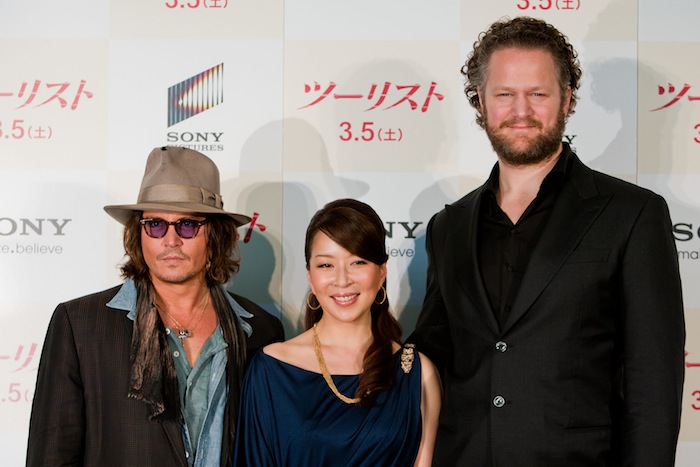
Walking between the raindrops of normalcy with Johnny Depp in Tokyo

Say what you will about Johnny Depp’s privileges as one of the biggest movie stars in the world, the guy doesn’t take them for granted. Though he’s made blockbusters, he’s made them on his own terms because he doesn’t seem to know how else to operate. He even approached The Pirates of the Caribbean franchise–a movie series based on an amusement park ride–as another means of exploring his capacity for weirdness, which, considering the performances he gave in Ed Wood, Fear and Loathing in Las Vegas, and others, rightly should have been exhausted years ago. He can credibly be called a matinee idol, and yet the only conventional romantic role he’s ever had was in Chocolat.

Which makes The Tourist all the more perplexing. It’s not a good movie and, considering the various detours the project took on its road to realization, one that wouldn’t seem to appeal to Depp. He ostensibly plays an American tourist who gets caught up in some pan-European intrigue, not to mention romantic entanglement with Angelina Jolie, while traveling from Paris to Venice; except that Depp, with his long hair, goatee, and quirky fashion sense, doesn’t look anything like an American tourist (Depp: “When I think of tourists I always think of Americans in Bermuda shorts arriving in Paris and demanding Coca Cola and french fries”), much less a math teacher from Wisconsin, which is what he’s supposed to be. In the end, this seeming disconnect is actually exploited in the film’s dodgy plotting, but by the time it’s clarified most people won’t care.

Continue reading

Posted in Media, Movies | Tagged , , , , | Leave a comment

March 2011 movies

Here are the movie reviews I wrote for the March 2011 issue of EL Magazine. The films are being released in Tokyo between the end of February and the middle of March.

Amazing Grace
Old-fashioned in its determination to provide enlightening history along with its hammy British acting and florid storytelling, Michael Apted’s explication of William Wilberforce’s efforts to abolish slavery in Britain in the late 18th century gets more things wrong than right, but the things it gets right are so right as to make it worth it. Wilberforce’s friendship with William Pitt, who became not only the youngest but also the longest-ruling prime minister in English history, illustrates in a clear-headed fashion the limits to progressive thought as it’s applied to the political process. Having seen the light, Wilberforce (Ioan Gruffudd) takes abolition as a sacred mission, and though Pitt (Benedict Cumberbatch) is the man who set him on the path, once in office Pitt has to demonstrate loyalty to the king. Wilberforce’s’s zeal is dramatized in ways that often seem unnecessary–the romantic side story has no traction–and many of the peripheral characters are rendered as stock figures suitable for framing as Classic Comics characters. But I learned something and left the theater a better person for it. (photo Bristol Bay Prod.) Continue reading

Posted in Movies | Tagged , , , , , , , , , , , , , , , | Leave a comment