March 2011 albums

Here are the albums I reviewed for the Mar. issue of EL Magazine, which came out last Friday. Also, be sure to check out the new EL website at http://elbuzz.tv.

Hotel Shampoo
-Gruff Rhys (Ovni/Hostess)
Jonny (PIAS/Hostess)
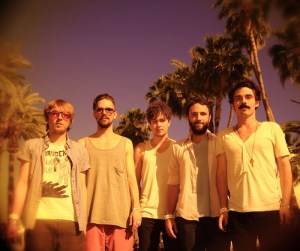
By rights the Welsh group Super Furry Animals should be as big as Belle and Sebastian, another retro-pop outfit with strong regional ties that influence its creative output. But SFA leader Gruff Rhys is too much of a musical polymath to settle for a single identifiable trademark, and since the birth of the group in 1990 it’s gone through a complex evolution, from proto-techno to indie guitar band to post-millennial psychedelia. The only unifying elements are Rhys’ muffled, languorous vocals and his penchant for 70s-style melodies. Though Hotel Shampoo isn’t his first solo record, it’s certainly his most determined attempt to nail down a characteristic sound, which recalls post-Beatles orchestral pop and R&B centered on thumping piano chords. Referencing the horn vamp from “Get Ready,” the radio-ready “Sensations in the Dark” could be called a prime dance track if Rhys didn’t sound as if he were singing it from inside a closet. Obviously less interested in the visceral properties of a song, Rhys places all his resources in the service of creating the perfectly tooled pop ditty. He knows he doesn’t have the voice for it, but he carefully modulates every trill, falsetto break, and swoon if the song’s emotional dimension calls for it, all the while making sure that the rhythms shift for a reason and the carefully arranged instruments don’t trip all over themselves in the process. Borrowing the Bacharach style without Bacharach’s typical melodic knottiness, “Take a Sentence” would have made the perfect B.J. Thomas ballad even if Rhys himself is incapable of the kind of operatic showiness the song seems to call for. And sometimes, as on “Christopher Columbus,” a song demands cheesy synthesizers and flatulent sax solos, thus indicating that Rhys has little use for highbrow-lowbrow distinctions when it comes to pop: the idea supersedes its effect. If a song demands a cheesy synth, you don’t argue with it. This attitude may be a Welsh thing, if the new side project featuring former Gorky’s Zygotic Mynci vocalist Euros Childs is any indication. Jonny, a partnership between Childs and Teenage Fanclub‘s Norman Blake, champions an even more distilled form of early 70s pop obsession, the kind of West Coast guitar rock that pub rockers like Brinsley Schwarz retooled for drunken working class blokes. Blake, of course, has already tilled this field, and if Childs adds anything it’s a sense of innocence, as if he’d just discovered his parents’ secret stash of Hamilton, Joe Frank & Reynolds singles in the attic. If Jonny shares anything with Rhys it’s his conviction that what made the 70s Top 40 great was its loopy disregard for thought-provoking lyrics. The catchiness of a song like “Goldmine” is not derived from its charging guitars but rather from the insistent conceit of its choral metaphor: “Goldmine, I’m diggin’ [repeat word six more times] for you!” Jonny proves once again that only really smart people are capable of producing music this mindlessly entertaining. Continue reading

Posted in Music | Tagged , , , , , , , , , , , , , , | Leave a comment

Media Mix, Feb. 27, 2011

Takuro Morinaga

Here’s this week’s Media Mix about the increasingly blurry line between content and commercials on TV variety shows. After filing the story I had misgivings about using “Gatchiri Academy” as an example of a show that made use of the infomercial format since it’s only a very small portion of it that does. Actually, when the series started a year or so ago, it was quite useful in that the economists and finance writers who made up the panel often debated significant consumer issues, such as whether it was better to buy or rent, or what actual value do you get from retail point cards and other incentive campaigns. But eventually the debates were phased out and replaced by direct promotions of certain brands and companies, and sometimes, though not always, they invite an employee of that company or a rep of that brand to explain things, and, naturally, it’s always in a positive light. No debate, or even a word from the competition. But last week the producers really showed their hand when popular economist-tarento Takuro Morinaga, a regular on the show, was hosting a running segment about a couple with six kids who were trying to buy a house in Sendai. It so happens that Morinaga’s brother is a manager with Mitsui Fudosan in Sendai, and he brought him on the show to advise the couple, all the while plugging Mitsui. When the segment started a few weeks ago, I wondered, “Why did they choose Sendai for this?” Last week, I got my answer.

Posted in Media | Tagged , , , | Leave a comment

Idol Chatter: The Evolution of J-Pop

The following article originally appeared in the April-June 1997 issue of Japan Quarterly, a now defunct English-language publication put out by the Asahi Shimbun. For a continuation of the story, there is an article I wrote for The Japan Times in Dec. 2009 about the development of J-pop in the 00s.

Takuro

Takuro

Last fall, Fuji TV premiered a half-hour series called Love Love Aishiteru. Co-hosted by the teenage singing/comedy duo Kinki Kids and veteran singer-songwriter Yoshida Takuro, Love Love is what is known in Japan as a “variety show,” meaning that it is essentially a talk show centered around a theme, a gimmick, a strong personality, or any combination of the three. The theme of Love Love is music, since Yoshida is considered one of the main forces behind Japan’s early 1970s folk music boom, but most of the half-hour consists of light conversation between that week’s guest and Kinki Kids, who, owing to their sharp sense of humor and huge popularity among adolescent girls, provide the show with its strong personalities. Yoshida, for the most part, sits uncomfortably to the side during these chats. The show’s gimmick is its band, which includes several of Japan’s most respected musicians and singers. Yoshida and Kinki Kids sing on the show, but the guest always sings a song, too.

One night, the guest was Osaka comedian Akashiya Sanma, who is more than twice as old as either of the Kinki Kids and about a decade younger than Yoshida. At one point in the conversation Akashiya tried to explain the importance of Yoshida’s music to his generation. “Takuro was like a god,” he said, “like…” He paused , trying to come up with an analogy that these youngsters would understand. Domoto Koichi, the funnier of the two Kids, finished the sentence for him: “Like Johnny?” The studio audience exploded with laughter. Everyone knew that he was referring to Johnny Kitagawa, the president of Johnny’s Jimusho, one of Japan’s most powerful talent agencies. The audience’s reaction was understandable, since Johnny Kitagawa is Kinki Kids’ boss and, considering Kitagawa’s reputation as a dictatorial impresario, certainly something of a god to them. Continue reading

Posted in Media, Music | Tagged , , , , , , , , , , , , , , , | 2 Comments

Media Mix, Feb. 20, 2011

High-quality stuff from Beisist Shonai

Here’s this week’s Media Mix, which is about rice and Japan’s consideration of participating in the Trans-Pacific Partnership, which would remove the import tariffs that protect Japanese farmers, in particular rice farmers. I plan to post a related article at Yen for Living tomorrow about how the TPP would affect the price of rice at the consumer level. I had planned to include that information in the Media Mix column, but it would have distracted from the main point, which is that the image of rice farmers is slightly distorted by media that are in favor of TPP but think that farmers can handle it if they’re smart and resourceful. I don’t think there’s any doubt that resourcefulness is a good thing, but since the vast majority of rice farmers are part-timers, most will be unable to compete on any level once the floodgates are open. The question, then, is whether or not the Japanese public is willing to let them fail, and maybe in the end the question is little more than a rhetorical one. There are too many factors, historical and otherwise, that point to an eventual liberalization of the market for rice and other agricultural products. If Japanese rice farmers are doomed, it seems to be an economic inevitability, not a political one. Rice farmers insist that the Japanese public can pay more for their rice and should, which is true but beside the point. The government desperately needs to increase consumer spending and one small but not insignificant means of doing that would be to reduce the average household expenditure on Japan’s staple food. The Yen for Living article will describe exactly how much more money could be in circulation if people paid less for rice, about ¥1.54 trillion.

In the same vein, a corollary issue I didn’t address in the column is what the TPP might affect other than agriculture. The financial writer Gucci goes on to say in his Aera article that Japan’s annual domestic agricultural production is ¥10 trillion. Though the loss of that production will have an effect, it won’t be nearly as momentous as the liberalization of financial markets. Japan’s private savings amounts to a staggering ¥1,400 trillion, 90 percent of which is socked away in financial institutions that use it to buy government bonds, thus keeping Japan solvent. If even 1 percent of that whole amount was snatched up by foreign financial entities promising better returns (not difficult in a country where the interest rate for ordinary bank deposits is 0.02 percent) that’s ¥14 trillion yen out of domestic circulation, which is a lot more than the loss from agricultural imports.

Posted in Media, Money | Tagged , , , , | 1 Comment

Keepin’ on: No Age in the age of anything

Randall & Spunt

The heady rush that punk delivers is indistinguishable from its hard-fast-short credo, and what emo has drained from the punk experience isn’t so much its native cynicism but rather its performance rigor. Years ago punk cured me of my consumerist preferences in live music: I often judged a band in terms of cost-effectiveness. How long did they play? I then saw Elvis Costello during the Armed Forces tour play a blistering 30-minute set in Berekeley. The college crowd was pissed, demanding an encore that never came and believing they hadn’t gotten their money’s worth. I was floored. It was the most intense concert experience I’d had up to that point. EC and the Attractions came out and played fifteen songs without pause and got off. Though Costello was not, strictly speaking, a punk act, he was exploiting the punk performance style to make a point. Of course, this style was developed in clubs where an evening’s entertainment consisted of half a dozen acts, so one could perhaps sympathize with the Berkeley crowd for feeling they hadn’t heard enough for what they’d paid, but I couldn’t say I wasn’t satisfied.

No Age, the punk duo from Los Angeles, played at Quattro on Feb. 16 in front of a good-sized crowd that was appreciative and at time stoked but never quite dropped over the edge into total punk ecstasy. Drummer/vocalist Dean Spunt and guitarist Randy Randall have a slightly artier take on hard-fast-short. The frantic tempos, bullet-proof melodies, and pocket-sized compositions are all there, but augmented by interludes of guitar squall and loops/effects that were recreated on stage by a serious-looking friend in a tie and windbreaker. Randall played the same hollow-bodied guitar through the entire 75-minute set, and the pair only paused between songs maybe twice. The show had momentum but lacked the kind of sharp definition, both aurally and visually, that usually makes live punk so bracing. My companion mentioned that just when a song started to hit its stride, it tended to end. He liked the fact that they were expanding punk’s parameters but thought they didn’t go far enough: It’s possible to take hard-fast-short too seriously. Call me old-fashioned, but that wouldn’t be punk; which, of course, is hardly a flexible position to take in an indie rock world where anything is acceptable and rules mean nothing. Continue reading

Posted in Music | Tagged , , , , , | Leave a comment

Media Mix, Feb. 13, 2011

Here’s this week’s Media Mix, which is about K-pop, specifically the TV Tokyo drama series Urakara starring the Korean girl band Kara. Though I don’t discuss the quality of the show in any detail, readers should be warned that it’s pretty awful; which, of course, is neither here nor there. The need to get Kara intense exposure on Japanese television was the obvious motivation for the program, even if that doesn’t necessarily justify its lack of coherence and crappy production values. Against all available evidence, I had actually hoped it might offer mindless silliness along the line of The Monkees; and when I first heard of the show I mistook it for a reality series, which might have been truly transgressive: Kara members seducing Japanese guys and then breaking their hearts. But no. In fact, it doesn’t even have the girls performing their music, at least not yet, so I’m not entirely sure what it’s supposed to be promoting except, maybe, Kara as possible fodder for TV talent. That, I would say, is a stretch. Even BoA, who is totally fluent in Japanese, has had limited success as a talent along the lines of Yoon Son-ha, the only South Korean who gets regular work on Japanese variety shows.

Also, I seem to be getting a lot of flack in the comments section from JYJ fans regarding my reference to the trio as “traitors.” I apologize for the term, which was meant ironically, so I probably should have placed it in quotes. My point was that bolting from one’s talent agency, whether in Japan or Korea, is considered a serious breach of show biz protocol regardless of the reasons, and as far as I know the group still hasn’t been forgiven by the industry in South Korea. The fans, of course, are quite a different matter. Their album is selling very, very well.

Posted in Media | Tagged , , , | 33 Comments

Media Mix, Feb. 6, 2011

Dr. Makoto Kondo's "Your Cancer Just Seems Like Cancer"

Here’s this week’s Media Mix, which is basically about skyrocketing medical costs and the probable failure of Japan’s national heath insurance program to keep up. However, the heart of the matter is the priorities attached to medical care, and I admit that the examples I’ve offered create a slippery slope. Medicine’s purpose is to prolong life and to make it more comfortable, which could be taken as two distinct purposes. The conventional wisdom of the medical community says that the first purpose has a priority over the second; after all, without life there’s nothing. Consequently, any means of prolonging existence, even at the expense of the patient’s quality of life, is acceptable. Dr. Makoto Kondo’s assertion that there is no evidence that radical surgery and chemotherapy prolong life “meaningfully” for most tumor-based cancer patients is thus treated in the medical world as a form of sedition or heresy, depending on which metaphor you attach to that world. I am not a medical expert, and, were I to be diagnosed with cancer and told that my only chance of survival is surgery and/or chemotherapy, I would likely accept that line of treatment because we all want to live.

The point is not to deny anyone the full range of treatments possible, which is the usual issue when talking about health insurance, but rather to face up to fact that treatments are made available for a variety of reasons, not all of them having to do with the welfare of specific patients. Kondo has been accused of cynicism because he says the cancer treatment machine is dominated on the one hand by a pharmaceutical industry that has a lot at stake in anticancer drugs and on the other by an academic mindset that does not broach any contrary viewpoint. What’s truly troubling to the medical community about Kondo is that he’s quite dispassionate. He bases his argument on a close reading of clinical literature, which he says shows that while more and more people are being diagnosed at earlier stages for cancer, the absolute number of people dying from cancer has remained the same. His main bugbear is diagnosis, which, in terms of cancer, remains highly problematic. Moreover, he has little faith in the science of pathology as it’s taught and practiced in Japan. Because the purpose of cancer screenings is to find cancer, the likelihood of finding something increases, though Kondo believes in many cases what doctors actually find is a “cancer-like growth” (gan modoki), which will either vanish over time or remain without really doing harm to the host. If the person really does have cancer, the cancer is always present in the body and will either kill the person or not; but in any case, he says, current treatments don’t alter the outcome. Radical surgery and chemotherapy, if they don’t outright kill the patient, definitely lower the quality of that person’s remaining life. Last week, the NHK show “Tameshite Gatten” talked about new advances in early detection that practically claimed no one need ever suffer from bowel cancer ever again. The doctor who had helped develop this new technology was understandably proud. The cognitive dissonance between Kondo’s position and this doctor’s sunny outlook was deafening, except, of course, that it was only in my head. NHK would likely never invite Kondo to any of its programs.

These are difficult ideas to contemplate, but in terms of health insurance they need to be discussed more resolutely, otherwise resources and times and money may simply be propping up a medical model that doesn’t actually improve people’s lives.

Posted in Media | Tagged , , , | 7 Comments

Local Natives are restless: Club Quattro, Jan. 31, 2011

Hairy as they wanna be

I often find it difficult to distinguish one post-millennial indie rock band from another, at least in terms of writing about them. In fact, I find it comforting that many are associated with specific geographical regions. It makes it easier to stereotype them, since the melting pot aesthetic (all genres being equal and equally serviceable) and textural prerogatives (lo-fi as a statement of purpose rather than something you have to put up with) have a tendency to obscure the lack of original ideas. I don’t think I’m the first person who believed that Local Natives, who hail from the storied artistic community of Silver Lake in Los Angeles, were from Brooklyn. The band’s peppy, Afro-inflected, intricately arranged rock songs and lack of sartorial exceptionalism lent them the same air of unassuming artistic ambition that characterizes the music scene of New York’s outer boroughs. When I think of L.A. indie, I think punkier (No Age) or glammier.

Local Natives’ debut album, Gorilla Manor, was one of my favorites last year. Though anyone who attempts a cover of a Talking Heads song (“Warning Sign”) from either of their first two albums deserves attention just because of their balls, what LN shares with the Heads is not so much an overachievers’ desire to totally distinguish themselves from their influences–though they do accomplish that–but rather their determination to make music as enjoyable as it is challenging. That sounds like something any band worth its salt would take for granted, but it’s generally the reason why I can’t distinguish one post-millennial indie rock band from another, especially ones from Brooklyn. Continue reading

Posted in Music | Tagged , , , | Leave a comment

Media Mix, Jan. 30, 2011

Here’s this week’s Media Mix, which is about that BBC quiz show which offended a lot of Japanese people. I’m hoping that anyone who reads the column will not automatically connect it to the common generalization that all Japanese people like to see themselves as victims, a view that is often advanced when talking about Japanese anger over the atomic bombings, which many in the West (i.e., former Allies) see as being self-righteous. The victim mindset I talk about in the column has more to do with self-restraint, in that the average person, regardless of what he or she thinks, will be solicitous to victims, and by extension their loved onces, simply because of the pain they experienced.

As I illustrated in the piece, this solicitude can be exploited by people with agenda and get in the way of things like constructive diplomacy. However, it’s also a factor in judicial procedure, as clearly shown by the decision to allow victims and/or families of victims to question suspects during criminal trials. Though I don’t necessarily think Japanese people exhibit the so-called victim mentality more than people from other countries, this particular sort of integration of “victims’ rights” into the judicial process seems unique, or, at least, specially designed to address emotional needs that courts usually don’t. It’s usually the media who address these needs by giving victims a platform from which to vent their grief and anger, and that’s to be expected. What shouldn’t be expected is that these aired emotions will influence due process. For the longest time it was something of a cliche to say that in Japan you were guilty until proven innocent, but the incorporation of victims’ rights into legal procedure has practically turned the cliche into a policy.

And in terms of the abductee issue, while I think the Japanese media is intimidated by right wing elements to a certain extent, the main reason they don’t express any doubts over the family-dictated narrative is lack of aggression. If someone with any sort of authority came out and expressed the opinion that the abductees were dead, they would report it and then start talking about it. When Toru Hasuike, the brother of Kaoru Hasuike, one of the five abductees who did return to Japan, quit his position as the leader of the abductee families group, it raised suspicions that maybe he knew something about the fate of the remaining abductees that he wasn’t revealing. For sure, Toru, as well as the other returned abductees, has never spoken with total frankness about his life in North Korea, and it has been easy for some to assume that he knows something that would greatly disturb the families of abductees who didn’t return to Japan. In any case, Toru is now said to be persona non grata in the abductee family community. The media is too solicitous of the families’ feelings to find out why, but if Toru came out and actually said something, you can be sure the press would be all over it.

Posted in Media | Tagged , , , , | Leave a comment

February 2011 movies

Here are the movie reviews I wrote for the February 2011 issue of EL Magazine, which came out on Jan. 25. They cover films released in Tokyo between late January and mid-February.

The Dilemma
Vince Vaughn and Kevin James beat the post-boomer guy sensibility to death in this mirthless comedy about conflicting loyalties. When super salesman Ronny (Vaughn) learns firsthand that Geneva (Winona Ryder), the wife of his best friend and business partner, Nick (James), is having an affair, he despairs over whether or not he should tell him, especially after Geneva finds out he knows and threatens to reveal to Nick that she and Ronny were lovers before they met. Vaughn milks the discomfort this situation causes for all its worth as Ronny devises lame excuses for his actions to his would-be fiancee, Beth (Jennifer Connelly), while making foolish attempts to get the goods on Geneva and the bubble-headed boy toy (Channing Tatum) she’s shagging. Director Ron Howard betrays absolutely no interest in Allan Loeb’s incoherent script, allowing gross incongruities in plotting and motivation to stand, and giving neither Vaughn nor James any help with the excruciatingly static humor. Even Queen Latifah, as an automobile executive with a taste for over-literal double entendres, is on her own, and it’s not a pretty sight. (photo: Universal Pictures) Continue reading

Posted in Movies | Tagged , , , , , , , , , , , , , | 1 Comment