February 2011 albums

Here are the albums I wrote about for the Feb. issue of EL Magazine, which comes out today. Though we continue to use the term “CD” in the magazine, I’ve decided to change the related blog post to “album” since several of these came into my possession over my net connection (legally, mind you; I still beg record companies for samples). Obviously, many of them are already “old” if you consider when they were released outside of Japan. I’d prefer to think of them as more seasoned, and my listening habits more leisurely.


My Beautiful Dark Twisted Fantasy
-Kanye West (Def Jam/Universal)
No Mercy
-T.I. (Atlantic/Warner)
Major label hip-hop isn’t dead, but there was little of it released last year that brought me out of myself. The Drake album was underwhelming, the Rick Ross thing generic to a fault; even The Roots’ How I Got Over felt inconsequential compared to much of their previous work. And then Kanye West stepped up with what has been roundly declared the album of the year, and for good reason. West remains one of the few big money rappers who still runs on inspiration, a commodity that has proved to be in ever-decreasing supply as hip-hop became the de facto pop music of the new millennium, and I include Lil Wayne in that equation. West’s prog-rock obsessions are what supposedly made his last album a near dud, but he’s a musician who understands that obsessions, regardless of how thoroughly they can screw up your judgment in the realm of real life, are capable of giving birth to real art, and West is nothing if not a self-conscious artist. Explicit in the title of his new album, his obsessions bear impressive musical and thematic fruit, whether it’s in the brilliantly utilized samples of everything from King Crimson to Mike Oldfield, the laser-like bead he takes on his own disturbing pecadilloes, or the insistence on incorporating guests who will both upstage him (Nicki Minaj, in particular) and provide startling contrast (Bon Iver’s Justin Vernon). In the album’s centerpiece, “Runaway,” West toasts the “douchebags, assholes, scumbags and jerkoffs” who are “gifted at finding what [they] don’t like the most.” Tension emerges from the play between this self-doubt and the arrogance implicit in the rapping tone, and which is ratcheted up with music so confident and immediate it can stand up to one of Gil Scott-Heron’s most caustic rants. Moreover, Fantasy is a real album, a collection of songs that complement and build on one another, just like the classic prog rock records that seem to have inspired West in the first place. T.I.’s latest album is more in the conventional hip-hop style, “inspired” by what is unfortunately a cliche hip-hop situation: incarceration. The Georgia rapper had scheduled a different release to celebrate his own after a year inside on a gun conviction, but then he was collared for a parole violation (drugs) and sent back, and No Mercy is what we get instead. Consequently, some people are interpreting its conciliatory tone as a cave-in to popular opprobrium, having obviously expected something tougher. For sure, the self-pity is often risible (“it’s so empty living behind these castle walls”) but introspection doesn’t automatically disqualify a rapper as Kanye proves, and if this very long CD sounds like it was hastily decked out with tracks from the B-files to achieve its more chart-friendly purposes, well, T.I. is a chart-friendly guy, and while the party cuts may indicate to fans that he’s not as remorseful as the other tracks imply, they’re still party cuts. Continue reading

Posted in Music | Tagged , , , , , , , , , , , , , , | 1 Comment

Media Mix, Jan. 23, 2011

Here’s this week’s Media Mix, which is about NHK’s appropriation of commercial TV’s programming strategies. In the print edition of the Japan Times it appears next to Mark Schreiber’s report about the potholes on the road to all-digital television, which starts in July. Mark didn’t mention NHK in his piece, though, as implied in mine, it has a huge stake in the changeover. Yesterday, Asahi Shimbun published a letter from a reader that said pretty much the same thing that I did, though the person took a more critical attitude toward the kind of owarai tarento that dominates television nowadays, saying that they don’t know how to talk and use “bad Japanese.” The impression I got from the remark is that it’s somehow acceptable for such incoherent yokels to appear on commercial TV but NHK has a reputation to uphold. (See example above from the Kansai NHK TV show West Wind) The comment clearly shows what NHK is up against in trying to convey greater relevance to its audience so that viewers won’t feel they are paying for nothing: you’re damned if you do give people supposedly what they want, and you’re damned if you don’t. But, of course, a better old saw would be that you can’t please all of the people all of the time, and NHK would probably be more successful in making a case for mandatory subscriptions if it just concentrated on quality programming. What is quality programming? That’s a difficult question to answer, but in any case it sure ain’t Shibuya Deep A.

The letter writer also brought up another point that I didn’t elaborate on in the column. This person seems quite angry with NHK’s concerted effort to promote the digital changeover on the air, especially with relation to the soon-to-be-overhauled BS channels. NHK isn’t just copying commercial TV style, they have in effect become a commercial enterprise, if commercial enterprise describes an endeavor that promotes something for the purpose of getting people to spend money. A good deal of NHK’s “resources,” says the letter writer, are obviously being used to promote itself. (S)he points out that a 60-minute show is now 55 minutes, because 5 minutes of every hour is reserved for “commercials” for NHK digital content, many of which feature celebrities singing the praises of BS channels.

Also, in the column I mentioned that NHK seems to be partnering with some business entities in the production of programs, and focused on a 30-minute “documentary” about the Italian espresso maker Illy. I happened to be in a grocery store this morning and saw a display for green tea from Kakegawa, Shizuoka Prefecture. In big, bold type, the display called attention to the fact that Kakegawa green tea was recently covered “on TV.” Though the display didn’t mention NHK, two weeks ago the science/health quiz show Tameshite Gatten did a whole show on the health benefits of green tea, and mostly covered the production process as it’s carried out in Kakegawa. In fact, the morning of the day that program was aired there was a flyer in the Asahi Shimbun promoting Kakegawa green tea mentioning that its virtues have been confirmed “on TV.” Coincidence? Certainly not. Since NHK wasn’t mentioned in either the display or the flyer the broadcaster obviously can’t be directly linked to them, but the report on Tameshite was nevertheless pretty flattering.

Posted in Media | Tagged , , , | Leave a comment

Media Mix, Jan. 16, 2011

Here’s this week’s Media Mix, which is about Asahi Shimbun’s series “Kozoku no Kuni.” Toward the end of the column I mentioned how the series mainly talked about men, and how the “lonely nation” seemed to be about them. This isn’t to say that women will not be lonely, too, only that women seem better prepared for this eventuality. As an adjunct, Masako and I wrote a blog post about how women are now buying more life insurance than men are, but there were other data in the Asahi series focusing on women that I didn’t have room for in the MM column. For instance, in terms of kodukushi, or “dying alone,” statistically there’s a sudden increase in the numbers of men dying alone in their early 50s, while such a spurt doesn’t happen among women until after they turn 65. And the kodokushi peak for men is in the early 70s, while for women it’s overwhelmingly in the 80s. Though the series doesn’t analyze these numbers in depth, the feeling I got from the articles is that even when women live alone they have stronger connections to their communities, and so the chance of dying alone at a younger age is less than it is for men, who, whether never married or widowed or divorced, have little connection to their communities. Other stray statistics that relate to this phenomenon are that men become ill more easily when they live alone, and that the rates for suicide for men living alone is 46.6 per 100,000, while the rate for men who don’t live alone is 19.6 per 100,000. Unfortunately, for purposes of comparison the series doesn’t provide suicide statistics for women living alone.

Also, this phenomenon is not limited to Japan. South Korea and China will likely have the same situation fairly soon; especially China because of the one-child policy and the imbalance between males and females born after the policy went into effect.

Posted in Media | Tagged , , , | Leave a comment

Media Mix, Jan. 9, 2011

Here’s this week’s Media Mix–with links! Having read various comments that advocated more hyper-text in web-based Japan Times articles that were originally written for the print version, I provided the web editor with some links to certain portions of the story. There seems to be a slight problem with the last of the links, the one to Kuniko Asagi’s production company page, but I hope to have it fixed shortly. In any case, the information contained therein–about which programs have her as a frequent (not necessarily “regular,” as I wrote) guest–is temporarily irrelevant since, according to said production company as reported by various weeklies, she’s taking a well-deserved and previously planned (i.e., before Omomo outed her as an adulterer) sabbatical from TV work that nevertheless appears to be indefinite. In the meantime, Miyoko Omomo is reaping the whirlwind of her tweet, if in a more modest fashion. One thing I didn’t mention in the column is that, in terms of ambition, Omomo is more earnest than Asagi though she has less to show for it in terms of income. Omomo put herself through university when she was in her 30s, and is reportedly fluent in Korean, which helped her get work on NHK last year when the public broadcaster was doing that series on cross-Japan Sea (excuse me, East Sea?) ties on the occasion of the 100th anniversary of Japan’s annexation of the Korean peninsula. Anyway, I heard her on NHK radio last Thursday shilling for Niigata rice (she was raised in Niigata) in her new capacity as an expert on natural foods or something. She also reportedly appeared on an NHK game show. From what I understand nobody mentioned the scandal–NHK, I’m sure, would forbid it–but the hosts were undoubtedly happy to have her, not to mention all the listeners and viewers who probably wouldn’t have tuned in otherwise.

Posted in Media | Tagged , , | Leave a comment

Remembering dismembering: A conversation with Travis Morrison

Last year, Travis Morrison announced that his old band, The Dismemberment Plan, was reuniting, and next month the group will be touring Japan. When they disbanded in 2003, their penultimate show was at Shibuya O-Nest, a headlining capper to a tour supporting their old pals Quruli. It was one of the best concerts I’ve ever been to, and several hours earlier I had interviewed Morrison for the Japan Times. You can read the article here. But after the jump is the full transcript of our chat, which covers shoelace touring in Japan, the “reality” of being in an indie band, the agony of long goodbyes, and Mary J. Blige. Continue reading

Posted in Music | Tagged , , | Leave a comment

January 2011 movies

Here are the movie reviews I wrote for the January 2011 issue of EL Magazine, which came out on Christmas day. They cover films released in Tokyo between late December and mid-January.

Burlesque
Postmodernism is dead, according to Burlesque, a movie with all the potential for good, trashy fun and not a trace of irony. In fact, one is hard put to find any trace of burlesque as it’s usually defined–not so much as the precursor to strip clubs, but as a form of entertainment that wasn’t afraid to get a bit low in terms of humor and titillation. The dancing on display is two parts Broadway aerobic workout to three parts slice-and-dice hip-hop video; while the songs express that kind of belty blandness you find when Elton John writes for the theater. The fact that the story is a generic backstage coming-of-age tale is not a problem in and of itself, but no one seemed brave enough to make fun of it, least of all Christina Aguilera as the spunky Midwestern orphan Ali, who comes to Los Angeles to make her fortune as a singer and ends up waitressing in a neo-burlesque club on the Sunset Strip. Her obstacles to fame and self-actualization are a backbiting prima donna (Kristen Bell) and a proprietor (Cher) who’s too busy keeping the creditor wolves from the door to pay much attention to Ali’s insistence that she can sing Etta James songs better than Beyonce. As the audience waits for the inevitable scene where Ali’s tonsils blow everyone away on this side of the San Gabriel mountains, they have to sit through her stumbling romance with a hot bartender-cum-songwriter (Cam Gigandet) who, because he has a fiancee back in New York trying to fulfill her own show biz dreams, is designated as being off-limits. No problem, since despite the one naked backside and the occasional sensual production number, sex doesn’t really have much to do in this movie. And except for the prima donna, Nikki, whose meanness is clearly a function of self-esteem issues, there aren’t any characters to hiss at. Even the rich real estate guy (Eric Dane) who supplants the bartender in Ali’s affections and plans to buy the burlesque joint and turn it into a high-rise condominium, is characterized as someone who is just following his natural talents in business, much in the same way that Ali is following her musical ambitions. Even Disney has the sense to make their villains evil. The only people here who get it are Cher, whose line readings betray a fuller understanding of her character’s (underwritten) comic potential, and Stanley Tucci, as the club’s gay stage manager, a man who has obviously seen it all and is hardly fazed by anything. Tucci’s coolness is a tacit rebuke to the movie’s overheated style, from the production numbers to the editing to the way Aguilera wears her costumes and makeup. She’s a kiln-fired porcelain diva. Continue reading

Posted in Movies | Tagged , , , , , , , , , , , | 1 Comment

Media Mix, Dec. 26, 2010

Here‘s this week’s Media Mix, which is the annual Media Mix Awards. There was no room on the page this year for the usual What’s-hot-what’s-not chart, so I’ll include it here. If you have any additions, let me know.

  • The In Crowd                                     The Out Crowd
  • Michael Sandel                                      Peter Drucker
  • Korean TV sets                                      Taiwanese netbooks
  • augmented reality                                 Akihabara
  • Coast Guard             Self-defense Forces
  • reading on your phone                         talking on your phone
  • centenarians                                          Shibuhara girls
  • Haneda Airport                                     Tokyo Sky Tree
  • foreign golfers                                       foreign sumo wrestlers
  • meat                                                        fish
Posted in Media | Tagged , , , , , , , | Leave a comment

January 2011 CDs

Here are the CD reviews I wrote for the January 2011 issue of EL Magazine, which comes out today. All the albums were released by local labels in Japan during the month of December 2010.

The Sun Comes Out
-Shakira (Sony)
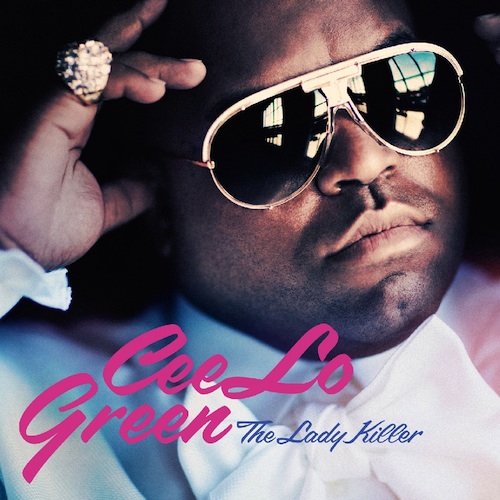
The Lady Killer
-Cee-Lo Green (Warner)
After three predominantly English-language albums in a row, Colombia’s biggest star releases a predominantly Spanish-language record, though the title (Sale el sol in Spanish) is still rendered in English in some markets, including Japan for some reason. Shakira’s double life as a global sensation, which involves multiple versions of the same album often with completely different songs, has always been put down to commercial imperatives, but except for the title confusion and the gratuitous, entirely utilitarian World Cup ditty, The Sun Comes Out is a fully integrated work, even with the bonus tracks thrown in, thus indicating that she thinks it’s good enough as it is for everyone. What Anglophones miss in terms of her storied “poetic sense” is made up for with a tougher approach. Shakira is basically a rock singer, but while classic elements have always figured on her LPs, this is the first one where they outstrip the Latin and reggaeton touches. She gives as good as she gets with her guests, which include Dizzee Rascal, Pitbull, and Calle 13, but the real singing pyrotechnics flash when she’s challenged by walls of hard rock guitars and pounding pianos. It’s hard to suppress a giggle when the U2 bombast of “Devocion” opens up into an operatic vocal line, but once the song reaches its churning vortex of a climax your hair will be on end. The breathy, kittenish intro to “Tu Boca” is deceptive; by the bridge, with a metal onslaught propping her up, she’s taking your head off. She can do quiet, too, and if Stevie Nicks is still looking for inspiration, she could do worse than check out “Island” and the title cut. In fact, if rock were still the default mode for Top 40 radio, Sun would launch a dozen singles, the same way Rumours did. It’s hardcore ear candy. These days, R&B is the default mode for Top 40, which is the best explanation for the pure soul tack that former Goodie Mob rapper takes on his third solo joint. The Lady Killer has already given up one hit single and made history in the process, but despite a knock-em-dead falsetto break, “Fuck You” (rendered on the Japanese edition in both its original and cleaned up versions, the latter titled “Forget You”) doesn’t outlast its initial novelty appeal, and serves to remind the listener that Cee-Lo never rests until he’s convinced you how clever he is. The opening and closing “Lady Killer Theme” establishes a tongue-in-cheek mood that puts these familiar R&B moves in an almost satirical setting, and most of his originality is spent on track 2, “Bright Lights Bigger City,” which pumps like a piston. With a tune this good and an arrangement this sophisticated, Cee-Lo hardly needs all the pushy sexual innuendo to keep a listener’s attention, but that’s mostly what you get on the rest of the album: warmed over boogie and soul ballads with a hint of snark. Continue reading

Posted in Music | Tagged , , , , , , , , , , , , , , , , | Leave a comment

Best movies 2010

Here is my list of ten-best-movies-plus that comes out in EL Magazine this week. It was a disappointing year. The pickings were slim because, on the one hand, movies are getting worse and, on the other, Japanese distributors are handling fewer foreign films. This latter trend reflects not only economic realities, but the concurrent trend of a local preference for domestic fare, which by itself should be good news. However, the most popular Japanese movies being released these days are financed by larger media companies with a bead on specific demographics. They tend toward a numbing sameness in style and sensibility, and are dependent on a predetermined group of tested actors and idols, none of whom betray having any real stake in the work they’re doing.

If it sounds like Hollywood, well, that’s a worldwide trend. But even non-mainstream Japanese movies, or, at least, the ones I’ve seen, are stuck in a rut that values expression over intellect. Not counting those in the field of anime, Japanese features are all about evincing responses, either with contrived plots, extreme bits of acting, or direction that clearly shows off a filmmakers’ influences. Behind it all there’s usually not much of substance. A pretty good example is Cold Fish, which opens next month and has been getting a lot of buzz for being edgy and all that. However, it’s a fairly atrocious film, filled with gratuitous sex and violence that not only feels false but isn’t even fun. Continue reading

Posted in Movies | Tagged , , , , , , , , | 4 Comments

Media Mix, Dec. 19, 2010

Here’s this week’s Media Mix, which is about university grads’ well-publicized desperation in the face of a shrinking job market. The story has been covered extensively for the past year or so, but the Closeup Gendai feature cited in the column made a persuasive case that many of these grads have a very narrow view of their possibilities based mainly on a received notion that, because they’re graduating from a particular university, they are somehow destined for a particular sort of future that doesn’t really exist any more, if, in fact, it ever did.

This idea is bolstered by an article in today’s Japan Times about large construction companies looking for growth overseas. The major corporations that these grads believe are the key to their happiness now require more flexible employees to accomplish their changing goals, and the grads have not received the kind of education to provide that. As mentioned on the program and in the column, there are small and medium-sized companies that do promise some growth from a purely domestic point of view, but many grads have to be purposely steered toward them. A pretty common complaint now about the younger generation of Japanese is that they have no desire to go abroad; they see no point in it. Whether this disinclination is due to fear, laziness, or cultural self-centeredness makes no difference. The big companies they long for are going in the opposite direction. Of course, the big companies, who for years carried out recruitment policies that encouraged the exact kind of attitudes that these grads now display, have as much to do with this perception gap as anybody does, and maybe even more so since as a collective force they’ve lobbied over the years to make it easier to dismiss full-time workers and hire people with no benefits or security. This is not news, though these grads may be the last to read about it.

Posted in Media, Money | Tagged , | 1 Comment