Review: Plane

Some find the trend of ultra-simple titles for blood simple action movies—Cocaine Bear, Snakes on a Plane—refreshingly honest, if not appropriately dumb, but this Gerard Butler vehicle, which was produced by Butler himself, would seem to be the last word in the trend. In fact, the title is so amorphously generic that it could be about anything and everything. As might be expected, it’s mainly about a plane crash, with Butler playing the resourceful pilot who takes his responsibility as the captain of his ship very seriously, meaning he thinks of the welfare of his surviving crew and passengers first. For the most part, the action is as generic as the title, but up until the guns and violence kick in, the movie does a fair job of explaining the mechanics of a commercial flight and what a flight crew really does in an emergency. The director, Jean-François Richet, is meticulous in his setup, and so we understand the stakes from the get-go. The flight depicted is a less-than-half-full New Years Eve jump from Singapore to Tokyo. Capt. Brodie Torrance (Butler) sees a storm brewing over the Philippines and decides to fly around it, which would add an hour or two to the flight time. Since many of the passengers are going to Tokyo to connect to other flights, the flight manager says no way. 

Richet walks us through the flight prep, the takeoff, and the relatively uneventful first part of the journey, showing how Brodie and his co-pilot, Samuel (Yoson An), maneuver through the storm by attempting to fly above it. He also, in true disaster movie fashion, samples the passenger list, settling uncomfortably on a law enforcement type handcuffed to a fugitive, Gaspare (Mike Colter), who has been wanted for murder, though the fact that he committed this crime when he was a minor grants him a certain measure of sympathy that will come in handy later. And once lightning hits the plane and knocks out the electrical system, including all communications, the nuts-and-bolts exposition really comes into its own, as Torrance miraculously crash lands the aircraft in the middle of a Philippine jungle with only two casualties—one of whom is the law enforcement guy.

After that, the movie becomes real conventional real fast. Torrance goes into full survival mode while the folks back at the airline’s HQ in New York struggle to locate the downed plane and, understanding that this part of the Philippines is controlled by rebel forces who regularly hold foreigners for ransom, call in “private assets” for assistance. The rebels, of course, show up on schedule and immediately terrorize the passengers, doing nothing helpful for the image of Muslim separatists in the Philippines. It’s up to Torrance, who, it turns out, learned how to fly in the RAF (Butler for once is permitted to wield his natural Scots accent), and Gaspare, who spent his fugitive years as a foreign mercenary, to battle the rebels and save the passengers, and then get the plane airborne again. Given that the action pales in terms of excitement when compared to the flying sequences at the beginning and at the end, Plane does justify its title, since it’s really the star of the movie. 

Opens Nov. 23 in Tokyo at Toho Cinemas Nihonbashi (050-6868-5060), Toho Cinemas Hibiya (050-6868-5068), Toho Cinemas Shinjuku (050-6868-5063), Toho Cinemas Roppongi Hills (050-6868-5024). 

Plane home page in Japanese

photo (c) 2022 Plane Film Holdings, LLC (c) Kenneth Rexrach
Posted in Movies | Tagged | Leave a comment

Media watch: Diet members neglect to read the room and (inadvertently?) raise their own pay

Fumio Kishida

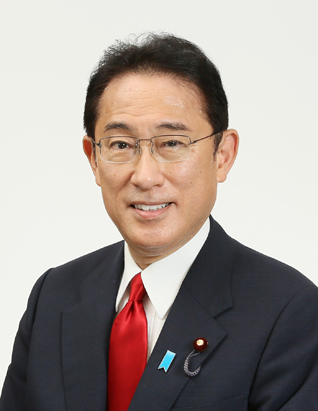
As Prime Minister Fumio Kishida’s support numbers continue to drop, the Diet on Nov. 17 approved an increase in pay for him and the rest of the cabinet, not to mention a select group of bureaucrats who perform “special work,” whatever that means. As one would expect, the increase was met with criticism, since the consumer price index continues to rise while the wages of mere mortals remain stagnant. The increase amounts to an extra ¥460,000 a year for Kishida and ¥320,000 for each member of the cabinet, and the prime minister obviously realizes the optics are not good here since he’s already announced he will return his increase to the treasury.

Nikkan Gendai Digital, in an article posted Nov. 15, before the Upper House passed the related bill, wants everyone to know that this won’t be the end of the matter. Gendai asserts that the mainstream media isn’t reporting the true significance of the increase: According to the law, when pay for cabinet members is raised, then bonuses for all members of the Diet must also be raised. The reason most media outlets didn’t mention this in their coverage is probably because the pay increase for MPs wasn’t included in the bill, and while the cabinet members can return their pay increases if they want to, MPs cannot return bonuses or any portion thereof. 

The main opposition camp, the Constitutional Democratic Party, submitted a bill to freeze the pay of cabinet ministers and other Diet members, but three parties, the ruling Liberal Democratic Party, their coalition partner Komeito, and the Democratic Party for the People, rejected it. The CDP’s Akira Nagatsuma pointed out that net wages in Japan have actually been declining for the last 18 months, so increasing politicians’ pay is just plain wrong. Kishida insists that the average worker’s pay will magically increase in April, so Nagatsuma thinks any pay increases for the government should be postponed until after that dream comes true. There’s absolutely no justification for raising pay at this particular point in time, and to add insult to injury the bill that was passed also includes a line that guarantees a pay increase for government officials working on the 2025 Osaka Expo, which is turning into a huge fiscal embarassment for everyone involved. As for what the CDP will do with the extra bonus pay they will receive against their will, Nagatsuma says they will collect the “difference” from all party members and donate it to charity. 

Continue reading
Posted in Media | Tagged , | Leave a comment

Review: Strays

As talking animal movies go, Strays isn’t very innovative visually, and its premise that the kind of typical dog behavior that humans find funny or gross is for dogs a point of pride is difficult to sustain for 90 minutes, but it does manage to entertain through its voice cast’s enthusiasm. Though not a big Will Ferrell fan, I think he’s perfect as the scruffy leading mutt, Reggie, who is too much of a callow canine to realize his layabout owner, Doug (Will Forte), hates him. As Doug continually tries to abandon Reggie, the dog just keeps coming back until Doug gets truly serious and dumps him in the city where his sense of direction is useless. Still convinced that Doug loves him, Reggie hooks up with the stray Boston Terrier Bug (Jamie Foxx), who quickly disabuses him about the reality of human warmth. Reggie is of the opinion that “a dog’s purpose is to make humans happy,” while Bug’s more cynical take is that Reggie is just a codependent sap and the life of a stray is where it’s at. 

Suffice to say that both dogs have their attitudes adjusted as they hook up with two other dogs disappointed with their own lots in life: Hunter (Randall Park), a former police dog turned therapy pet in a nursing home, and Maggie (Isla Fisher), a collie who’s been replaced in the affections of her owner by a Pomeranian. Parodying The Incredible Journey, the movie has this quartet finding their way to Doug’s house, where Reggie, his mind turned around by Bug’s profane life’s lessons, plans to “bite Doug’s penis off.” Along the way they filch food from a county fair, get high on mushrooms, dodge birds of prey, land in the pound where they and other strays make a jail break, and hump a lot of furniture and garden ornaments for recreation. It’s a dog’s life, director Josh Greenbaum wants to say, and while the jokes don’t always land the depiction of how dogs really view the world is consistent—and sometimes revealing in new and strange ways. Pissing, of course, comes with its own set of rules (doing it on another dog is a sign of affection) and philosophical tenets, while dog shit is obviously valued highly by humans—Why would they always pick it up and put it in a bag if it were otherwise? Also, postal workers are the Devil’s spawn. 

It’s the interplay between Ferrell’s clueless puppyism and Foxx’s street-wise bluster that keeps the movie going, as if the two actors had transplanted a seasoned comedy routine wholesale into the characters. And while the movie earns its R-rating, it’s hardly surprising that Reggie and Bug essentially change places at the end, with the former embracing his newfound independence and the latter finding his own human to love. Some things never change, though if this were a movie about cats, all bets would be off. 

Now playing in Tokyo in dubbed and subtitled versions at Toho Cinemas Nihonbashi (050-6868-5060), Toho Cinemas Hibiya (050-6868-5068), Toho Cinemas Shinjuku (050-6868-5063), Toho Cinemas Roppongi Hills (050-6868-5024).

Strays home page in Japanese

photo (c) Universal Studios

Posted in Movies | Tagged , | Leave a comment

Review: Mona Lisa and the Blood Moon

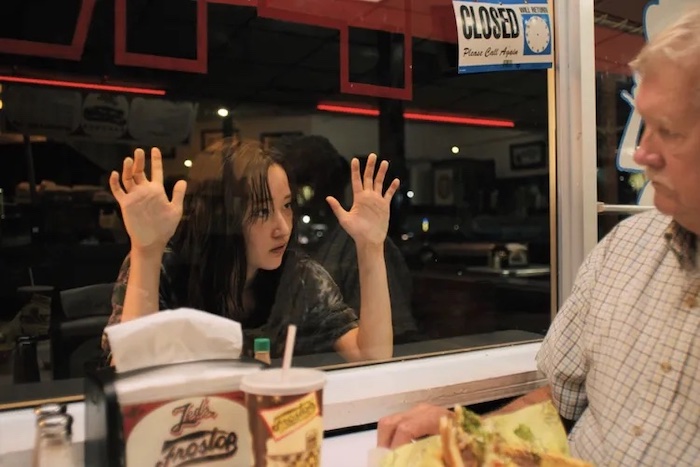
For her third feature, Ana Lily Amirpour returns to the methodology she adopted for her impressive 2015 debut, the Iranian vampire movie A Girl Walks Home Alone at Night, and though the dialogue was in Farsi (Amirpour grew up in the U.S. but is of Iranian heritage) and the setting was supposed to be Iran, it was filmed in California with Iranian expats. Mona Lisa and the Blood Moon evokes a similar feeling of dislocation. Though filmed on location in New Orleans, the disparate range of types suggest a hodgepodge of notions that must have coursed through Amirpour’s imagination while devising the story, which swerves wildly through and around several genres. 

The titular protagonist (Jeon Jong-seo) is presented from the outset as suffering from some sort of neurological impairment that has confined her to a mental institution for what may have been her entire life. We take the orderlies’ less-than-reliable word that she is of Korean descent but that’s all the info we will ever get about her background. The staff subject this young, mute woman to offhanded cruelty, and one employee goes too far while cutting her nails. Mona Lisa Lee (Her real name or a nickname?) responds by locking eyes with her tormentor and taking control of her motor functions, making her stab herself repeatedly with the nail cutters. She then makes her escape onto the streets of the Big Easy, where, desperately searching for food, she encounters colorful characters galore, including a sympathetic but somewhat skeevy drug dealer (Ed Skrein) who buys her junk food (a running joke that runs out of gas pretty quickly) and a stripper named Bonnie (Kate Hudson), who, after witnessing Mona Lisa’s mind control shtick, recruits her to get people patronizing ATMs to surrender their cash. Eventually, the cop investigating the stabbing (Craig Robinson) tracks down the two and, after suffering himself under Mona Lisa’s gaze—she gets him to shoot himself in the foot—goes all out to capture them. Awkward chases and confrontations with underworld scum ensue. 

Though there’s a definite comic vibe to the whole enterprise, Amirpour can’t sustain any sort of tone. The viewer is meant to commisserate with Mona Lisa’s predicament, which amounts to that of an innocent just coming to terms with the wiles of the world, in particular, Americans who can be selfish but, deep down, still lean toward moral awareness. What they never are, however, is responsible. It’s hard to muster any kind of fellow feeling for Bonnie, who in addition to having a casual flair for larceny is a negligent single mother, even though I assume Amirpour wants us to identify with her. As for Mona Lisa, she remains an unmarked white board even as she slowly picks up some verbal capabilities and develops a sense of potential for her future. As a character she lacks qualities. She’s simply a vehicle for ideas that weren’t thought out very clearly.

Opens Nov. 17 in Tokyo at Shinjuku Cinema Qualite (03-3352-5645), Human Trust Cinema Shibuya (03-5468-5551).

Mona Lisa and the Blood Moon home page in Japanese

photo (c) Institution of Production LLC

Posted in Movies | Tagged , | Leave a comment

A conversation about Yasujiro Ozu with Kelly Reichardt

(c) TIFF 2023

The acclaimed American indie filmmaker Kelly Reichardt was invited by the Tokyo International Film Festival to come to Japan and join a symposium to talk about the work of the late Japanese director Yasujiro Ozu to celebrate the 120th anniversary of Ozu’s birth. Following a screening of Ozu’s 1959 comedy, Ohayo (Good Morning), on Oct. 27 at the Mitsukoshi Theater, Reichardt discussed the film and other Ozu works with fellow directors Kiyoshi Kurosawa and Jia Zhangke. Each was to choose a film to discuss in detail. Reichardt chose Ozu’s most famous film, Tokyo Story, which often shows up on lists of the greatest movies ever made. Kurosawa chose the lesser known The Munekata Sisters, and Jia talked about Late Spring. Several days later, I interviewed Reichardt in the offices of the festival for The Japan Times, and the conversation was so lively I have decided to post the whole transcript, digressions and all. Enjoy.

This is the first time you’ve been in Japan, right?

Yes.

You must be a big fan of Ozu if they expressly asked you to come for this symposium.

I was shocked. And then I came here and I literally only spoke for ten minutes.

How did it come about?

I’d been waiting to be invited to Japan for a long time, but my films haven’t really played here much. So this was my first chance, and it was great. But I only scratched the surface.

But why did they specifically ask you?

I don’t know. I think my films and Ozu films were mentioned together in some books. 

Well, you teach, right? Do you teach Ozu?

Well, next semester, just because I’ve been studying so much. I’ve just seen 16 films. I teach production. The students in one of my classes–I teach one semester a year–we do a feature film and each student does one scene and then we suture it together. I give them scenes where they sort of…I’ve shown Ozu and talked about Ozu before, but never made an Ozu film. It’s tricky, because you don’t want to see a bunch of Americans doing Japanese. There’s a lot of Chinese students in the class, so we could do a Chinese film. They do everything, but they’ll do a lot of scenes of Sirk and stuff in Mandarin. 

But if you use Ozu in class, do you use him to teach composition?

Yes. Composition. It’s all about trying to keep a formal language alive against the onslaught of YouTube. It’s a losing battle, but nevertheless. 

At the symposium you said that in the past you had always imagined Japan through Ozu’s lens. What have you discovered since being here?

I mean, also Mizoguchi and Kurosawa, but I suppose it’s the attention to detail for everything. I’ve seen some little scenes play out that seemed very Ozu to me, between parents and kids. It’s just that I’m suddenly very steeped in it right now. Also, this constant corridor effect of looking at things. I went to Kyoto for two days. It was nice to get that kind of change, even if it was only scratching the surface.

You also said that you had discovered Ozu backwards, meaning you saw the later films first. 

Those were the ones I knew.

Continue reading
Posted in Movies | 1 Comment

Media watch: New child-oriented housing loan plan literally has something for everyone

Last week the Japan Housing Finance Agency announced a new scheme whose ostensible purpose is to support couples who have children or plan to have children. The scheme targets couples looking to buy homes by offering to reduce the interest rate on mortgages approved under the agency’s Flat 35 plan, which offers full-term fixed-rate loans with no guarantee fees or extra charges for prepayment. 

In a series of articles, the Asahi Shimbun implied it is yet another government scheme to raise Japan’s sagging birth rate, though a closer look at the particulars would seem to suggest that it’s yet another government scheme to boost the residential real estate market. In a nutshell, the plan, which goes into effect next spring, is to knock 0.25 percentage points off the Flat 35 interest rate approved by financial institutions for every child a couple has at the time they apply. At present, the interest rate for Flat 35 loans ranges from 1.96 percent to 3.53 percent for mortgages that last between 21 and 35 years. So if a couple has two children, they can reduce their interest rate by 0.5 percentage points. If they have three children, it’s 0.75 percentage points. The maximum reduction under the scheme is 1.0 percentage points, but if the couple applying for the loan is already receiving other reductions offered by either the central government or their local government, including interest reductions for a new house with approved energy saving functions, then those reductions are included in the final calculation by the lender.

Some local governments already offer interest-reduction plans to couples with children, and those reductions would also be counted toward the 1.0 percentage point maximum allowed under the new plan. However, if the total reductions add up to more than 1.0 percentage points, the excess can be carried over to a later year. The new scheme sets the interest reduction to be in effect for up to ten years, but if there is an excess of reduction points those points can be knocked off the mortgage interest for five years following the expiration of the initial reduction period. As it stands, the central government, through the Ministry of Land, Infrastructure, Transport and Tourism, has already budgeted ¥210 billion in various schemes to help people with children buy homes—for instance, couples with children under 18 who buy a new house that qualifies as a Zero Energy Home can receive ¥1 million in cash—and the budget for this new scheme is only ¥1.5 billion. 

Continue reading
Posted in Media | Tagged | Leave a comment

Review: You Will Not Have My Hate

The title of this movie, based on a best-selling memoir of the same name, probably feels less awkward in French. Having not read the book, I can’t say how much of the movie is faithful to the real life story of its author, Antoine Leiris, but the director, Killian Riedhof, ends up with something that seems to veer from the implication of the title. Leiris lost his wife in the 2015 attack on the Bataclan theater in Paris by Muslim terrorists, and in trying to address his sudden, intense grief he posted an open letter to the terrorists on Facebook saying, in effect, that they wouldn’t win; that though they “stole the life of an exceptional being, the love of my life, the mother of my son…you will not have my hate.” In essence, he would not give them the “satisfaction” of hating or even fearing them. “I will not change,” he wrote. The post went viral and Leiris became a minor celebrity, with media from all over the world treating him as the open face of defiant victimhood, a role he accepted reluctantly but accepted nonetheless. 

The film never leaves Leiris’s side. As portrayed by Pierre Deladonchamps, he’s a slightly off-putting example of male privilege, a would-be writer who can’t seem to get past the third chapter of his novel. His wife, Helene (Camelia Jordana), works full-time, and in the opening scene, which takes place the morning of the attack, they have a minor row over her job schedule. It becomes apparent that Antoine is the stay-at-home dad for their 3-year-old son, Melvil, and he seems to resent the fact that Helene has a life outside their roomy Paris apartment. She is going to a concert that night with a male friend, while Antoine babysits. Riedhof chronicles the unfolding of the attack in almost real time as it impacts Antoine, who desperately tries to find out Helene’s situation once the bulletins start crowding the airwaves. Riedhof ratchets up the suspense, even though the viewer knows what is happening and what the end will be. Most of the film charts Antoine’s emotional state in the aftermath, in particular his relationship to his son, who can barely understand that his mother is not coming home again. But the essay that occasions his fame feels almost like an afterthought. Though reporters play up Antoine’s refusal to play the terrorists’ game, the movie never has much interest in the game or even the background of the attacks. It is purely a study in grief, and once the essay is posted it doesn’t have much purchase on the continuing plot, which is simply a day-by-day reckoning with sadness. 

In that regard, the movie is effective, though the viewer may find it difficult to sympathize completely with Antoine, who remains a sticky personality, so caught up in his grief that he can’t be present for other loved ones, especially those in his immediate family who are also mourning Helene. And while I think this is the point of the movie and a valid one, as a viewing experience the story moves along without much in the way of dynamic variation. Even the highs and lows have a rhythmic consistency that feels predictable. That’s the thing with memoirs: they tend to follow real life, which is often at odds with the aims of cinematic storytelling.

In French and English. Now playing in Tokyo at Toho Cinemas Chanter Hibiya (050-6868-5068), and from Nov. 16 at Kino Cinema Shinjuku.

You Will Not Have My Hate home page in Japanese

photo (c) 2022 Komplizen Film Haut et Court Frakas Productions TOBIS/Erfttal Film und Fersehproduktion

Posted in Movies | Leave a comment

Tokyo International Film Festival 2023

Here are links to the articles I wrote for this year’s TIFF website. Thanks to Karen Severns.

Gondola Q&A

Sermon to the Birds Q&A

A Long Shot Q&A

Blind at Heart Q&A

Zhang Yimou masterclass

Tatami Q&A

Roxana Q&A

Tony Leung masterclass

Kore-eda Hirokazu masterclass

Air Q&A

Ozu Yasujiro symposium

The Settlers Q&A

The Gospel of the Beast Q&A

Maria Q&A

Love Nonetheless Q&A

Snow Leopard Q&A

TIFF Lounge: Yamada Yoji and Gu Xiaogang

TIFF Lounge: Yang Yonghi and Mouly Surya

A Foggy Paradise Q&A

Posted in Uncategorized | Leave a comment

Review: The Beasts

Recipient of the Grand Prix at last year’s Tokyo International Film Festival, as well as the prizes for Best Actor and Best Director, this Spain-France co-production is one of the few TIFF winners that seems like it could have been a contender at Cannes or Berlin. (It also won Spain’s Goya Award for Best Picture.) The Competition films at TIFF tend to be movies that aren’t submitted for competition at more famous festivals because of rules imposed by an international film festival authority that limits such films to only one competition, and so as a group they often come across as second-tier. Reviews of The Beasts at other film festivals hinted that it was very good but lacked something crucial that would make it great, maybe because it was pegged as a thriller. Watching it a second time, I picked up on nuances that eluded me initially, and I found the tension actually doubled, despite the fact that I knew what was going to happen. 

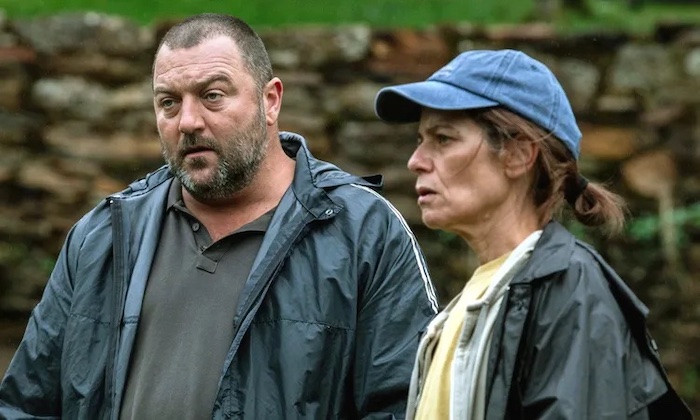
When the movie begins, the problems that will eventually boil over are already simmering. Antoine (Denis Menochet) and Olga (Marina Foïs), are a middle aged French couple who have moved to the mountains of northern Spain to start an organic vegetable farm. They are outsiders to this provincial village, and while they have made friends, their nearest neighbors, a pair of brothers named Xan (Luis Zahere) and Lorenzo (Diego Anido) who raise livestock, hate Antoine’s guts, and not just because he’s French. A Norwegian company wants to buy a large parcel of land for wind turbines, and Antoine is one of the landowners who has voted against the deal. The permanently aggrieved Xan figures the money from the sale could set him up for life and relieve him of having to “smell like shit” all the time. The director, Rodrigo Sorogoyen, keeps Antoine’s reasons for spiking the deal under wraps, but it slowly comes out that he understands how this Norwegian company works, and at one point tries to reason with Xan, saying that the company is simply looking for the cheapest land in the EU, and that the money they will pay him will not set him up for life. The gambit fails, because Antoine, a former teacher, is to Xan a “tree-hugging intellectual” who looks down on people like him. The die is cast, and it becomes clear as the two men spar and feint at each other, that the title refers not just to Xan, but also to Antoine, whose resentment for being denied a comfortable, fulfilling life makes him mean and desperate. And while I was expecting some kind of Straw Dogs confrontation, what happens is different but no less terrifying, and as the focus of the movie shifts from Antoine to Olga and their frustrated adult daughter, Marie (Marie Colomb), everything you thought about the movie’s theme and expected from the plot development turn out to be wrong. 

The movie’s haunting atmosphere is deepened by the rugged landscape, the broken down stone houses that Antoine endeavors to fix up for his fellow villagers (Xan thinks he is doing it to attract more like him), and weather that can change on a dime. This is a tale about not taking people you don’t really know at face value. Xan is what he is, and the other inhabitants of these hills and forests, even when they pretend to welcome you, will just as soon wrestle you to the ground and take everything you have. It’s not a thriller. It’s a chiller, because its view of human nature will freeze your soul. 

In Spanish, French and Galician. Now playing in Tokyo at Bunkamura Le Cinema Shibuya Miyashita (050-6875-5280), Cinemart Shinjuku (03-5369-2831).

The Beasts home page in Japanese

photo (c) Arcadia Motion Pictures, S.L., Caballo Films, S.L., Cronos Entertainment, A.I.E., Lepacte S.A.S.

Posted in Movies | Leave a comment

Review: Saturday Fiction

This is the second feature from Chinese director Lou Ye to open theatrically in Japan this year. The previous movie, The Shadow Play, was a cynical comment on the effects of the postmillennial Chinese real estate boom. Saturday Fiction could not be any more different, as it’s a period thriller with not much to say about any particular social order except the ones that accommodated the Japanese occupation of Shanghai that both preceded and followed the attack on Pearl Harbor. However, there are similarities in the way the two stories address the way Chinese societal aims are undermined by forces that are at their core antisocial, which isn’t to say Lou is completely successful in making these points credible and compelling. Both films belong to genres that Lou was tackling for the first time. Shadow was a conventional police mystery, while Saturday trades in espionage intrigue. Lou, it should be remembered, made his name with the atmospheric Suzhou River and the sensational frankness of his 2006 Tiananmen epic Summer Palace, which was banned in China. His latest movies, while still displaying notes of transgressive art, adhere closely to ideas and devices that most moviegoers will understand immediately.

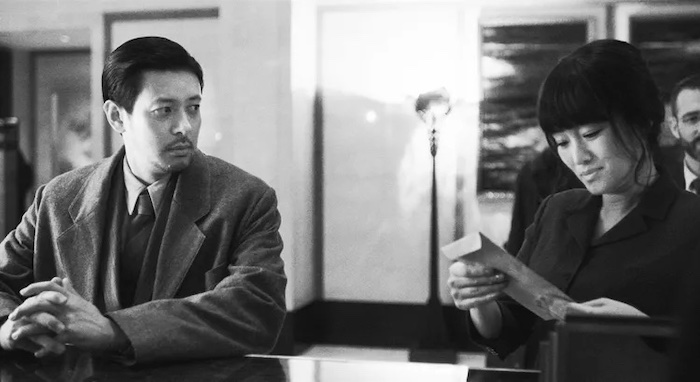
Based on at least one bestselling novel, Saturday Fiction centers on a popular stage and film actor, Jean Yu (Gong Li), who returns to Shanghai on Dec. 1, 1941, after several years of self-exile in Hong Kong, to star in a play called Saturday Fiction that is being staged by her former lover, Tan Na (Mark Chao). Chinese media are saying that Yu is actually returning to get her ex-husband (Zhang Songwen), currently detained and presumably tortured by the Japanese, sprung from confinement, and one of the major problems in Ma Yingli’s screenplay is that this ex-husband’s role in the ongoing political drama is never clarified. It seems that everyone wants him dead, whether Japanese or Chinese, and his temporary survival, even in bruised and broken form, doesn’t make much sense amidst the seething nationalist emotions at large in the city at the time, when Shanghai was called a “solitary island” because of the French and British concessions allowed by the invading Imperial Army. The play-within-the-movie is about a factory strike, thus adding another layer of danger to the proceedings, and the rehearsals are as fraught as any of the spy stuff. Pascal Greggory plays Yu’s foster father, a resident of the French concession who runs a book store as cover for his intelligence activities, which are now focused on breaking the new Japanese military codes that have been implemented to carry out the various sneak attacks planned for later in the week. He enlists his adopted daughter to play act a role that will extract the meanings of the codes from the Japanese naval intelligence attache (Joe Odagiri). Other contributors to the chaos of conflicting intentions include Tan Na’s duplicitous producer (Eric Wang), an aspiring actress (Huang Xiangli) with a hidden agenda, the attache’s thug-like security operative (Ayumu Nakajima), and the Jewish emigre concierge (Tom Wlaschiha) for the hotel where much of the action is set. 

Despite the basic spy story’s total lack of believability, the movie passes as a heart-racing thriller, especially during the final half hour when all bets are off with regard to the plot and people just start shooting at anything, regardless of their loyalties. Though the production values are high-end, it’s obvious Lou wants to make something more of the material than what it is—the low-contrast black-and-white photography, the handheld camerawork, and the overlaid, oversized white textual elements all practically scream “DIY!”—and he proves himself adept at tried-and-true action cliches. Next time, he should just get himself a script that works on the same level.

In Mandarin, English, Japanese and French. Now playing in Tokyo at Human Trust Cinema Yurakucho (03-6259-8608), Shinjuku Musashinokan (03-3354-5670).

Saturday Fiction home page in Japanese

photo (c) Yingfilms

Posted in Movies | Tagged , , | Leave a comment