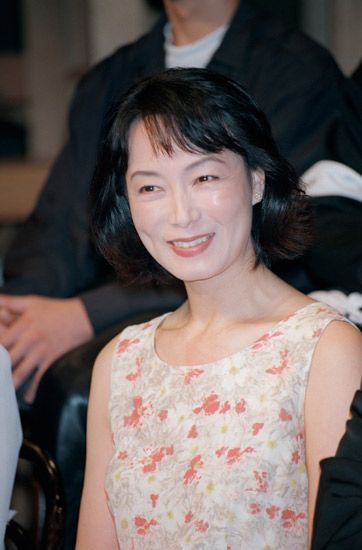
On July 25, the Japanese actor Yoko Shimada died in a Tokyo hospital. She was 69 years old. Some older people may remember Shimada as the female lead in the 1980 American TV miniseries Shogun, which was based on James Clavell’s bestselling novel about Edo-era Japan and an Englishman, played in the series by Richard Chamberlain, who served the shogun. Shimada received a Golden Globe Award for her performance and became famous worldwide as a result. She was already a star in Japan and the acclaim made her even more of one. Afterwards, she was busy, and even did more work in Hollywood, but eventually she faded from the Japanese public’s consciousness, partly due to the usual indignities the industry imposes on female actors as they age, and partly due to Shimada’s pride.
In 2018, Shimada was diagnosed with rectal cancer and refused to undergo chemotherapy. Realizing she might soon die, she initiated a final project, a movie called Ever Garden, in which she played a dying woman. It was filmed in Kagoshima Prefecture in the summer of 2021 on a shoestring budget, with Shimada providing her own wardrobe. She was on a lot of medication at the time and often had trouble breathing and even eating. According to an article in the Dec. 21 Asahi Shimbun, at one point, Shimada’s character was supposed to enter a lake, and the director, knowing how difficult that would be for her in her condition, suggested she just dip her feet in the cold water, but Shimada insisted on immersing herself fully. A co-star remarked that everyone on set was so impressed by how determined Shimada was to get the scene right. This incident is obviously included in the article to show what a consummate professional Shimada was, even if such an act was physically agonizing.
The movie opened in theaters at the end of 2021, but Shimada could not attend the premiere or any related events because she was in the hospital, where she did not receive any visitors and communicated to the outside world only through texts. When she died, she died alone. An anonymous acquaintance told Asahi that following her death, the Shibuya Ward office in Tokyo contacted the actor’s relatives listed in their records, but no one came to claim her body. The source elaborated by saying that before she died, Shimada had told others that she had no family to speak of after her own mother died. In addition, she had been going through financial difficulties for some years, so after Shibuya Ward kept her body for two weeks without any contact from kin, they cremated her at their own expense in accordance with the Welfare Law, which states that if the deceased has no family, or if they do and that family is insolvent, the local government will handle the postmortem processing. In most cases, this means a social worker or interested acquaintance can carry out a funeral and cremation ceremony that is paid for by the local government, even if the deceased was not approved for government assistance before their death. The local government will also take care of transporting and storing the body beforehand. When Asahi called Shibuya Ward to ask if this was the case with Shimada, the representative said they were not free to talk about it, but the previously mentioned source confirmed that everything related to Shimada’s postmortem process was paid for by the local government.
Continue reading