As we’ve said here many times before, one of the main purposes of Japan’s family register system (koseki) is to determine paternity for the sake of bureaucratic convenience, which means that it is the authorities who have the last word on who the father of a child is. Over the years this function has caused grief to some families whose circumstances veer from the norm. The most infamous component of this system is the Civil Code statute that states if a child is born to a woman within 300 days after her divorce is finalized, the child’s father is automatically deemed by the government to be the woman’s previous husband, regardless of whether she has remarried or, if she has, any claim of paternity the new husband may want to make. The idea behind this odd rule is simple and almost cynical: Since the authorities can’t prove beyond a reasonable doubt that the child is not the issue of the previous husband, given that it is entirely possible that the couple could have had sex on the eve of their divorce, it’s easier to just assume he is rather than fret over other possibilities. Such arbitrary attention to detail would not be necessary if the family register weren’t so focused on a head-of-household, but that, to the authorities, at least, is the beauty of the family register since it defines a family the way the authorities want it to be defined.
The problem, of course, is that marriages and families don’t always align with this model, and many women who find themselves giving birth during this 300-day connubial lacuna refuse to register the child because they don’t want their ex to be designated as the father, for various reasons. The Ministry of Justice says that there are 793 people in Japan who do not have family registers (the number sounds quite low to us, but for the sake of this blog post we’ll take their word for it), and 70 percent don’t have them because of this 300-day rule. In Japan, it is difficult to live without a koseki, because you need one to apply for social services and a passport, and many employers require them as well. So while 793 is not a particularly big number, the rule has always proved to be an obstacle, and an unnecessary one because of its aformentioned arbitrary character.
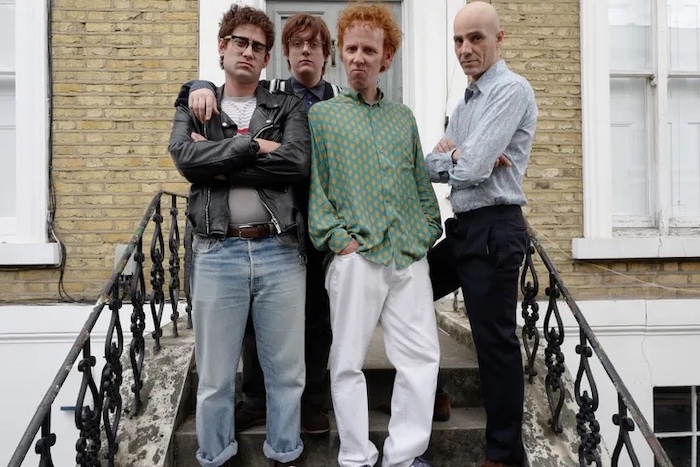
I’m too lazy to check, but I’m pretty sure there’s already been at least one documentary made about Creation Records, the incongruously successful indie label that catapulted some of the biggest British acts of the 80s and 90s to world fame. Creation Stories is more of a comic biopic of founder Alan McGee, though it’s structured as a doc in that it tries to stuff everything of consequence regarding the history of Creation into its frantic 100 minutes. I admit that I learned some interesting things, mainly about how My Bloody Valentine essentially destroyed the label financially before Oasis gave it a second wind, but generally the live-fast-and-die credo that underpins most rock music stories is milked for more than it’s worth, and by the time McGee is a walking, talking cliche of show biz excess, holding court beside a Beverly Hills swimming pool, of all places, you’re tired of the whole thing.
Part of the problem is that the filmmakers, which include Irvine Welsh as script contributor and Danny Boyle as producer, cruise on their love of this era and thus neglect to find anything in McGee’s tale that’s distinctive for those of us who didn’t grow up in it. It’s the classic story of a poor lad who’s obsessed with music but harbors no innate creative talent of his own (though he did front a semi-successful band for a time), channeling his energy into the promotion of people he instinctively recognizes as great. In McGee’s case his impulses were more correct than those of others of his ilk. As played by two actors (Leo Flanagan, Ewen Bremner), McGee is all manic idiosyncrasy and no discernible personality, so when the drugs and booze quickly take over the viewer isn’t sure what’s actually fueling his success. It all seems so accidental, and when the initial triumph managing the Television Personalities leads to the revolutionary discovery of the Jesus and Mary Chain, you don’t get any sense of McGee using his wits to make the cognitive leap. The movie makes it seem as if he was just in the right place at the right time, which could have made for something funny and ironic, but it’s mostly just confusing.
By the time McGee discovers Oasis (played by bad actors) in the basement of a club during a talent showcase, the trite attempts to cultivate nostalgia have curdled over into cynical boredom. Even the end game, where the label’s disastrous financial follies finally defeat McGee, who then marshals his marketing proclivities in the service of politics, lacks the dramatic intrigue that should bring the story full circle. I have no doubt much of this is true, but it all plays as farce, and not very funny farce at that.
Now playing in Tokyo at Shinjuku Cinema Qualite (03-3352-5645), Shibuya Cine Quinto (03-3477-5905).
In my daily reports on this blog I reviewed movies I had seen in screenings at the festival, but I also saw other films online and in the Video Library. Here are observations of those movies. Festival section names in parentheses.
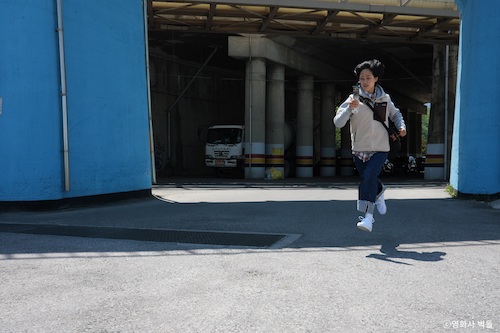
A Wing and a Prayer (Jiseok): This is the first feature I’ve seen by former Hong Sang-soo assistant Lee Kwang-kuk, and while it follows the general Hong template of seemingly aimless conversations that only add up in hindsight, it also has more of a conventional structure. Two female BFFs in their 20s make an impromptu night bus trip to the coastal town of Donghae to watch the sun rise over the sea, only to fall asleep on the beach and miss it. Predictably, the pair bicker and go their separate ways, each making a new friend in the process. Lee trusts his instincts insofar as the resulting action doesn’t go where you might expect it to go, but although I liked the characters and found everything plausible, it didn’t offer enough dramatic substance to make a deep impression, except, that is, for one scene of bullying that really got my blood pressure up. Contrast, or just that Lee really know how to depict cruelty?
Universe Department Store (Wide Angle: Documentary Showcase): Not so much a documentary as a personal exploration of memory, Wong Tae-woong’s expressionistic film was sparked by the news that a teahouse he’d once frequented had closed because the department store that contained it was being demolished for a redevelopment project. The news revived memories of the Universe Department Story, which stood on the same spot for only three years in the 1980s before the department store with the teahouse was built, but Wong’s recollection of the store (he was in elementary school) are fuzzy to the point where he wondered if it even existed. Soliciting others with memories of the place he finds that most of what he remembered was true, but everyone favors different details—for instance, the “space ship ride” that stood in front of the building seemed to have different functions for different witnesses. Wong also patronizes a hypnotist to better plumb his own brain reserves. In the end, what emerges is a capsule summary of the Korean middle class of that era, but the mystery of the place remains a mystery, if for no other reason than that it’s difficult to believe that there are no records about the store, but Wong does a good job of describing his own feelings about it.
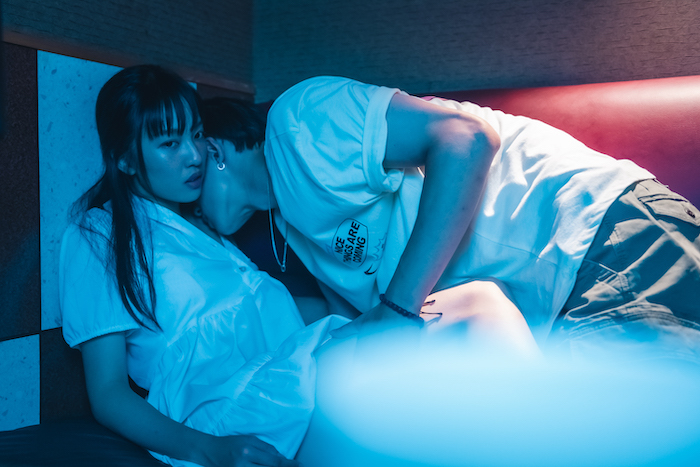
Little Blue (A Window on Asian Cinema): This Taiwanese movie is yet another look at how social media has affected—or, in this case, twisted—young people who seem to have no other outlet for self-expression. Director Lee Yifang conveys it completely through a teenage girl’s awkward and desperate sexual awakening, a risky move that only partially pays off. Xiao Lan is introduced as a model student with a streak of cynicism, especially with regard to friends and acquaintances who are already sexually active. Part of the reason for her attitude is her single mother, a realtor who readily sleeps around, even with clients, though it isn’t apparent in the beginning how much Xiao Lan knows about this. When a popular, somewhat disreputable boy in her class hits on her she eventually gives in and, of course, falls in love, which is not something he’s willing to reciprocate, and as a result she goes off the deep end by sleeping with everyone who swipes her on Tinder (or whatever the dating app they use in Taiwan). Lee depends way too much on coincidence and plot short cuts to make a case. The movie is well made but it seems to describe a situation that could only happen on screen.
Just as he did with his 2017 portrait of Jackie Onassis, director Pablo Larrain fixes his gaze on another famous female partner of an important man, Diana Spencer (Kristen Stewart), during a specific period of his subject’s life. In Onassis’s case, it was the period of mourning following the assassination of her husband, John F. Kennedy, a situation that posited the first lady as the most famous widow in the history of the Western world. Larrain’s point—that Jackie used this opportunity to not only advance the idea that JFK was one of the greatest leaders of all time despite his short time in office, but also to sell her own brand—seemed painfully reductive for a full-length feature whose main characteristic was its period-detail production design (not to mention star Natalie Portman’s bizarre mid-Atlantic accent).
Spencer is similarly reductive in that the period depicted—Christmas 1992, shortly before the announcement that Princess Diana would separate from Prince Charles (Jack Farthing)—was chosen to highlight Diana’s struggles with mental illness, an aspect of this already over-studied history that was mostly absent from Ed Perkins’ recent documentary, The Princess. But that doesn’t necessarily mean the two movies complement each other. Perkins was concerned with the media’s obsession with Diana, while Larrain takes such obsession with famous women for granted and, again, tries to analyze his subject’s temperament through a study of her behavior, which he often fabricates in ways that seem beholden to that obsessive coverage. It’s not so much that he projects a revisionist biography, but rather than he highlights one aspect of the conventional narrative to the point of distortion. Right from the start we know there’s a serious problem when Diana, driving her own car, gets lost on her way to the estate where the royals will be celebrating the holidays, despite the fact that it’s where she grew up. After she arrives, she is mostly left to her own devices, since Charles had yet to show up and everybody else has already cultivated a dismissive attitude toward the troubled princess.
Larrain conjures up what very well may be the nastiest Christmas anyone has ever had to suffer through, and Diana’s own abject fear of having any contact with her in-laws and their minions—including Timothy Spall in a diverting turn as the factotum in charge of keeping the press at bay—is treated like something out of Dario Argento. The only person she halfway trusts is her maid, Maggie (Sally Hawkins), whose idiosyncrasies are all bound up in her loyalty to the one person in the household who, it’s implied, doesn’t deserve to be there. Though Diana’s demise is five years away, the viewer can see doom at every turn from one hallway to another in this massive manor house. Larrain’s stylistic choices almost overwhelm Diana’s story. It’s as if the whole idea of this monarchy was dictated by the Devil. Had Roman Polanski directed the screenplay it couldn’t have been more oppressive.
Now playing in Tokyo at Toho Cinemas Nihonbashi (050-6868-5060), Toho Cinemas Hibiya (050-6868-5068), Toho Cinemas Shinjuku (050-6868-5063), Bunkamura Le Cinema Shibuya (03-3477-9264), Toho Cinemas Roppongi Hills (050-6868-5024).
A friend attended the public screening of Decision to Leave at the Sohyang Theater yesterday morning and said that the print they showed had no English subtitles. Consequently, almost all the non-Korean members of the audience just walked out after ten minutes or so. If any of them had paid I wonder if they were able to get refunds. In the 20 years I’ve been attending the festival this has happened to me at least once. I’m sure the festival knew before the screening that the print was not subtitled. Were they only expecting Korean people to attend? They should have made an announcement, but it sound like they didn’t make on. Fortunately, I saw the movie at a press screening, and the print was subtitled, so obviously there’s a subtitled print at the festival.
Yesterday was pretty much my last day of movie-watching. I have interviews and other work I have to do today, so I didn’t reserve any tickets, but if I have time I might go to the video room or watch something online.
I saw two documentaries yesterday that dealt somewhat with what I guess you call the Korean diaspora. Both were American productions about American subjects. The first was Free Chol Soo Lee, which is about that famous case of the Korean man who was falsely accused of murder in San Francisco in the early 70s. I moved to SF in 1974, but didn’t really become aware of the case until the retrial in the early 80s, when he was exonerated. The movie does a good, albeit dry job of explicating the case through stock footage and recent interviews with acquaintances (Lee died in 2014). The main issue, of course, was racism. Though Lee, who had immigrated from Korea when he was about 12, had been in juvenile detention and was considered, even by himself, to be a street punk as a teen, he was mostly a loner. The person he was accused of killing was a member of a Chinese gang, and Lee was famous in Chinatown as the “Korean guy.” Chinese witnesses to the murder would never have picked him out of a lineup, but the only witnesses used during the trial were white people to whom all Asians looked alike. Plus, the police completely botched the ballistics investigation. It was a classic case of pre-ordained conviction, and while in prison Lee was often attacked by white gangs or Mexican gangs. He was still alone, and while defending himself killed a member of the Aryan Brotherhood. He was convicted of murder and sentenced to death. His road back to freedom is encouraging and shows the power of a community—in this case the Asian community and not just Koreans—who feels victimized. Given the current mood of anti-Asian hate in the U.S., the movie is timely. I just wish it were a little less academic in style.
The other documentary, Liquor Store Dreams, is about Korean-owned bodegas in Los Angeles. It was made by a young woman who grew up as a “liquor store baby.” Her parents had immigrated from Korea in 1970s and her father eventually bought a liquor store at around the turn of the century. And while they weren’t involved in the infamous L.A. riots of 1992, when the Korean properties were attacked by Black people angered by the Rodney King verdict, they were deeply affected by it. Something like 80 percent of the liquor stores in the Black and Brown neighborhoods of South Central are owned by Koreans, and the director goes briefly into the history of how this happened. Mainly, however, the story is personal; about her own feelings of growing up in such a milieu, and how it affected her relations with other minorities. She contrasts her own situation with that of another liquor store baby, a man who got his dream job with Nike only to quit after his father died and he took over the store. But he made it into a community space that successfully bridged the racial divide between the Black/Brown community and the Asian community. Though the narration and mood were a bit too American bubbly for my taste, it’s a good look at a niche subject that says a lot about the immigrant experience in the U.S.
I also saw my third Iranian film yesterday, Jafar Panahi’s No Bears, which he completed before being sent to prison for various anti-government actions. Panahi, of course, has been banned from filmmaking in Iran for the past ten or more years, though he’s managed to make movies secretly through various means. No Bears is probably his most ambitious of this ilk. In fact, it addresses his situation directly. Panahi relocates to a village on the Turkish border where he remotely directs a movie set in Turkey (he’s not allowed to leave Iran). Naturally, all sorts of problems emerge with this methodology, including telecommunications issues, but the story has a dual structure. One is the movie-within-a-movie about an Iranian dissident couple exiled in Turkey who are attempting to flee to Europe, and the other is a young couple in the village he is staying temporarily who are having an illicit affair that Panahi may have inadvertently photographed. The two stories play out in parallel and finally converge in a very distressing way. I would say the whole production was a bit too neat, but it’s masterfully done, which is all the more extraordinary given the circumstances under which it was made.
The fourth movie I saw was Dream Palace, a movie that could only take place in South Korea, even though I know the problem discussed happens in Japan, too. A woman whose husband has died in a work accident takes the settlement money from the company and uses it to buy a new condominium, which right from the start has serious problems. The water, for instance, is rusty, and the developer says it can’t do anything until all the units are sold (if it sounds unbelievable, it is, though the explanation given is plausible to a degree). Eventually, the woman comes up against the condo owners association who resents her effort to help sell the unsold units at a discount. Meanwhile, the families of the victims of the accident that killed her husband resent the woman for settling while they continue to press the company for better compensation. It’s a complicated story that sometimes gets bogged down in particulars about who did what when, and it presupposes a certain understanding of the Korean penchant for organized demonstration, which to outsiders may seem over-elaborate. But it’s a very intense movie and Kim Sunyoung’s lead performance is one of her best.
It rained yesterday off and on but never heavily, so while I carried around my umbrella, I never used it. Last night I had drinks with the director Shin Suwon and her producer. Though none of her films are being shown on the official program this year, some are being screened at side events. I was surprised to learn that she released a movie several years ago about whether or not to have children. I didn’t even know about it, probably because it was never shown in Japan and, I guess, was not featured at BIFF. She also told me that one of her older films, Light of the Youth, was based on the same true story that July Jang’s Next Sohee was based on, but, in deference to the family of the person who committed suicide, she changed a lot of the particulars. Jang didn’t. And, apparently, another director is planning to make their own movie about this incident, so that will make 3 films about the same subject.
She also asked for recommendations and I said she would probably like A Table for Two, which I saw yesterday. It’s a Korean documentary about a young woman who suffered from anorexia and bulimia as a teen and her mother. It’s the first movie I’ve ever seen about eating disorders that probed the psychological mindsets of people who have the disease—and the movie makes it clear that it is a disease, even if its triggers are mostly psychological. The young woman apparently felt neglected as a child after her parent divorced. Her mother admits as much. She was a student activist in the 80s during the dictatorship, and after democratization in the 90s she married and had a child but couldn’t find much purpose to her life. She eventually found a job in education that she loved but ignored her daughter’s spiritual needs. Most of the movie involves pointed discussions between mother and daughter, and they are quite enlightening.
I also saw Thousand and One Nights, the Japanese submission to New Currents, the only section of the festival where awards are given out by the festival. I wasn’t expecting much but it was quite good. Yuko Tanaka plays a woman on Sado Island whose husband disappeared 30 years previously. She becomes a kind of advisor to a younger woman whose own husband disappeared two years ago. There’s some talk about possible abductions (though the words “North Korea” are never uttered) but the feeling you get is that these men disappeared because that’s what some men do. In a sense, it’s a woman’s film but it doesn’t make either of the two protagonists into crusaders. I found the subplot about the fisherman who is trying to get Tanaka to let go of her husband’s memory and marry him a bit annoying, because he himself is annoying. Maybe that was the point, but his nagging insistence, as well as their acquaintances, that she should marry him when she obviously just didn’t want to became too much in the end.
I saw my second Iranian film of the festival in the afternoon. Scent of Wind was the opening movie for the festival. Like the other Iranian film I saw it’s mostly about how inconvenient life in rural Iran is. Both movies, for instance, contain a scene where a vehicle gets stuck due to the poor quality of roads. Scent also brings in two disabled characters, one of whom drives the plot, if you want to call it that. When the character’s power goes out an engineer from the power company has to go to all sorts of lengths to fix a broken transformer, and even pays for it out of his own pocket, because he sees that this character is taking care of a boy who is in a vegetative state. There’s very little dialogue and the acting is strictly movement-oriented. The real star of the film is the landscape, which is filmed in such a way as to highlight the massiveness of the mountain ranges that surround this part of Iran.
Then I watched my first Indian movie of the festival. Mariam is about a Muslim family barely getting by in Mumbai. The title character is pregnant with her fourth child, and at first the viewer is drawn to believe that the husband is irresponsible for having more children when they can hardly feed the other three, but things are not what they seem. Mariam is one of those movies about the poor that goes from bad to worse to even worse. It’s a classic film tragedy in that regard, though it addresses a very modern phenomenon. And while I didn’t expect a happy ending, I also didn’t expect no ending at all. The movie just sort of cuts out, as if the filmmakers were exhausted by all the misery.
The weather has been perfect so far—sunny and cool, though a bit windy. Today it is supposed to rain, which means I have to carry an umbrella. I’m already carrying too much.
Yesterday, I expanded a bit beyond Korean cinema. In the morning I saw Myanmar Diaries, a compilation of videos created by anonymous Burmese, some taken during pro-democracy demonstrations and others dramatized renderings of life in Burma since the Feb. 2021 coup. It’s pretty devastating, especially the footage of police and hired thugs beating demonstrators and hauling them off the jail as their loved ones plead and wail. But it also holds together as an integrated film. There are no credits; though, apparently the production was overseen by some Dutch filmmakers. There’s a lot of careful overlap between the purely documentary material and the more expressive stuff, and the movie has an easy fluidity that takes nothing away from its power to shock. It’s an impressive feat, though I doubt it will see a lot of exposure.
I’ve heard talk that this year’s Iranian offerings are strong, but I haven’t heard anything particular about individual movies except Holy Spider, which was banned in Iran and filmed in Jordan. Unfortunately, I couldn’t get a ticket to the only public screening that will take place while I’m in town, and it isn’t available online or in the video library. Instead, I went to see Life & Life, the Iranian submission to the new Jiseok section, which contains the kind of Asian films that the late programmer Kim Jiseok liked to bring to BIFF. The director apparently isn’t here for the screening and recorded a message that was played before the film screened. In it, he said that he was not after any kind of “technique,” but simply wanted to tell a story. Actually, Life & Life betrays almost no technique at all—which isn’t necessarily a put-down, but sometimes I got the feeling he was simply going with what he had and wasn’t really after anything definite. It’s strongest element is its handling of the COVID pandemic as a fact of life. A school teacher and her five-year-old daughter are trying to travel to the village where she normally teaches, but due to COVID the main roads are closed to anything but emergency vehicles, so she is forced to take backroads through the desert. It turns out to be a perilous endeavor because the roads are all dirt or sand and the directions she receives from various passers-by are invariably wrong. Along the way, the precocious daughter asks lots of probing questions about her absent father and life in general, and her mother tries to answer these questions as sincerely as possible, but, being a teacher, she can’t do so without trying to made some kind of moral or ethical point. Though not a dull movie, Life & Life gets a bit tiring with all this sermonizing, and I wonder, given the current situation in Iran, what with women rioting over the lack of control they have over their lives, how they would react to this teacher’s sense of pride and purpose, not to mention entitlement.
Pride and purpose threw me for a loop in Brillante Mendoza’s newest film, Feast, which was produced by a Hong Kong company. One of Mendoza’s rare “conventional” movies, it really threw me for a loop, and not because it doesn’t really play up to his normal strengths, but rather because it travels in a direction that I would never associate with Mendoza. It’s essentially about how a traffic accident affects two families, one very well-off, and the other poor. But it’s also about food and its preparation, and sometimes the two themes seem quite far apart. I think Mendoza is more religious than I previously thought, because the power of prayer and Biblical knowledge had a prominent position in the dramatic development. I wasn’t expecting a tale of revenge or retribution, but I would never have predicted he’d make a movie that basically pities the rich. I couldn’t stay for the Q&A, but apparently he said he shot and alternate ending that was much darker. I’m not sure if that would have been a better movie, but I would definitely like to see it.
The reason I couldn’t stay for the Q&A is because I had ten minutes before Park Chan-wook’s Decision to Leave started. Fortunately, the festival added a press screening after the first day, because I’m sure it would have been difficult to get tickets for the only public screening that’s taking place while I’m here. It definitely lives up to the hype, and after seeing it I really can’t think of another living director who makes such consistently high quality work. Even when I don’t like his stories or themes—I’m not a huge fan of Old Boy, and The Thirst was downright awful—I have to admit he knows exactly how to put a film together. Decision to Leave is blessed with a great script with a ridiculously convoluted story that just keeps pulling you further and further into its universe. I don’t think it’s a stretch to call it the best femme fatale movie since Double Indemnity, and yet it succeeds as a deliriously romantic film without resorting to any sex or even much violence (at least, compared to past Park movies). And it’s a movie about ideas, too: about insomnia, the malleability of language, the appeal of being “wanted” (as a suspect, in this case), and the real definition of fidelity. And Park Hae-il’s character enters the noir canon as one of the most original cops ever conceived, a man who loves his work to the point that he has to quit when he believes he’s compromised his professional ethics. See it, and find fulfillment.
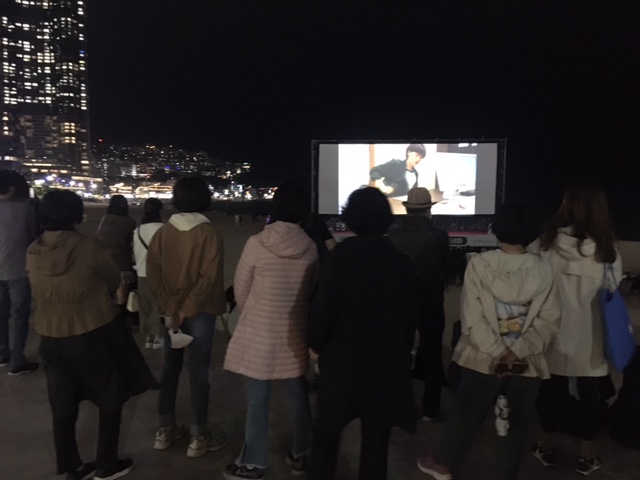
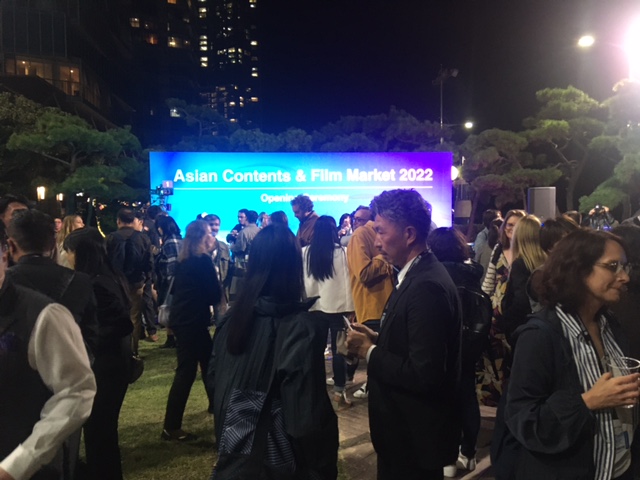
The big news at this year’s BIFF is that, after 2 years of limited activities due to the pandemic, the festival is back to normal. I arrived Thursday evening, the day after the official opening, and had to make my way into town on my own. It wasn’t a big deal, but since the mid-2000s I’ve been a guest of the festival and they had paid for my accommodations and given me a ride from the airport. None of that this year—I’m paying for a tiny room in a little hotel off the main drag in Haeundae that doesn’t even have a closet or a desk—and though I greatly appreciate the hospitality in the past, I don’t automatically expect it. I’m just a reporter. Still, I’ve heard that public funding for the festival is still down quite a bit, so they are obviously cutting back on things. I see very few foreign press here, and even those who are present mainly work for the trades and live in Asia. I haven’t seen any journalists from Europe or North America. They’ve completely done away with English interpreting for the Q&A sessions (though they still announce after the screening, in English, for the audience to “stay in your seats” for the after-screening talks). A lot of the amenities that were normal features of the festival around the Busan Film Center are gone. So obviously things are not completely back to normal; or maybe the festival is just downsizing to be rational.
But they are definitely back to speed in terms of the program—more films than ever, and quite a few premieres. The main missing ingredient is China. I would say the number of films from China and Hong Kong is about a third the usual offering. China can be selective about what it sends to film festivals, and I know they are cracking down on Hong Kong’s movie industry, but I assume the paucity of works is due to COVID. The zero-virus policy must have had a serious effect on output. That’s also why BIFF gave their Asian Filmmaker of the Year award to Tony Leung. It gives them an excuse to set up a whole section with Leung’s classics, thus adding half a dozen old Hong Kong films to the roster. But with China slightly out of the picture, other national cinemas get a relative boost, and the buzz this year is that Iran’s offerings are very strong, which is a lucky coincidence because of the turmoil that’s in the news every day. I haven’t seen any Iranian movies yet, but there are several that I’ve heard are quite controversial.
Yesterday, I saw four movies, all Korean. I always try to catch Hong Sang-soo’s latest when I’m in Busan and, as usual, he has two this year. It’s better to see his work with a Korean audience, who tend to laugh a lot at his situations and dialogue. Nevertheless, I enjoyed Walk Up, which I watched online in my hotel room Thursday night, more than The Novelist’s Film, which I saw at a public screening yesterday morning. Walk Up is one of this Hong films whose structure is deceptive in that time doesn’t necessarily proceed linearly, but it’s story about how a particular artist abandons his art out of sheer neglect and distraction was quite potent and even a bit sad, an adjective I rarely use for Hong’s movies. The Novelist’s Film, on the other hand, is the usual Hong fare in that it’s almost all conversation over drinks that reveals more than its participants probably realize. It was definitely funnier than Walk Up, but seemed tossed off. Not surprisingly, the cast for both movies was identical, as if he had made both movies simultaneously. He probably did. I think, in fact, that’s part of his methodology.
Jang Kunjae’s Junee from 5 to 7 shows Hong’s influence in terms of style: monochrome with mostly static shots and very little in the way of plot development. It’s much more somber, though, befitting its theme. The title character, played by Kim Jooryung of Squid Game fame, is a middle aged drama professor who, during the titular time period, awaits a possible breast cancer diagnosis and tries to go about her business as best she can. It’s an actor’s film in more ways than one, since Kim has to convey what’s happening inside while she puts on a normal front for colleagues, friends, and family. But half the movie is also about a small theater company who is doing a play by her husband, which is about a husband and wife. Though the movie is almost too modest, it has a cumulative power that really does show how performance is the foundation of civilized life.
In contrast, Next Sohee, the latest film by July Jang, a former assistant to Lee Chang-dong and whose earlier film, Girl at My Door, is one of my favorite Korean movies of recent memory, is conventional in all the best ways, and yet it kept surprising me—at one point it even made my jaw drop. Like Lee’s earlier films, Sohee takes an acute social problem and studies how it affects individuals. The title character is a high school senior whose vocational school gets her a position in a telecom company as a customer service rep. Pugnacious to a fault but understanding her place in the scheme of things, Sohee quickly realizes that this setup is a kind of scam. The work is punishingly awful, and I wondered if customers for internet services are really this horrible, but in any case pay is dependent on performance and many new recruits quit. For Sohee that isn’t an option because the job is tied to her credits—if she quits, she might not graduate. The second half of the film centers on a police detective played with sullen assurance by Bae Doona, who investigates the goings-on at both the company and the high school and finds that the problem is systemic in the worst way. Next Sohee is simply a great, engrossing film, made with skill and a keen appreciation for what makes a viewer shake their head in disgust.
The last film of the day was 20th Century Girl, which has received a bit of pre-fest buzz, though I misunderstood the nature of that buzz. I think what people were talking about was that this movie will be hugely popular, and I can see why. It’s produced by Netflix, which Korea is slowly conquering series by series. 20th Century Girl looks like a Netflix production and has the same sparkly vibe as the biggest Korean drama series. It’s a romantic comedy set in 1999 at a high school. One girl is slated to go to the U.S. to receive heart surgery, and just before she leaves she meets a new kid at school and falls for him hard. She asks her best friend to keep an eye on him while she’s gone and tell her everything about him over the new internet. The best friend does too good a job of this assignment. At first, I found the bubbly humor obnoxious, but the script is clever and has some interesting twists. Mostly, though, it’s a nostalgia gorge for Korean viewers who were about the same age as the protagonists in 1999, so, yeah, it will likely be hugely popular. In Korea, anyway.
Dreamworks reportedly hopes to develop this animated feature into a franchise, but so much of it is pastiche that it might be difficult to pass off as original. The premise is that the heroes are not only “bad guys” in movie parlance, but animals that tend to have a negative image in real life: snakes, piranha, tarantulas, sharks. The head of this motley crew of criminals is a wolf voiced by Sam Rockwell at his sleaziest, and while wolves have generally been rehabilitated in recent decades through the services of environmental groups (as have sharks, even though they still kill people), the movie appropriates the old Hollywood cliche of wolves, meaning guys on the make, especially when it comes to their approach to women.
The other element that makes the movie more generic than distinctive is that it’s a heist movie whose particulars about the job in question seem to have been cribbed from every other heist movie, in particular the Soderbergh “Oceans” series. George Clooney is even mentioned by name, as if two cinematic universes had passed each other in the night. There are car chases and evil geniuses and corruptible politicians, but all these different aspects are more or less thrown into a stew of jokes and pop cultural asides that stall the plot’s forward momentum. The object of larceny is a bank and the mechanizations of the steal get buried under all this comedic business and sideways moves for the sake of romantic intrigue: Wolf “makes love” to the state governor, a fox (Zazie Beetz), whom, naturally, he ends up really falling in love with, though his original purpose was to distract her. The villain, of course, isn’t Wolf or his team of fanged, clawed accomplices, but rather a guinea pig (Richard Ayoade) named, of all things, Professor Marmalade. (Where’s Paddington when you need him?) It’s not spoiling anything to say that the “crooks” end up looking like the good guys because they fight the real “evil” in the world. One for all and all for one, though the “one” in this case would seem to be the franchise.
Subtitled version opens Oct. 7 in Tokyo at Toho Cinemas Shinjuku (050-6868-5063), Toho Cinemas Roppongi Hills ((050-6868-5024).
Movies, especially American movies, love characters who are ground down by the effort to just get by, and usually they are allowed some measure of triumph. Andrew Bujalski’s Support the Girls, which is set in a Hooters-type family restaurant in suburban Texas, is so dense with circumstance that the viewer doesn’t have time to parse whether the various people moving across the screen are getting by or triumphing. Though ostensibly a comedy, the laughs are so hard won that you almost feel guilty for being entertained.
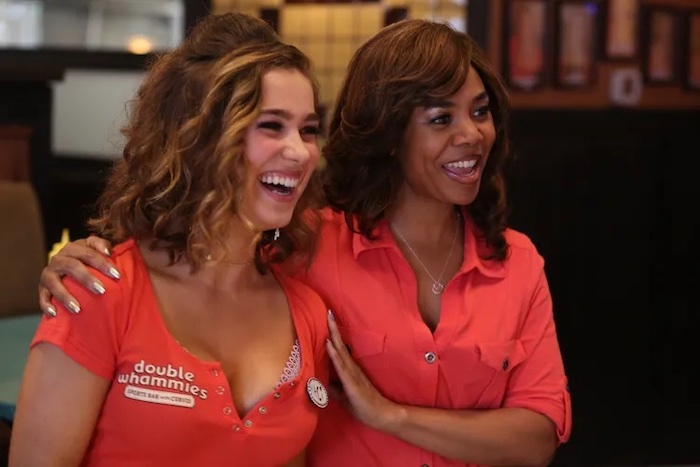
Bujalski doesn’t give us a plot, but instead a structure within which various stories play out in pieces and segments. At the center is Lisa (Regina Hall), the manager of Double Whammies, who is serious about her work and her dedication not only to her customers, but to her employees—female servers who wear revealing clothing and understand why. For the most part they’re in their early 20s and know that they can make a lot in the way of tips by flaunting what they’ve got, but Lisa is protective and strict in this regard: She’ll boot a customer who “disrespects” her girls but she’ll also send a worker home if she goes over a certain line. In other words, Lisa is a real manager, but Bujalski is careful to balance her authoritarian bent with a conscientiousness born of bitter experience. “I can take fuckin’ up all day, but I can’t take no trying,” seems to be her abiding attitude toward labor, and the girls appreciate it, especially the veteran Danyelle (Shayna McHayle), whose attachment to the establishment is tentative—she might not come in on time if the babysitter is late and doesn’t care if she called out—but whose loyalty to Lisa is unequivocal.
It’s the way Bujalski contrasts what goes on in the restaurant with what goes on outside of it that makes the movie unique, and the latter is mostly about Lisa’s struggles with the economy. During the day depicted, she has to take time off to visit rental properties that are probably out of her reach and then meet with the sleazy owner of Double Whammies (James Le Gros) who is not shy about slamming diversity if it even looks sideways at his bottom line; and he’s frankly getting sick of Lisa reminding him of his responsibilities. These scenes are simultaneously funny and painful to sit through, because you know they’re not at all funny for Lisa, and since Bujalski isn’t the kind of director who is here to make you feel good, you know he isn’t going to reward Lisa in the end with a happy ending, because those things just don’t happen. As matters at the restaurant spin out of control this funny-tragic dichotomy only intensifies. Support the Girls is a rare movie and an even rarer study of what most American workers have to put up with. You suffer every day but when you step outside yourself and look at the situation straight, you just gotta laugh.
Opens Oct. 7 in Tokyo at Shimokita Ekimae Cinema K2, Shimokitazawa.