BIFF 21: Oct. 14

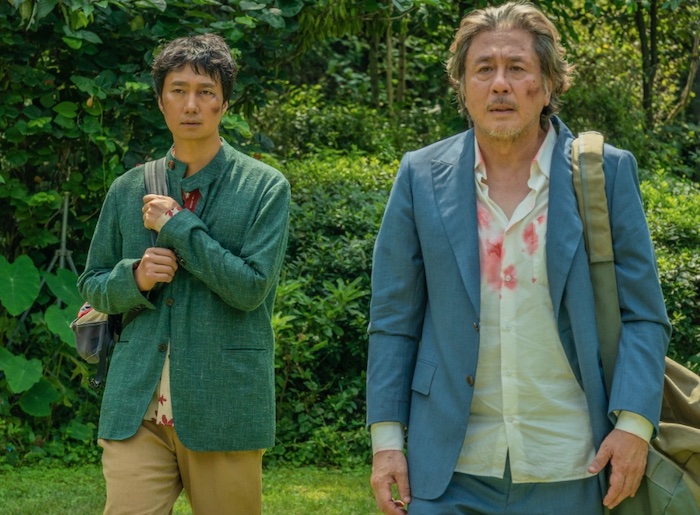
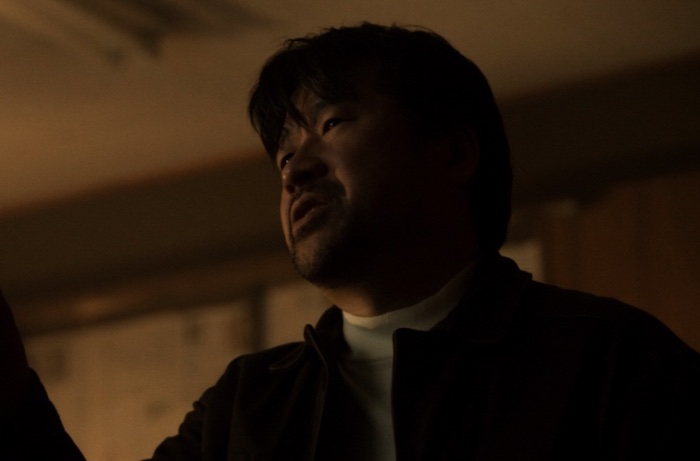
still from Missing (c) Missing Film Partners

In most people’s minds, film festivals without the word “fantastic” attached to them mostly deal in art house cinema, though these days the big ones show Hollywood blockbusters, even if they draw the line at the Marvel cinematic universe. In that regard, BIFF has a leg up on the competition since such distinctions in Korea tend to be purely economic. There are lots of Korean indie art house features released every year, but they get little exposure. Even the work of Hong Sang-soo, which is celebrated the world over and tends to find wide distribution in Europe, doesn’t make much money in his home country. But what would derisively be called “middle-brow cinema” in other countries gets fair play in Korea, and often the distinction between such fare and obvious blockbusters is blurry. That’s why BIFF often screens the biggest box office hits in Korea that have already been in theaters for months. For one thing, it’s a means of showing off the national product to international players (including journalists) who are coming to the festival, and it’s also a way of allowing hardcore local fans to interact with the directors and actors responsible for these hits. 

Invariably, a lot of these movies that blur the line between art house and mainstream are genre exercises, and it’s interesting that two of the entries in the New Currents section this year are pulpy indies that are obviously meant to appeal to more general audiences. One, the second feature from Japanese director Shinzo Katayama, who has worked with Bong Joon-ho, belongs to the ever-popular serial killer genre, though the production notes try to make the case that it is a trenchant study of “human nature.” The English title, Missing, does the film no favors since I can think of at least two other movies off the top of my head with the same title. (The Japanese title, Sagasu–Search–is probably no better) Those who seek it out for the kind of excitement one expects from a thriller will probably not be disappointed, but despite a few odd twists and an unconventional structure, I’m not sure if they will come away impressed. 

The premise seems simple enough. Harada (Jiro Sato) is a widower raising a high school age daughter, Kaede (Aoi Ito), on meager means. Having made a mess of a business he started, he goes from one low-paying odd job to another and finds it difficult to save enough money. Still, Kaede loves him as much as an intelligent, independent teenager can, and when he purposely goes missing one day, she rustles up all her resources to find him on her own, since the police don’t seem to take the case seriously. Her only clue is that before he disappeared, Harada said he had seen a fugitive serial killer on the train and wanted to look for him in order to claim the ¥3 million reward.

Had Katayama stuck to this simple, serviceable story–which is based on a real life serial killer story–it might have generated the requisite suspense you anticipate in such movies, but he wants too much in terms of the aforementioned “human nature” exploration, and the exposition necessitates a flashback structure that dulls the momentum of the plot and, even worse, strands the most interesting character, Kaede, in movieland limbo for almost a full hour. By the time she reappears her role in the story has changed for the worse. She goes from dogged seeker of truth to proxy conscience without proceeding through the phases that usually come with such a transformation. This lack of clear character motivation extends to the other primary characters, whose more extreme actions range from the blackly comic to conventionally grand guignol to stomach-churningly repulsive. Katayama seems to know he’s going out on a limb with these characters because he over-explains them at every turn through redundant dialogue. In the end, the viewer thinks more about the mechanics of the plotting than about what makes the characters tick.

Seire (c) BIFF

The Korean film Seire, by first-time director Park Kang, is more straghtforward about adhering to its genre protocols. In this case the genre is ghost stories. The title refers to a Korean custom surrounding the birth of a child. For a 21-day period that extends from just before the birth to after it, the parents must follow certain rituals and avoid certain behaviors, otherwise bad luck could befall the child. The protagonist, Woojin (Seo Hyun-woo), is the new father, a salesman who takes his responsibilities seriously. He thinks the seire custom is a lot of hooey, but puts up with it for his wife’s sake. However, during the seire period he receives a message saying his old girl friend has died and he decides to go to the funeral despite his wife’s strong entreaties not to go, since one of the prohibitions of seire is that the parent must not go to a funeral. As it turns out, she’s right, but not necessarily for occult reasons. Woojin broke up with his former girlfriend after she miscarried a child that he didn’t really want in the first place, and, according to her twin sister (whom Woojin didn’t know about), the girlfriend never got over the miscarriage, or Woojin. 

Park does some very interesting things with regard to Woojin’s difficulty in distinguishing between dreams and reality, and it becomes clear rather early on that the spooky things that happen around him are mostly projections of his own nagging guilt. Given that the South Korean birth rate is even lower than Japan’s, Seire will probably not be welcomed by those in the government whose job it is to convince young Koreans to have more babies. Children themselves are not scary in Seire the way they often are in other horror movies having to do with childbirth, but Park pretty much shows everything that could possibly go wrong when you decide to have a baby. 

Posted in Movies | Tagged | Leave a comment

BIFF 21: Oct. 13

still from Pedro (c) BIFF

As I wrote yesterday, one of the challenges of attending BIFF and making the most of your time there is being able to pick up on the buzz and then responding to it. Observing the festival remotely, it’s very difficult to pick up on any buzz, but early on I heard good things about the Indian movie Pedro, which was supposed to make its world premiere last year in the Cannes’ Directors Fortnight section, but didn’t since the whole festival was cancelled. Consequently, it’s making its debut at BIFF as part of the New Currents lineup. As befits the section, it is 26-year-old director Natesh Hegde’s first feature film, following two shorts that, according to him, cover similar stories and themes. 

The titular character, played by Hegde’s father, is an electrician in a small village in Karnataka in western India. His reputation as a hard worker endears him to one of the local landowners who runs a large farm. He is also introduced early on as a doting father to a young boy, meticulously bathing him in a scene that practically glows with familial affection. Also living in the same small house is the boy’s mother, Julie, and Julie’s mother. The first hint of drama arrives at night, with the mad, drunken  shoutings of a man outside their home, most of which is aimed at Julie. Eventually, we learn that this man is Pedro’s younger brother, Bastyava, who is actually Julie’s husband. However, due to his reckless drinking habit, she kicked him out and Pedro has taken his place. 

The landowner, who allows Bastyava to bunk on his property, hires Pedro to patrol his land when his regular security guard dies suddenly. Pedro has never handled a gun, but he reluctantly takes the assignment since he needs the money for his family. His inexperience, combined with what seems to be a low sense of self-esteem, leads to a stupid mistake whose negative resonance in the village Pedro compounds through his stubborn resentments. In essence, he trades places with his brother as the village black sheep, a situation that the landowner and Pedro’s few friends try to remedy through negotiation and expiation, but Pedro is too far gone in his anger.

As a story, Pedro is a classic tragedy, except that the protagonist who is brought down by a fatal character flaw is not high-born. In fact, one of the film’s nagging mysteries is Pedro’s origin. When the villagers turn against him, they start referring to him as an “outsider,” and while the Western provenance of his given name sets him apart from others, it’s not clear from Hegde’s bare bones exposition what makes him different. In a phone conversation with the director two days after the sold-out world premiere of his movie, he told me that Pedro belongs to a lower caste and had been raised by Catholics, while the dominant culture in this part of India, which speaks the Kannada dialect, is Hindu. Pedro’s “mistake” was basically an affront to this culture, which is even worse to the villagers since they see him as being from “outside” that culture. Moreover, the authority in the village is split among the main landowner and various village leaders whose interests often conflict. There is no overriding and objective legal authority to mediate his situation, and thus he is at the mercy of the villagers’ random feelings toward him and responds with equally bitter scorn. The story’s spiraling contours are like something out of Steinbeck, where one bad decision leads to another in rapid succession until the whole world spins out of control. But Hegde’s fatalism is the quiet kind. Though the emotional violence is palpable, all physical violence takes place off screen, except for one instance when Bastyava encounters Julie alone and starts beating her for abandoning him. 

Hegde says that the village depicted is an “extension” of the place where he grew up, and most of the actors are acquaintances. When he tells me he wanted to explore what makes people go to extremes under circumstances that don’t really call for it, I ask him if his actors understood this theme and whether they accepted and appreciated it. He says that he never explained motivation or the overarching idea of the film to any of the actors. He simply put them in specific situations and asked them to “be in those moments.” He doesn’t believe they thought much about what the movie was trying to say, even though they understood the plot. The result of this kind of open-ended direction is strangely precise, from the way he incorporates the lush natural setting into the film’s emotional tone, to those scenes where the naturalism of the characters overflow into new modes of expression that convey not only how these people feel, but how the village as a whole operates. It’s an incredibly organic film, which is probably why it strikes so many people as being mysterious when, in fact, it’s so everyday.

Hegde says he did not study film. He studied journalism, and his desire to make films started after he wrote and published some short stories. He saw Abbas Kiarostami’s Closeup and, realizing film was a more “intimate medium,” decided to transmute his talent for storytelling to a visual form. He also mentions as influences Bresson and Hou Hsiao-hsien, whose penchant for stationary cameras and long master takes are evident throughout Pedro. Having never studied film formally—when I ask him if he used storyboards, he laughs and says the script was only 30 pages—he approaches everything personally. His goal was to tell a story that people didn’t have to think too much about in a “landscape” that he knew like the back of his hand. 

Posted in Movies | Tagged | Leave a comment

BIFF 2021: Oct. 12

still from Asteroid (c) BIFF

Since there are so many movies at BIFF, I usually spend the first day or two just figuring out what I want to see. I always try to do as much research as possible before arriving Thursday afternoon, and because I am a guest the press office allows me to reserve seats for almost any public screening I want to see. At first, I always took this privilege seriously, and tried to get as many screenings booked as possible so as to save time during the festival itself, but after a few years I found this to be a bad idea. Without pre-reservations of films that are not being screened specifically for the press (and even for those that are, since the press and industry screenings are fixed and thus sometimes overlap with other things I want to do or see) you have to wait in line at one of the ticketing venues early in the morning so as to make sure you get a seat, since you are competing not only with other guests and journalists, but also with the public, who are quite keen about BIFF. Still, the movies I pre-reserve tend to be those I already knew something about or whose directors I’ve seen before, but after a day or two at the festival you hear about other movies through word-of-mouth and want to see those. So I started cutting down on the number of pre-reservation ticket requests and just kept my ears open and my mind free. Of course, often I couldn’t get tickets due to scheduling or availability, and in such cases I would go to the video room and watch the movie on VOD (if, in fact, it was made available on VOD by the distributor or producer). Because, in the end, those kinds of surprises—finding a new director, for instance—are what film festivals should be about.

Since I’m not there this year, there’s no face-to-face interactions and thus fewer opportunities to pick up the skinny on what’s good and what isn’t, but a friend who knows one of the programmers told me that the New Current section was especially strong this year. New directors are mainly showcased in the New Currents section, the only group of films for which BIFF itself sets up a dedicated picture competition. The films in the section are supposed to be the first or second feature of the connected director, and thus there’s little pre-festival buzz accompanying them, but once the fest starts most of the journalists who are serious about film try to see all the movies in the section, because one will win a prize. Festival competitions, after all, are carried out to generate publicity. Most directors I’ve met say they hate them. But in the case of New Currents, the end result—more exposure not only for the winner, but all the directors in the section—is effective, and invariably they were the movies I heard most about at parties and casual run-ins with friends and acquaintances. 

I’ve never seen all the movies in the section in a given year, and this year is no exception, but yesterday I watched the two Iranian entries, which offered perhaps the starkest example of the polar differences in what Iranian cinema has to offer these days. Asteroid, the debut feature of veteran film and TV editor Mehdi Hoseinivand Aalipour, is almost a throwback to the formative days of Iranian cinema when children were used to deliver themes that couldn’t be handled easily with adult stories, since censorship was more severe. Kiarostami’s Where Is the Friend’s House is the most representative example, but Asteroid doesn’t have to carry that kind of burden. In the production notes, the director says he was inspired by an experience working on a film shoot in the desert where he saw a village boy who knew nothing “about life except working.” But rather than be appalled by the boy’s circumstances he found his attitude almost saintly and immediately tried to write a script about someone like him. As a result, the movie is more of a portrait than a story, though Aalipour does an effective job of filling in the environment without making any editorial judgements about how that environment shapes the boy’s character. 

Ebrahim is one of six siblings living with their single mother, whose husband and oldest son left one day to work far away and never came back. No explanation is given for their disappearance though at one point Ebrahim’s mother wonders if they weren’t waylaid in a foreign country. Though not yet an adolescent, Ebrahim becomes the de facto breadwinner of the family, and works any job thrown his way, from date orchard worker to stable boy to B&B runner to housemaid for a well-to-do widower. Except for one incident where he actually loses a bunch of foreign tourists in the desert while they’re seeing the sights, he never causes trouble and is always considerate and subservient to a fault. He has accepted his lot with humility, even when his best friend, another young boy who works at the date orchard, tries to enlist him to come to the city and join him in a delivery venture. Ebrahim’s work ethic has a purpose: to help his mother and siblings not just survive, but be happy, which is why he tends to spend the money he earns on presents for them, a penchant his mother finds both endearing and frustrating. Aalipour is not interested in plumbing Ebrahim’s soul or charting his emotional landscape. At one point his mother apologizes that he has to work so much, saying he should be in school, but Ebrahim doesn’t really seem put out by his lack of educational opportunity, and, in truth, I wanted to know more about the socioeconomic situation in this remote part of Iran. The only inkling we get is when the mother consults with a local official about finally getting national IDs for her family, which involves paying for DNA tests since her kids don’t have birth certificates. As it stands, the IDs are necessary for her to take out a loan to finish building her house, so it’s not as if the family is destitute. A scene involving Ebrahim making a pizza for the family from scratch shows that resourcefulness can trump material lack in most cases. And when Ebrahim and his older siblings are invited to the rich family’s weekend getaway it’s presented as the nice time it is, though the hosts still treat Ebrahim as a kind of servant. Which is to say that Aalipour wants to celebrate a kid like Ebrahim, not analyze him, and that makes Asteroid (whose title isn’t clarified, though there’s lots of talk about the sky and the stars) an unusual entry in the New Currents section, which when addressing movies about children usually go for something more dramatic or distressing. Ebrahim is to be admired, not pitied. 

Continue reading
Posted in Movies | Tagged | 1 Comment

BIFF 2021: Oct. 11

still from The Book of Fish (c) BIFF

The Asian Contents and Film Market opened Monday. Though separate from BIFF, it’s considered an adjunct to the festival, with attendees of both overlapping and mixing freely outside of sanctioned events, mostly in watering holes and hotel meeting places. In fact, it’s hard to imagine one without the other. While BIFF’s distinctive place in the world as a major international film festival is the attention it pays to local film buffs, ACFM feels like a truly global happening, since it addresses the business side with a real sense of purpose and scale. And while BIFF this year is making a lot of noise about how far it’s rebounded from last year’s curtailed event, ACFM rightly has to face reality and hold much of its events online due to continuing international travel restrictions, though its bulletins are quick to point out that they will be holding “onsite events…for domestic participants who are able to attend physically.” They literally mean business, so the online meetings, booths, and screenings are, presumably, run proficiently enough to facilitate the transacations that make BIFF and its peripherals one of the most important film market events of the year, but one component is necessarily missing, even for those who can attend in person: the parties. Every night, there are a dozen or so wingdings associated with the festival or the market that are attended freely by participants of both, and it’s where a lot of important connections are made. As someone who merely covers the festival, I’ve set up more interviews at parties than I have through the official press office, which is how you’re supposed to do it, but usually by the time the press office makes the necessary arrangements, I’m already gone (the festival typically pays for 5-6 days of my accommodations, and I usually leave on Tuesday or Wednesday). At parties, you can meet distributors and directors who are desperate for exposure, not to mention connections who are happy to introduce you to distributors and directors desperate for exposure. BIFF has bounced back, but from what I’ve learned from people who are there, the parties haven’t. However, one correspondent, a Korean friend, posted on Facebook the intelligence that a lot of the schmoozing and business card-exchanging normally reserved for evening and late night is now being done during breakfast at the various hotels, most of which have buffet offerings. She says, in fact, that she prefers this setup to the usual shenanigans since people are more serious and have to get their business done right away. After all, they have places to be at certain times. And, of course, they aren’t drunk, but she doesn’t mention that.

BIFF is also my venue for catching up on recent mainstream Korean cinema. Many of these films, unlike the often more stimulating indie fare, will eventually be released in Japan, but I like to get to them as soon as possible and on big screens. This year’s Korean Cinema Now: Panorama section, where these films are usually slotted, didn’t have many I was already familiar with, and since I am limited by which films the press office can send me (and have to watch them on small screens), I’m at a double disadvantage. The Book of Fish, which I watched today, is by Lee Joonik, a veteran director whose work I’ve seen but don’t recall with any clear memory. The movie is slated to open in Japan in November, so I was expecting something slick and star-studded. But besides the main actor, Sul Kyung-gu, one of the most versatile leading men in Korea (Peppermint Candy, Rikidozan, and Oasis, maybe my favorite Korean movie of all time), I didn’t see any viable stars in the cast. As a historical movie, its appeal falls outside the usual sword-and-intrigue genre that Japanese fans of K-cinema like, but I can see where it could draw a certain breed of cinephile based on world-of-mouth. It’s at once a crowd-pleaser and an intellectually challenging work. 

According to the opening title card, the script is based on the “preface” to the titular marine guide, which was written by a scholar in the early part of the 19th century. The story, I’m assuming, is mostly fiction suggested by acknowledgements in the preface that the author gleaned much of his knowledge about the sea and its products from one local fisherman named Changdae (Byun John). The scholar’s name is Jeong Yak-jeon (Sul), who was one of three nobleman brothers arrested for sedition because of their familiarity with the Catholic Church and its teachings, which were illegal at the time. As it turns out, only one of the brothers was a baptized Catholic, and he is eventually executed. The other two do not present as Christians but nevertheless admire the science and political thought attendant to Western teachings that arrived with Catholicism, and they are each exiled to far-flung regions. Jeong ends up on Black Mountain Island (Heuksando), whose governor, a bumbling semi-literate bureaucrat, feels himself only slightly superior to this traitor, who is quickly installed in the home of a widow with extra room. Contrary to what he might have expected, the island is an idyll for Jeong, a place of boundless nature and beauty that stimulates his intellect. Changdae is a young fisherman who often deposits seafood at the widow’s door, and who is the illegitimate son of a nobleman who lives on the mainland. Cognizant of his potentially high birth but low circumstances, he teaches himself to read, though the only books he can get his hands on are difficult Confucian classics about the proper way to live in the world. He asks Jeong to help him understand the texts, and in turn Jeong asks Changdae to help him understand the sea, since he wants to write a “treatise,” or, more exactly, a kind of encyclopedia of the ocean’s riches. At first, each of the two men resent the other’s demands, but they eventually fall into a mentor-apprentice relationship that mutually enriches their understanding of the world.

It’s Changdae’s entreaty, “I want to be a better person,” that informs the movie’s theme. To him, “better people” are the learned nobility that he was only half born into, and when he finally achieves his goal he realizes that ambition is a two-edged sword, and reviles what ambitious men make of their privilege, since it necessarily means subjugating the lower classes of which he was member for so long. Jeong, who was born into the nobility and stripped of his place in it, has no such illusions. He is left only with his mind, which has plenty of room for both Eastern philosophy and Western worldliness. To him, the better person is the one who wants to know more. He is, to put it bluntly, the original democratic thinker. 

As befits a mainstream entertainment, the film’s intricate social fabric is shot through with hyperbolic dramatic touches that sometimes feel antithetical to Lee’s intentions, and while the pristine black-and-white cinematography is an effective antidote to the hyperbole, the score, which mixes familiar classical themes (Satie?) with Jerry Goldsmith-worthy bombast often distracts from what a scene seems to be trying to pull off. But it’s a moving historical drama, and one that does a very good job of illuminating a tricky intellectual conundrum. 

Posted in Movies | Tagged | Leave a comment

BIFF 2021: Oct. 10

still from Fanatic (c) BIFF

The Asian Film Awards are now being presented every year in conjunction with BIFF, and the 15th set of winners was announced at the Paradise Hotel Ballroom on Friday night, though it’s not clear how many of the winners were physically present. Japan won big by capturing the Best Picture prize for Kiyoshi Kurosawa’s Wife of a Spy, which also garnered Yu Aoi the Best Actress award. The most prominent Japanese person on hand at the awards seemed to be director Ryusuke Hamaguchi, who didn’t win anything, but was in town because two of his movies are being feted at the festival in the Gala Presentation section, which is set aside for high profile new releases whose makers accompany their films in order to talk at length about them in front of fans and in conversation with other filmmakers. Probably owing to the fact that still many filmmakers are unable for one reason or another to attend BIFF, the Gala section this year only has three films: Hamaguchi’s Drive My Car and Wheel of Fortune and Fantasy, and Leos Carax’s Annette. Consequently, Hamaguchi is responsible for two-thirds of this year’s Gala Presentation.

So far I’ve only had time today to watch one screener today, Oh Seyeon’s Fanatic, which is in the Documentary Competition section. A highly personal film, as a documentary it reminded me of last year’s When the Hen Crows, by another young woman who goes by the name of Dabin, which I also saw online through BIFF. Oh’s movie is definitely a student project, since she is still studying film at university, and I suspect Dabin’s was, as well. Besides both being mainly about their authors, the two docs ostensibly use the personal to explore a more general theme. In Dabin’s case, it was the state of feminism in South Korea through the filter of her own “coming out” as a feminist. Oh’s film explores the countours of fandom, especially the downside, and jumps off from her own adolescent crush on a K-pop singer who was eventually arrested and tried for gang rape and distributing videos of his victims. Since both are quite young—Dabin 25 when she made her movie, and Oh only 21 when she made hers—there’s an air of embarrassed amateurness in their narrative tone, though Oh, having already tasted the limelight as a fan, seems more confident of her ability to hold your attention. 

That 15 minutes of fame, when she met her idol, Jung Joon-young, in person on TV at a fan event, is the centerpiece of the film since it not only describes perfectly the depth of her devotion, but also made it possible to reach out to other fans who knew her by reputation. She interviews about a dozen young women, many Jung fans, though about half had crushes on other stars. What they all have in common is that their idols eventually disappointed them either through criminal activity or scandal. Perhaps predictably, their enmity became as fierce as their adoration was previously. “I want him to die in jail,” one hooded woman says of Jung after he was convicted and sentenced to five years in prison. Despite the fact that Oh herself professes to only being able to talk frankly about her crestfallen emotions after getting drunk, she’s articulate and probing about her feelings, as are almost all her interlocutors, who approach their fanaticism (seongdeok) with a lot more thoughfulness than you’d expect, which probably says more about my prejudices than it does about their states of mind. In fact, I was intrigued by the film because I regularly write about K-pop for a music industry magazine and have always been intimidated by the defensiveness of hardcore K-pop fans, who are extremely sensitive to anything that even resembles a slight to their idols. Unfortunately, Oh doesn’t go into this aspect of the issue, maybe because from her perspective it was more or less natural, but as a reformed seongdeok she certainly knows how it feels, and at one point made the connection between rabid K-pop fandom and right wing proselytizing by visiting a rally for the release of imprisoned former president Park Geun-hye, where one of the activities was writing fan letters to Park that the organizers would pay to have delivered to her. As someone who has had a lot of experience penning sweet meaningless love notes to someone she doesn’t know, Oh felt as if she were among her people, despite the fact that most were old enough to be her grandparents and she didn’t have any particular opinion about Park.

She also avoids the elephant in the room when it comes to pop stardom and fandom, especially with regard to K-pop, which is that most stars are manufactured. Consequently, their whole public being is built around attracting people like Oh and making them devotees. One of the women Oh interviews had a crush not on a K-pop star but on an indie rock artist, which would seem to contradict the kind of fandom Oh is talking about, since indie artists are, by definition, self-made, but the woman didn’t sound any less distracted in her devotion than the K-pop fans, and was equally destroyed when the artist was felled by a scandal. It also might have been interesting had Oh interviewed some men, but maybe their own brand of fandom doesn’t scan along the same lines as that of women’s. In my own experience, I once made a joke about a K-pop boy band some years ago in print and received reams of hate email, which seemed to mostly come from men. 

But what makes Fanatic special is that Oh, thankfully, doesn’t take herself seriously, even if her movie is formally meticulous. It appears that at least half her production budget was spent on taking the train from Busan, where she’s from, to Seoul to attend Jung’s trial, which, like any function related to K-pop, “sold out” in 5 minutes. It’s implied that she got into the court by paying a scalper. She also interviews her own mother about her own feelings regarding an actor she idolized who similarly screwed up and ended his career in disgrace. The parallels with her daughter’s situation are both chilling and hilarious, and when Oh asks her if she was worried about her daughter’s devotion to Jung, the mother says, “No. I thought it was good that you stuck to one thing for so long.” Let’s hope she sticks to filmmaking with the same dedication.

Posted in Movies | Tagged | 2 Comments

BIFF 2021: Oct. 9

(c) BIFF

The 26th edition of the Busan International Film Festival started last Wednesday with the usual red carpet ceremony and opening film extravaganza, and according to the organizers the festivities this year are back up to speed after last year’s severely curtailed doings owing to the COVID-19 pandemic. Nevertheless, I am not there because there are still restrictions regarding foreign visitors to South Korea, not to mention restrictions on Japanese residents returning home from overseas for whatever reason. So I’m stuck in my little office in Inzai trying to follow the festival (my first was in 2001). Unlike last year, I was not offered access to the online market screenings to which the non-attendant press are entitled with a special code. I informed the press office of this oversight and they were kind enough to set up a system so that I could receive screeners of whatever films I wanted to see that happened to be available, which means not all of them. I feel bad because it obviously required more work on the part of the foreign press office (NDAs, contacting each film’s distributor for permission, etc.), but so far they’ve sent me links to four films with, I hope, more to come. 

To say the least, I feel strange not being there. This time of year I’m always there, and I feel even more disappointed than I did last year, probably because I know the festival this time is almost back to full strength. Moreover, since the last time I was at the festival, Parasite won the Best Picture Oscar and Squid Game has taken over the world (there’s even a new section this year dedicated to new TV dramas). Those of us who’ve always known how special Korean cinema is have finally been vindicated, and it would have been great to share in that sense of achievement after all these years. I’ve been in touch with a few people who are also regulars of BIFF and who feel the same way, so we’re all hoping that next year things are back to “normal,” if such a thing is possible in a post-COVID world. 

Today I managed to watch the opening film, Heaven: To the Land of Happiness, a mainstream entertainment whose somewhat redundant English title sums up its eagerness to please. BIFF openers, especially if they’re Korean movies, often split the difference between somber high-mindedness and big-budget high-mindedness. This year’s offering leans so heavily toward the latter that it tilts over into genre excess, but what intrigued me was the director. Im Sang-soo is responsible for two of the most memorable Korean movies I saw at BIFF in the 2000s: A Good Lawyer’s Wife and The President’s Last Bang. He followed these acid-laced, cynical comedies with the pleasingly stylized but wholly unnecessary remake of Kim Ki-young’s classic 1960s erotic thriller The Housemaid, and then dabbled in commercial films that never displayed the kind of distinctive wit that characterized his earlier work. Heaven continues this pattern. It’s a buddy road movie whose only distinguishing feature is that the buddies are both really ill—one terminally so—and yet they get beat up so much that you wonder if they aren’t superhuman in some way. In other words, it’s a pretty conventional Korean popcorn movie, replete with the requisite melodramatic family subtext and a balance of honest and crooked members of the establishment. There are also a lot of things that don’t make sense, but that’s par for the course with this kind of movie. I would have been interested to see the reaction at the opening night screening since Korean audiences tend to be quite demonstrative while watching if you know what to look (and listen) for. It wasn’t the most auspicious opener, despite the high-caliber cast: Choi Min-sik playing to his strengths as a middle aged loser, and Oscar-winner Youn Yuh-jung in a small, delectable role as a dying mob boss. 

As is usually the case with the opening film, Heaven was a world premiere, though the opening title card indicates it was slated to be shown at Cannes in 2020. Last year, BIFF had a special section devoted to films that were supposed to play at famous international film festivals but didn’t owing to the pandemic, and in a sense this year’s edition continues to clean up the mess that COVID has made of the film industry’s schedule for the past 18 months. A casual perusal of this year’s program (more movies than last year, but still fewer than normal) shows a higher percentage of world and international premieres, so obviously BIFF is doing its part to help the world heal. Let’s hope it’s completely better again by next October. 

Posted in Movies | Tagged | Leave a comment

Review: Pity

The second feature by Greek director Babis Makridis has been compared to the work of his more famous countryman, Yorgos Lanthimos, which could be considered unfair given that Makridis’s first feature was released in 2012 and was thus co-extant with Lanthimos’s early work. For sure, both filmmakers trade in a Beckettian absurdity that often froths over into mild horror–not due to conventional scare tactics (which they mimic more or less ironically), but rather because their stories depend on an extremely bleak understanding of human frailty to put across their dramatic intentions. Besides, both directors co-wrote their scripts with the same partner, Efthymis Filippou, so the comparison isn’t entirely unwarranted.

But the 8 or so years separating Makridis’s debut from his sophomore film, Pity, only seems to intensify the comparison, seeing how much work Lanthimos has done during that time—not to mention how much progress he’s enjoyed as an artist and professional. If anything, Pity seems almost regressive in its embrace of the pointlessness of existence and the nihilism at the core of its humor. Yannis Drakopouls plays a mousy, affectless, nameless lawyer whose wife lingers in a coma after an accident that happens off screen. What at first looks like depression over the state of a loved one reveals itself as a kind of sick contentment. The lawyer actually revels in the sympathy he receives from colleagues and acquaintances, and, in Makridis’s telling, becomes “addicted” to being pitied. For a good portion of the film, however, this mindset is played for laughs, as the lawyer manipulates his surroundings and situation to gain as much pity as possible. The laughs, however, become more uncomfortable as the lawyer’s voiceover conveys not only his self-delusion, but his almost evil regard for the people who actually think he’s suffering. He resents them at the same time he desires their attention.

Eventually, this need becomes insatiable, and when the unexpected happens, the proverbial rug is pulled out from under our protagonist, at which point things really do get weird and scary. Makridis’s deadpan style, reminiscent of those Scandinavian directors who work in monochrome and fixed camera placements to highlight the comic dreariness of being, successfully contrasts the lawyer’s narcissism with the more conventional socialized behavior of everybody else. If the movie isn’t quite as horrifying as it should be, it may be due to the fact that the effect of all this lack of affect is that the main character just isn’t that engaging. When he does truly horrible things you just shrug it off. 

In Greek. Now playing in Tokyo at Human Trust Cinema Shibuya (03-5468-5551), Shinjuku Cinema Qualite (03-3352-5645).

Pity home page in Japanese

photo (c) 2018 Neda Film, Madants, Faliro House

Posted in Movies | Leave a comment

Review: Mainstream

Though Gia Coppola’s Mainstream presumes to address the way online culture has highjacked culture in general, its flashy, colorful style and pretensions to quick wit reveal an eagerness to appeal to the same kind of jaded sensibilities that the movie lampoons. Coppola’s proxy is Frankie (Maya Hawke), a struggling video artist who can barely attract 100 people to view her work on the internet, and thus makes a living as a bartender in the kind of place that uses her videos as wallpaper. Frankie’s life is presented as a cautionary tale, a means of sending up media trends as fashion trends as lifestyle trends ad nauseum. The idea that there’s no substance to Frankie’s life can be taken to mean that there’s no substance to Coppola’s movie, but then Link shows up.

Link (Andrew Garfield) is first seen wearing a stuffed animal costume outside a Los Angeles mall that Frankie is incorporating into one of her videos. Link has the chutzpah in selling his sorry ass that Frankie can’t muster to sell her art, and a kind of bond is formed. Link’s shtick is to reject “all that,” meaning the phone, the internet, all the trappings of our “connected society.” The viewer immediately pegs him as a  crank, but Frankie sees a “project.” Link becomes the star of a new series of videos that Frankie produces with her partner, Jake (Nat Wolff), called “No One Special,” which encourages people to do as Link does and unplug.

What follows is entertaining enough despite its utter predictability as a rise-and-fall tale of celebrity. Just because Coppola is using the formula to explore the work of influencers doesn’t make it necessarily fresh, though it does offer Garfield a chance to act out in some amazing ways. Since I am not an avid YouTube watcher, many of the jokes that accompany the improvement in production values of Link’s videos likely flew over my head, but I got the point: content is overrated for the terminally engaged. “I don’t get people’s tastes any more,” someone says about, seemingly, everything. It’s too general a complaint to base an entire movie on. 

Now playing in Tokyo at Shinjuku Piccadilly (050-6861-3011), Shibuya Cine Quinto (03-3477-5905).

Mainstream home page in Japanese

photo (c) 2020 Eat Art LLC

Posted in Movies | Leave a comment

Review: Stardust

As rock star biopics go, this somewhat fictionalized account of David Bowie’s first trip to the U.S., before he broke big even in the UK, is encouragingly circumscribed, since it addresses only that formative period before the drugs and money did their worst (and best, for that matter). And in some ways, it feels important in the sense that Bowie at the time had yet to create any of the professional personae that made him unique in the realm of popular music. However, writer-director Gabriel Range is sorely limited by not only his budget but his lack of access to Bowie’s catalogue, and while he does get a lot of mileage out of the period production design, his portrayal of the man who would soon become Ziggy Stardust feels pale and compromised by caution.

It’s difficult to remember a time in his professional life when Bowie was insignificant, but as Range conceives it in 1971 the singer-songwriter born David Jones (Johnny Flynn) barely knew what he was as an artist. He had one solid hit in England, “Space Oddity,” but it was such a strange song that even his own record company thought of it as a one-off. Nevertheless, his management decides to send him to the states for a solo tour to see if he can get a record contract. It isn’t until he arrives that he learns he should have gotten a work visa beforehand. The local publicist who meets him at the airport, Ron Oberman (Marc Maron), tells him that means he can’t play legally for money, and so Oberman books him into private parties where, it is hoped, the right industry people will show up. Performance-wise, Bowie at this point thought of himself as a mod-era Anthony Newley, a showman with a cold, arty image, but he had yet to translate this idea into something that made sense to an audience. Though he had started to explore the androgynous style that eventually defined his initial star power, musically he couldn’t put across the real appeal of his unusual songs with just his voice and an acoustic guitar, and the “shows” he played in the U.S. were mostly ignored by people who attended them. 

Had Range stuck to this concept of Bowie figuring out his image under extreme duress, all the while learning about America from the voluble, earthy Oberman (the best scene is when Bowie crashes for the night at Oberman’s mother’s house), the movie could have at least been a valuable curiosity, but Range wants to psychoanalyze Bowie as well, throwing in long, involved passages related to his half-brother Terry (Derek Moran), who suffered from a mental illness that Bowie was afraid would befall him as well. Having studied theater and mime—Bowie’s show biz ambitions were, if anything, hilariously conventional—the future star cuts a flamboyant figure but without the trappings of confidence that are necessary to put it across to the average pop fan. He would leave the U.S. broken and disappointed but with a better idea of what he needed to do to break through. These are all interesting ideas to explore, but Stardust is dull, simply because it’s incomplete. Flynn is a good singer but his performance is attenuated by the fact that he can’t use any of Bowie’s songs. How can we believe he’s a genius with this kind of material? Moreover, Range tries to pump up the drama by making his wife, Angie (Jena Malone), into a harridan, a woman who only thinks about money and fame. It’s a cheap cliche, even in big budget rock biopics.

Opens Oct. 8 in Tokyo at Toho Cinemas Chanter Hibiya (050-6868-5001).

Stardust home page in Japanese

photo (c) Copyright 2019 Salon Bowie Limited, Wild Wonderland Films LLC

Posted in Movies | Tagged | Leave a comment

Media Mix, Oct. 2, 2021

Scene from D.P.

Here’s this week’s Media Mix, which is about bullying and abuse in the South Korean military and Japan’s Self-Defense Forces. As pointed out in the column, all militaries throughout the world have this problem, and though it isn’t necessarily covered up in Japan, the severity of the problem may be. The reason I mentioned the Netflix drama D.P. is that it shows how popular culture in South Korea addresses the problem in a very direct and accessible way. The same is true in the U.S. (think of movies like Jarhead). I can’t imagine a Japanese TV drama or even movie doing the same thing with regard to the SDF, though part of the reason has mainly to do with what I see as complacency. The Japanese public doesn’t seem to be that interested in the SDF or what happens within its ranks. South Koreans do simply because of the draft and the threat of North Korea, but their movie and TV industries are also more developed and thriving than Japan’s, and they confront social problems as a matter of course. The worldwide popularity of Squid Game isn’t just due to the violence and gore inherent in its bizarre premise. Though it’s total fantasy, the show gets at the heart of the wealth gap in South Korea and how it has twisted society, and this theme, I believe, resonates in other countries even if the specific plot points that deliver the theme are peculiar to South Korea. D.P. does something similar and, in my mind, is a better series, not so much because, as Miran Tanaka says in the article I cite, it’s realistic. Actually, it doesn’t seem that realistic since its entertainment requirements call for lots of thrills and complex detective work. What makes it relevant is the idea that military culture brings out whatever cruelties are latent in male personalities, and that it isn’t an unfortunate side effect. It’s on purpose, because the goal of military service is to prepare men to kill if necessary. At one point in D.P., the lead character says as much, except he’s not talking about killing a theoretical enemy, but rather a flesh-and-blood comrade who has become a monster under such circumstances. The genius of D.P. is the way it shows how this attitude ripples out into the larger society with dire consequences. These kinds of themes are very common in South Korean movies and TV shows, and while certain directors deal with them directly, most incoporate them into works that are ostensibly entertainments. As I said near the end of the column, D.P. is filled with exciting chases and fight scenes. In that regard, Squid Game and even Parasite are not exceptions. They’re representative of what South Korean narrative art regularly delivers because, we have to assume, it’s what South Korean audiences demand. 

Posted in Media | Tagged , , | Leave a comment