Review: Irresistible

As an American who was only physically present in the U.S. during the Trump administration for, at most, two weeks out of the year, I found former Daily Show host Jon Stewart’s comedy about the foibles of political gamesmanship both phony and too earnest. Essentially a Democrat’s owning up to the fact that he didn’t do enough to prevent Trump’s election, Stewart’s directorial debut plays both sides of the matter against the center, where he presumably exists, but in the end his even-handedness comes across as false, if not downright dishonest.

Steve Carrell is deep within his wheelhouse as Gary Zimmer, a successful Democratic consultant who was so blindsinded by the Trump victory that he thinks of packing it all in, but then he comes across a video of farmer and former marine Jack (Chris Cooper) giving a speech at a civic Q&A session in his small town of Deerlaken, Wisconsin, railing against the Republican mayor’s plan to force everyone to carry ID, presumably to check on illegal immigrants, saying that isn’t what he fought for, and Gary thinks he found his way back into the promised land. He immediately flies to Wisconsin and recruits Jack as a possible Democratic spoiler in the predominantly Republican town by stressing those values that Democrats usually have a lock on—or so Democrats think. Most of the comedy springs from Gary’s failure to navigate the cultural contours of Deerlaken while making Jack palatable to coastal elites. Of course, once Gary’s Republican counterparts, most prominently blonde GOP operative Faith Brewster (Rose Byrne), descend on the town as well and try to gum up Gary’s machine, problems accelerate. In fact, it’s the scenes between Faith and Gary, full of sexual tension and delivered with the kind of screwball accuracy that was once de rigeuer in Hollywood comedies, that prove Stewart’s bona fides as a promising filmmaker, but his real goal is trying to show how both parties miss what’s vital about real America.

If I don’t buy it, it’s because the kind of sentiments that Trump unleashed in the so-called heartland were genuinely scary, and Stewart does little more than make fun of them. The plan here seems to be to ridicule both-sidesism, but actually both sides are not equal, at least not in terms of how they will eventually affect the middle and lower classes, including many people who think they were better off with Trump. And by saving most of its ire for Stewart’s own industry, he basically falls into the trap that the extremes at both ends of the political spectrum have set for him and his liberal ilk, which is that it’s the media who are indeed the enemy of the people. The big joke that drops like a bomb at the end of Irresistible is also a big disappointment, since it succumbs to the age-old myth that plain folks are wise to the machinations of elites and thus know how to manipulate them to their advantage. That’s another Hollywood cliche, and one that takes on a particularly sinister cast in post-Trump America. 

Now playing in Tokyo at Toho Cinemas Hibiya (050-6868-5068), Shibuya Cine Quinto (03-3477-5905), Toho Cinemas Roppongi Hills (050-6868-5024).

Irresistible home page in Japanese

photo (c) 2021 Focus Features LLC

Posted in Movies | Tagged , , | Leave a comment

Media Mix, Sept. 11, 2021

Taro Kono

Here’s this week’s Media Mix, which is about the media narrative that young Japanese people are generally hesitant about being vaccinated for COVID-19. As part of the narrative-reinforcing process, the web magazine Litera went on about vaccine czar Taro Kono’s media campaign earlier this summer to change young people’s minds about the vaccine, when, in fact, they didn’t need changing. What needed to happen was making more vaccines available so that they could get vaccinated, but for a number of reasons, some of which I wrote about earlier this year, there weren’t enough doses. Litera, perhaps cynically, suggested that Kono’s media blitz was more about him promoting his new book than getting young people in line for a jab, and, in truth, I can see their point if only because Kono seems to be one of the rare public Japanese figures his age who not only understands the value of social media, but knows how to use it. 

What seems to have set Litera off was not so much Kono’s perceived phoney appeal to young people but rather his avoiding some of the issues central to this role as vaccine minister. On Aug. 26, it was discovered that one batch of the Moderna vaccine amounting to 1.63 million doses was probably contaminated with foreign substances, which meant they would have to be thrown out. That’s a huge waste, especially cosidering the shortage that was already plaguing the government’s rollout program. But as Litera noted, Kono said nothing on Twitter that day about the Moderna problem, which isn’t to say he didn’t tweet anything. All he talked about was his new book (and, perhaps as a sop to responsibility, something about schools in Hiratsuka, his constituency, being closed until Sept. 3 owing to the pandemic). As a result, said Litera, Kono came off as “clueless,” though the implication is that he didn’t want to associate his position with the Moderna issue. In fact, it was the next day that the Shibuya pop-up vaccination venue opened, and the media clamor over the problems I described in the column both overshadowed the Moderna story and exacerbated the attendant outrage. Litera mentions a number of other embarrassing vaccine-related developments that Kono pointedly ignored on social media, including an instance where he seems to have manipulated data to make it seem as if Japan was in a “better position” than other developed countries with regard to immunization coverage. Actually, right now that may be true, but at the time Litera mentions, it wasn’t. Of course, Kono could be Japan’s next prime minister, and this tendency (or talent, depending on how you look at it) for dissembling on social media may come in handy. Neither Abe nor Suga seems to have been very good at it, but they had lots of flunkeys watching their backs. 

Posted in Media | Tagged | Leave a comment

Media Mix, Sept. 4, 2021

Nagoya Immigration Center

Here’s this week’s Media Mix, which is about the death of Ratnayake Liyanage Wishma Sandamali last spring at an immigration detention center in Nagoya. As pointed out by Tokyo Shimbun reporter Isoko Mochizuki, Wishma originally went to the authorities because she was trying to escape a fellow Sri Lankan immigrant who she said was abusing her. The immigration officials who dealt with her case essentially ignored the domestic violence assertion and treated her as an overstayer, and Mochizuki’s reporting, not to mention lawyer Shoichi Ibusuki’s comments on the matter, suggest that detention center staff tend to be fixated on preventing detainees from being released at any cost, regardless of the reason for their detention or any attendant circumstances. Because that’s the overriding protocol, they didn’t even consider justice ministry guidelines regarding foreign nationals who claim to be the victims of domestic violence. 

However, there is perhaps another, subtler reason for their neglect, which is that domestic violence itself is not treated very seriously. Wishma originally went to a local police box for help, telling them of the abuse she suffered, and their response was to hand her over to immigration services. There is no indication that they investigated her claim, even in Mochizuki’s rather detailed reports. In fact, one of the big mysteries in this case is what exactly happened to this Sri Lankan man. Supposedly, Wishma changed her mind about returning to Sri Lanka after she received threatening letters from him. As Mochizuki points out, all letters received by detainees are screened by staff, so if they read the letters themselves, they would have realized that Wishma’s claims deserved attention. But, again, how did the man know where to send the letters, and where did he send them from? There is another passage in Mochizuki’s report that said Wishma would often spend free time on the roof of the facility, but stopped going there at one point because she was afraid of running into the man, which implies she thought he was in the same building. Was he also being detained? Was Wishma delusional? In any case, Wishma’s supporters say that a central factor in the deterioration of her mental state was that the staff didn’t take her fears at face value. Domestic violence often leads to post-traumatic stress disorder, which is exacerbated if nobody believes you were a victim of abuse. The justice ministry seems to have formulated domestic violence guidelines in an environment where DV is not properly defined and its ramifications not fully understood.

Posted in Media | Tagged | 1 Comment

Review: Those Who Wish Me Dead

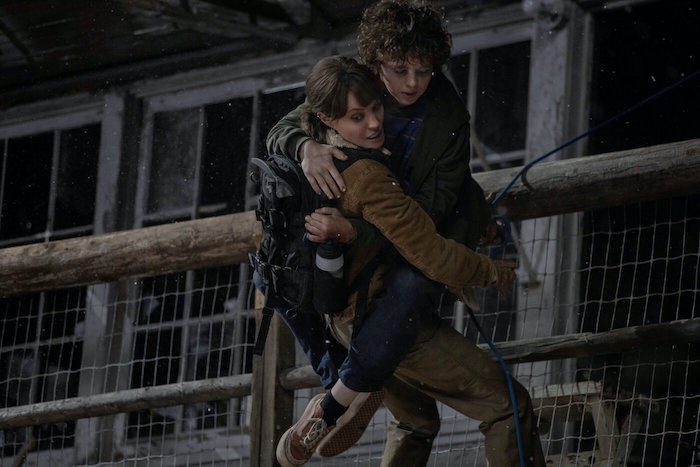
Since scripting the thematically engaging but derivative drug thriller Sicario, Taylor Sheridan has gradually positioned himself as an action filmmaker with something interesting to say. Perhaps because the source material for Those Who Wish Me Dead is not his own, Sheridan seems unsure of how to approach the material and pretty much settles into full-bore action mode, allowing the story’s sentimental highlights to get away from him and inadvertently dominate the proceedings. With Angelina Jolie providing the requisite star power he probably felt he could let her handle whatever emotional subtexts the script offered, but Jolie appears content to cruise through the story with little real engagement.

For what it’s worth, the setup seems way outside Sheridan’s wheelhouse. Before we even get an idea about Jolie’s main character, we have to sit through three action set pieces that require fairly detailed exposition for the rest of the movie to make any sense. Essentially, an accountant in Florida (Jake Weber) who uncovers the shady finances of a crooked politician is forced to flee his destroyed home with his young son (Finn Little) when the politician’s factotums’ sick a pair of hit men (Aidan Gillen, Nicholas Hoult) on him. They make it as far as Montana, where the accountant plans to hole up with his brother-in-law, Ethan (Jon Bernthal), a local police chief, but the bad guys get to him first. The kid escapes in the wilderness where he becomes the prey of the hit men. Ethan, expecting the boy to show up, recruits Hannah (Jolie), a “fire jumper” who has been demoted to lookout duty due to her alcoholism and failure to save two children during a recent blaze. Inevitably, the boy and Hannah cross paths just as the hit men are closing in, and by that point you may be itching for some real excitement if you aren’t already confused by all the characters and subplots the story has thrown at you.

Jolie has proved her mettle in action movies before, but Sheridan gives her almost no opportunity to make an impression, and once the bad guys start a fire to flush the boy out and distract the constabulary, Hannah has to pivot between hard-ass professionalism and the kind of empathetic maternalism that will redeem her as both a woman and a member of society. The action is exciting as far as those things go, but you can sense a certain impatience on Sheridan’s part with how busy the story is. In the end, it just doesn’t feels like the kind of action movie he’s good for. 

Now playing in Tokyo at Toho Cinemas Nihonbashi (050-6868-5060), Toho Cinemas Hibiya (050-6868-5068), Shinjuku Piccadilly (050-6861-3011), Human Trust Cinema Shibuya (03-5468-5551).

Those Who Wish Me Dead home page in Japanese

photo (c) 2021 Warner Bros. Entertainment

Posted in Movies | Tagged | Leave a comment

Media Mix, Aug. 28, 2021

Here’s this week’s Media Mix about Japan’s age of consent, which has been 13 for more than 110 years. A good portion of the column is taken up by the story of a girl who was allegedly molested by her biological father when she was 13, which means she was over the age of consent and would therefore have to prove in court that she resisted her father’s advances in order for him to be convicted of sexual assault. What makes the situation doubly perplexing is that the father could be prosecuted for having sexually assaulted his own daughter, but when the alleged assault happened he was divorced from her mother, who had sole custody of the daughter, so that particular statute didn’t apply. For sure, many people will find this legal point puzzling—how can fatherhood be revoked?—but it follows the peculiar logic of family law in Japan, which gravitates around the primacy of the family register (koseki).

Determining motherhood is easy, but fatherhood is essentially a matter of taking somebody’s word for it (minus a DNA check, that is). The family register system allows the state to be the sole arbiter for paternity. That’s why the state considers the father of a baby born to a woman within 300 days after her divorce to be her ex-husband, even if the biological father is really someone different. The reason for this law is because it is possible that the ex-husband could be the father if he had sex with the mother up until the eve of their divorce. In any case, it makes it easier for the bureaucrats. The state basically wants the final say on who the father of a child is, so when a couple get divorced and the mother gains sole custody of their children, the ex-husband is, technically at least, no longer the children’s father in the eyes of the state. Japan also doesn’t really recognize joint custody, and in most divorce cases it’s the mother who gets sole custody, a circumstance that has led to a great deal of misery on the part of fathers, both Japanese and non-Japanese, who end up being denied any contact with their children. However, sometimes it is the father who gets sole custody (usually because he or his parents are more invested in having an heir) and it is the mother who is cut off. The main controversy about this legal nicety is whether it is fair to the children, who, as the low age of consent shows, don’t merit much consideration in Japanese family law.

Posted in Media | Leave a comment

Review: Summer of Soul

Ahmir Questlove Thompson, the drummer of The Roots and the self-styled keeper of the flame of African-American music style and history, is ostensibly the director of this documentary about the Harlem Cultural Festival that took place over the course of six Sundays at Mount Morris Park in NYC in the summer of 1969. Except for those who actually attended the festival, most people didn’t know about it, despite the fact that it featured many of the most important soul, blues, and jazz acts of the day. One reason it has been neglected and/or forgotten is that Woodstock took place around the same time and the whole media fascination with hippie culture, not to mention the ad hoc immediacy of the festival itself, overshadowed any other music-oriented event that summer. In fact, one of the proposed titles for the documentary was “Black Woodstock,” and, in fact, a compelling part of the story of the film’s release is that the footage remained in the possession of the man who originally directed it in the belief that it would be made into a TV special. Hal Tulchin, who died in 2017, never got to see his dream come true, and to his credit Questlove pays fitting tribute to Tulchin’s legacy.

As such, the film is more than a series of lovingly shot, impeccably mixed musical performances. It is a chronicle of the state of Black consciousness at the time it was made. Questlove pays close attention, through interviews with people who were there and some who weren’t, to how the Civil Rights movement had evolved a year after the assassination of Martin Luther King, Jr. The Harlem Cultural Festival was not just a means of celebrating Black culture; as the Rev. Al Sharpton says, it was also a way to keep people occupied and amused who might otherwise want to burn the whole thing down out of righteous anger. The point was to couch the entertainment in a forthright appeal to Black pride. In that regard it was not only a success, but a milestone in raising the profile of Black culture among the people who needed it the most, meaning Black folks themselves. 

The artists not only knew this about the festival, they embraced the attendant themes wholeheartedly. Certainly the most surprising act was The 5th Dimension, an all-Black vocal group who many in the audience had assumed were white because of their string of hits, which didn’t sound much like soul music. Their performance is riveting, not because they try to “act Black,” but because they are Black and love what they do, and they make the audience love it, too. 

One Sunday was dedicated completely to gospel music and emceed by the Rev. Jesse Jackson, who describes in heart-wrenching detail how he witnessed firsthand the death of Dr. King. The older people in the audience know this music, but most of the young folk (it should be noted that the festival was free and promoted for the whole family) were not as interested in the church but fully appreciated the energy that exploded from the stage when the Edwin Hawkins Singers ripped through “Oh Happy Day,” or when Mahalia Jackson sings Dr. King’s favorite song, “Precious Lord,” and invites the young Mavis Staples, who was there singing gospel and R&B with her family, to duet with her. The expressions on the faces, young and old, captured by Tulchin’s crew are priceless and indescribable.

That said, Summer of Soul is not as affecting as another recently excavated Black music documentary. Amazing Grace, which recorded Aretha Franklin’s brief return to gospel music at the height of her pop fame in 1971, is more personal and thus more emotionally fraught, but Summer of Soul has a higher energy level that feeds off its righteousness, from the joyful crossover Motown pop of Stevie Wonder, David Ruffin, and Gladys Knight and the Pips (the Pips’ performance here may qualify them as the greatest backup singers in the history of the universe); to the rocking blues of B.B. King; to the Latin beat of Ray Barretto and Mongo Santamaria; to the grooving jazz of Abbey Lincoln, Herbie Mann, and Roy Ayers; to the pure African sounds of Hugh Masekala; and finally to the politically charged protest music of Nina Simone, who reads a poem in which she asks if it’s OK to kill white people. But it’s perhaps Sly and the Family Stone, a group that, after all, was also a huge hit at Woodstock, that Questlove positions most prominently because of their mixture of male and female, black and white players (a whole five minutes is given over to the amazement in the audience that this hardcore funk machine is bedrocked by a white boy drummer). They take the film out on a truly high note. 

Now playing in Tokyo at Toho Cinemas Hibiya (050-6868-5068), Toho Cinemas Shinjuku (050-6868-5063), Shibuya Cine Quinto (03-3477-5905).

Summer of Soul home page in Japanese

photo (c) 2021 20th Century Studios

Posted in Movies | Tagged | Leave a comment

Media Mix, Aug. 21, 2021

Chosen schoolroom

Here’s this week’s Media Mix, which is about a recent Supreme Court decision to deny Chosen high schools the right to receive central government tuition subsidies that all other non-public high schools in Japan receive. At one point in the column, there is a brief history of Chosen schools, which are associated with North Korea. As pointed out, there are also schools in Japan for ethnic Korean residents that are affiliated with South Korea, but they are fewer in number than Chosen schools. Of course, before the end of World War II, the Korean peninsula was a colony of Japan and thus Koreans were considered Japanese subjects. With the surrender of Japan in 1945, these individuals lost their Japanese nationality and, for the most part, Japan, not to mention the American occupying forces, expected them to return to their “home country.” Many Japan-resident Koreans had been brought over, some against their will, to work in Japan for the war effort, but there were also many who had been living in Japan for much longer. In any case, it wasn’t just a matter of suddenly packing up everything and moving back to Korea, which was in turmoil as the northern part of the peninsula fell under the sway of the communists in the chaos that resulted from Japan’s removal. For various reasons, the school system created by Japan-resident Koreans right after the war to teach the Korean language (banned under colonial rule) leaned toward the communist north, which is why the Americans eventually banned the schools at the urging of former Japanese imperialists who still had some influence.

Later, after the Korean War effectively divided the peninsula, resident Koreans also split between those who favored the south and those who favored the north, and some residents did “repatriate” to their respective “homelands.” Those who aligned with South Korea were able to gain South Korean nationality, even if they didn’t move to South Korea, but those who aligned with North Korea and who didn’t move to North Korea have become basically stateless, and for a time North Korea and its representative in Japan, Chongryon, financially supported Chosen schools. Presently, it isn’t clear how much support Chosen schools receive from Chongryon, but reliable reports indicate it isn’t much, if, in fact, they receive any at all. Over the years, an increasing number of resident Koreans have opted to become naturalized Japanese, but many do not in the belief they would lose their Korean essence if they did. Nevertheless, almost all have lived their entire lives in Japan and could not imagine living anywhere else, including South or North Korea. 

Here is a much more detailed explanation of the postwar situation of Japan-resident Koreans, as well as that of Okinawans.

Also, there is an earlier Media Mix column from 2013 that covers this same subject more contemporaneously.

Posted in Media | Tagged | Leave a comment

Review: IWeirDO

Taiwanese filmmaker Liao Ming-yi’s debut is said to be the first Asian movie shot on iPhones, a gimmick that no longer feels particularly fresh but one that is peculiarly suited to the themes he addresses. The portrait mode does a good job of conveying the discomfort of living with OCD, which our hero, Chen Po-ching (Austin Lin), suffers from. Po-ching, who sports an immaculate widow’s peak and a buff physique, manifests many of the stereotypical behavioral ticks associated with OCD: incessant cleaning, running errands at the exact same time every day while taking the same number of steps to the supermarket, and donning two layers of protective gear to ward off germs and other airborne contagions. As a freelance translator, he has no need for face-to-face contact with others and, on the surface at least, seems content with his lot, though as his therapist presciently points out, it’s all in his head, meaning he won’t die or otherwise fall victim to illness if he breaks out of his claustrophobic routine.

And then he meets Chen Ching (Nikki Hsieh), whom he spies at the supermarket similarly clad in PPE while shoplifting. Intrigued, he forces himself to strike up a conversation and finds that she, too, suffers from a condition that restricts her movement, except that in her case it really is mandatory. She can only leave her home for an hour or two at a time before breaking out in severe skin allergies. Moreover, while Po-ching’s odd outlook on life is determined by his psychological condition, Ching’s has been warped to a certain extent by the frustrations brought on by her illness, thus the shoplifting, which she doesn’t do for the sake of survival but as a means of coping with her demons.

Nonetheless, Liao’s film is a comedy, at least for the first half, and while the iPhone thing forces him to come up with unique, often funny exposition tricks, most of the requisite quirkiness is afforded by the bright, primary-color production design. Once it is established that Po-ching is a good translator but an atrocious typist and Ching won a typing award as an adolescent, there’s nothing to do but for her to move in with him and share their lives, which leads to various other cute moments that show how two oddballs, as Po-ching puts it, can not only get along but fall in love. 

And that’s where the movie loses its way. As soon as Liao changes the aspect ratio through what looks like magical realism and Po-ching decides that he has to make an effort to meet the world halfway, the meaning in the relationship falls to the side. Though this kind of melodramatic development is natural for a romantic comedy, in this particular case Liao can’t seem to figure out how it might manifest itself, and he resorts to the kinds of cinematic cliches that went out of fashion with Spellbound. Moreover, his decision to switch POVs only succeeds in needlessly confounding the audience and diluting his dramatic intentions. While I normally only have so much patience with the kind of cute romantic style that Liao brings to bear, I found it made total sense for the story he was telling. It’s too bad he didn’t see it through to the end.

In Mandarin. Opens Aug. 20 in Tokyo at Cinemart Shinjuku (03-5369-2831).

IWeirDO home page in Japanese

photo (c) 2020 Activator Marketing Company / MAN MAN ER CO., LTD / Taiwan Mobile Co., Ltd.

Posted in Movies | Leave a comment

Media Mix, Aug. 14, 2021

Image of Harumi Flag

Here’s this week’s Media Mix about some sustainability issues related to the so-called legacy of the recent Tokyo Olympics. As mentioned at the beginning of the column, after the Paralympics the Olympic Village will be thoroughly remodeled in order to create condominiums, which are currently on sale. More than a year ago there were already some problems with the plan owing to the postponement of the games, which meant people who were planning to move in would have to wait even longer. My partner and I wrote about these problems at the time and you can read the article here. Not sure exactly how the situation has changed since then, but if we’ll look and add anything we find.

Posted in Media | Tagged , | Leave a comment

Media Mix, Aug. 7, 2021

(c) 2021 Pankeki o Dokumi Suru Seisaku Iinkai

Here’s this week’s Media Mix, which is about the new documentary feature, Pankeki o Dokumi Suru, about Prime Minister Yoshihide Suga and his peculiar brand of survival politics. As pointed out in the column, one of the overriding themes of the movie is that Suga and his predecessor, Shinzo Abe, mostly work on feelings of resentment that guide their decisions and actions, and that includes Suga’s almost patented disregard for what others think. His hostility toward the media is unsubtle and entirely deliberate, but he also doesn’t have any use for fellow politicians who feel as if he owes them something since he happens to be the leader of the nation. During one long sequence in the movie, Hosei University Professor Mitsuko Uenishi analyzes Suga’s behavior and speaking style during Diet deliberations and has a grand old time pointing out how everything about him indicates his utter contempt for lawmakers who are simply trying to get a yes or no answer out of him. Given Uenishi’s reactions, you might get the feeling that Suga, in fact, enjoys baiting his interlocutors, but over the course of the movie the larger impression is that this attitude is bred in the bone. When his LDP colleagues are interviewed they betray a kind of admiration for Suga’s ability to push people away, which they think is a rare but necessary talent for a politician. Shigeru Ishiba says that Suga doesn’t kiss ass and that his “intuition” is sharper than most people’s. Others say that while most politicians lie as a matter of course, Suga doesn’t, and that if he says he’ll do something he will. These observations don’t necessarily contradict his reputation for stonewalling and obfuscation, which obviously can be considered beneficial skills if they are exercised for your sake. Last Friday, Suga was ridiculed in the press for skipping a whole page of his prepared boilerplate speech in Hiroshima for the anniversary of the atomic attack. Most media made it sound as if he was being lazy or inept, but more likely he just didn’t want to say the part about ridding the world of nuclear weapons, because he’s already said elsewhere that he has no intention of joining the worldwide campaign to denuclearize, despite Japan’s history with regard to nuclear weapons. It was somebody else who said that the papers of the speech had gotten stuck together, not him. So, yeah, he doesn’t lie, especially if he can get someone else to do it for him. What you see is exactly what you get. 

Posted in Media | Tagged | Leave a comment