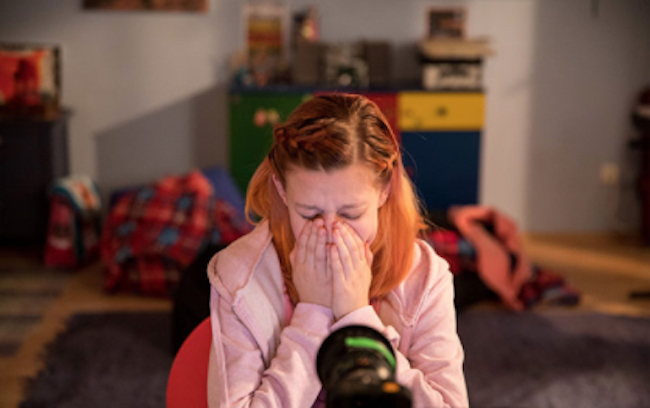
Review: Caught in the Net

The clever, almost flippant title of this Czech documentary betrays its slightly self-congratulatory tone. Though the topic is a very serious one—pederasts stalking children online—the focus on superior production values and the game-like execution counteracts the seriousness to a certain extent. For all the disgust certain scenes will surely provoke in viewers, the movie seems almost beside the point, and I can’t help but feel that a more effective documentary about the sexual victimization of children could have been made without the reality show trappings.

Granted, the enterprise concocted and recorded by filmmakers Vit Klusak and Barbora Chalupova is presented as an “experiment” that mostly investigates the permeability of social media and how those without proper defenses due to lack of maturity can be taken advantage of. Right at the start of the film we are shown statistics stating that 41 percent of Czech children have received unsolicited pornographic images online from other people. The parameters of the experiment are explained clinically and also in a slightly conspiratorial fashion. The directors put out a casting call for young female actors over the age of 18 to arrive wearing children’s clothing. Twenty-three show up and each is told her task if selected: she will impersonate a 12-year-old girl who joins a number of social networks with the purpose of attracting men who stalk pre-teen girls for sexual gratification. Those auditioning for the part explain, often in lurid detail, some of their own experiences with sexual abuse. Three are selected, and then an elaborate set is constructed on a soundstage consisting of three bedrooms that simulate the individual actors’ respective spaces when they themselves were 12 years old, complete with actual artifacts from their childhoods. Computers are set up and connected to video recording equipment that will be monitored by a large staff, including psychologists, lawyers, social workers, and sexologists, who are on hand to make sure things don’t get too intense for the actors, which, of course, they do.

The experiment lasts for ten days, during which the three women are contacted by a total of 2,548 men, who mostly interact with the women through Skype. Their faces are creepily masked, and they often freely admit that they are masturbating as they talk to the women, who are clearly distressed by the fact though they’ve been warned this will happen. In almost all the cases recorded, the men not only show the women their penises, but request that they remove articles of clothing themselves or demand they send nude photos of themselves. In fact, in order to extend the experiment, the producers hire outside models to act as body doubles for the women so that they can send the nude photos requested. In at least one case, an interlocutor uses the photo for blackmail purposes. (As a kind of antidote to the queasy mood, they include one young man who goes online just to talk and then commiserates so honestly with one of the women about the horridness of most men that the interaction brings tears to the eyes of everyone listening.) The whole endeavor is capped by in-person meetings in a cafe with 21 of the men and then a contentious encounter with one outside his home where the filmmakers reveal their project and accuse him of illegal acts. 

The film does explicate how shockingly widespread child stalking is on the internet, and many of the encounters reveal the mindset behind such actions, which often come down to simple misogyny (in his defense, the man confronted at the end of the movie blames the girls for coming on to him); and a final title card mentions that the data collected during the experiment was eventually handed over to the police, who are now “investigating” the men depicted. But the overall impression is of a very sophisticated stunt that produced interesting results that probably could have been produced in a way that was less sensational. 

In Czech. Now playing in Tokyo at Human Trust Cinema Shibuya (03-5468-5551), Shinjuku Musashinokan (03-3354-5670). 

Caught in the Net home page in Japanese

photo (c) Milan Jaros, 2020 Hypermarket Film, Czech Television, Peter Kerekes, Radio and Television of Slovakia, Helium Film


Posted in Movies | Leave a comment

Review: The Booksellers

D.W. Young’s engrossing documentary attempts to make a case for the physically printed word as the most viable means of extending culture into the future, but  because it focuses on rare booksellers it invariably makes that case as a construct of capitalism, and I don’t think that was Young’s intention. At one point near the end of the movie an expert comes out and says that young people, or, at least, young New Yorkers, are rejecting digital reading platforms for paper and theorizes that technology like Kindle was developed and used mainly by boomers whose eyesight was starting to go. It’s a quaint but rather difficult idea to defend empirically (he seems to base this theory on observations he made on the subway), and, in any event, contrasted with the narrative that Young presented prior to this assertion, simply sounds like the conclusion of someone with a vested interest in trade paperbacks.

The main subject of the movie is books as artifacts–as works of art distinct but not separate from the art of the writing they contain. Revived New York essayist/iconoclast Fran Lebowitz puts it best when she says saltily that she would kill anyone who dared place their drink on a book, any book. Books are living things, she says, which is why she can’t countenance anyone “throwing them away,” no matter what kind of literature they deliver. In that regard, Young might have gained a lot of traction by reporting on regular book stores that are going out of business (or coming back, as some media have reported) due to or despite digital pressure, but instead he hangs out with the fringe of the business, those who collect books obsessively and then trade the rarest of them for ever-increasing amounts of money. As such, the movie has the kind of musty, low-lit atmosphere that antique book stores give off. The sellers themselves are, for the most part, quiet and serious, though Young makes a point of interviewing members who don’t fit the stereotyped majority, meaning middle aged men in tweedy outfits with bad haircuts. There are women and people of color, who point out how hard a time they have doing business with the leaders in the field. There’s also a brief shout-out to rare magazine fans, which at least brings the business into the 20th century.

Unfortunately, Young seems to assume that the viewer cares more about the state of books than the state of literature, and consequently it feels like it’s aimed at a niche audience that already has its mind made up. For one thing, he often neglects to identify the person on screen or the place where the interview is taking place, which is odd for a documentary about documentation. In a sense, he’s more interested in conveying the excitement of the physical world of books than he is in the act of reading, and, in my mind, at least, the two are inseparable. 

Now playing in Tokyo at Human Trust Cinema Yurakucho (03-6259-8608), Shinjuku Cinema Qualite (03-3352-5645). 

The Booksellers home page in Japanese

photo (c) 2019 Blackletter Films LLC

Posted in Movies | Leave a comment

Media Mix, April 17, 2021

Kei Komuro

Here’s this week’s Media Mix, which is about the latest development in the coverage of Princess Mako’s and Kei Komuro’s bumpy road to everlasting happiness. “Coverage” is the operative word here since it’s not clear how much of what the media says about this fraught love affair is rooted in reality. Even the way the press pounced on the cited Shukan Asahi survey that found 97 percent of respondents “disapproved” of Mako and Komuro marrying showed how much the publications with a stake in such stories (tabloids, weeklies, and women’s magazines, mainly) want to think the worst of Komuro. But, in fact, if you look at the results of the survey more carefully you find that while 52 percent of the respondents said Komuro needs to explain the money issue, 48 percent said it wasn’t necessary. The media harps on the money that Komuro’s widowed mother supposedly owes her former lover, funds she claims were given to her son to help with his education and with no strings attached, and thus the reason for the public’s enmity toward Komuro is assumed to be this money. That’s why Komuro said last week that he is keen to pay it all back, regardless of the ex-lover’s original intentions, but that there is still some sort of failure to communicate with the man, or at least with the people representing him.

What needs to be remembered is that it was this ex-lover who originally brought the story to a weekly magazine several years ago, and who has effectively, not to mention anonymously, controlled the narrative ever since. Komuro and his mother, for the most part, have tried to keep quiet in order to save Mako and her family as much embarrassment as possible, so in the end the whole scandal is something that was brewed up between the ex-lover and whichever media outlets he has talked to; which isn’t to say Komuro and his mother are off the hook, but the story plays into established prejudices about single mothers and the men they take up with, presumably for financial reasons. Based on what small amount of real information is available (as opposed to the rank speculation fueling most media reports), Komuro should actually be commended for defending his mother, who may have made a bad choice of a romantic partner, but then why does the media take that romantic partner at his word in everything he says? 

Of course, nothing of this story would matter if the imperial family weren’t somehow involved, but it says something about the media’s priorities that they can provoke negative public opinion so easily with the dangerous cliche that single parents, especially those whose deceased spouses committed suicide, are, by definition, not good parents at all. 

Posted in Media | Tagged , | Leave a comment

Review: Cheerful Wind

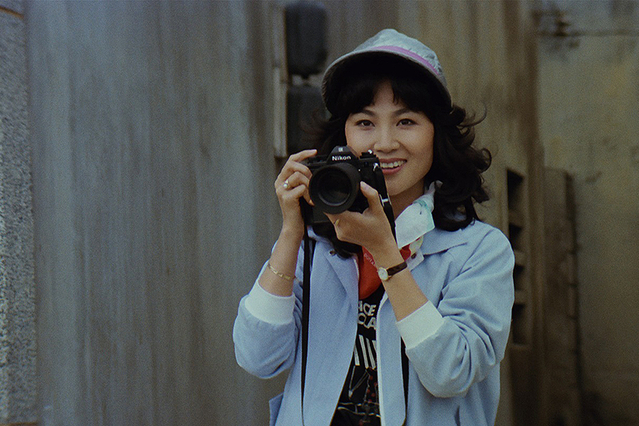
K’s Cinema in Shinjuku is presenting a two-month retrospective of Taiwan cinema centered mainly on the work of Hou Hsiao-hsien that includes a lot of films from the 1980s which rarely get shown here any more, despite Hou’s close relationship with Japan. Among these is Hou’s second feature from 1981, the digitally remastered Cheerful Wind, providing what is probably the master’s most conscientious stab at a conventional crowd-pleaser, though there are enough peculiarities in both the story and the presentation to satisfy fans of his more distinctive work. Basically a romantic comedy made during a time when Asian directors were only mildly familiar with the genre, the movie offers up a unique female lead in a setting whose circumstances are deceptively anodyne (Taiwan was under martial law until the late 1980s).

Working with two established stars, Hong Kong idol Kenny Bee and Taiwanese pop singer Fong Fei Fei, Hou subverts the usual male-female dynamic of idol movies by making the female lead an aggressively self-possessed career woman and the male an introvert by necessity, since he is blind. Moreover, he sets up the requisite meet-cute moment with an almost ridiculous plot premise: a location film shooting on a city street for a TV commercial. Hsing-hui (Fong) is the ad agency’s photographer working on the shoot, whose client is a company that makes laundry detergent. The shoot is a chaotic affair, a seeming comment on the “movie-within-a-movie” concept on display, with the director trying all sorts of bizarre ideas, including exploding cow shit, to prove the worth of the subject product. Hsing-hui spots blind harmonica player Chin-tai (Bee) and ropes him into appearing in the commercial based on the very un-PC premise that, even as a sightless person he can appreciate the quality of the detergent just by reputation.

A kind of crush is developed on Hsing-hui’s part, despite the fact that she is informally engaged to a colleague, Lo (Anthony Chan Yau), who is keen for her to meet his mother in Hong Kong. Her reluctance to carry through this obligation indicates, in classic rom-com style, that Hsing-hui’s attachment to Lo is anything but fast, and when she keeps running into Chin-tai on the street she endeavors to place herself in an orbit he can’t quite comprehend, though the audience does. Eventually, we understand that Hsing-hui’s interest in Lo is entirely self-serving, since he is from a family of means and her real desire is to travel extensively on his dime. As with many entertainments of that time, a lot of story time is given up to show the characters’ middle class aspirations, invariably represented by Western encroachments. When Hsing-hui’s father arrives from the sticks to meet Lo, they take him for pizza and Coca Cola, a meal that he finds somewhat repugnant.

Counterintuitively, the romance with Chin-tai is so low-key as to be practically demure, a quality that Hsing-hui herself never embodies. If anything, her casual insubordination at work and rather callous method of dumping Lo come across not as the actions of a selfish individual but rather that of a true free spirit. She pretty much charms everyone she comes into contact with, so her choosing Chin-tai, a blind man with no prospects, as a potential life partner seems particularly subversive; that is, until the happy ending, which is perhaps a bit too fantastic to take at face value. Since rom-coms didn’t really exist in Chinese-language cinema at the time, it’s not as if Hou were standing an established genre on its head. It’s as if he were already having fun with it, and that’s an aspect of his art that applies throughout his work. 

In Mandarin and Taiwanese. Starts April 17 in Tokyo at K’s Cinema Shinjuku (03-3352-2471).

Taiwan/Hou Hsiao-hsien Retrospective home page in Japanese

photo (c) 1982 Kam Sai (HK) Company (c) 2018 Taiwan Film Institute

Posted in Movies | Tagged | Leave a comment

Media Mix, April 10, 2021

Kensei Mizote

Here’s this week’s Media Mix, which is about various theories on why former justice minister Katsuyuki Kawai changed his plea in the middle of his trial for buying votes for his wife, Anri, during the 2019 Upper House election. The journalists and others I mention are knowledgeable and serious, but there were other theories floating around from less reputable sources, the most interesting one being that of Asahi Geino, a weekly magazine known for its salacious content, especially with regard to celebrity sex scandals. In the April 1 issue the magazine interviewed a former “executive” of a yakuza organization who said that prior to the election campaign for the Hiroshima seat in question, he was asked to dig up dirt on Anri’s main opponent, Kensei Mizote, who, like her, belongs to the Liberal Democratic Party. Mizote has often been touted as the main reason for the alleged vote-buying spree, since former prime minister Shinzo Abe reportedly hates his guts owing to some unflattering things Mizote said about Abe in the past. The ex-gangster interviewed by Asahi Geino, Tokihide Hirota, didn’t mind revealing his own name but he wouldn’t reveal that of the person who asked the favor. However, he did say this person was the chairman of a powerful “corporate group” in Hiroshima Prefecture. Also, Hirota got the impression that this chairman himself had been asked to find some compromising intelligence about Mizote. Hirota boldly speculates that it was probably a sitting member of the prefectural assembly and that this person was probably solicited to carry out the dirty work by none other than LDP secretary-general Toshihiro Nikai, since Anri belongs to Nikai’s faction in the party. 

Hirota couldn’t resist throwing his own two yen into the discussion, saying that it’s all about the enmity between Abe and Mizote and “factional in-fighting within the LDP.” The fact that this intramural donnybrook has been “exported” to the Hiroshima electorate shows just how “shameful” Japanese politics has become. “It’s terrible for the local citizens,” he said, thus reminding us that yakuza are citizens, too.

Posted in Media | Tagged | Leave a comment

Review: Ammonite

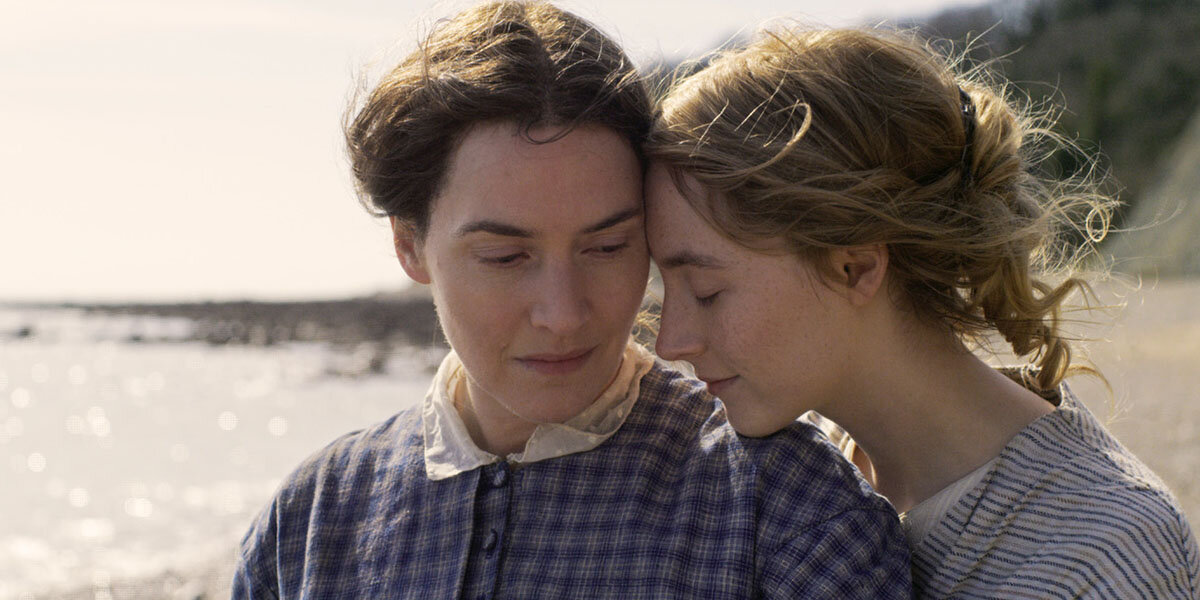
It’s difficult to imagine Francis Lee’s romanticized reimagining of 19th century paleontologist Mary Anning (Kate Winslet) being produced without the precedent of Mike Leigh. Though Leigh is best known for his modernist take on working class British everypersons, in more recent years he’s addressed British history that, even when it focuses on “great men” (Gilbert & Sullivan, Turner), tells their stories from a “peoples’ history” perspective. Though the hook of Ammonite is Anning’s romance with a would-be acolyte, Charlotte Murchison (Saoirse Ronan), the overarching theme is class friction that even scientific notoriety can’t transcend. The most fascinating parts of the movie are those scenes that simply show Anning going about her work, combing the beaches of the coastal town of Lyme for fossils, occasionally squatting to take a piss in the sand, and then hauling her spoils back to her dark shop where she attempts to sell them as either genuine artifacts to like-minded aficionados of geology, or tourists with a bit of cash to spend on odd conversation pieces. 

Anning’s main claim to fame is a large prehistoric fish exhibited in the British Museum, but it seems only insiders know that a woman actually found it. One of these insiders, a man of means and amateur paleontologist, Roderick Murchison (James McArdle), understands Anning’s place in the annals of British naturalists and endeavors to pick her brain on all things fossilized. Though put off by the man’s airs and preternaturally averse to company, Anning grudgingly accepts his request to look after his young wife, Charlotte, whom he has installed in the seaside town under advice that it might cure her “melancholia.” Of course, Charlotte’s affliction is nothing more than depression brought on by the stifling British patriarchy, something that Anning knows too well but manages to keep at bay with her work, which includes taking care of her ailing mother (Gemma Jones). Anning only takes on the task because of money, and Charlotte, who tags along on her expeditions, is at first an annoyance, but there is a mutual need that either woman soon realizes the other could fill.

The sex scenes are powerful but undermine the movie’s tone of forbearance. Lee, perhaps because he’s a man, seems to feel that when the social bonds that keep these women in their place are released through the passion of their feelings for each other, naturally the release will be explosive, but for the most part the lovemaking feels incidental to the class-marking plot development and Anning’s inner story, both of which are more interesting. Reportedly, the actual descendants of Mary Anning have objected to the movie because there is nothing in her available biography that said she had an affair with Charlotte Murchison. That’s hardly a valid criticism when Lee has said his movie is speculative. For sure, he understands Anning’s peculiar place in her time and explores that aspect with great sensitivity and imagination, but why does every such story have to be constructed around a core of tragic, everlasting love?

Now playing in Tokyo at Toho Cinemas Chanter Hibiya (050-6868-5001), Bunkamura Le Cinema Shibuya (03-3477-9264).

Ammonite home page in Japanese

photo (c) 2020 The British Film Institute, British Broadcasting Corporation and Fossil Films Limited

Posted in Movies | Tagged , | 1 Comment

Review: House in the Fields

There’s probably no more momentous development in the practice of filmmaking since the dawn of the millennium than the expansion of the documentary genre beyond its classic parameters. At one time the idea that the documentary filmmaker is a kind of anthropologist, in that they should have as little impact on their subject as possible, was sacrosanct, but current filmmakers have taken greater liberties in their interactions without expressing any misgivings. Often, in fact, the interaction is the point of the film.

Tala Hadid’s House in the Fields is almost anthropological by definition. The British filmmaker, whose mother is Moroccan, spent a good deal of time in a village in the Atlas Mountains of Morocco getting to know the people there, particularly two teenage sisters, in hopes of finding out what they wanted from life. Reportedly, she didn’t even show her camera to her subjects until weeks into her stay. This was a vital consideration because although the village was along a path that was destined to be developed by the state, the development never came, thus leaving the village to its unchanging cycle of seasons. But the village was not inured to change, and that’s what fascinated her.

The two girls, 16-year-old Khadija and her older sister Fatima, are the focus, and many of their scenes are so intimately shot that the viewer can’t help but wonder if they were staged. In this village, the men play and the women work, and though the sisters do attend school, most of the time we see them weaving. According to custom, they are the targets of matchmakers who try to set them up with eligible men, many of whom are not that young. Hadid illustrates the psychological effect these customs have on teenage girls by focusing on their affection for one another. They can only really talk openly with other girls and women, a notion that is hardly surprising but nevertheless quite fascinating when placed in relief against the daily doings of the village. Khadija and Fatima lay in bed together laughing about their teacher and the smell of his feet, but they also talk about their freedom as women, not so much because of their exposure to outside ideas (which is available), but simply because they are sentient creatures who inevitably regret their restrictions by a social order. 

Matters come to a head during a marriage ritual where conflicting feelings come to the fore. There’s a sadness to the bride’s demeanor that is reflected in the conversations among other girls as to whether they really want to get married, and it’s difficult to tell if Hadid prompted these conversations or if they emerged organically. For much of the second half of the film, which is, incidentally, profoundly beautiful in its merging of nature and human activity, the viewer may be frustrated trying to decide how much the filmmaker brought about what is shown on screen. And yet, it still feels like real life. 

In Berber. Now playing in Tokyo at Uplink Shibuya (03-6825-5503).

House in the Fields home page in Japanese

Posted in Movies | Tagged | Leave a comment

Review: 21 Bridges

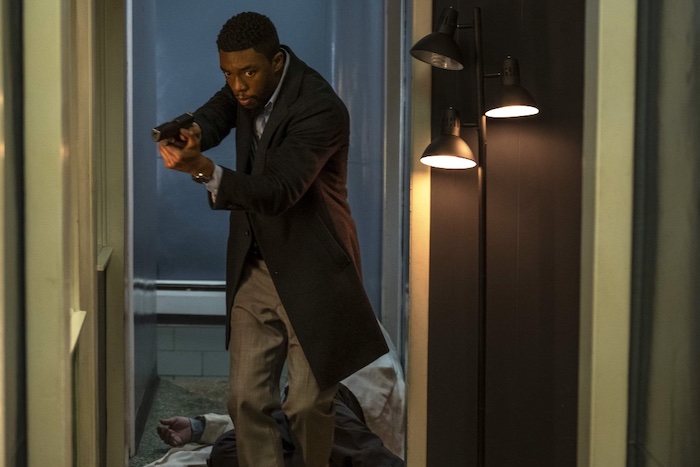
Though it wasn’t the last film he made, the police action thriller, 21 Bridges, is being released in Japan just as the late Chadwick Boseman has been nominated for a Best Actor Oscar that most bookies say he’s going to win. Boseman stars in and produces the movie, which doesn’t add much to his repertoire and feels like something he took on in the hopes of broadening his appeal among the general public. But after playing Jackie Robinson, James Brown, and Black Panther, his trigger-happy NYPD detective feels a bit generic even if he does inject the role with a canny blend of intensity and mystery. More to the point, the movie’s own generic bona fides feel a little out-of-line given the way American black people and the police, especially the New York City police, have been interacting for the past several years.

Thus the opening scene comes off as an inadvertent blast of cognitive dissonance. A child sits in church at the funeral of his policeman father, who was killed by drug addicts, probably during that period in the 80s when crack swept the city and destroyed a lot of black families. The fact that the child and his father are black is enough of a head-scratcher in terms of launching a plot, but the minister’s sermon, which celebrates the fact that the policeman killed two of his attackers before he himself was killed, is chilling in its implications. And then the child grows up to be Andre Davis (Boseman), a detective with a reputation for shooting first and asking questions later.

Davis’s reason to exist as a movie protagonist is tested by two seemingly small-time thieves who attempt to heist a shipment of cocaine and find that it’s three times as big as they had originally thought. Not only that, but they are met with an army of policemen that results in a massacre of said law enforcement. The two fugitives are now the target of Davis, who closes down the whole island of Manhattan in the belief that they are still there and sends pretty much the whole force out to track them down. It doesn’t take a David Simon to figure out that at least a few of the cops had something to do with the coke shipment in the first place, and none of them are Davis. The viewer develops this realization at the same time Davis does, and most of the movie involves the detective manuevering around his colleagues while hunting down the fugitives, all the while wondering who is crooked and who isn’t. 

Meanwhile, director Brian Kirk crowds the frame with multiple shootouts and car chases that make the time pass pleasantly enough, and in the end you have to hand it to everyone involved that the movie is as entertaining as it is given the subtext. It should be pointed out that the equal-opportunity fugitives, one white, one black, are given a sympathetic back story, and the movie is at least partialy redeemed by the notion that the black cop is punishing his white co-workers for their double-edged privilege. But that’s not what the movie is mainly about. It’s about one cop doing what’s right in a manichean world that doesn’t really exist. 

Now playing in Tokyo at Toho Cinemas Nihonbashi (050-6868-5060), Toho Cinemas Hibiya (050-6868-5068), Toho Cinemas Shinjuku (050-6868-5063), Shibuya Humax Cinema (03-3462-2539), Toho Cinemas Roppongi Hills (050-6868-5024).

21 Bridges home page in Japanese

photo (c) 2019 STX Financing, LLC

Posted in Movies | Tagged | Leave a comment

Media Mix, April 3, 2021

Here’s this week’s Media Mix about two recent court rulings related to same-sex marriage, which remains illegal in Japan. One of the premises of the column is that marriage is mainly a social or cultural construct and that the legal protections guaranteed by state-sanctioned matrimony can easily be provided through other legislation. That’s why my friend in California didn’t really care much about getting married because the state already guaranteed the same kinds of rights that married couples enjoy for registered domestic partnerships. In Japan, many local governments have set up systems recognizing domestic partnerships for LGBTQ couples, but, unlike states in the U.S., they can’t guarantee certain rights, which remains the purview of the central government, and that means only marriages recognized by the central government receive such guarantees.

The ruling by the Sapporo District Court that found the denial of same-sex marriage to be a violation of the Constitution is significant because Sapporo was the first “designated” city in Japan to provide recognition of LGBTQ couples back in 2017. But all this recognition can do is provide guidelines. It has no legal force, which can only be provided by the central government. That means, unlike for married couples, same-sex partnerships cannot apply for dependent status for medical insurance or co-custody of children or spousal status for tax purposes or inheritances. According to the Asahi Shimbun, the certificate of recognition can be used to “demand” that public officials and businesses “treat” the partnership as they would a married couple, but the city has no power to penalize any organization or company for discrimination. What Sapporo hoped to do with the certificate is provide “family status” for same-sex couples looking to rent public housing or support for victims of crimes (for instance, if one of the partners is murdered, the other is eligible for compensation the way a spouse would be). But just saying so doesn’t make it true without the central government allowing for it. That’s why the presiding judge in the case said that regardless of her ruling about constitutionality, nothing could be done until the state changed the law. Ideally, a court declaring something unconstitutional would force a reckoning of the offending law, but that doesn’t seem to be the case in Japan, or, at least, not consistently. As always, the main culprit is the Civil Code, specifically the family registration system (koseki), which defines family relationships and gender and is considered fundamental with regard to family law in Japan. 

Here’s an earlier column about same-sex marriage that covers similar ground.

Posted in Media | Tagged | 1 Comment

Review: The Reason I Jump

Since I haven’t read David Mitchell’s translation of Naoki Hagishida’s 2007 memoir of autism I can’t rightly say how faithful Jerry Rothwell’s semi-documentary movie version is, though much of the voiceover narration, by Jordan O’Donegan, is taken straight from the book. Higashida was a nonverbal autistic Japanese child, and he reportedly wrote the book when he was only 13. Rothwell makes it seem as if much of the book was written in an impressionistic style, and the visual and aural decisions often try to convey this style with synthesized sounds and odd camera angles. Naturally, trying to replicate what an autistic child feels in a medium with its own technical limitations has its problems and often the movie seems intent on aestheticizing the autistic experience, if such a thing is possible; and yet the movie is often very powerful in spite of these questionable ambitions.

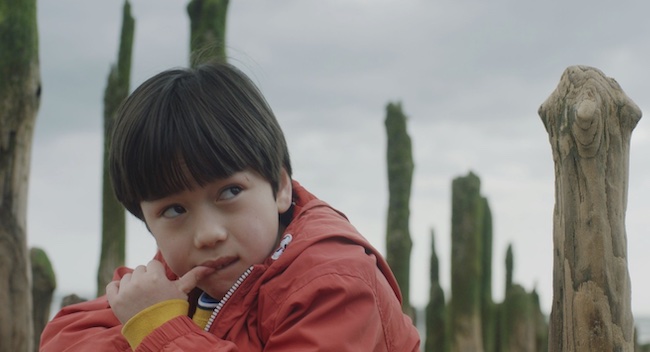
Higashida’s own experiences are illustrated with a Japanese-British autistic boy (Jim Fujiwara), but Rothwell also brings in the stories of five other mostly nonverbal autistic teens from various corners of the world. Generally, these stories elaborate on the frustrations that autistic youths go through trying to navigate a world that relies on clear communication of feelings and intentions. A girl from India can only really express herself through drawings, and eventually the empathy that she elicits with those drawings result in an art show. A boy and girl from Virginia use their friendship to show non-autistic acquaintances how to communicate feelings that only they feel. In the most disturbing sequence, autistic individuals in Sierra Leone are ostracized as evil beings, forcing them either underground or away from people in general. What Rothwell really wants to put across, and what Higashida’s book implicitly states, is that autism, as explained by its more clinical term “the spectrum,” is a varied and nuanced condition that requires not just empathy but acceptance. What Higashida accomplished with his book is that he showed that autistic children were no different from other children in terms of how they feel about the world. There was no diminution of what we would call intelligence, just a different means of processing stimuli and making sense of it. Ben, one of the Virginia teens, even expresses to his teacher the idea that he feels his human rights have been violated by conventional education structures. 

This more straightforward documentary approach actually does a better job of giving the viewer a feeling for autism than does the pointedly “poetic” passages that replicate the book and which often feel obligatory. The Reason I Jump was a worldwide bestseller, and it’s the reason Rothwell made the movie, but he could have produced a more potent one had he relied more openly on finding stories other than Higashida’s. 

In English and some German. Now playing in Tokyo at Kadokawa Cinema Yurakucho (03-6268-0015), Shinjuku Piccadilly (050-6861-3011).

The Reason I Jump home page in Japanese

photo (c) 2020 The Reason I Jump Limited, Vulcan Productions, Inc. The British Film Institute

Posted in Movies | Tagged | Leave a comment