Review: Monster Hunter

Expected to meet expectations like the pro he is, director Paul W.S. Anderson is charged with adapting the popular Capcom video game to the Imax screen in much the same way he adapted the Resident Evil game to…how many sequels did they get away with? And he brings along his wife, Milla Jovovich, to star in order to make the Resident Evil connection complete. Consequently, there was a lot of buzz preceding the opening, which had to be delayed and recalibrated due to the pandemic. Since there’s a ton of Chinese money behind the movie, the international distribution potential was formidable, and Jovovich gets to share most of her screen time with Thai martial arts superstar Tony Jaa, thus broadening that potential even more. 

Apparently, an unfortunate bit of subtitle translation bolloxed the movie’s appeal in its biggest potential market, China, but Japan shouldn’t be a problem, since Capcom is a national treasure and the Resident Evil franchise was a huge hit over the 14 years it lasted. Monster Hunter probably will be a hit here as well based solely on momentum, but for the rest of us who aren’t susceptible to such bait (meaning, people who don’t play video games) it’s odd even for a big budget fantasy blockbuster. Much of it feels like disparate ideas from other, similar blockbusters patched together in a haphazard way. The framing idea of an American military patrol headed by Jovovich’s Captain Artemis caught in a desert sand storm and somehow deposited in an alternative dimension lorded over by huge insects and burrowing creatures immediately brings to mind Starship Troopers and Dune, and when Artemis cauterizes a gaping wound with ignited gunpowder you wonder which macho military porn Anderson was watching. Jaa shows up as the titular hunter who happens to inhabit this dimension full-time and does nothing but kill monsters for no stated reason except as sport it would seem. After some good-natured one-one-one battles to the near death between these two alpha types, they form a kind of alliance for the sake of pure survival and eventually catch up with guy called the Admiral (Ron Perlman), who makes them an offer they can’t refuse and one that displaces them back in Artemis’s dimension for the big apocalyptic battle. 

Which is to say that the movie’s narrative focus is always a bit on the blurry side, and while that’s what you get for trying to adapt a game, Anderson did a pretty good job of turning Resident Evil into a story-directed romp that never lost track of its various plot threads, no matter how frayed they had become. Monster Hunter is mainly a set of eye-popping CGI set pieces strung together with jokey exposition that doesn’t bear much scrutiny (and which resulted in the aforementioned subtitle faux pas). Apparently, the thing to do is not concentrate on motivation or character development, but rather on the outlandish weapons, which are central to the playing of the game. I mean, that sabre-toothed sword is so ridiculous you can’t keep your eyes off it. 

In subtitled English version and dubbed Japanese version. Now playing in Tokyo at Toho Cinemas Hibiya (050-6868-5068), Toho Cinemas Nihonbashi (050-6868-5060), Toho Cinemas Roppongi Hills (050-6868-5024), Toho Cinemas Shibuya (050-6868-5002), Toho Cinemas Shinjuku (050-6868-5063), Shinjuku Wald 9 (03-5369-4955), Shinjuku Piccadilly (050-6861-3011).

Monster Hunter home page in Japanese

photo (c) 2020 Constantin Film Verleih GmbH

Posted in Movies | Tagged , , | Leave a comment

Review: Lords of Chaos

It may seem petty to start this review with the observation that it sure feels odd that a movie which concerns itself, albeit in a tongue-in-cheek expressionistic sort of way, with a true life crime in a language that is not native to the country it depicts. Of course, Hollywood has been Anglicizing stories since its inception, but Lords of Chaos presents a Norwegian director helming a Norwegian production set in Norway that tackles a story which took place in Bergen and Oslo in the early 90s, and yet all the dialogue is in English and most of the cast is American speaking in typical American vernacular. Of course, since Vice is one of the backers, there was probably international distribution considerations behind the decision, but whatever prompted that decision has resulted in a movie that takes the piss every which way but up.

Rory Culkin leads the cast as Euronymous, the self-styled inventor of Norwegian black metal, a hard rock sub-genre that would require a flow chart and an expert to distinguish it from, say, death metal, speed metal, etc. In the opening voiceover, director Jonas Akerlund juxtaposes Euronymous’s iconoclastic but humorously self-aware world view (“people are supposed to hate what I do”) with his passive middle class existence. When he mentions that life in Norway is horrifically boring, he hits on Akerlund’s theme, which is that black metal, a musical expression of nihilism, sprang from Norway’s storied social cohesion. When the government makes it possible for you to live your life without economic anxiety, you have to make your own tension, and Euronymous’s is to seek succor in death, though, to be honest, his response is cynical rather than nihilistic. He advances black metal as a means of thumbing his nose at society and sees his mission as more of a marketer of outrageous content than as a prophet of the dark arts. 

Basically, the movie’s dramatic arc follows this mission to its inevitable tragic end. Euronymous plays lead guitar in a bad metal band called Mayhem, and an ad for a lead singer produces Pelle (Jack Kilmer, son of Val, in case you were wondering), who nicknames himself Dead and likes to open his veins onstage during performances. However, his suicidal rage is not an act, and eventually he kills himself in a spectacular manner, but rather than be disturbed Euronymous, at least outwardly, sees Pelle’s death as a PR opportunity since in death Pelle manifests the central thesis of black metal. Mayhem attracts a more dedicated fan base, including a young “poser” named Christian (Emory Cohen), whom Euronymous takes on first as an acolyte and then as a bandmate, though Christian, after adopting the moniker Varg, starts his own musical project called Burzum, which quickly outstrips Mayhem in terms of dedication to the tenets of black metal. Varg is a true believer in a way that Euronymous isn’t, and burns down a church to prove it. Euronymous and his “black circle” of followers approves, but Varg quickly realizes it is Euronymous who is the poser, since he seems set on following the conventional road to rock stardom, an ambition Varg thinks is antithetical to black metal dogma. 

For the most part, this is a well thought-out explication of the true story behind Burzum and Mayhem that resulted in a string of arsons and murders which shocked Norway, but Akerlund doesn’t really know how to direct it. Genre-wise, the movie slots as a horror film—the scenes involving actual death are drawn out beyond their acceptable limits and, set against the almost Spinal Tap level of self-parody that rules the rest of the scenes, verge on the sickening. There is one brilliant scene in which Varg invites a journalist to hear his confessions of criminality. The journalist, unimpressed and incredulous, catches Varg out on his ignorance of religion and paganism, but understands a sensational story when he hears it. Unfortunately, Akerlund can’t maintain this ironic tone, and the movie descends into slasher territory without much in the way of insight into a sub-culture it can only address superficially. Caveat: if you plan to come for the music, be warned there isn’t really much of it. 

Opens March 26 in Tokyo at Cinemart Shinjuku (03-5369-2831).

Lords of Chaos home page in Japanese

photo (c) 2018 Fox Vice Film Holdings, LLC and Vice Media LLC

Posted in Movies | Tagged , , | Leave a comment

Media Mix, March 21, 2021

Asahi Shimbun headquarters in Tokyo

Here’s this week’s Media Mix about the telecommunications ministry scandal, which was handled gingerly by the major media until it got so intense and ridiculous that they had no choice but to dive in. Still, it was up to peripheral media, like those I reference in the column, to provide the background that would explain why these wining-and-dining episodes were so compromising for the ministry. But it shouldn’t be surprising. After all, the top executives of the major newspapers all have meals with the prime minister himself every so often and usually give the excuse that they are doing so for news gathering purposes, which nobody really believes. Rubbing shoulders with important political leaders is a kind of lobbying activity for corporate officials of press organizations, many of whom are not reporters anyway. As mentioned in the piece, newspapers get a break on the consumption tax and can sell their shares to anyone they please, dispensations that aren’t granted to other industries. For their part, politicians always say about such meetings that they never talk business—those caught dining with Tohokushinsha said the same thing—but that’s not the point. The point is to maintain a fraternal relationship that makes it easier to ask for favors when favors are wanted; or, even better, cause those in power to do the favor even without being asked to. 

As for TV, we’ve already seen how the government uses its leverage with broadcast licenses to control the news. Several years ago, eyebrows were raised when Sanae Takaichi, then the telecommunications minister, made veiled threats against the media for coverage that rubbed the ruling party the wrong way, saying that it was in her power to suspend operations of broadcasters who continually aired “politically biased” reporting. In most developed countries, the airwaves are controlled by non-governmental bodies, and when the Americans occupied Japan after the war they set up an independent agency modeled after the Federal Communications Commission to oversee broadcasting functions. But when the Americans left in 1952, one of the first laws the new Diet enacted was to put this agency back into the hands of the government, which, of course, completely controlled all media during the war. Also, all the headquarters of major media companies, both newspapers and broadcasters, are located on prime real estate in Tokyo. It’s often been reported that the land these headquarters occupy used to be owned by the country and the companies were able to either purchase or lease the land at rock bottom prices, in particular Asahi Shimbun, the main propaganda arm of the imperial government. One explanation for such largesse is that major media companies need to be centrally located in order to do their jobs effectively, so it’s good for the country. But when we say “good for the country” it isn’t necessarily the same as saying “good for the people.” 

Posted in Media | Tagged | Leave a comment

Review: Minari

Amidst the Oscar-related acclaim for Lee Isaac Chung’s semi-autobiographical feature there was an online interview with Best Supporting Actress nominee Youn Yuh-jung, who expressed bewilderment at the strong emotional reaction that many Korean-Americans had toward the film. Having herself emigrated to the U.S. when she was young, she understood the hardships that the fictional family in the film endured, but as someone who was born in Korea she said immigrants her age didn’t expect to have access to the American Dream. Korean-Americans, meaning people of Korean ethnicity who were born in the U.S., were steeped in that mindset.

Youn’s insightful take on the film’s effect reflect something of Chung’s own reticence to over-dramatize what happens to the Yee family, who move from Los Angeles to the rustic town of Lincoln, Arkansas, to start a farm where they will grow vegetables for local Koreans. The film is set in the 1980s. Jacob (Steven Yeun) and Monica (Yeri Han) are South Korean immigrants, while their two children, Anne (Noel Kate Cho) and David (Alan Kim), were born in the U.S. Monica, we soon discern, is not that crazy about the move, since she and Jacob had relatively good factory jobs in SoCal. Jacob takes the American Dream at face value, which is why he believes he can make something of himself on his own, but Chung, obviously remembering his own father, who did pretty much the same thing when Chung was David’s age, presents Jacob as headstrong in the worst way: Dismissive of his wife’s concerns and over-confident of his own abilities to tame the land. Two scenes clearly show that his dream was not properly thought out. When the family arrives at the farm they have taken over with their life savings—and which came cheap because the previous tenant committed suicide—Monica is shocked that the house is a mobile home on blocks with dodgy water pressure and crappy wallpaper. Later, when Jacob is looking to dig a well in order to avoid the high cost of buying public water for irrigation, he dismisses the professional water diviner, thinking that his own common sense (look for where the land dips down) will save him a lot of money. 

Jacob is thus the movie’s immovable force, but Chung pointedly avoids making him either the devil or a fool. He mostly ignores how his attitudes affect his family, and his relationship with Monica is always chilly. He understands his responsibilities, but also thinks that only he can make things right. Consequently, he asks Monica’s mother, Soonja (Youn) to move in with them, ostensibly to watch the kids because Jacob and Monica still have to make cash by sexing chicks at a local poultry farm. Soonja, it’s implied, has come straight from Seoul, where she seems to have lived fairly well and cultivated a saucy, unkempt attitude. Her casual obscenities, even in front of her grandchildren, lend the film a welcome element of comic relief, especially given the air of seriousness surrounding the Yees’ marriage and David’s struggles to construct an identity in a place that automatically sees him as an outsider.

Chung takes an episodic approach to the story, whose dramatic arc is perhaps too subtle for it to be as effective as he likes: The ending’s power has more to do with how unexpected it is than anything else. This measured restraint has its good points, the main one being how naturalistic and credible the Yees’ relationship with their white neighbors is; but also its weaknesses, the main one being that the stakes are never fully articulated. And therein, perhaps, lies the difference that Youn was trying to explain in interviews. As a white American (and one who has lived as a white American in Japan for half his life), I can’t hope to make the immediate emotional connections that are so meaningful to Korean-Americans, who come to the film with expectations born of experience. Which probably means I should see it again. 

In Korean and English. Now playing in Tokyo at Toho Cinemas Chanter Hibiya (050-6868-5001), Toho Cinemas Shinjuku (050-6868-5063), Toho Cinemas Nihonbashi (050-6868-5060), Toho Cinemas Roppongi Hills (050-6868-5024), Toho Cinemas Shibuya (050-6868-5002).

Minari home page in Japanese

photo (c) Melissa Lukenbaugh, A24

Posted in Movies | Tagged , | Leave a comment

The Merle file

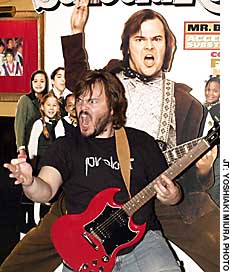
Occasionally, I go through old published reviews of mine from the 90s and 00s and post them here. I came upon one that I did under the alias Merle Pangloss, a parody persona used for reviewing certain types of rock concerts whose purpose is quickly discernible and hardly original, but I’ve decided to post links to the ones that are still online. There were other Merle missives from the 90s that are not online but somewhere in my files. I’ll try to dig them out and get them up. Enjoy.

Limp Bizkit

Green Day

Oasis

“School of Rock”

Posted in Music | Tagged , , , | Leave a comment

Media Mix, March 14, 2021

Here’s this week’s Media Mix about the government’s proposed revision to the immigration law. As pointed out by attorney Shoichi Ibusuki and Eri Ishikawa, who works for an organization that provides support for refugees in Japan, during the discussion of the matter on the TBS radio show “Session,” much of the immigration agency’s work with regard to asylum-seekers is to dehumanize them so that they can’t possibly get a purchase on the public’s sympathies. Ibusuki mentions how the mass media learned about the revision through a justice ministry “lecture,” meaning there was no question-and-answer session. The government told the reporters only as much as they wanted them to know and then the reporters, for the most part, regurgitated this information verbatim. Asahi Shimbun at least had the wherewithal to look at the bill more carefully and betrayed some doubts as to just how much it would solve the problem of indefinite detention, but it was in the context of an editorial, meaning anyone who read it might think that the Asahi itself had an agenda. During the discussion, Ibusuki could barely contain his anger, which was aimed as much at the media as it was at the government. 

And one of the ways the media conspires with the government in this way is not to humanize the issue. These are real people we’re talking about, people whose lives might be in danger, so the issue of “Why did they choose Japan in the first place?” is sort of beside the point. They are here now and if the authorities willfully choose to ignore the situations these people fled then they can’t rightfully claim to be members of that subset of countries who says it respects human rights above all else. In that light, I fell victim to this same pattern of neglect by calling the person who basically sparked the revision “the Nigerian man [who] died in Nagasaki Prefecture after going on a hunger strike to protest his confinement,” rather than his name, which is Gerald Okafor, though many people called him “Sunny.” You can read his story in Dreux Richard’s new book, Every Human Intention. Sunny was not a refugee, but the media’s tacit agreement to not name him is the same tactic the government uses to make asylum seekers disappear. 

Posted in Media | Tagged | Leave a comment

Review: The Outpost

The post-Platoon American war movie has been obsessed with verisimilitude; not just in terms of visceral shock, but with the kind of behaviors that battle readiness gives rise to. On the surface, The Outpost comes across as a kind of exploitation flick, with the last half given over to nonstop fighting that places the viewer right in the midst of the carnage, but in other ways the movie is almost strikingly forthright about the pointlessness of the current American attitude toward military effectiveness, especially when it comes to the misguided adventure in Afghanistan, the longest war the U.S. has ever fought. 

Director Rod Lurie doesn’t try to transcend his assignment. Right away he lays out what’s at stake, both strategically for the characters and dramatically for the audience. The titular base is located at the bottom of a basin in the Afghanistan mountains near the Pakistan border. It’s 2009, and already the troops know that they’ve been tasked with the impossible. The script provides us with the usual roster of recruit types, varying in emotional and intellectual range, and what they all seem to have in common is a general disregard for their commanders’ sense that the locals they are supposed to work with against the Taliban will help them in this fight. In any case, the outpost goes through leaders like band-aids. Stretches of boredom are broken by sudden attacks that usually leave at least one American dead. As the word comes in that the outpost will soon be dismantled, the men themselves understand that once the Taliban find out (and they will find out), they’ll attack with everything they’ve got. The intelligence that those in charge haven’t taken this eventuality into full consideration makes the resulting slaughter all the more infuriating.

Though there are no big name stars in the film, there are enough second-level A-actors (Orlando Bloom, Caleb Landry Jones, Scott Eastwood) to make you wonder what the pitch was, and one of the most impressive feats that Lurie pulls off is creating an ensemble dynamic that feels organic. He doesn’t try to highlight heroics and has no use for meaningful dialogue, but rather focuses on the only truism that holds any real substance for these men, which is to survive at any cost. The Outpost isn’t going to change anyone’s mind about war, whether in Afghanistan or elsewhere, but it keeps its eye steady on the prize, which is to show how men hold on to their sanity under impossible circumstances. 

Now playing in Tokyo at Shinjuku Wald 9 (03-5369-4955).

The Outpost home page in Japanese

photo (c) Outpost Productions Inc. 2020

Posted in Movies | Leave a comment

Interview with Aidan Moffat, Dec. 2006

Arab Strap has reunited and released a new album. Here’s an interview I did with Aidan Moffatt on the occasion of their farewell tour. From the Japan Times.

Pop artists tend to be identified by their musical stylings but some are associated with specific themes. The Scottish duo Arab Strap specialize in alcohol-induced sexual anxiety, characterized by Aidan Moffat’s slurred, sotto voce ramblings about women bedded in a haze of beer and Malcolm Middleton’s delicate, atmospheric guitar work. Over a decade they moved from a kind of ambient electronica to real pop songs with choruses and bridges, and apparently the evolution is complete, since they announced in Sept. that they’re calling it quits. 

“It’s a good idea we end where we sound good instead of continuing to make records that don’t interest anybody,” says Moffat over the phone from Manchester, one of the final stops on their Farewell Tour of Europe. “There are other bands who would benefit from the same thing, but I wouldn’t want to name any of them.”

The breakup has also resulted in the inevitable career retrospective, but “Ten Years of Tears,” a title that pokes fun at the pair’s depressive reputation, isn’t the usual greatest hits collection if only because Arab Strap didn’t have any bona fide hits. “It was going to be a B-sides/rarities compilation,” says Moffat. “Then we decided it would be better to tell a story of how we began and follow through.”

Moffat and Middleton were both 21 and disillusioned with their respective musical projects when they joined forces in their hometown of Falkirk. Calling themselves Arab Strap, the name of a sexual aid, they made some tapes and sent them to local label Chemikal Underground who asked them to send more. Their first single, “The First Big Weekend,” which was written and recorded in an afternoon, earned instant notoriety when it was named by tastemaker John Peel as one of the best songs of 1996 and played every day for months by DJ Steve Lamacq on Radio 1. 

“To this day I don’t understand why people like it so much,” says Moffat. The song is a monologue about what he did the previous weekend and set the pattern for his uncomfortably personal lyrics, which were sometimes described as being misanthropic or even misogynistic. Close listening reveals a romantic at heart, albeit a brutally honest one. Over time, sexual malaise gave way to thoughtful meditations on the meaning of commitment and the elusiveness of connubial happiness. In addition, the music itself became more evocative. The tunes on their last proper album, “The Last Romance,” are almost upbeat. 

“We were getting stuck in a formulaic Arab Strap sound,” Moffat says. “‘There Is No Ending,’ which ends ‘The Last Romance’ and the compilation was released as a 7-inch single and I read a review that said, ‘Typical of Arab Strap, they release their most commercial single on the eve of their destruction.'”

Moffat has already started a solo career under the name L. Pierre. “It’s instrumentals made up of old record samples that I found, almost easy listening type of stuff, though by the time I’m finished with them they may not be that easy to listen to.” He’s also working on a spoken word project in which “every track is a minute long, and there’s like thirty tracks, so you get this half-hour story and there’s a booklet that you read while listening or it doesn’t make any sense.”

Given his distinctive narrative style, has he ever considered just writing for the page? “It’s something I want to pursue, but writing takes up an incredible amount of time. People who write for a living have to get up at eight o’clock in the morning.”

The farewell tour is supposed to end in their home base of Glasgow, where they are central to that city’s internationally-recognized music scene. (Belle and Sebastian’s “The Boy With the Arab Strap” was written about Moffat) It sold out a long time ago. However, it won’t be the last dates they play.

“The Japanese tour is a secret tour,” he says, and adds with a raspy laugh, “at least as far as the Western world is concerned. It wasn’t finalized until after the Glasgow date was advertised as our final show ever. I don’t want people to get pissed off, so I don’t see why they need to know.”

Posted in Music | Tagged , | Leave a comment

Media Mix, March 7, 2021

Kawamura/Omura

Here’s this week’s Media Mix about the ignominious end of the petition drive to recall Aichi Prefecture Governor Hideaki Omura. Though I purposely played down the ideological forces at play in this drama, it mostly came down to what one observer called ineptitude in the service of blind rage. Famous plastic surgeon Katsuya Takasu was the public face of the recall campaign, and he’s an equally famous right wing firebrand who was deeply offended by that section in the 2019 Aichi Triennale art show that featured things like the comfort woman statue and some burnt photo of the emperor. Omura had nothing to do with the selection of these exhibits. He was simply a figurehead, someone who was named the head of the Triennale for ceremonial purposes, but since he didn’t support the closing of the exhibit (it closed due to threats from anonymous persons) he was demonized by Takasu and Takashi Kawamura, the mayor of Nagoya, where the exhibit was held. Kawamura is not so much right wing as totally self-serving, and he’s had a beef with Omura ever since the governor declined to support his pet project, rebuilding Nagoya Castle completely in wood. There were other more minor right wing personages behind the petition drive, but these two are the ones with the name value, so they pretty much have to carry the burden of the ignominy after 80 percent of the names on the petitions were found to be forged. It may be months before the results of a police investigation into the matter see light, but the general feeling I got from reading the coverage in Litera and conversations about the matter on the internet is that there was never enough public support behind the recall and perhaps the authors of the petition knew that. What they mainly wanted was to keep their resentment of the Triennale and Omura’s lack of support in the public’s consciousness. So the question is: When did it turn from a desperate PR ploy into a desperate face-saving gambit? Even Makoto Sakurai, one of the most rabid right-wingers in Japan, commented that the forgeries seemed to indicate that the people behind the recall had been carried away and in the process lost all sense of proportion. How to explain the utterly foolish idea of setting up an operation to forge petitions that would be impossible to hide? Media are calling the Chunichi Shimbun and Nishinippon Shimbun stories about the petition mill scoops, but from what I gather the information was just there in plain sight for anyone to discover. It’s tempting to characterize this stupidity as a side effect of the uncompromising hatred that many ultra-conservatives trade in, and not just in Japan. It just shows what can happen when that hatred gets out of hand. 

Posted in Uncategorized | Leave a comment

Review: Baseball Girl

The implied purpose of Choi Yun-tae’s Baseball Girl is to upend all the cliches attached to sports movies while at the same time following them to the letter. Thematically, Choi wants to show as honestly as possible the obstacles that women face when trying to make it in professional sports on the same terms as men, and sometimes this clarity of intention gets in the way of the drama. An opening title card informs the viewer that since 1996 women have been allowed to play on professional baseball teams in South Korea with men. The card doesn’t say whether any women have actually made it that far, but the movie makes it appear that attitudes are much more difficult to change than rules. The titular protagonist is Joo Soo-in (Lee Joo-young), a pitcher for her high school team who is determined to make it to the big leagues. By the time we meet her, she is already a sullen figure, having been beaten back for her ambition after causing some excitement in the press years ago when she became the first girl to ever play on her high school varsity team in more than two decades. However, the acclaim is conditional, because her talents are only considered exceptional because she’s a girl, and she resents this characterization.

So when a scout for the pros comes to her school during the start of her senior year and chooses only one player for tryouts, she doubles down on that ambition and decides to work on her fastball so hard that no pro team will be able to reject her, at least not fairly. The team’s new coach, Jin-tae (Lee Joon-hyuk), himself a frustrated wannabe pro pitcher, is frank and cruel: She’ll never make it, not because she’s a girl but because she just isn’t good enough. Jin-tae’s get-over-it approach just works to make Soo-in’s determination that much more stubborn, and we get the usual training montages that end with her hands bleeding. Eventually, Jin-tae, recognizing how his own thwarted dreams are contaminating his judgment, advises Soo-in to develop a knuckleball, since she can’t hope to compete with stronger, larger pitchers with just a fastball. Meanwhile, that other cliche of the adolescent sports movie, the parent who berates her child into thinking more rationally about the future, is installed in the background. Soo-in’s mother (Yum Hye-ran) scolds her constantly, saying if she doesn’t soon choose a credible goal in life she’ll end up like her useless father (Song Young-kyu), who has wasted most of his life trying, and failing, to pass the national estate agent’s certification test. 

What Choi avoids, however, is more significant than what he includes. The movie is almost perversely low-key. Even when Soo-in achieves some measure of victory, the director pulls back so as not to place too much importance on it in the larger scheme of things. Part of this strategy is to keep the viewer wondering what Soo-in can possibly achieve in a world where everything is stacked against her, but it also makes the viewer appreciate the subtle bits of narrative that give meaning to Soo-in’s existence, like her relationship to Jeong-ho (Kwak Dong-yeon), the male teammate who was selected by the scout and who has been her best friend since they played together in Little League. Though there are hints of genuine affection between the two, Choi doesn’t do the obvious and make the relationship a potentially romantic one. If anything, these two souls, through what is portrayed as a very special rapport, seem to understand life better than anyone else in the movie, which is why it’s slightly disappointing that Choi doesn’t extend this sensitivity to the other female characters in the story. Soo-in’s mother never transcends her cinematic stereotype. Her best friend, a frustrated dancer, is simply on hand for dull contrast. Choi’s decision not to make a big deal of Soo-in’s gender while conveying the idea that it’s her distinct personality that makes her a good athlete is compelling, but he doesn’t quite do enough with it. In the end, the cliches win. 

In Korean. Now playing in Tokyo at Toho Cinemas Hibiya (050-6868-5068), Toho Cinemas Nihonbashi (050-6868-5060), Toho Cinemas Shinjuku (050-6868-5063), Toho Cinemas Shibuya (050-6868-5002), Toho Cinemas Roppongi Hills (050-6868-5024).

Baseball Girl home page in Japanese

photo (c) 2019 Korean Film Council

Posted in Movies | Tagged | Leave a comment