
 The true story of photographer Masashi Asada and his Mie Prefecture family, who were and presumably still are the main subject of his award-winning pictures, provides such a smooth dramatic arc for a movie that early on you begin to wonder how much was elided. As played by Kazunari Ninomiya, Asada is an amiable iconoclast, someone who is passionate about his art but not particularly intent on the work involved. His success is more or less accidental since he doesn’t actively apply himself to getting his photographs out there, and the viewer develops the feeling that he relies on his family for subject matter simply because it’s easier. Director Ryota Nakano depicts Masashi’s progress as a creative soul with the kind of comic aloofness you’d expect from someone like Robert Zemeckis, if we were to use a Hollywood cognate. If that seems like a cheap reductionist rhetorical gambit, it’s important to note that the aforementioned dramatic arc was something that Hollywood perfected in its heyday, if not outright invented.
So Masashi’s mildly antisocial bona fides are conveyed by his tattoos and, reactively, by his brother Yukihiro’s (Satoshi Tsumabuki) relentlessly disapproving comments. Yukihiro is the killjoy, the scold who walks the straight and narrow and had little confidence in Masashi’s ability to make a living from his art. Which isn’t to say he doesn’t love him. His parents (Jun Fubuki, Mitsuru Hirata), on the other hand, couldn’t care less about his putaro attitude, and love getting dressed up as gangsters and firefighters and sick people for his staged tableaux. Predictably, publishers of photo books — a rarefied but seemingly active subsection of the Tokyo publishing business — aren’t interested in “family photos” and it falls to an equally iconoclastic small press to finally bring out his book, which is simply called “Asadake” (The Asada Family). It sells next to nothing, but it does win a prestigious award, so you could say that Masashi is on his way, even if he relies on his girlfriend, Wakana (Haru Kuroki), for financial support.
But if his book isn’t exactly flying off shelves, it does give him a certain rep, and he starts a niche business taking photographs of other families at their request. This activity takes him all over Japan and eventually to Fukushima, where he makes friends. When the quake and tsunami strike, he rushes back to see how he can help, and eventually gets caught up in a project to reunite families with the photos and albums they lost in the flood.
The completion of Masashi’s journey not only as a photographer but also as a character worthy of cinematic recognition is so airtight that the movie as a whole is stifling. While there are a few well-staged scenes in Fukushima involving victims and loss that are emotionally affecting, overall the story feels as safe as milk. It’s an extremely comforting two hours in that you never once sense that, as a viewer, you will be confronted with anything that could be described as disturbing. Families are wonderful things, of course, but they make better movie subjects when there’s a bit of friction.
In Japanese. Now playing in Tokyo at Toho Cinemas Hibiya (050-6868-5068), Toho Cinemas Nihonbashi (050-6868-5060), Toho Cinemas Roppongi Hills (050-6868-5024), Toho Cinemas Shibuya (050-6868-5002), Toho Cinemas Shinjuku (050-6868-5063), Shinjuku Wald 9 (03-5369-4955), Shinjuku Piccadilly (050-6861-3011).
The Asadas home page in Japanese
photo (c) 2020 “Asadake”Seisaku Iinkai

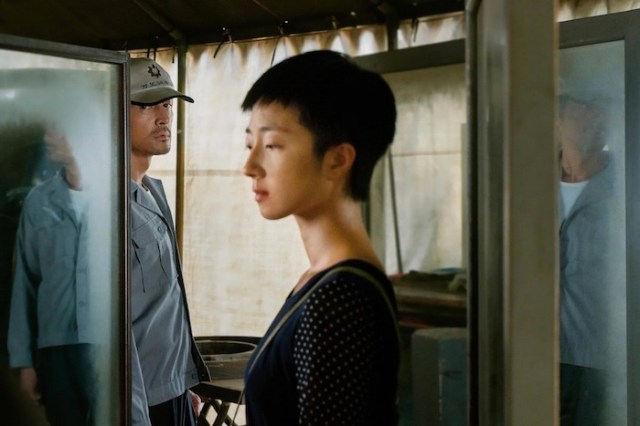 Mainland Chinese cinema was relatively late to film noir, especially in relation to Hong Kong and other Asian countries like South Korea, Japan, and the Philippines, all of which have reshaped the genre in distinctive ways. But once a younger set of directors applied film noir tropes to their local circumstances, it became almost a national obsession. Diao Yinan’s The Wild Goose Lake has pretty much become the standard to which all Chinese noir will be compared until something better or more original comes along, but that seems unlikely owing to how thoroughly Diao has applied these tropes. It’s a pretty stunning achievement, even if it can sometimes feel like a trial.
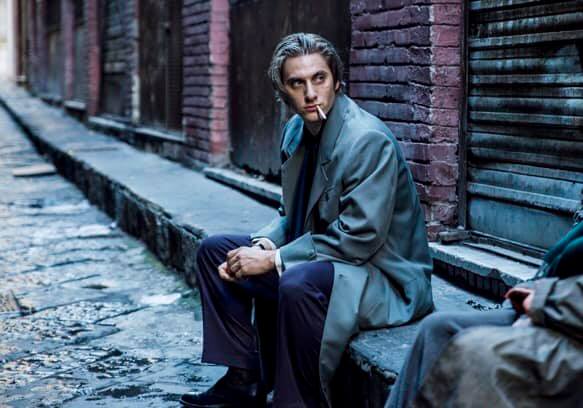 I haven’t read Jack London’s novel, which is supposedly an autobiographical affair outlining his genesis as a writer, but based on his other writings that I have read and the general tenor of autobiographical novels by writers, I can probably guess what the main theme is: the triumph of the individual sensibility over that of the crowd, and the suffering that comes with it. Pietro Marcello relocates the book’s setting from Oakland to Naples in a time that feels as if it’s early to mid-20th century (but since there are no references to any world wars, it may simply be a time out of mind). Martin (Luca Marinelli) is a sailor, a proletarian by birth who is uneducated but hungry for knowledge. He meets the socialite Elena (Jessica Cressy) after saving her brother from a beating, and develops a crush both on her and her bourgeois living situation. After a conversation with Elena about the poet Baudelaire, he decides to become a writer in a language, Italian, he’s not fluent in. Martin’s mission is simple and almost sad in its trite dramatic essence. He wants the respect of the better classes, initially so that he can marry Elena, since her parents can barely remain in the same room with him, but inevitably so he can get revenge on his own lowly past.
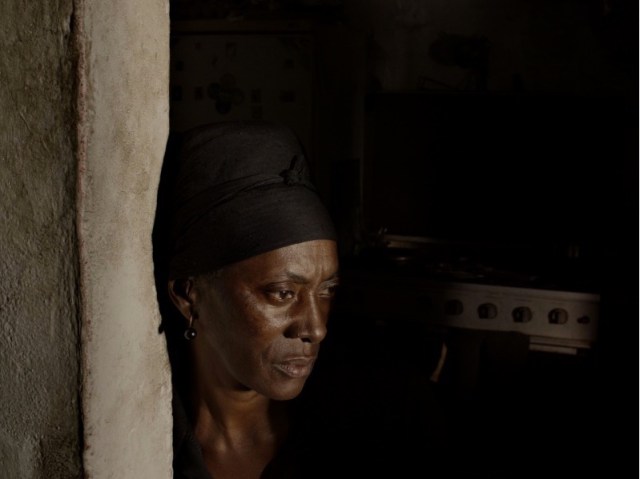 There’s a subset of narrative film directors who work almost exclusively with non-professional actors, which may sound like an oxymoron since these performers are in all likelihood paid for their efforts, but in most cases they only appear in one movie and otherwise live lives that have nothing more to do with film. The Portuguese filmmaker, Pedro Costa, belongs to this group, but his methodology is even more refined. For 20 years he has focused on immigrants to Lisbon from the former Portuguese colony of Cabo Verde, off the Atlantic coast of Africa. More to the point, he centers his stories in a small, warren-like Lisbon slum where these people live their lives of quiet desperation, and while that sounds like a cliche, Costa’s use of space and narrative is highly unusual, not so much because it follows documentary procedures, but rather because it plucks its protagonists’ stories out of a strip of their lives as a means of illuminating what it’s like to pass most of one’s existence in the shadow of an alien culture.
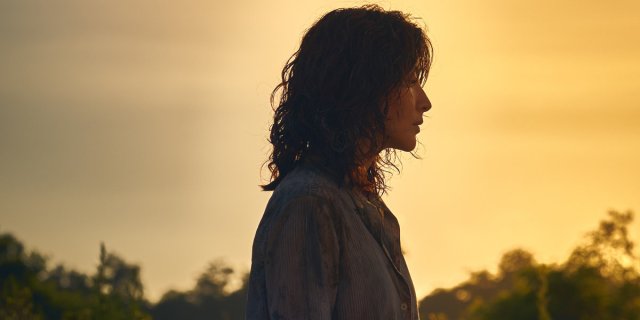 Bring Me Home is, I think, the third missing child movie I’ve seen this year, which, given the attenuated nature of my moviegoing pastime in the COVID era (I tend to watch TV series at home), practically makes it a subgenre. Compared to something more cerebral like the Spanish movie, Madre (opening here next month), this Korean thriller is pretty straightforward, and because it’s Korea it’s also more viscerally stimulating. First of all, there’s the social elements to contend with, which are always more potent in Korean movies, whether mainstream or indie. Then there’s the violence and emotional extremism, which is also a given in any Korean movie that even touches on criminal behavior. In other words, it’s quite a ride to begin with, and that isn’t even taking into account its questionably exploitative handling of children.
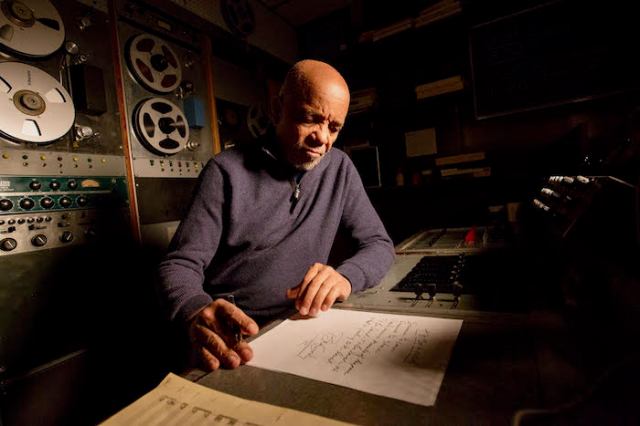 Right away, I should mention that this documentary about the pioneering Black-owned independent record label was authorized and to a certain extent supervised by Motown’s founder Berry Gordy. It’s essentially a PR gambit and looks like it. The narrative emphasis is on the label’s enormous success and historical importance, neither of which can be denied. Whatever frictions it covers are good-naturedly glossed over with a smile and/or a shrug, and some of the biggest surviving beneficiaries of Motown’s success, most conspicuously Diana Ross, don’t participate.
 Last week, the organizers of the 25th annual Busan International Film Festival announced somewhat abruptly that the festival, originally scheduled to take place Oct. 7-16, would be postponed for two weeks and would instead begin on Oct. 21. It has already been decided and announced that, due to the COVID crisis, the size of Asia’s biggest film event would be scaled back considerably. For one thing, there would be no foreign guests in attendance due to government rules stipulating a 14-day quarantine for anyone entering South Korea. That includes, of course, the usual invited press, of which I have been a member since 2001. It also means that most if not all the non-Korean filmmakers whose works will be shown at the festival will not be able to attend in person. However, the organizers were, and still are, intent on having a live event, with real people attending screenings in real theaters, because that is what a film festival is about and BIFF considers itself a real film festival, i.e., one for the local fans. The two-week postponement was implemented because of uncertainty over the Chuseok holiday period in the first week of October, when many Koreans visit family and friends. The fear is that such activities could result in another spike in infections. If that happens, the two-week lag time might be enough to flatten the curve.

 philipbrasor.com