
Neeraj Churi is a UK-based Indian businessman who runs a company called Lotus Visual Productions, which provides production assistance and advice to independent filmmakers who address LGBTQ+ themes and characters.
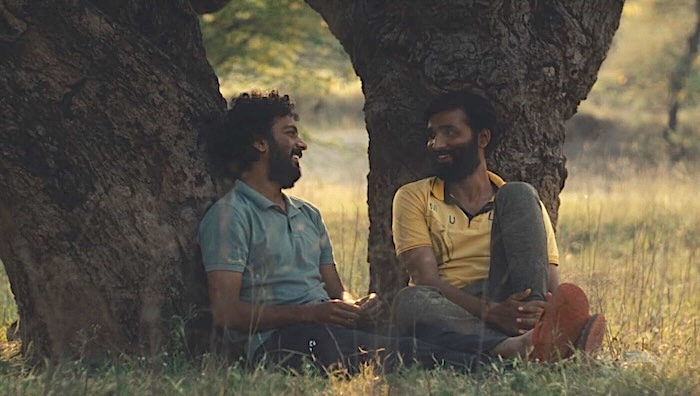
Churi’s most well-known production is probably Cactus Pears, an Indian film about a young man who returns from the city to his home village to preside over the funeral of his father and in the process reacquaints himself with a childhood friend who, he soon surmises, is having casual sexual trysts with men who live in the vicinity. They reignite their friendship, which soon turns erotic, while both navigate the various familial and social pitfalls of the village culture. The film has won several awards over the past year or so, including the Grand Prix at last year’s Tokyo Filmex.
I met him in early October at the Busan International Film Festival, where two of his feature films were being screened. Lovers in the Blue Night centers on a Muslim couple living in Mumbai who are flood refugees from Bangladesh. The husband works as a rat killer while the wife does phone sex work at a night club. The husband eventually falls into a sexual relationship with a thief from the Untouchable caste.
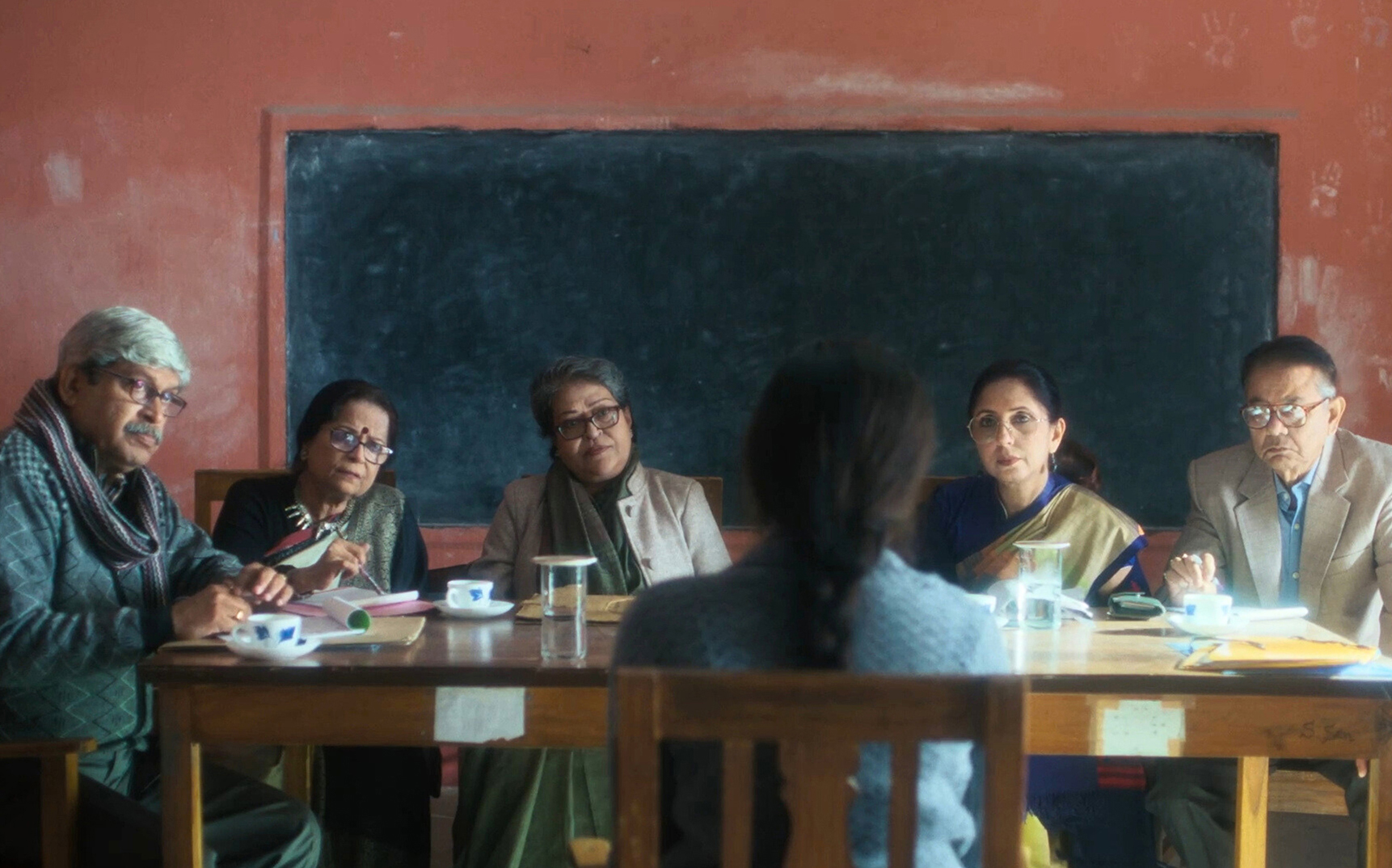
The other movie Churi accompanied was About an Intimate Matter, which deals with two childhood friends living together in Kolkata. One teaches at a public secondary school. A student leaks some private FB photos of the teacher, who is then called before the school administration and interrogated about her private life, since it is assumed she is having an intimate relationship with another woman. The interrogations affect both her job and her relationship at home.
Our conversation took place at the guest lounge in the Busan Cinema Center.
-What exactly does your company do?
Our goal is to promote LGBTQ filmmaking and filmmakers.
-Specifically in India.
India is my home country, where I grew up, and I found that systematically LGBTQ was quite an issue. I was in banking, and people used to come to me from India and say do you want to make some movies, do you want to put some money in my movie? It wasn’t a big amount but I thought of it as a one-off, so why not start this grant in India. This was about 11 years ago.
-But it’s through a festival. Is it exclusively an LGBTQ festival?
Yes, it’s the largest LGBTQ festival in Asia. It’s called Kashish Pride Festival. Basically, we solicit scripts and get a shortlist of scripts and they come and pitch their ideas, and the winning pitch gets money and the runners-up get smaller funds to build up the script further. Sometimes, I’ve given them money to make the films themselves. Many such films have come out of this initiative. Eventually, we started pairing them with industry mentors. Lots of people who come in as jury members from the Indian film industry get teamed with them and end up improving the quality and in the meantime they get exposure to the industry. And these filmmakers are usually LGBTQ filmmakers who may have not made any films yet. They get good mentorship, and good things have started to come out of it. Making features was not necessarily my intention. Like I said, I came from the world of finance.
-What was your intention?
My intention was for LGBTQ filmmakers in India to get a voice.
-That could be done in many ways, not just through films.
Well, first they’d make short films in order to get their foot in the door, or at least the first step, but what happened was that one of the filmmakers who we made a short film with then came to me with the script for a feature film. They said, “No one is willing to produce this. Will you take a look at it?” This was Cactus Pears. And I loved it. I thought, I’m a first-time feature film producer and you’re a first-time feature film director, so why not give it a shot? So we started that journey. But while that film was under development, I got a chance to be a part of another film called A Place of Our Own. We provided the funds for developing and finishing these films and then started navigating through the international market. I didn’t know much about any of that, unfortunately. I had them find finishing funds, and then the film was invited to Cannes, and I went and represented the film and learned about how the process worked—all about distribution. And the film then went to the SXSW Festival. This is A Place of Our Own I’m talking about, whose premier was actually at the Tokyo International Film Festival. And then our second feature film was Cactus Pears. And then I became executive producer of Lovers in the Blue Night and now this one [About an Intimate Matter].
-So four features so far?
That’s correct.
-How did these two more recent features come about? Did the directors come to you with ideas or finished scripts?
With Lovers in the Blue Night, the film was mostly shot already. One of the producers wanted me to look into it due to the subject matter. And then when the film came out to give feedback on multiple cuts. Due to the experience I’d had with Cactus Pears I supervised the launch. With Intimate Matter, it came to me because the word had been spreading that I would be the person to talk to about this kind of subject matter, so they approached during the development stage.
-They hadn’t started shooting yet.
They had a script. And at that stage it was more a matter of just giving them tips on the script. People didn’t necessarily want me to jump in as producer yet. Another friend of mine was also producing it. So I just gave them my card and when the film started coming into shape…it involves a queer couple and so on. The cut had a lot of things and I just wanted to give them advice that was very, very important from a couple’s point of view, because sometimes when you’re editing you don’t know what is more resonant. So it was a matter of giving feedback on multiple ideations. Ultimately, the film was ready, and now we’re helping its PR, distribution, everything.
-Besides the LGBTQ themes, these two films contain underlying social comments. The problems these characters go through are not so much due to their sexual orientation or preferences, but rather that they don’t have much power over their lives in the first place.
Exactly.
-And those social themes seem more pronounced in the Indian films I’ve seen recently. On top of having to live with their sexual feelings, they have to deal with survival.
Absolutely. One of the reasons I chose to come on board with these films is that there once was a time when we didn’t have proper queer representation in Indian cinema. It was normally used for comic relief or for villains…
-I think that’s been the case for most national cinema histories.
Right. And then when representation started making itself felt, it was mostly among the urban, English-speaking elite; whereas my personal experience growing up in small towns in India, it’s quite the contrary. So when the stories started coming to me, I loved that they talked about characters who were, as you mentioned, going through their own struggles with their sexuality as a continuum of the larger struggle to be a part of society and live with some sort of dignity. In India, the LGBTQ struggle doesn’t come in a neat, tightly wrapped bundle. It is part of a continuum of everything we do. We cannot tell a story where social stigmas or social obligations don’t exist. We have to survive and thrive and find a homeostasis, a balance between our lives and the social lives we’re expected to follow. That’s what we navigate every day. A Place of Our Own is the story of two trans women who come from a Dhali background, and they’re trying to find a home. It’s an uplifting story of these two women who are trying to find a place to live despite everything society throws at them. Similarly, Cactus Pears is about these two men who are trying to come together despite social circumstances that would seem to make it impossible, in order to just be together. What I absolutely love about Lovers in the Blue Night is the fact that the lead character is married.
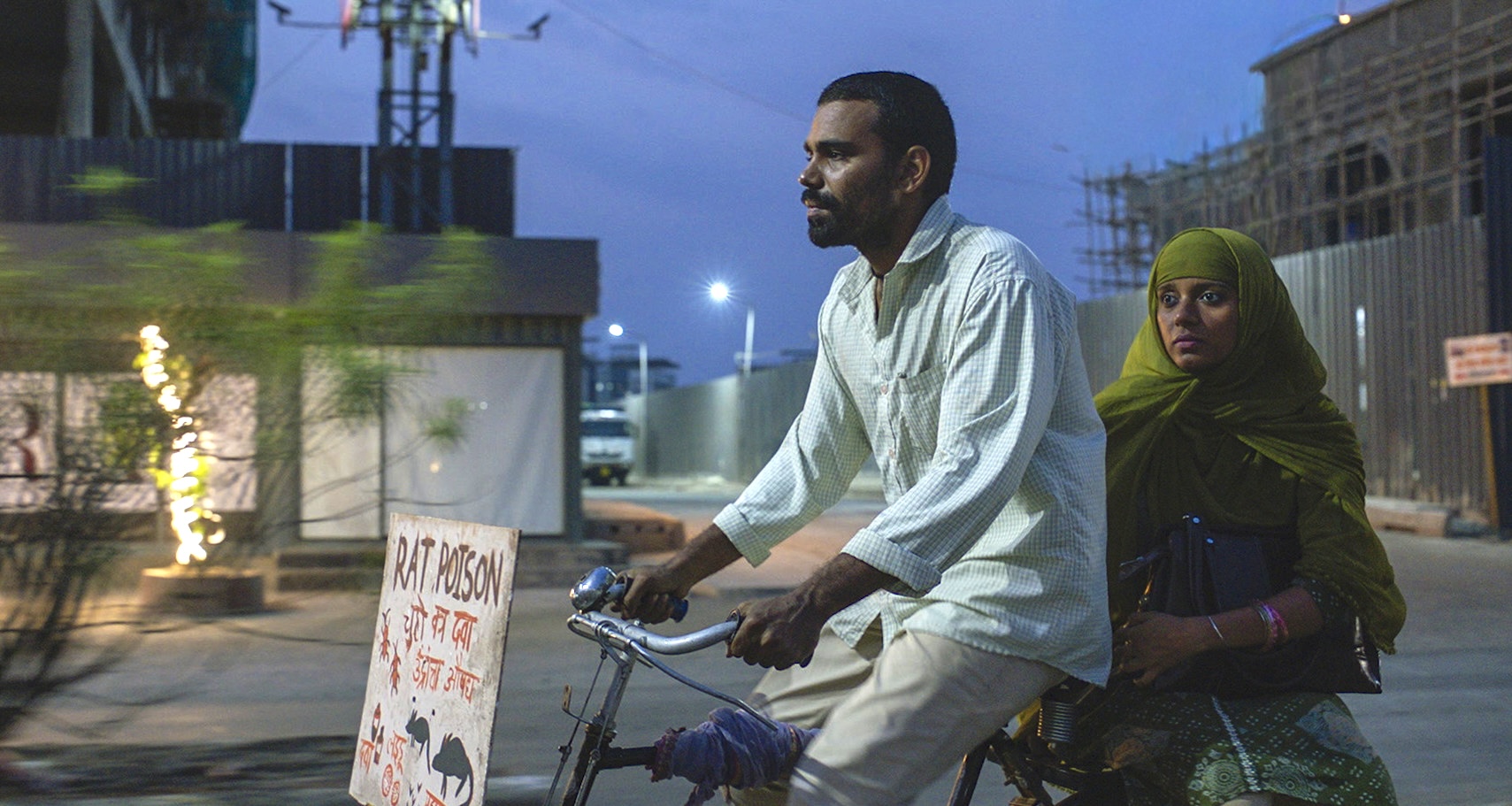
-It’s obvious from the beginning that there is no intimacy in this couple’s life. But in the beginning I didn’t know the husband was homosexual. I thought the lack of intimacy had something to do with the fact they were Muslims.
And that’s the beauty of the story. Maybe homosexuality is the last thing you’d think of with regard to their problems as a couple. We’re so used to seeing queer characters portrayed a certain way–they dress garishly or have colored hair or are hyper-sexualized. But in India the reality is that people keep it secret.
-Well, even the thief in the movie, who I assume is bisexual, comes across as a tough, macho guy because he has to overcome his low caste status.
Right, he has to create a persona. These are exactly the kind of characters we want to show. We want people to think about them and look at them, and then have a discussion about it all. When you look at About an Intimate Matter, you have two characters and the interrogation [at the hands of school administration] that one of them has to go through. These two characters exist in a relationship that isn’t necessarily played out on screen. It’s a relationship that’s been there for a while. They are not really in it deeply. The one woman moved in just six months ago because they’ve known each other since childhood. So in that sense it’s a mature relationship, but as they go through this delicate juncture in their lives you have one who is still not over her ex-boyfriend and is still in contact with him, while the other is dealing with her own crisis at work without telling her partner about it. That’s what I wanted to show people, all these different shades of existence that are just part of being in a society.
-Their relationship isn’t depicted as this kind of passionate thing. More or less they just fell into it, which means it isn’t the central thing in their lives. Yesterday at the post-screening Q&A, the actor who played the teacher pointed out that the character’s love of teaching is actually stronger than her love for the woman she was living with.
Sometimes what happens is that, as queer people, we lean on other identities that provide more validation of our existence. We build our identities on our work, which we find value in within the system. So when something like what happens to this teacher happens, you then start to question everything about that existence. In this particular case, she gets scrutinized because of the underlying factor that she’s living with another woman, and that is the part that keeps bothering her; not that she was wearing that T-shirt that seems to bother her superiors. If she were married to a man with two kids, those questions wouldn’t bother her, because she knows what such a person’s place in society is. She knows that if she doesn’t find a job something else will come her way. But in this case she’s made aware that her job is threatened because of her sexuality, or perceived sexuality. And these are situations that we all go through in our jobs because of the ways people perceive us. You’re married or you’re not married. “Why do you need a promotion? Look at that person. He has a wife and kids. He needs more money. You’re single. You don’t need more money.”
-But those are attributes that don’t always have anything to do with the job itself.
Exactly. If I’m doing my job well, I deserve a raise regardless of my relationship status. All these things are common in life, so when I saw this movie I appreciated how all these factors can affect a relationship, especially a relationship that is not legally sanctioned. They are not married, but they choose to stay together, and those kinds of relationships can fray under pressure, and that is what this film is about. In India, I don’t think a film has done such a good job of showing clearly a relationship under societal pressure. We usually show the conventional version or the cutesy version of couples living together and dealing with imagined pressures, but here we have to confront the real world we live in.
-What intrigued me was the attitude of the school administration. It would seem that the welfare of the students should be their primary concern, but they somehow associate what’s best for the students with how well the teachers display the proper decorum.
Right. The interrogation starts after private photos are leaked. Those photos were taken a long time ago and were private. They only mean something now because she is unmarried and living with another woman. They just keep grilling her on her personal background and who this woman is. Ultimately, what they don’t want to say is, “How can you be queer and teach? What kind of influence will you have on the students?” And that kind of behavior is common. We still see it in America, where teachers have been sacked or even killed themselves.
-In America, the school authorities would probably be more direct about it.
Also in America a person can say they are gay, but normally it’s not something you talk about openly. It’s only when someone asks you that you might divulge such a thing. But at the same time that’s when the passive-aggressiveness comes out, because the other people don’t always know how to accept it.
-How do you promote what you do in order to get people who might benefit from your work to get in touch?
Fortunately, people have been reaching out to us, even from places like Australia, to see how we can collaborate and what we can do. We’re quite happy with the way the connections are happening. Having said that we’re now considering getting into other kinds of films except LGBTQ-related ones, projects that I think have a social message that’s urgent or exciting.
-Can you give me an example?
Sure. One of them is about a family in the Himalayas. A woman lives with a husband and a child, and it’s about how her family is coping with the loss of bees in their village. Their apple harvest starts failing as a result. It follows them as they grapple with the problem. Basically, it’s a story about how climate change impacts the fragility of the ecosytem which in turn impacts the fragility of the family. We are now in the process of financing and finding partners. Shooting that film in the Himalayas will be challenging because of climate change itself. You saw what happened in Nepal. So we’ve decided to find a safer location where we can shoot without a whole lot of trouble getting there and coming back.
Another project we’ve selected is based on the filmmaker’s life. She was divorced at a very young age as a Muslim girl, and she had to work in her mother’s hair salon in a working class neighborhood. It’s about the characters she encounters and how they help her take the reins of her own life. A third project is completely different, and a genre I absolutely love: horror. It’s based in Hong Kong and will feature a South Asian and Asian cast. It will be a British-Hong Kong production.
-So you don’t limit your productions to Indian films?
I’m dealing also with South Asian themes. There’s another queer film we’re making in India. It’s a documentary that will soon start its festival journey. It’s about two siblings in rural India who make this traditional liquor, which the native community knows how to make. They’re sisters who want to make money. One of them wants money so that she can move to the city and see the world. The other wants to make money so that she can transition into a man. This revelation didn’t come out until after shooting started, so the filmmaker came to me and said, I didn’t start out making this film about a transitioning woman. So he asked me to shape and guide the production. I want it to go through to the transition process and capture the emotions involved.
-Do you see the treatment of LGBTQ themes in India different than it is in other places?
It’s mostly the same throughout Southeast Asia. Nepal has made good strides in LGBTQ representation. They’ve legalized same sex unions. These matters will keep coming and going. You have to be vigilant. A lot of people in the Indian media or Indian production houses do try to do things. Sometimes they get it right and sometimes they get it wrong. What’s going to happen is that as time progresses we will have continuous ongoing representation, continuous discussions, and continuous visibility to make that impact normalized. I’m also working on some initiatives that I will soon be able to make public that should provide a better execution of support for LGBTQ storytelling, and not just in India but Southeast Asia and South Asia.
-Sometimes the legal part doesn’t make an immediate difference. Even if you legalized same sex marriage tomorrow, it doesn’t mean it will become socially acceptable to those people who don’t accept it right now.
For same sex couples in bigger cities, it’s a lot more acceptable right now, especially among educators. I’m pretty sure the society will move on and circumstances will improve as time passes. Usually what happens is that society is forced to accept these things. I know so many couples even in India who have been together 25 or 30-plus years, and now that they’re facing retirement they’re asking, what about my rights of inheritance and so forth? Housing is a challenge sometimes if a person does not belong to a conventional family. As you see, the character in About an Intimate Matter is having such a tough time trying to find a home, trying to find a job. If she were married it would be simpler, but until that is legalized it’s maybe easier for her to live alone.
-In her case, I don’t see how the school would be in any position to take away her job if same sex marriage were legalized, regardless of their policy.
Exactly.
-But because there’s no law now they can do whatever they want. Or can they?
If the law was there and she was not married to her opposite sex partner, it wouldn’t be a problem because they would probably assume they’ll get married at some point. So their opposition to her unmarried status would be different. The absence of a legal sanction for same sex marriage is hurting people. There are genuine reasons why we need this law. It’s about dignity. It’s about pragmatic, practical things. We’re living together. My parents are happy. His parents are happy. What about buying a house and getting a loan? Why should it be that difficult?
-The roommate in the movie kept pushing her to pursue a lawsuit, but it seemed to me that it would have been very difficult if you didn’t have such a law. Would it have been possible for them to litigate?
She could have sued for having been harassed for a private matter, like an invasion of her privacy, because she had not done anything wrong in school, as such. And the students’ parents have not complained. It was another teacher who did that.
-What is your main goal here in Busan?
That climate change film I told you about? The director is here, so we’ll be taking meetings with some people who are interested in a co-production. And then meeting up with the cast and crew of Lovers in the Blue Night and we’re in the process of locking down a sales agent for About an Intimate Matter. We’ll see what kind of progress we can make.
–Cactus Pears had a general release in the U.S. How about A Place of Our Own?
At SXSW we found a distributor and it had a limited release in America. And from that we got a nomination from the GLAAD awards.
-Do you have any prospects for the two films you’re showing here?
Let’s hope we’ll be able to make some progress at the market here. For Lovers in the Blue Night BIFF was the Asia Premiere, and they’ve been in discussions for various territories at festivals. After the premiere of About an Intimate Matter we’ve been getting a lot of invitations to other film festivals, so we’re trying to narrow down on a sales agent.
-Is it difficult to find distribution for independent Indian films?
Film distribution is still a challenge, and not just internationally but domestically, as well. You meet so many fine filmmakers who are still lacking in distribution. Even award-winning films don’t have an easy time and queer films have their own special challenge. But at the same time we have to go the extra mile, to push and make things happen. For instance, British films always tend to have distribution funds coming in from foreign bodies. The same thing with European films. You can get additional funds to promote the film. Our films do not necessarily see that. One answer is the Film Board of India and others, which can grant funds to promote your film. Let’s say there’s an interest from Japan or America for your movie because they’ve see it. Any distributor in India would jump at the chance in that case. And what’s great about this kind of funding is that they don’t have to give it back. It’s a big win, and they do it for, like, ten films a year, which is like $300,000 tops, for promotion. That would mean so much for Indian creativity, because more people would come into India to produce independent films, which then get a chance to journey outside of India. That’s what happened with All We Imagine As Light, because it was also a French film and it went to Cannes. It had that journey. There are just so many films out there competing for a limited amount of attention.
-Even in India?
Worldwide.
-But is there an audience for these kinds of films in India? Is it that the audience just doesn’t know about them?
India is 1.5 billion people. So when you talk about an audience, even if I have .001 percent of that audience coming to my film, I am a success commercially. The audience exists, but the distributors have a skewed perception of the audience because it’s distributed so widely.
-Is it a language issue?
It’s also a culture and access issue. If there are dedicated theaters who keep talking about these kinds of films, people will come and watch them. In Britain we have such a great mechanism, the National Lottery Fund and spaces like combination cafe-theaters. Every small and large city has these kind of spaces where people can go and watch films. And what that does is it makes a culture. People know they can go there to watch art house films and not commercial films. That culture grows and the audience solidifies. All I need to do is make sure my film is there. That’s enough to generate sufficient buzz.
That sort of culture doesn’t exist in India yet. We are competing with mainstream cinema for a small number of legitimate theaters. We have around 9,500 theaters in all of India, which is small for our population. China has many, many more. Something like 90,000 theaters, multiple kinds of theaters can play multiple kinds of movies and that multiple kinds of people can access. There’s no need to compete for screens. If we have dedicated spaces then people will definitely find those movies. In every city there is a sufficient number of people who will want to see these kinds of movies. So I refuse to go along with these people who insist there is no audience for this kind of cinema. The audience exists. They just need a dedicated space where they know they can watch these films. Usually people come and watch these films in city clubs, a model that’s flawed because it’s free. The club will ask us for a film and say we will give you exposure. I don’t need exposure. I need an audience. How about we have a revenue model with the city clubs? We charge the audience. We tried that with Cactus Pears in India and it worked.
-BIFF is mainly a festival for the public, as you probably know, which is why it’s so difficult to get tickets to some films. And its strength is that the audience is so diverse, meaning they’ve been exposed to so many different kinds of films. I tend to think that’s because for many years the government of Korea subsidized the film industry in one way or another.
There needs to be some state-sponsored support for the film industry, either through distribution or the creation of a structure for exhibiting films. I’m UK-based and I can technically make films in any part of the world. I believe India has incredible talent and incredible stories–obscure, weird, funny, engaging stories. This is my first time attending a festival in Asia outside India. I’ve accompanied my films in the U.S. and Europe. And the experience has been so different with regards to the questions we had yesterday after the screening. I felt for the first time they were coming from common people, and I loved that.
-The audience questions are always great here because the people who ask them are genuinely curious about specific things, either regarding the making of the movie or what the movie is about. The frustrating thing is that if the guest at the Q&A isn’t speaking English, you don’t get English interpretation. And I think they have to fix that because they’re now actively trying to attract more international attention through their new status, which is why they finally launched a Competition Section last year. They never had one before.
I think it’s good to have a competition, because then it gets talked about and written about. It could give a film a boost in their home country. Perhaps it might help it with distribution. There’s some sort of cultural connection that people end up appreciating. And I don’t think that the Korean audiences I’ve seen here exoticize movies as much as they do in, say, Europe. They just get into the storytelling.
-That’s what I like about it. I’ve pretty much learned about the world through movies.
Exactly.
-More than any other medium, including the news.
Films gives us a glimpse into people’s lives and how they are thinking, and, more importantly, how the director is perceiving the situation.
-If you’re cinema-literate, so to speak, you can watch a movie and decide for yourself how true-to-life it is, even if you don’t understand the language or the cultural foundation. You clue into the truthfulness of what’s being presented by the way it’s being presented.
Yes
-And that’s a valuable skill to have, not only for filmmakers, but for film viewers as well.
At the same time there’s the realization that we’re not all that different after all.
-The basic themes are universal. I’m always amazed when somebody says, “I don’t want to watch a movie from another culture, because I’m not going to understand it.”
My mum likes blockbusters. Everyone likes blockbusters, but when I started showing her world cinema, she said, “My God, she is doing the same thing I would do. People are so similar.” American blockbusters have a very different world view. World cinema has a view in which people are more connected with life rooted in their culture, and that’s the beauty of it.
-And so many films from Southeast Asia now are social-oriented, or at least that’s how it seems to me. Maybe if you come from outside a culture you can pick up more easily on the social issue aspects because they may affect you differently than they normally would. So even if a movie isn’t necessarily about a specific social issue, you can pick up on it more easily.
Exactly.
-To me, Lovers in the Blue Night is a melodrama. It’s about people having very strong emotional reactions to their situations, because those situations are in flux. That’s the dramatic appeal of the movie. But once you get into the story, you start to understand these characters’ respective social standings, and you learn something about the society and what problems are inherent in that society.
And what’s beautiful about these characters is that they are all ambiguous in some way. They are complicated. In Cactus Pears, the main character has to contend with all these outside people making his life difficult, trying to intrude on his life.
-That’s exactly the beauty of world cinema. You enter it through the dramatic layer, but come away from it with a stronger curiosity about what the underlying structures are that make the drama so effective.
And Lovers in the Blue Night does that so well. You can think about these people coming from different strata of society–one is a Bangladeshi Muslim migrant, one is from the Untouchable caste. Both cannot assimilate in Mumbai away from their homes. And then the wife of the Bangladeshi man takes up with another Muslim man, who has his own back story with his own troubles.
-And what makes the whole movie so compelling and relatable is that all these characters have to lie to get by, even to one another.

