
 Few genres have become as formulaic as horror movies, and one of the better things you can say about Luca Guadagnino’s reimagining of Dario Argento’s 1977 slasher classic is that it avoids the cliches you expect. Unfortunately, it replaces them with other cliches, mostly from opera and political thrillers. In fact, it’s probably best not to categorize this new version of Suspiria as a horror film, since it will mislead fans of the genre—there’s not a whole lot of suspense, and rather than gore the film charges its shocks with unsettlingly bizarre visuals—and repel those who usually eschew horror movies, though even this latter group might find it difficult to swallow.
Having never seen the original, I approached it with an open mind and, since I don’t really like conventional horror, the movie exerted a certain peculiar fascination, though, to tell the truth, I really had no idea what was going on from scene to scene and would have a very hard time trying to explain the plot in detail. The story takes place in Berlin in the autumn of 1977, when West Germany was going through political upheaval due to antics by the likes of the Red Army Faction. A member of a local avant garde dance troupe, Patricia (Chloe Grace Moretz), consults with an elderly psychiatrist (Tilda Swinton with tons of makeup) about a coven of witches who use the dance company as a kind of front. When Patricia disappears, the doctor tries to investigate the dance troupe to find out what happened to her, and in the process we learn that he lost his wife in the Holocaust, though it’s not clear if she was killed or just disappeared, like Patricia. Eventually, this through-story becomes annoyingly complex and muddied as Guadagnino intercuts it with scenes from inside the dance troupe that suggest the leader, Madame Blanc (also Swinton), is, in fact, a witch who recruits young women as dancers to fulfill some sort of Satanic inevitability that I could never really figure out. The film shifts its focus on a new American recruit, Susie (Dakota Johnson), who has escaped a rigidly religious upbringing in the Midwest to feed her art jones in Europe’s most celebrated divided city.
To say the dance sequences, which are set to Thom Yorke’s hyperventilating score, are ridiculous is to question the film’s priorities. Good horror revels in ludicrous brainstorms, but one thing that Suspiria truly lacks is a relatable sense of humor. The scary scenes are usually built around body horror meant to mimic the unnatural choreography that Madame Blanc favors, and which Susie seems to understand preternaturally. There is a kind of genius to these scenes, though they aren’t really scary, just discomfiting, and, to paraphrase Bob Dylan, they sit in the movie like a battleship in a bathtub, overcompensating for the meandering plot and the confused themes. And it just goes on forever. One thing you have to say about Suspiria is that its original, but I’m not sure if that’s what horror fans are really into.
In English, German and French. Now playing in Tokyo at Toho Cinemas Hibiya (050-6868-5068), Toho Cinemas Shinjuku (050-6868-5063), Human Trust Cinema Shibuya (03-5468-5551), Toho Cinemas Roppongi Hills (050-6868-5024).
Suspiria home page in Japanese.
photo (c) 2018 Amazon Content Services LLC
 Though horrific in intent, this French film about a battalion of Kurdish women fighting against the Islamic State in Iraqi Kurdistan avoids scenes of overt violence and goes rather light on the gore. It’s both a relief and a cop-out, since what’s left of Eva Husson’s movie is mostly suffering for the sake of suffering.
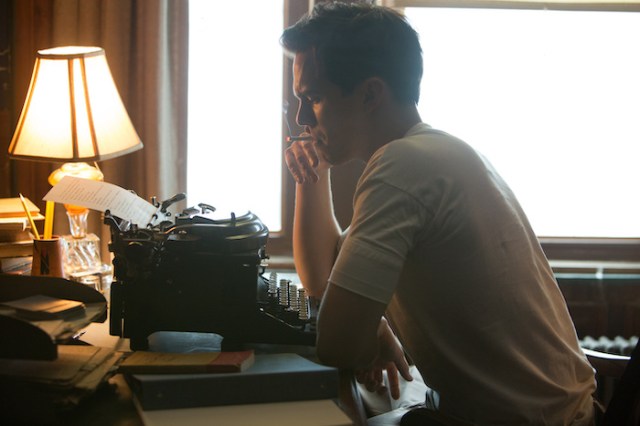 Whether couched in prose or celluloid, literary biographies are a dodgy enterprise, but prose at least has the luxury of length for people who are probably pre-disposed to sitting for long periods of time reading a book. Danny Strong’s rather precise film about the development of J.D. Salinger (Nicholas Hoult) into one of the most iconic American novelists of the 20th century isn’t really that long, but it feels over-stuffed with details that could have been conveyed in different, more economical ways. It’s likely that most people with any interest in Salinger know that he was a difficult artist, that editors had their hands full with a writer who knew exactly what he wanted to accomplish even if that vision didn’t jibe with conventional publishing wisdom at the time. However, they may not have known about his PTSD as a result of his service in WWII, his crush on Eugene O’Neill’s daughter, Oona (Zoey Deutch), or his brief but seminal interest in Buddhism, and while Strong was right to explain these matters, he treats them as milestones on Salinger’s road to success and self-exile without distinguishing them in terms of relative impact.
 The cautious tone and austere aesthetic of Nanako Hirose’s debut feature was what most likely got it placed in the New Currents section of the most recent Busan International Film Festival, where it had its world premiere. New Currents is the only section of the festival with a dedicated competition, and it’s limited to films that are the first or second feature of their respective directors. They are also limited to Asian films, and over the years a certain type of film has ended up in the section, and they tend to look and sound a lot like His Lost Name. They also tend to be more interesting or, at least, more exciting. The fact that this was the lone Japanese entrant in the category says more about Japanese indie films than it does about new Asian directors.
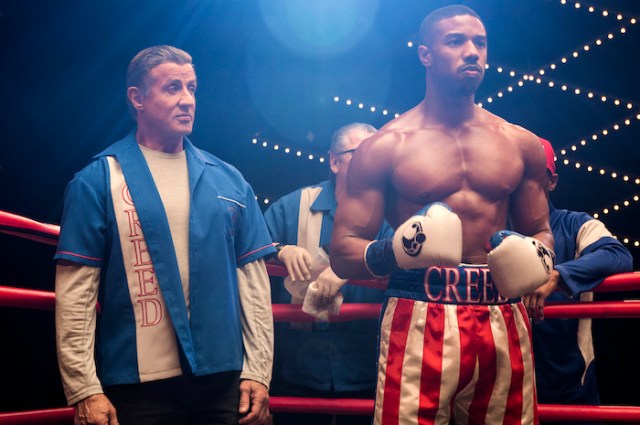 As a gambit to legitimize the reboot of a franchise that should have been put to rest years ago, this sequel to the potently effective Creed works surprisingly well, but probably for the wrong reasons. Though it continues the story of fighter Adonis Creed (Michael B. Jordan), the illegitimate son of Apollo Creed, the early nemesis and then BFF of Rocky Balboa (Sylvester Stallone), who has made his own name as a professional boxer thanks to the ministrations of Rocky, it flatters moviegoers with long memories, since it basically revisits the original Rocky series’ most gaga installment, Rocky IV, in which Apollo Creed was killed in the ring by the Soviet-engineered bruiser Ivan Drago (Dolph Lundgren), who then had to fight Rocky in what everybody understood was a revenge match. In Creed II, Adonis, who has recently won the heavyweight title, is pretty much forced to fight Drago’s son, Viktor (Florian Munteau), to defend that title.
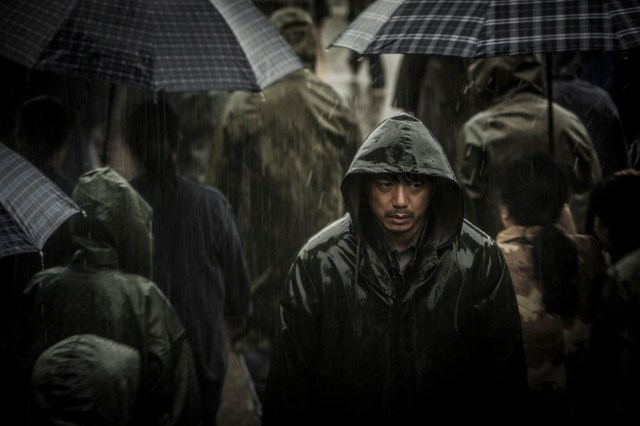 Film noir is defined as much by atmosphere as by any other visual or narrative attribute. The first film by director Dong Yue, a noted cinematographer, is drenched in heavy weather per the title. Ostensibly a murder mystery, The Looming Storm tries to say many things about its milieu—a factory town that’s slowly dying—and how it affects people who have perhaps had their hopes elevated too high.
 Here’s
  There’s nothing like a cleverly made documentary to bring up the obvious and somehow make you believe you’re hearing it for the first time. The general purport of David Batty’s nostalgic romp through 1960s Swinging London is that the milieu announced the triumph of the working class over the gentility that dominated British culture up until that point. As their mouthpiece, Batty and screenwriter Dick Clement and Ian L Frenais use Michael Caine, who’s more than game to make the case that he and his Cockney-inflected cohort changed England for the better and forever. No one who has owned a pulse for the past fifty years is going to argue with that, and while the film’s visual design and pacing makes for lively discourse, the narrative rushes through so many sub-themes—pirate radio, sexual liberation, revolutionary fashion photography—in its brief 85 minutes that you wonder why they just didn’t make a TV series out of it. Actually, maybe they did, given how ubiquitous feel-good 60s nostalgia is at the moment…for the third or fourth time.
 The album as a delivery device for music has been dying for more than a decade now, or, at least, that’s what the pundits say. What struck me more than anything about the way new music was presented this past year is how the album form was adapted to the way streaming has changed our mode of listening. This is only partially due to technological changes. The idea of the album as a unified work of art that developed in the late 60s changed organically over the years as the sheer volume of available music has grown exponentially. Two of the “albums” on my list would, under old rules, be categorized as EPs, but were nonetheless presented to the public as albums in the sense that they were designed to be heard in one sitting. The fact that they’re brief could be taken as a sop to the shorter attention spans brought about by online lifestyles, but I’d like to think they turned out the way they did because of a particular vision.
 philipbrasor.com