Review: Asako I & II

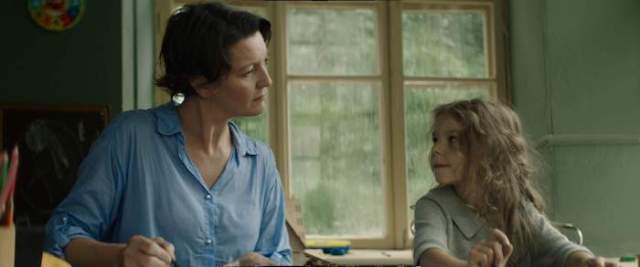
I have yet to see Ryusuke Hamaguchi’s previous film, the internationally lauded 5-hour domestic drama Happy Hour, which, probably due to its length, hasn’t been picked up by WOWOW. But having read about its charms for almost a year I was intrigued to see his latest, which premiered in competition at this year’s Cannes. It’s much shorter and, based on a popular novel, apparently more manageable than Happy Hour. In fact, it’s pretty conventional in terms of plot and characterization. Hamaguchi’s strong point is his attention to personality detail. Despite the hackneyed dialogue and thin motivation that’s built into the story, he manages to make the people on screen seem familiar in a three-dimensional way, though, in the end, it isn’t enough to lift the narrative out of the pedestrian.

The title is cleverly misleading. There are not two physical Asakos (Erika Karata), but rather two completely different men with whom she falls in love in tandem. The first man, Baku (Masahiro Higashide), she meets in Osaka. Baku is carefree and irresponsible and pretty much forces his way into Asako’s life. Her friend, Haruyo (Sairi Ito), warns her about him, but they become a couple of a sort, despite the fact that Baku, who has longish hair and a distracted demeanor, tends to disappear and not show up for appointments. One day, he goes off to buy some shoes and never returns.

The story resumes two years later with Asako transplanted to Tokyo, where she meets Ryohei (Higashide), who looks a lot like Baku but, due to his retiring manner, obviously isn’t. Thanks to a second chance encounter, the two become friends and then lovers, and it’s mostly up to the viewer to decide if Asako’s attraction is based on Ryohei’s inherent qualities or his resemblance to Baku. Most likely it’s a bit of both.

Hamaguchi’s handling of the romantic give-and-take is more satisfying than the intrigues that eventually materialize. You feel like you’ve seen these intrigues done before in better movies, even if you can’t name them off the top of your head. Asako I & II is better than most Japanese films of its ilk only because Hamaguchi is a more interesting director. He allows the story, whatever it’s flaws, to reach its own conclusions without clever tricks or narrative prodding, but he necessarily misses something with his casting. Higashide, a well-respected star of stage and screen, is quite good in the dual roles. I, for one, didn’t even find the resemblance that obvious because the two men were so different temperamentally. Karata, a newcomer, is more problematic. She underplays Asako’s emotional development, but it’s hard not to think that she’s doing so because she doesn’t feel ready for the part. She’s a very slight presence in a movie where she’s supposed to be the main focus.

In Japanese. Now playing in Tokyo at Theatre Shinjuku (03-3352-1846), Human Trust Cinema Yurakucho (03-6259-8608), Cine Quinto (03-3477-5905).

Asako I & II home page in Japanese.

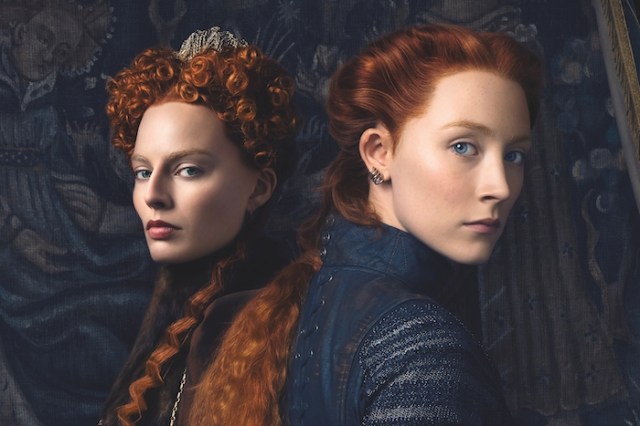
photo (c) 2018 Eiga Nete mo Samete mo Seisaku Iinkai/Commes des Cinemas

Posted in Movies | Tagged | Leave a comment

Review: Ant-Man and the Wasp

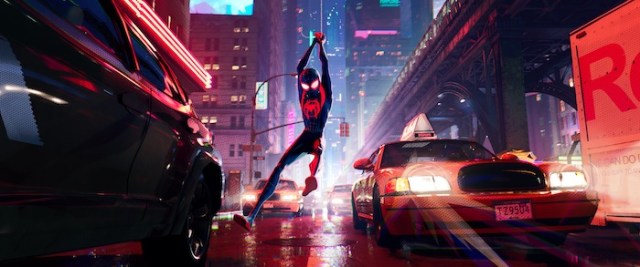
It’s a good thing the second Ant-Man movie is above average, because it’s becoming quite a chore to fit all these Marvel superhero movies into the Marvel universe, at least as it applies to the Avengers movies, which seem to be the focus. Much of the plotting of Ant-Man and the Wasp is dependent on both the last Captain America movie and the last Avengers flick, though temporally they exist in different relative dimensions, and I found myself uselessly trying to recall the details of Avengers: Infinity War, which hasn’t taken place at this point, when I should have been concentrating on Captain America: Civil War, which is the reason our hero, Scott Lang (Paul Rudd), is under house arrest as the movie begins.

He’s actually just finishing up his sentence, which doesn’t seem so harsh: He still gets to see his daughter, and lives in a very nice San Francisco Victorian. He’s even on pretty good terms with his FBI handler (Randall Park), who is a bit of an airhead otherwise. Naturally, he’s jerked out of this little piece of paradise by the call of duty, which, if you remember from the first movie, wasn’t exactly Lang’s forte, being a minor criminal and all before he became Ant-Man. Hank Pym (Michael Douglas), who devised the suit that makes Lang small, and his daughter, Hope (Evengeline Lilly), contact Lang to help them find Hank’s wife, Janet (Michelle Pfeiffer), who has been lost to the so-called Quantum Realm for years. Lang is the only other person who has reached that small a size, but he was able to come back, so they require his experience, which calls for his slipping his ankle bracelet and risking his freedom.

Hope is the Wasp, who, due to her father’s fugitive status and the government’s mistrust of superheroes in general, is also laying low, and the relationship between her and Ant-Man is comically tense, since they have a certain amount of skin in their reputations as heroes, though Lang’s persona is mostly bluster covering up a lack of real knowledge about what his powers entail. In addition to literally getting down, he can also summon insect friends to help him get things done. But he also has two criminal sidekicks to take care of logistics. Since a villain is required we have two in the over-complicated Marvel style. One is Sonny Burch (Walton Goggins), who wants to steal Pym’s nanotechnology and sell it to the highest bidder. The other is Ghost (Hannah John-Kamen), a woman who herself passed through the Quantum Realm and as a result is literally immaterial, in that she can pass through solid objects. She needs Pym’s technology to save her from disintegrating into countless random molecules.

Director Peyton Reed doesn’t belabor the already overloaded story and lets it play out naturally while investing his attention in the set pieces, which take more advantage of the extreme possibilities of scale than any other Marvel movie has made out of their respective relationships with peculiar super powers. He keeps the humor churning as actively as the action, melding them in ways that might have been models for the series if that damn Thor movie hadn’t been so funny. It’s not as good as Ant-Man and the Wasp, but it’s much more irreverent, which these days counts for something special.

Now playing in Tokyo at Toho Cinemas Hibiya (050-6868-5068), Toho Cinemas Nihonbashi (050-6868-5060), Toho Cinemas Roppongi Hills (050-6868-5024), Toho Cinemas Ueno (050-6868-5066), Toho Cinemas Shinjuku (050-6868-5063), Shinjuku Wald 9 (03-5369-4955), Shinjuku Picadilly (050-6861-3011), Toho Cinemas Shibuya (050-6868-5002).

Ant-Man and the Wasp home page in Japanese.

photo (c) Marvel Studios 2018

Posted in Movies | Tagged , | Leave a comment

Media Mix, Sept. 2, 2018

Here’s this week’s Media Mix about the weekly magazines’ pursuit of royal scandal for the hell of it. The point I was trying to make, and which wasn’t really reflected in the headline, is that while the weeklies buck the Imperial Household Agency simply because they can, at bottom they support the conventional idea of the royal family. Kei Komuro is portrayed as a kind of interloper, despite the fact that he appears to be an intelligent, responsible person who truly loves Princess Mako. If he and the princess had been “matched” through more traditional means, the weeklies likely wouldn’t have said much of anything, even if his mother were in debt (though an omiai would have implied vetting that might have disqualified him in the first place). The weeklies didn’t have problems with the matches made for Princess Ayako or her older sister, though they seem delighted now that the sister’s marriage has hit the skids. Likewise, former Princess Sayako’s marriage may be less that perfect, they imply, but in any case, this is all after the fact, meaning after the marriage has taken place and the women have left the royal family.

In fact, the rule that says women must leave the royal family after wedding commoners is one of the reasons the IHA has pushed Mako and Komuro to put off their engagement. The weeklies want to make it about the IHA and Mako’s father objecting to Komuro as husband material, but likely it has more to do with bureaucratic convenience. A survey by broadcaster JNN in January found that 71 percent of the public said that they would accept a royal family “based on female members,” meaning that the female line could produce heirs who may one day become emperors–or even empresses. The IHA and the government is pondering allowing female members who marry outside the royal family to stay in it, but they have their hands full with next year’s abdication of the present emperor and the succession of his son, so they don’t have time to discuss the female line until that’s over with. This affects Mako and Komuro’s engagement, because if they decide to allow her to remain in the royal family after they marry, it might be to their advantage. The royal family has become quite small since not too many male heirs have been produced. With every female member who marries a commoner (and who else are they going to marry after the peerage was abolished following World War II?) the royal family loses a valuable employee, because only family members can credibly carry out the “activities” (komu) expected of the royal family. It’s a human resources problem. The IHA probably wants Mako to stay, but if the weeklies are raising questions about her intended partner, they may want to put off any developments in that direction until the public’s presumed concern for Komuro’s fitness as the partner of a royal has cooled. If that’s making way too much of the matter, well, that’s the nature of any office whose job is to rationalize the existence of a monarchy.

Posted in Media | Tagged , | Leave a comment

Review: Mamma Mia! Here We Go Again

Thanks to Japan’s complicated publicity machine, the sequel to the successful movie version of the very successful ABBA-inspired jukebox musical Mamma Mia! arrives well after most of the rest of the world has decided it’s a better movie than the original. The first thing that strikes me is pity for Meryl Streep, who basically saved the first movie from  mawkish amateurism with her native ability as a stage performer and willingness to parlay her appreciation of the songs into a silly nostalgia romp. I don’t think I’m spoiling anything at this point by saying that Streep’s character is deceased in the sequel, a move that may have been production-oriented (Meryl may have simply thought once is enough) but was probably strategic, since the plot is divided into two parallel storylines taking place in different time periods. In the present, we have Donna’s (Streep) daughter, Sophie (Amanda Seyfried), preparing to reopen her mother’s Greek hotel, with or without the aid of her famously three fathers, Sam (Pierce Brosnan), Bill (Stellan Skarsgard), and Harry (Colin Firth). The other storyline depicts the early 20-ish Donna, played by the other young blonde go-to actress of the moment, Lily James, coming to the Greek island in question for the first time and meeting the three men who will seal her fate as not only a single mother of distinction, but a popular travel destination entrepreneur.

What most people find more agreeable about the sequel is that the musical numbers have been more carefully integrated into the plot, but only barely. For one thing, the two storylines don’t necessarily speak to each other in meaningful ways, and could have easily been spun off as separate films (a lost box office opportunity, I’d say, since the success of the sequel indicates it could be turned into a franchise). Considering that that producers decided to reprise some of the big hits from the original, it’s obvious they don’t think people will be put off by any redundancy. Jukebox musicals, in fact, thrive on redundancy, on the immediate satisfaction of the overly familiar. But the one thing that Here We Go Again definitely has going for it is that it also has a lot of what might be called ABBA’s “deep cuts,” songs that weren’t hits but nevertheless are familiar to anyone who bought their albums. And that’s the real appeal of the movie: Regardless of how wince-inducing the story and the characters become, the viewer anticipates the next production number, which arrives pretty quickly in a movie like this. “Instant gratification” would have been a more appropriate subhead than “Here We Go Again.”

And, again, everyone by now knows that Andy Garcia plays the Spanish love object to Christine Baranski’s horny pre-doddering Tanya if only to provide a contextual excuse to revive “Fernando,” and Cher shows up at the end as Donna’s still-living mother to convey dispensation to her granddaughter’s project, as well as (it’s implied) a lot of money. That Cher gets to sing not one but two ABBA songs is more than just gravy. Of all the big stars who have appeared in these two films she’s the one best suited to deliver the Swedish group’s outsized pop anthems. Whoever decided to hire her is a genius.

Now playing in Tokyo at Toho Cinemas Nihonbashi (050-6868-5060), Toho Cinemas Hibiya (050-6868-5068), Shinjuku Wald 9 (03-5369-4955), Shinjuku Picadilly (03-6861-3011), Toho Cinemas Shinjuku (050-6868-5063), Toho Cinemas Shibuya (050-6868-5002), Toho Cinemas Roppongi Hills (050-6868-5024), Ikebukuro Humax Cinemas (03-5979-1660), Toho Cinemas Ueno (050-6868-5066).

Mamma Mia! Here We Go Again home page in Japanese.

photo (c) 2017 Universal Studios

Posted in Movies | Tagged , , | Leave a comment

Media Mix, Aug. 26, 2018

Mitsuyo Hoshino’s book “Moshimo Maho ga Tsukaetara”

Here’s this week’s Media Mix, about children orphaned after World War II. As described in the column, the Japanese media has avoided the topic for years and most likely decided to finally cover it because, as with many controversial subjects related to the war, the generation that experienced it firsthand has almost died out. The war orphans were quite young when the war ended, but they’re now in their 80s. Of course, some freelancers and smaller media have talked about the orphans for years, and one of the people who has been instrumental in drawing attention to them is Mitsuyo Hoshino, who is not a reporter but rather a woman, now 84, who lost her parents and four siblings in the Tokyo air raids. Like many children in the capital during the war, she was evacuated to the countryside. According to various media who have interviewed her, she kept her memories of that time to herself until 2013, when she visited a war archive in Sumida Ward. The experience prompted her to convey her memories through drawings, many of which were of war orphans she saw on the street after the war when she returned to Tokyo. (She herself was not a street child) In 2016 she self-published a book of these drawings and later the publisher Kodansha commissioned a larger book that supplemented the drawings with Hoshino’s writings about orphans in Tokyo, Yamagata, and Kobe. Hoshino has told reporters that her motivation was simple: Nobody had written much about these children and so she wanted to record their experiences “so future generations will understand” what happened. In the sense that her book may have opened the door for major media to finally approach the subject, her hope wasn’t in vain.

Posted in Media | Tagged , | Leave a comment

Review: Pop Aye

The titular elephant in this Thai film is named after the iconic cartoon sailor, though I can’t really fathom the title’s unconventional spelling. In a way, the linguistic disconnect expands on the movie’s sometimes jarring juxtaposition of universal themes and local particulars. The hero is a successful architect, Thana (Thaneth Warakulnukroh), who is going through the usual mid-life crisis (failing marriage, loss of direction, etc.) and one day happens upon a man trying to move an elephant along a Bangkok street. Convinced the elephant is Popeye, his childhood pet when he lived in the deep countryside, he buys the animal off the man and sets out to “bring the elephant home” on foot. In other words, Pop Aye is a classic road movie of self-discovery except that we have no insight into the mindset of one of the members of the entourage.

Several times during the movie, the director, Kirsten Tan, suggests that the elephant isn’t what Thana thinks he is, but this subtext of self-delusion becomes inseparable from the general feeling of total incompetence. Thana may have once been a good architect, but he now seems lacking in basic motor skills and common sense. Through flashbacks, we learn that even at work he has become little more than a figurehead at his company. The young bucks are running things. Similarly, Thana’s relationship with his wife is thwarted more by his inability to communicate directly than by the usual breakdown of affections that accompany a longterm romantic partnership. Thana’s pathetic, but it’s difficult to feel sorry for him.

Consequently, the misadventures that characterize the road trip through hot and dusty countryside are difficult to comprehend from a dramatic standpoint. It’s obvious Thana is longing to recapture some of the simple joy that he remembers from his childhood, but nostalgia is a fickle mistress: she only reveals what her lover wants to see and hear. It’s thus a pleasant turn of events when Thana meets Jenny (Yukontorn Sukkijja), a transgender woman, in a roadside bar who seems to complete Thana in ways other characters, including his wife, do not. There is no sexual tension but, especially in a moving scene where they perform a karaoke duet, a shared feeling of being different and, in each other’s company, relaxed with that feeling. Encounters with other interlocutors—a suicidal drifter, Thana’s uncle who raised him, presumably in an indifferent manner—are much less consequential, though that may be an unintended result of Tan’s underwhelming directing style.

Through it all, the elephant (named Bong, who, interestingly, gets top billing) is mostly a cipher. Even animal lovers will have a hard time finding him cute or endearing. He’s a vehicle in more ways than one, a means for Thana to confront his own obsolescence as a man and member of society. Elephants get a pass in Thailand, apparently, and Popeye expresses no particular feelings toward Thana that we can discern. His presence is merely grounding and calming, as if Tan were afraid Thana by himself was too distressing a figure to focus on.

In Thai. Now playing in Tokyo at Euro Space Shibuya (03-3461-0211).

Pop Aye home page in Japanese.

photo (c) 2017 Giraffe Pictures Pte Ltd., E&W Films, and A Girl and a Gun.

Posted in Movies | Tagged | Leave a comment

Review: The Girl Without Hands

The Brothers Grimm story from which this French animated film has been adapted is not one of their more famous ones, but it has all the non-Disney hallmarks that have made the fairy tale-meisters the darlings of comparative lit majors. It’s fixated on graphic violence and sublimated sex, but it’s also about the human capacity for cruelty that goes beyond the kind of cartoon villainy we’ve come to expect from stories like this. The fundamental reason the story is so powerful and suggestive is the animation itself, which not only eschews CGI, but also the kind of cell-craft that most people are familiar with.

Sebastien Laudenbach is mainly a brush and ink painter, and he draws his figures in impressionistic but wholly dramatic style over washes of pure watercolor. The images flicker naturally, as if alive in a flame, and with his knack for distinctive facial expression, Laudenbach can alternately charm and terrify on a dime. This style ably brings to life the story of an unfortunate girl, which is as lean as the drawings.

She is, naturally, from a poor household, and her desperate miller father sells his apple tree to the devil for gold. However, when the father made his misbegotten deal, his daughter was in the tree, and the devil is thus unable to claim his sale because the girl’s purity makes it impossible for him to touch it, so he forces the father to cut off her hands as further payment. The girl flees both her father and the devil and eventually meets a prince who gifts her two golden hands. That would seem to be her salvation, but the prince must go off to war, and, pregnant, she is left in the care of the prince’s gardener, who is slow but kind.

From this point the story becomes increasingly fantastic and difficult to follow in terms of plot clarity. The devil returns in various disguises, perhaps as a means of stealing the girl’s child, and eventually a river takes the form of a woman who defends the girl. Though the viewer can get a sense of the moral that the Grimms were aiming for, these flights of narrative fancy may simply be Laudenbach’s take on the story, as a means of depicting in visual form the callousness of human nature, which becomes almost palpable on the screen. Though abstract in theory, the effect of the animation, and of Olivier Mellano’s beautifully spare score, is literal and affecting. People will do what they will if they think they can get away with it.

In French. Now playing in Tokyo at Euro Space Shibuya (03-3461-0211).

The Girl Without Hands home page in Japanese.

photo (c) Les Films Sauvages – 2016

Posted in Movies | Tagged | Leave a comment

Review: Tully

Charlize Theron’s second feature with director Jason Reitman and writer Diablo Cody is more sentimental than Young Adult but every bit as irreverent, which may sound like a contradiction in terms. Theron plays Marlo, the pregnant mother of an autistic kindergarden-age son, Jonah (Asher Miles Fallica), and a nine-year-old daughter, Sarah (Lia Frankland). Her devotion to her children is unconditional and almost tragic in the contours of the difficulties she faces. Marlo knows that Jonah causes problems for the staff at the school he attends and is guiltily thankful they even accepted him—that is, until the principal brings up the possibility that he might be better served somewhere else. This early in the story you can see her slow meltdown begin, and though Cody cagily deflects our attention from the real issue a pattern is set that keeps the viewer off balance.

As usual, Cody’s dialogue is clever and pointed, but her past movies dealt in characters with flaws of their own making. Marlo has her personality problems, but she is mainly a victim of her surroundings, no matter how supportive those surroundings can be. Her husband, Drew (Ron Livingston), is mostly removed from the parenting sphere since he’s busy running a business that was set up for him by his wealthy brother, Craig (Mark Duplass). In other words, he has his own challenges, and for some reason Cody and Reitman give him a pass. He loves his wife and his kids, and he helps when he can, but given the magnitude of Marlo’s slow descent into self-doubt, he seems almost willfully clueless about her situation.

Oddly, and, more to the point, tellingly, it’s Craig who offers a solution. He’ll pay for a “night nanny” named Tully (Mackenzie Davis) after the new baby is born who will watch the kids while Marlo takes time to collect her wits and unwind—maybe even have some unguarded sex with her husband (an episode that Cody treats with her usual measure of cynical humor). Predictably, Marlo and Tully bond to the exclusion of almost every other character in the movie. Some will say Tully, who is cheerful, resourceful, and infinitely patient, is too good to be true, a quality that Reitman plays up too much, deepening the predictability of the story arc as it veers toward something ominous and not funny at all.

Reitman manages to keep these thorny issues in line, but as a writer Cody isn’t rounded enough to do bittersweet. It’s one or the other with her, and while the film isn’t sour, it can be inadvertently manipulative. Tully is one of the more thoughtful takes on modern motherhood as a state of mind separated from it natal primacy. It’s all about expectations, but by concentrating only on two sensibilities’ approach to the issue, it’s limiting to the point of claustrophobia.

Now playing in Tokyo at Toho Cinemas Chanter (050-6868-5001).

Tully home page in Japanese.

photo (c) 2017 Tully Productions LLC

Posted in Movies | Tagged , | Leave a comment

Aretha Franklin

I first heard Aretha Franklin when I was 11 years old, listening clandestinely to my small transistor radio tuned to WABC (or was it WMCA?), which was tucked under my pillow as I was supposed to be sleeping. Like my mother I was an insomniac, though unlike my mother I would eventually outgrow it. We had strict bedtimes and it always took me several hours to fall asleep, so I would put my radio under the pillow and listen to music, or to Jean Shepherd tell stories on WOR.

When “Respect” came on that fateful night it struck me in a weird and wonderful way. The wonderful part is obvious to anyone who’s heard the song, but I use “weird” because the passage of time makes it difficult to explain exactly what I was feeling, but the fact that that moment still remains clear in my brain proves the unique staying power of the chemistry of the song. At 11, I was still processing popular music, which dominated my world, even while I lacked the critical faculties to explain why. And it wasn’t as if Aretha was the first “new artist” I had grappled with in my short life. In hindsight I have to contend with the feeling of that moment, of hearing something both old and incredibly fresh. I think it was the boldness of the performance that struck me. At the time I was still enamored of Motown, whose commercial priorities were meant to appeal as equally to a white boy like me as they were to the black kids who were their main constituency. I was still a bit intimidated by James Brown, probably because of the primacy of his art, the raw calculation of his rhythms and the directness of his voice. I heard these same qualities in “Respect,” but for some reason–because it was being sung by a woman? because of the more conventional structure of the song?–I felt immediately drawn into the performance, which was at once confrontational and warm, accusatory and exuberant, provocative and inviting.

In a nutshell, this was something new–not the music, but my reaction to it. Aretha was the first artist this AM radio-loving preadolescent really acknowledged as something new and different, even if she was, as a singer and performer, a culmination of all the great black music traditions that came before her. To me, it really was a religious experience; certainly the first and most powerful impression a new song ever made on me, and the very fact that I can remember that feeling fifty years later so unambiguously proves to me that I’m still alive and still vital in mind and body. The very fact that Aretha isn’t any more just makes me confused and incredibly sad. Whenever I listen to her music I have a direct connection to my childhood that can’t be broken. And the life in the meantime has been so much better because of it.

Posted in Music | Leave a comment

Review: Viceroy’s House

Given the casting of Hugh Bonneville in the role of Lord Louis “Dickie” Mountbatten, the last British viceroy of India before independence, it’s easy to guess that the producers wanted direct comparisons between this dramatic recreation of the summer of 1947 and Downton Abbey, though it more rightly resembles Upstairs/Downstairs in its contrast between the political machinations of the British overlords and the romantic goings-on among the servants in the titular establishment.

But to say that selling point does a disservice to the historical magnitude of the subsequent partition that created Pakistan and forever plunged the subcontinent into lethal, genocidal squabbling is perhaps too much. For sure, the complications of the deal have been filtered down into a cynical play for post-colonial “security” on the part of the British, which, while true up to a point seem here more informed by dramatic stimulation than accuracy. More troubling is using the forbidden love between a Hindu valet (Manish Dayal) and a Muslim secretary (Huma Qureshi) to represent the tragedy of partition in a dull, hackneyed way that has more to do with Bollywood than the Merchant-Ivory quality drama model that writer-director Gurinder Chadha obviously had in mind. Mountbatten and his idealistic wife, Edwina (Gillian Anderson), are also perhaps too on-the-nose sympathetic to make you believe things happened the way they did. When Edwina summarily fires a middle-aged career female English servant for complaining that a native servant is “standing too close,” you know character development is not one of Chadha’s strong points. Similarly, Michael Gambon’s British government fixer practically announces himself as the fly in the post-independence ointment as soon as he shows up scowling and genuflecting. Gandhi and Nehru and Jinnah are stock players asked to play gods and don’t quite get it.

But, of course, if you really want to know what happened, you should read a good history book. (My recommendation: Indian Summer by Alex Von Tunzelmann) Viceroy’s House, despite its exaggerations and romantic affectations, will at least suffice in conveying the magnitude of bad colonial practice, no matter how well-meaning (Dickie’s motives are the purest). One might call it the ultimate cautionary tale except that Britain subjugated the sub-continent for three whole centuries. Suffering and stupidity are inevitable.

Now playing in Tokyo at Shinjuku Musashinokan (03-3354-5670).

Viceroy’s House home page in Japanese.

photo (c) Pathe Productions Ltd., Reliance Big Entertainment (US) Inc., British Broadcasting Corporation, The British Film Institute and Bend It Films Ltd. 2016

Posted in Movies | Tagged , | Leave a comment