
 The Brothers Grimm story from which this French animated film has been adapted is not one of their more famous ones, but it has all the non-Disney hallmarks that have made the fairy tale-meisters the darlings of comparative lit majors. It’s fixated on graphic violence and sublimated sex, but it’s also about the human capacity for cruelty that goes beyond the kind of cartoon villainy we’ve come to expect from stories like this. The fundamental reason the story is so powerful and suggestive is the animation itself, which not only eschews CGI, but also the kind of cell-craft that most people are familiar with.
Sebastien Laudenbach is mainly a brush and ink painter, and he draws his figures in impressionistic but wholly dramatic style over washes of pure watercolor. The images flicker naturally, as if alive in a flame, and with his knack for distinctive facial expression, Laudenbach can alternately charm and terrify on a dime. This style ably brings to life the story of an unfortunate girl, which is as lean as the drawings.
She is, naturally, from a poor household, and her desperate miller father sells his apple tree to the devil for gold. However, when the father made his misbegotten deal, his daughter was in the tree, and the devil is thus unable to claim his sale because the girl’s purity makes it impossible for him to touch it, so he forces the father to cut off her hands as further payment. The girl flees both her father and the devil and eventually meets a prince who gifts her two golden hands. That would seem to be her salvation, but the prince must go off to war, and, pregnant, she is left in the care of the prince’s gardener, who is slow but kind.
From this point the story becomes increasingly fantastic and difficult to follow in terms of plot clarity. The devil returns in various disguises, perhaps as a means of stealing the girl’s child, and eventually a river takes the form of a woman who defends the girl. Though the viewer can get a sense of the moral that the Grimms were aiming for, these flights of narrative fancy may simply be Laudenbach’s take on the story, as a means of depicting in visual form the callousness of human nature, which becomes almost palpable on the screen. Though abstract in theory, the effect of the animation, and of Olivier Mellano’s beautifully spare score, is literal and affecting. People will do what they will if they think they can get away with it.
In French. Now playing in Tokyo at Euro Space Shibuya (03-3461-0211).
The Girl Without Hands home page in Japanese.
photo (c) Les Films Sauvages – 2016
 Charlize Theron’s second feature with director Jason Reitman and writer Diablo Cody is more sentimental than Young Adult but every bit as irreverent, which may sound like a contradiction in terms. Theron plays Marlo, the pregnant mother of an autistic kindergarden-age son, Jonah (Asher Miles Fallica), and a nine-year-old daughter, Sarah (Lia Frankland). Her devotion to her children is unconditional and almost tragic in the contours of the difficulties she faces. Marlo knows that Jonah causes problems for the staff at the school he attends and is guiltily thankful they even accepted him—that is, until the principal brings up the possibility that he might be better served somewhere else. This early in the story you can see her slow meltdown begin, and though Cody cagily deflects our attention from the real issue a pattern is set that keeps the viewer off balance.
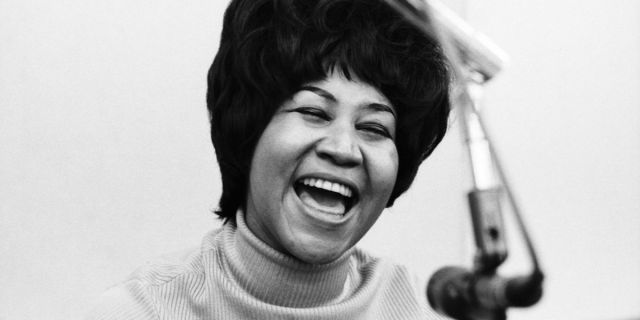 I first heard Aretha Franklin when I was 11 years old, listening clandestinely to my small transistor radio tuned to WABC (or was it WMCA?), which was tucked under my pillow as I was supposed to be sleeping. Like my mother I was an insomniac, though unlike my mother I would eventually outgrow it. We had strict bedtimes and it always took me several hours to fall asleep, so I would put my radio under the pillow and listen to music, or to Jean Shepherd tell stories on WOR.
 Given the casting of Hugh Bonneville in the role of Lord Louis “Dickie” Mountbatten, the last British viceroy of India before independence, it’s easy to guess that the producers wanted direct comparisons between this dramatic recreation of the summer of 1947 and Downton Abbey, though it more rightly resembles Upstairs/Downstairs in its contrast between the political machinations of the British overlords and the romantic goings-on among the servants in the titular establishment.
 Christopher McQuarrie returns to direct the sixth installment of Tom Cruise’s vanity project, which he has every right to be proud of, and not just because it continuously breaks box office records internationally. For what it’s worth, the Mission: Impossible franchise is the most seaworthy of action vessels, but that reliability is only partly due to its watertight premise based on the famous 1960s TV series about a secret organization that tackles cases too difficult for the usual U.S. government intelligence bodies. What generally keeps the series afloat is Cruise’s unflappable penchant for his own impossible stunts and scripts that are not built to be taken seriously by anyone.
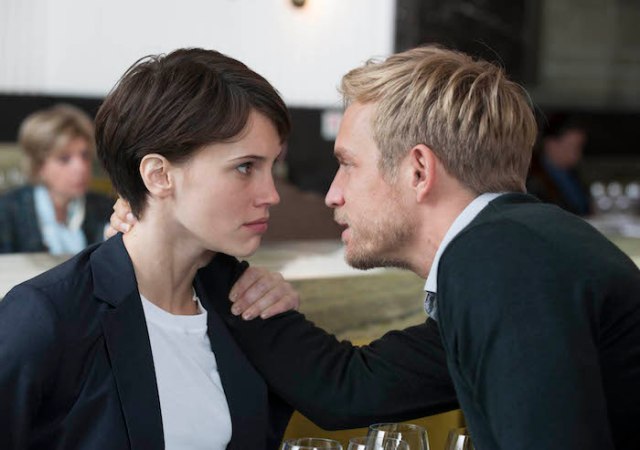 Though Francois Ozon has made an enviable reputation for himself by being both prolific and consistently engaging, his best movies are throwbacks to enduring styles that have never really benefited from being updated. Double Lover falls into this category. It’s the kind of psychological thriller that Hitchcock not only invented in cinematic terms but seemed to have perfected before anyone else tried to recreate it. Though relatively free of shock value and suspense, the movie nevertheless casts a queasy spell that lasts well after the lights go up.
 Here’s
 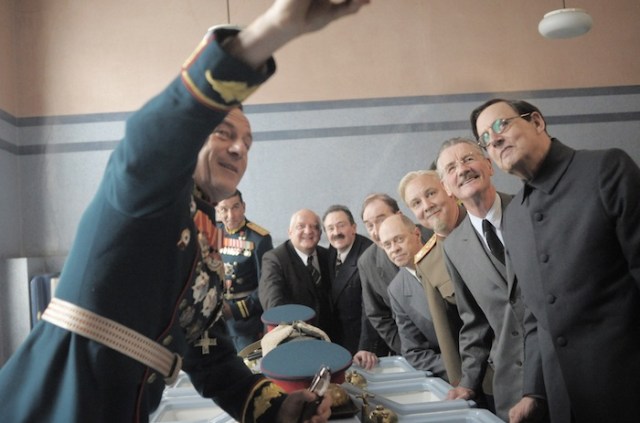 As he proved with the 2009 political satire, In the Loop, director Armando Iannucci is not afraid to delve deep into the curdled souls of ambitious men and women for comedy that smarts more than it entertains. He is the reason a wholly offensive TV show like Veep works as well as it does, and his reimagination of the inner-Kremlin machinations following the sudden death of Joseph Stalin in 1953 is funny for the same wincing reasons, but it offers something even more subversive: History you can use and laugh at at the same time.
 Though Pixar and Marvel are two separate production companies, both are distributed by Disney, a context that becomes problematic as the sequel to one of the best Pixar movies ever begins. The superhero Parr family battles a villain called the Underminer in Metroville and in the process destroys the city in order to save it. That is the same plot device that activated one of the Avengers movies, so you accept that fact as either a comment on Marvel or a shameless simulation of the studio style.
 philipbrasor.com