December 2016 albums

Here are the album reviews I wrote for the December issue of EL Magazine, which was distributed in Tokyo last month.


honne_0190295955243eric-benet_1500%e5%b0%8f-copyWarm on a Cold Night
-Honne (Atlantic/Warner)
Eric Benet
(Victor)
Blood Orange deserves all the accolades he’s received for making sexy music safe for electronica, and it should be remarked that it took the world something like half a decade to fully reach that conclusion. Honne, a white British duo, is thus spared the heavy lifting with their debut album, which isn’t half as good but actually gets to where it’s going in half the time. This is the sound of the slow jam taken to its natural end as a construction fully purposed for making out. As locals will immediately note, the duo’s name is Japanese for “true feelings,” and the tracks are nothing if not earnest attempts to find the appropriate musical equivalent for gushing. Though the two members, who go by their first names, James and Andy, cite Al Green and Bill Withers as influences, there’s nothing here that recalls those two pioneers’ funky sides. And while “warm” is the operative adjective, the heat very rarely rises above room temperature. Because everything is electronically derived, including the percussion, the beats don’t always penetrate to the spine. What you’re left with is hooks and vocals that lack distinction as far as soul music goes but do the job with regard to those feelings they’re so intent on conveying. The Izzy Bizu Collaboration, “Someone That Loves You” (sorry, shouldn’t that be “who”?), stands out for its bright sheen, which may simply be a function of the guest’s brighter, more traditional vocal style. The gospel intonations on “It Ain’t Wrong Loving You” also bring the album out of its cave, while the closer, “FHKD,” could pass as a dance track and may point the way to Honne’s future. This sultry stuff is all well and good, but eventually they have to play it live in front of people who may not want to remain seated for a whole set. Eric Benet is one of those so-called nu soul artists who rejiggered the slow jam for the new millennium, and he had a nice run with the concept while it lasted. His latest, for an indie, is self-titled, thus indicating a fresh start, and the first thing you notice is how he seems determined to jettison the “nu” from his soul music. He even brings in a big band, complete with horns, on the seriously funky “Cold Trigger.” And while I’ve never held Benet and Prince in the same thought, the late purple god is the first person I think of when I hear “Insane,” with its hell-bent falsetto. Of course, there are plenty of ballads, which have always been Benet’s calling card, but they convey a more lascivious state of mind than his past lover-man work. In a way, it’s as if Benet, after years of struggling to make sense of a style he had obviously outgrown, returned to the music he liked as a child but had never really explored as an artist, and it fits him like a tailored suit. Continue reading

Posted in Music | Tagged , , , , , | Leave a comment

December 2016 movies

Here are the movie reviews I wrote for the December issue of EL Magazine, which was ditributed in Tokyo last week.

RZ6A8660.JPGA Bigger Splash
The emotional frenzy wrought by Italian director Luca Guadagnino in his first English-language film helps to distract from its weak underlying plot premises. Tilda Swinton is Marianne, a rock star resting up her shot vocal cords on a sun-drenched Mediterranean island with her younger lover Paul (Matthias Schoenarts), who’s also recovering from something self-inflicted. Their idyll is shattered by the arrival of Marianne’s ex, Harry (Ralph Fiennes), an old school debaucher who brings along his jaded daughter, Penelope (Dakota Johnson), and, in a bid to win back Marianne, proceeds to ruin everyone’s life. Though the film’s notable quirk—Marianne is mute by necessity—is also its default source of humor, it allows Fiennes to run away with the film, mugging shamelessly in an attempt to prove that Harry is still a force of nature. The fact that he’s a monumental jerk in the bargain is telescoped too soon, so when the shock ending implicates him it doesn’t feel as heavy as it should. The externals, including references to actual pop music and a real world subtext of refugees passing through, add nothing, so Fiennes gets the movie all to himself. (photo: Frenesy Film Company) Continue reading

Posted in Movies | Tagged , , , , , , , , , , , , , , | Leave a comment

Media Mix, Nov. 27, 2016

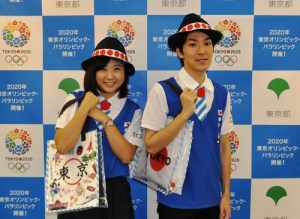
Possible negative legacy: Volunteer uniforms for 2020 Olympics

Possible negative legacy: Volunteer uniforms for 2020 Olympics

Here’s this week’s Media Mix about the quixotic movement to cancel the 2020 Tokyo Olympics. The downside of the Games that is mainly discussed in the column has to do with the cost and, to a lesser extent, the virulent nationalism that turns so many people off, but there are other reasons given by anti-Olympics advocates to call off the event. On the surface, these other reasons may sound desperate, but in actuality they could really have a negative effect if they happened. One is earthquakes. Japan, not to mention the Asia-Pacific region in general, seems to have entered a long period of increased seismic activity, and the likelihood that a major temblor could hit the Kanto area in the next four years is high. Of course, that likelihood is greatly diminished during the two weeks that the Olympics actually takes place, but if a major quake happened in the year or so leading up to it, it could undermine preparations to the point where the Olympics might have to be moved somewhere else. Another, less mentioned reason is the Emperor’s health. Some reports have said that the Emperor’s desire to abdicate before he dies came about partly as a response to Tokyo winning the right to hold the Olympics in 2020. Those who were living in Japan when Emperor Showa died in 1989 will remember that a six-month period of mourning ensued, during which events of a celebratory nature were cancelled or otherwise frowned upon. The Emperor himself knows that if he died during the months leading up to the Olympics it would cause all sorts of problems for the Games. For sure, they would go on, because the world has too much at stake, but a substantial portion of the Japanese population would say that it is disrespectful and would call for them to be cancelled. However, if his son had already ascended to the throne, his death would not have the same effect. It seems the Abe administration, which would just rather not talk about such things, is willing to take that chance and is working against early abdication. Continue reading

Posted in Media | Tagged , | Leave a comment

Cheap Trick, Oct. 1999

I recently realized that almost all of the music reviews I wrote for the Japan Times in the 90s and the movie reviews I wrote for the Asahi Shimbun during the same decade are not available on the Internet, so I will remedy that by slowly, methodically posting them here on my blog. I have not edited these, so all the prejudices and dumb assessments remain. Enjoy. Continue reading

Posted in Music | Tagged , , | Leave a comment

Media Mix, Nov. 20, 2016

Rena Nonen

Rena Nonen

Here’s this week’s Media Mix about the scandal surrounding the Japan Record Awards. As is clear by the column, all the various players in the media work together to promote one another’s show business interests, so the idea of fostering quality and individual talent has almost nothing to do with honoring creative work. Though I’m sure readers will give me grief over my belief that Japanese pop music is terrible–not all of it is, of course, but the mainstream stuff is sufficiently, uniformly bad–the point I’m making, which is hardly a new one, is that all these various business entities conspire to oppress originality and elevate mediocrity. The culture is so rife with self-importance that often players confound their own interests just to maintain its primacy. For instance, last summer actress Rena Nonen reappeared after two years of inactivity. Nonen shot to fame in 2013 in the NHK morning drama, Amachan, and was considered at the time to be the hottest new face in movies, but apparently she had problems with her talent agency after she started activities outside of their control, so they punished her by not giving her any work. Her contract finally expired this year and she is trying to reenter show business, but she has to change her name to do so. She now is simply known as Non, even though Rena Nonen is her real name. Apparently, her old agency, LesPros Entertainment, still feels it has dibs on that name and because of their pull in the industry no one will hire Nonen if she uses it. LesPros could have simply overlooked Nonen’s extracurricular activities and continued promoting her, and probably would have made a lot of money in the process; but because of some unspoken rules in the industry they were compelled to isolate and then ostracize her, going so far as to deny her use of her own name. And, apparently, it’s not over. Some show biz media are saying that LesPros is still considering legal action against Nonen, which would effectively end her career. And that’s the real point: You go against the powers that be, and you’re finished, regardless of whatever talent or appeal you may possess. Continue reading

Posted in Media | Tagged , , , | Leave a comment

“On connait la chanson” July 1998

I recently realized that almost all of the music reviews I wrote for the Japan Times in the 90s and the movie reviews I wrote for the Asahi Shimbun in the 90s and early 00s are not available on the Internet, so I will remedy that by slowly, methodically posting them here on my blog. I have not edited these, so all the prejudices and dumb assessments remain. Enjoy. Continue reading

Posted in Movies | Tagged | Leave a comment

Media Mix, Nov. 6, 2016

marijuanaHere’s this week’s Media Mix about the Japanese media’s demonization of marijuana as its profile improves throughout the world due to medical applications. Though the column mostly addresses the legal problems that marijuana faces in Japan, the economic angle is worth discussing. The main point of Hiroyuki Arai’s Diet speech about marijuana in May was that its re-regulation for medical use could save the government a huge amount of money because it is so cheap to grow and distribute, whether it’s used to combat depression or alleviate the side effects of cancer treatments. At the moment, the LDP is desperately searching for ways to bring down the country’s skyrocketing health care costs, but the fear of pot as a “dangerous drug” is too overwhelming. Or is it? Could it actually be that certain parties have vested interests that would be undermined by decriminalizing marijuana, such as the pharmaceutical industry. It’s a supposition that can’t be discounted, but it should be noted that Otsuka Pharmaceutical is already working on a product overseas that uses active ingredients in marijuana as a palliative treatment. In fact, Masamitsu Yamamoto, the late liver cancer sufferer who was arrested for growing marijuana for his own use, went to Otsuka to ask if he could be granted an experimental license to use the product, but they told him it was against the law—in Japan. So in this case there is a Japanese company that is already taking advantage of relaxed marijuana laws abroad–it doesn’t make sense that they would oppose decriminalization here. In any case, the media refused to cover Yamamoto’s case, which he himself fought as a human rights issue. Though human rights get a lot of lip service in the Japanese media, they lose out in the argument if the other side cites “the greater public good,” which seems to be easier to advocate in the marijuana debate. Despite the popularity of movies like The Pineapple Express, the general public has been conditioned to view marijuana as akin to heroin and cocaine in terms of addictive, crazy-making properties, and so they don’t say anything one way or the other. Unlike in the U.S. and Europe, there is no underground bedrock of casual users, past or present, who are predisposed to support legalization. As one Japanese woman who lives in California and uses medical marijuana to relieve her depression put it on her blog, there are lots of Japanese people who are curious about pot, but they can’t even talk about it on social media because they think they’ll be arrested just for writing about it. The propaganda is that effective.

Posted in Media | Tagged , , | Leave a comment

Jonathan Richman, June 1997

I recently realized that almost all of the music reviews I wrote for the Japan Times in the 90s and the movie reviews I wrote for the Asahi Shimbun during the same decade are not available on the Internet, so I will remedy that by slowly, methodically posting them here on my blog. I have not edited these, so all the prejudices and dumb assessments remain. Enjoy. Continue reading

Posted in Music | Tagged | Leave a comment

Media Mix, Oct. 30, 2016

Road-building in South Sudan

Road-building in South Sudan

Here’s this week’s Media Mix about the status of Japan’s Self-Defense Forces when they’re dispatched overseas to participate in peacekeeping missions. What’s odd about the obfuscation carried out by the government is that, by all accounts, the public seems to want the SDF to take on a more proactive role in matters like this. The ruling party definitely wants the SDF to someday become a real standing army but they never talk openly about it because they think the public isn’t ready for it. For that reason they want to amend the Constitution first in order to allow for a broader range of military activities, and the media puts this across as an attempt to do an end-run around public opinion. But while it’s not completely clear how much the average Japanese person will accept in terms of military deployment, some recent surveys have shown that a good portion of respondents say they want the SDF to carry out rescue missions abroad, and would accept the use of force in such cases, especially if Japanese people are the ones being rescued. As pointed out in the column, South Sudan’s situation is special in that even if the SDF already were authorized to carry out such rescues they would be violating some laws if they found themselves in conflict with government forces, who seem to be responsible for a good part of the violence in the country targeting civilians. But the point is that the public may not be as squeamish about the matter as the government thinks it is.

Kenji Isezaki, the former UN official mentioned in the column, is perhaps the most cogent media personality voicing this sentiment. He is all for amending the Constitution to clarify the SDF’s role and even expanding it to cover overseas postings, though mainly it has to do with legally limiting the government’s options with regard to waging war. He has also said a number of times that he believes the government would like nothing better than for an SDF member to be killed in the line of duty, since that would galvanize the Japanese public, who would then call for more action with regards to allowing the SDF leeway to defend itself and be more aggressive when it is dispatched to conflict areas–something they aren’t allowed to do now. That may sound cynical and macabre, but the government has so far only shown that they’d prefer moving forward in their schemes by moving sideways in their methodology.

Posted in Media | Tagged , | Leave a comment

Media Mix, Oct. 23, 2016

Fine Line Media

Fine Line Media

Here’s this week’s Media Mix about the new documentary, A Whale of a Tale, which looks at the people of Taiji, Wakayama Prefecture, who were profiled in the Oscar-winning documentary, The Cove. For the record, I liked The Cove, though perhaps more as a movie than as an exercise in persuasion. I didn’t need much persuasion to think that dolphins shouldn’t be hacked to death, even for food, but what I found interesting about the film was its atmosphere of intrigue, of a secret that was being kept from the world and the filmmakers’ dedication to getting it out there at any cost.

A Whale of a Tale doesn’t necessarily contradict that impression, but it does provide enough of a corrective response to make me think that the makers of The Cove edited their material in such a way as to demonize the people of Taiji. The director of Whale, Megumi Sasaki, thought it necessary to give them a chance to give their side of the story, and in a culturally-intensive controversy like this one they probably aren’t going to persuade anyone who’s already put off by the dolphin cull that what they’re doing is justifiable from any standpoint. But it does at least make them look like human beings.

However, Whale did bring up one aspect of the issue, albeit very briefly, that always bothered me about The Cove, namely it’s use of the mercury content of dolphin meat to make its case against the killing. To me, the power of The Cove‘s argument was inherent in its footage of the drive hunt, and the charge that Taiji was feeding its residents meat tainted with mercury seemed beside the point. Though it could have been used as a powerful footnote, instead it was relegated to its own debate point. It was as if the filmmakers were saying, “If you don’t think killing dolphins for any reason is immoral, then what about this poison thing? Isn’t that enough of a reason to ban drive hunts?” Mercury poisoning is a larger issue that deserves its own investigation, and making it a corollary to a thesis that is mostly moral/emotional in impact seemed a bit desperate.

Whale makes the case that while researchers have found above-normal levels of mercury in the meat of dolphins and whales sold as food in Taiji (and, presumably, elsewhere in Japan), there is absolutely no evidence that anyone in the town has suffered health problems because of it. In fact, as one researcher says (and, in order to point up his objectivity, the doc clearly states that he doesn’t eat whale or dolphin because he just doesn’t like it), life expectancy of residents of Taiji tends to be longer than that of Japanese people in general, and Japanese people are famous for having the longest life expectancy in the world. As with the issue of killing dolphins, this added information about mercury is not likely to convince people who already think any chemical contamination is bad for you, but it does put things in a clearer perspective.

Posted in Media | Tagged , , | 1 Comment