
Here are the movie reviews I wrote for the September issue of EL magazine, which was distributed in Tokyo last week.
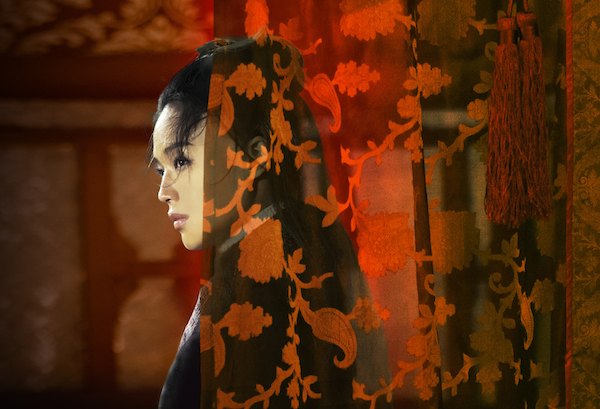 The Assassin
Hou Hsiao-hsien’s first attempt at an “action” movie retains the narrative distinctions peculiar to all his features, which means fans of the genre will likely be baffled and disappointed. Though the plot, which is based on an old novel, has conventional storylines and develops its characters accordingly, Hou’s spare use of dialogue and tendency to elide anything that doesn’t serve his aesthetic aims means it doesn’t make as much of an impression as it would in others’ hands. Nevertheless, the film has a rigorous visual integrity that evokes its own story. Shu Qi is Nie Yinniang, raised in ninth century China as an assassin by a nun who uses her to dispatch corrupt officials on behalf of the emperor. When Yinniang fails to complete one particular assignment after seeing the target spend time with his family, the nun realizes she isn’t emotionally mature enough to be a real assassin and sends her to her hometown to kill an official (Chen Chang) to whom she was once betrothed, the purpose being to toughen her resolve and rid her of material sentimentality. Though presented as a kind of test, the mission is complicated by unforeseen developments taking place within the official’s court and which involve his concubine and his wife. Hou doesn’t clarify these developments since they are mostly conveyed through third person, offstage exposition, but the upshot is that Yinniang is compelled to use her skills to both protect her ex-lover from the machinations of his underlings and somehow see her mission through, ends that would seem to be contradictory by definition. What’s striking about the fight scenes isn’t their bloodless grace, but rather how their economy of movement actually adds to the naturalism of the movie as a whole. Death has real meaning, and while Hou spares us gore he drives home the idea that killing is not an easy act, even for the highly skilled. The contrast between the austerity of the action and the sumptuousness of the production design makes it one of Hou’s most beautiful films. If it takes more than one viewing to absorb its dramatic dimension, then all the better, I say. In Mandarin (photo: Spot Films Metropole Organisation Ltd. Central Motion Picture International Corp.) Continue reading







 philipbrasor.com