Media Mix, Nov. 22, 2015

SDF soldiers making roads in South Sudan

SDF soldiers making roads in South Sudan

Here’s this week’s Media Mix, about divisions within the nominal Japanese left wing regarding whether or not to revise the Constitution with regard to Article 9, which currently prevents Japan from taking up arms. As everyone knows, Japan has taken up arms, and, if Prime Minister Shinzo Abe and the conservative Nippon Kaigi have their way, will take up more in the future, so the purposes of what might be called the more “realistic” members of the left wing, which is to acknowledge and clarify the role of the Self-Defense Forces in the national charter, could either make Abe’s mission more difficult by setting legal limits to the SDF’s activities, or help him out, since it would at least establish the SDF’s legitimacy to exist. In a sense, these matters are mostly academic, as columnist Minako Saito points out, because the Japanese establishment has never been very conscientious in its adherence to constitutional limits. The security bills that allow the SDF to engage in collective self-defense overseas is a glaring example, but so are a lot of everyday judicial decisions that clearly violate individual rights outlined in the Constitution.

The issue, however, may become less academic with the rise of terrorist groups that disregard borders. It seems obvious that the group known as the Islamic State carries out terrorist attacks to provoke revenge and get Western countries more involved in their fight, since such involvement drives more Muslims and dispossessed people in the Middle East and Asia into their arms. In the eyes of the IS, Japan effectively belongs to the decadent West, which is why they murdered two Japanese last spring. If Japan sends the SDF overseas to help the U.S. or other Western countries in this struggle, and allows Japanese troops to use their weapons, Japan will be drawn into this apocalyptic struggle, which means it will become a target. Some are saying that Japan is already target, but in any case once Japanese troops start shooting they will belong to this struggle, as will the people of Japan, whether they like it or not. The SDF is in South Sudan as part of the UN peacekeeping mission, but when the ceasefire was broken, peacekeepers from other countries were freed to use their weapons to defend themselves. Japan’s cannot because of Article 9. Something similar happened when the SDF went to Iraq to build roads and other infrastructure. Though it wasn’t reported widely in Japan, the Japanese troops were often the target of local militias, and a few times were actually attacked. Luckily, none of these incidents led to casualties, but since the SDF was not allowed to fight back they were in a very difficult situation that apparently placed immense psychological stress on its members.

Then there’s the Japan-U.S. alliance. If North Korea ever decided to use that military of theirs, it would have to attack American capabilities in the region, and one of first targets would be Okinawa. At the height of the Vietnam War, Okinawa was the base for the B-29s that were bombing the country, so by the rules of war Okinawa could have been targeted if Vietnam had the capability to attack overseas, which they didn’t. So the security alliance also violates the Constitution. The LDP and Nippon Kaigi want to normalize the Japanese military, and these are the kinds of things that Japan will have to accept in the future–threats from enemies of the countries Japan allies itself with, and an increasing potential to become part of the so-called global war between civilizations. It’s not an academic debate any more.

Posted in Media | Tagged , , | Leave a comment

November 2015 albums

Here are the album reviews I wrote for the November issue of EL Magazine, which was distributed in Tokyo on Oct. 25.

neworder15lanadelrey15Music Complete
-New Order (Mute/Traffic)
Honeymoon
-Lana Del Rey (Interscope/Universal)
Though Peter Hook was a founding member of New Order and a valuable holdover when the group changed its name from Joy Division along with its style, bass players need to do a lot in order to maintain as much of a license on a group’s sound as vocalists or soloists do. Hook’s long-anticipated departure from the group worried some of their fans, but the new album, New Order’s first set of all original songs since 2005, may actually be their strongest in more than two decades, and while those strengths mostly mimic what made the band popular in the first place—danceable rhythms in the service of songs that still retained the fetching dark melodies of JD—they don’t sound warmed over. For one thing, Bernard Sumner, never a great singer, is big enough to request assistance from like-minded artists such as Brandon Flowers, La Roux’s Elly Jackson, and Iggy Pop, but generally what makes Music Complete compelling is the return of that dynamic swoon that made their early material thrilling. It shows up within the first minute of the lead single, “Restless,” which, while constructed around a dull lyric, soars on the wings of returned keyboardist Gillian Gilbert’s sparkling synth lines. And when New Order actually endeavors to make a dedicated dance track, like the irresistible “Plastic,” they don’t skimp. For seven minutes you understand how Sumner felt after the death of Ian Curtis when the band seemed doomed: it’s time to get up and get down. You won’t miss the guitars at all, though you may miss them on Lana Del Rey’s new album. In fact, you may miss most of the trappings of modern-day pop music since there are few. By far the young singer’s most creatively ambitious record, Honeymoon exaggerates Del Rey’s torchier proclivities with full-on string arrangements and murky keyboards. It’s also, on average, much slower than her previous two records, thus focusing the listener’s attention on her narcotized vocal style, which reaches—sometimes over-reaches—for full dramatic intensity. When she says “I like you a lot” during the creepy-funny “Music To Watch Boys To” she makes it sound like the most painful admission in the world, especially as she follows it with the line, “so I do what you want.” Thematically, the songs are all about love—sex is implied, more bitterly this time—but they’re also simultaneously, though not necessarily concurrently, about Los Angeles; not the physical city, but that mythical place of eternal sun and celluloid dreams, and if you need a pop culture signifier, think David Lynch’s romantic longing spiked with Billy Wilder’s cynicism. The one cover, “Don’t Let Me Be Understood,” is Nina Simone’s version, not the Animals’. To say this is not for everyone implies that her first two albums were popular, but they were more talked about than listened to. This seems purposely challenging and rewards close attention, though you may want to take a shower afterwards. Continue reading

Posted in Uncategorized | Tagged , , , , , , , , , , | Leave a comment

Media Mix, Nov. 8, 2015

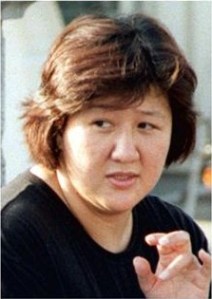
Masumi Hayashi

Here’s this week’s Media Mix about the press’s role in the phenomenon of enzai, or “false accusations” and the resulting convictions and punishment of people for crimes they didn’t commit. The focus of the column is on prosecutors who use any means at their disposal to secure convictions so as to improve their resumes when promotion time comes around. Many of their methods clearly violate the Constitution, such as their reliance on confessions. Article 38 states that confessions cannot be used as the sole evidence in a criminal case, and yet prosecutors have become so addicted to the practice that in many instances they don’t even bother to look for hard evidence, since that would take work, obviously, and since in some cases where the person did not actually do the crime for which he’s accused, there is likely no evidence anyway. What makes this situation even worse is that judges have gone along with the program, ignoring the Constitution and thinking mainly of their jobs. In the Tokyo Shimbun article cited in the column, one lawyer points out that judges in criminal cases tend to think more about their image in the public eye than they do about justice, thus implicating the media even more. For instance, the judge for the original Aoki-Boku case convicted the couple even though he didn’t find their confession to be convincing; but, in an example of the kind of logic that judges have to twist in order to satisfy the prosecution, he stated that “we can’t definitely say there is a zero possibility that [the fire that killed Aoki’s daughter] was natural [meaning not set deliberately], but we cannot help but say that the possibility is small.” In other words, even though the judge has his doubts about the prosecution’s claims, since there is even a small possibility that they might be right, he has to convict. This is not just a miscarriage of justice, it is blatant self-delusion. Continue reading

Posted in Media | Tagged | 1 Comment

November 2015 movies

Here are the movie reviews I wrote for the November issue of EL Magazine, which was distributed in Tokyo on October 25.

AmericanHeistAmerican Heist
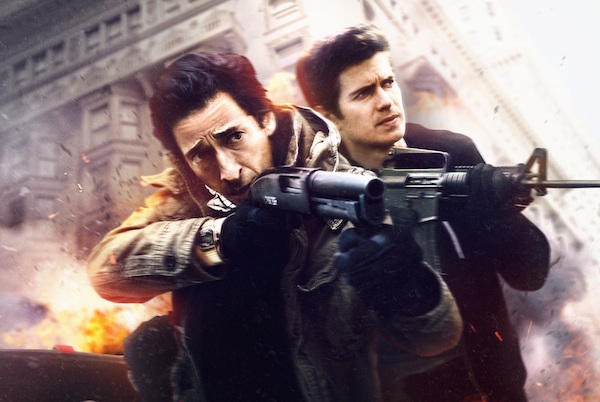
Hayden Christensen and Adrien Brody act their asses off as brothers James and Frank, a pair of New Orleans ne’er-do-wells suckered into joining a bank heist. Frank has just finished ten years in the slammer for shooting a cop while James, who only did a year as an accessory, has turned his life around by trying to start an auto repair business. Frank owes Ray (Tory Kittles), an emotional fascist who justifies larceny as a political act, for saving his skin in prison and when he gets out Ray forces him to recruit James, an ace driver, to be the getaway guy against his will. Blood is thicker than water, but the viewer is expected to take the fraternal bond at face value based on the performative excess. Likewise, the heist itself never gears up sufficient excitement thanks to director Sarik Andreasyan’s pointlessly erratic style shifts. More problematic is the movie’s inadvertent take on racial dynamics: the black guys are evil opportunists while the white guys are naive dupes. It’s an interesting but bogus turnaround. (photo: Glacier Entertainment SARL of Luxembourg) Continue reading

Posted in Movies | Tagged , , , , , , , , , , , | Leave a comment

Media Mix, Nov. 1, 2015

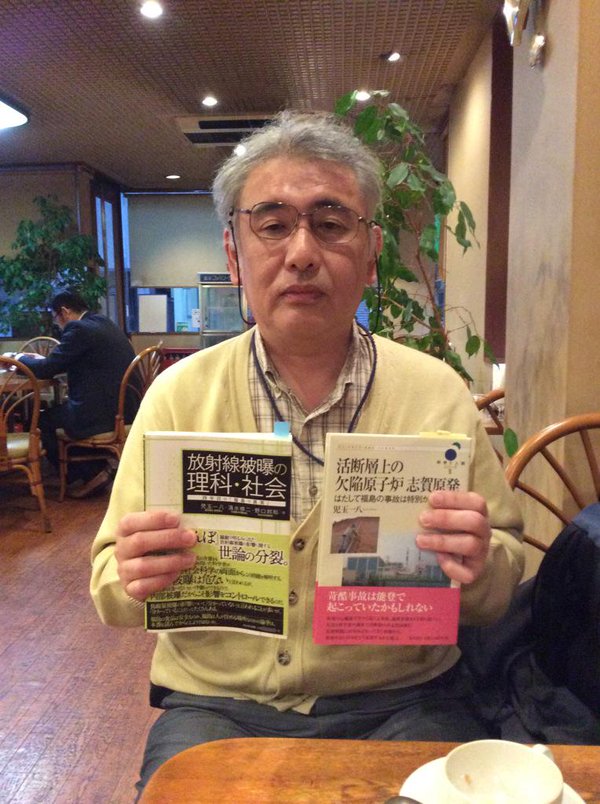
Katsuya Kodama

Katsuya Kodama

Here’s this week’s Media Mix about continuing media coverage of the health situation, especially regarding children, in the irradiated areas of Fukushima Prefecture. As stated in the column, the authorities, a term that represents the government but also includes the nuclear power industry and certain medical institutions, tend to play down the results of tests and other empirical evidence of possible health problems because the longer they do so the sooner people will forget about it and put the accident behind them. Of course, those who live in those areas can’t afford to forget, which is why the mothers profiled in Hitomi Kamanaka’s documentary are still looking for answers. The point of the column is that the media throws out information in a rather random fashion, just adding to the confusion, and maybe that can’t be helped owing to the nature of radioactivity and its still unknown effects on the body.

An exchange between Katsuya Kodama, the medical researcher mentioned in the column, and a female emcee for the net news channel DemocraTV illustrates the conundrum in a more casual fashion. Though Kodama is careful not to say anything that could be construed as a belief that the radiation in Fukushima is probably not harmful to children (he works with many groups who are nominally against nuclear power in Ishikawa Prefecture), he obviously harbors doubts about the findings of people like Toshihide Tsuda, also mentioned in the column. For one thing, Tsuda’s new findings show a marked increase in incidence of thyroid cancer for individuals under the age of 19, with incidence rates mirroring those of children exposed to the Chernobyl accident in the 1980s. Kodama points out, however, that while it’s true that the incidence rate is higher for people under 19 in Fukushima, the demographics don’t fit those for Chernobyl. In Fukushima, four years after the accident, most of the cancer cases are in kids over the age of 10, while in the case of Chernobyl, most cancers four years after the accident were found in kids under the age of 5. Only 2.4 percent of the cases were in children over 10. Such a discrepancy could mean that the cancers in Fukushima were not caused by the accident, but more research “with better controls” needs to be carried out, he said.

Then the emcee says something interesting: “So what you’re essentially saying about Fukushima is that ignorance is bliss.” It’s a blunt summation of what Kodama is getting at, but it does make him answer to the possible charge that he’s doing the authorities’ work for them. His answer is, if anything, diplomatic: “Maybe, but it can’t be helped. The people there are already worried, so they have to be checked.” When the emcee counters that what he is talking about might be difficult for the lay person to understand, he agrees, but adds, “Experts must help people understand this data in an appropriate way. We cannot say these children were not affected by the accident, but we shouldn’t approach all these data with preconcieved ideas.”

In addition, Kodama’s own ideas about cancer may be one reason his theories don’t hold much weight with the authorities, especially the medical community, whose reputation is based at least partly on an aggressive stance toward cancer. Anyone who implies that cancer is overdiagnosed and that doctors are too quick to treat early stages of the disease with powerful drugs and invasive surgery tend to be shouted down, even though such opinions are gaining currency in the global medical community. It’s something that must be taken into consideration when discussing the health effects of radiation.

Posted in Media | Tagged , | Leave a comment

Media Mix, Oct. 18, 2015

Asuka Someya

Asuka Someya

Here’s this week’s Media Mix about sex education in Japan. One point I neglected to mention that is central to the issue is the current administration’s emphasis on empowering women and getting more to enter the workforce. To me, preparing young people for sexual lives should be an essential aspect of this scheme, if it is to be taken seriously at all. The government is still stuck in 1970, thinking that if it can recapture the social and cultural environment of that time, when couples married at an “appropriate” age and went on to have two or three kids in quick succession, then everything will be great, but like the proverbial genie and the bottle, it’s not going to happen in our post-bubble economic world. This is not news and hasn’t been for more than two decades, but the Liberal Democratic Party’s piecemeal approach to “female power” still incorporates a belief that the old social order can be reclaimed.

If women are to be truly empowered they have to have control over their biology first, and that means safe, effective birth control even before they are married. Asuka Someya, the head of the NPO Pilcon I mentioned in the column, became involved in sex education because of her own experience. She became pregnant during her junior year of college and underwent an abortion “reluctantly.” She realized that her knowledge about sex, even at that age, was insufficient. She actually believed, based on what she had been taught at school, that her chances of becoming pregnant after one sexual encounter was “almost nil.” She also thought that the only girls who contracted STDs were those who had sex “all the time,” that if you lived “normally” you didn’t have to worry.

Most significantly, she and other women her age, because they didn’t learn anything about contraception, left such matters to their male partners, who, as anyone who has been in a relationship knows, is hardly a guarantee. After she terminated her pregnancy, Someya became obsessed with teaching herself about sex and everything related to sex, and as a result is now convinced that adolescents, especially girls, should be taught what she taught herself as early as possible.

The media makes a big thing out of how passive young people are today about sex, saying that they aren’t interested, that they’d rather hang out on social media and not connect with anyone on a personal level any more. This is generally a media-made crisis, but it does point up one important problem that has escaped the media: Just because young people aren’t talking about sex so much any more and not getting married doesn’t mean they aren’t interested in sex. They’re just going about it in an irresponsible and sometimes dangerous way. According to Pilcon’s statistics, while the number of abortions for all women is going down, the number among teenage girls is going up. Everyday, 53 girls under the age of 20 undergo abortions in Japan. Given their rhetoric, the LDP would like nothing better than that these girls keep their babies and marry the men who knocked them up, but that’s hardly a policy.

Posted in Media | Tagged , , | Leave a comment

October 2015 albums

Here are the album reviews I wrote for the October issue of EL Magazine, which was distributed in Tokyo on September 25.

BOY We Were HereTAMARYN pcd93943We Were Here
-Boy (Groenland/Victor)
Cranekiss
-Tamaryn (Mexican Summer/P-Vine)
What was really lost when the album format became too unwieldy for the iTunes generation wasn’t so much the format itself, since by and large it’s still the way pop music is chiefly marketed, but rather the tendency for labels to cultivate artists with an eye for the long haul. Bruce Springsteen wouldn’t have made it in today’s market because his first two albums, as good as they were, tanked. We Were Here is only the second long-player by the German duo Boy, but the progress they display over their debut is formidable in both style and scope. Valeska Steiner and Sonja Glass used folky melodies and simple instrumentations to describe the sexual awakening of young women in a world that didn’t take them seriously, and while it was touching its tentative nature didn’t make a huge impression. Just the title track on their new album demonstrates a startling maturity of outlook. A song about death that is many years away, it nevertheless homes in on that feeling of the present, the only thing that separates a thinking person from existential despair. In a quiet but strong voice that recalls Regina Spektor, Steiner sings of how “we need no photographs/the past’s not only past,” with warmth and assurance. The music matches this elevated confidence, using more electronic production that is never heavy-handed but brings out the poppier elements of the pair’s songs. “Fear” addresses its titular emotion not with ominous synths and minor chords, but with buoyant drums and a rollicking chorus that banishes the night sweats and “shuts its hungry mouth.” We Were Here is a celebration of self that isn’t self-conscious from young women who revel in youth without rubbing it in your face. It’s enough to make you feel like a boy again. New Zealand Indie diva Tamaryn is too jaded to wear her heart on her sleeve, but her new album also shows a considerable amount of growth, away from the shoegazey muddle that characterized her previous work and more toward the dreamy pop you would expect from a 4AD artist. Though still overly reliant on reverb and orgasmic vocal gimmicks (found sounds from porn sites litter the proceedings, not to mention a line from Paris, Texas) that seem to substitute for substance, Tamaryn at least is writing complete songs now rather than recording extended snippets of ideas. Jorge Elbrecht’s production can sometimes bog down in atmospherics but as long as Tamaryn is singing the tracks retain enough sharp angles to get their hooks in you. The skinny is that Tamaryn now lives in New York, a city where you pretty much need to state what you’re all about if anyone is going to take you seriously, and despite her image as an erotic sylph, she comes across here as someone you could actually talk to, which means when she sings you believe it’s a real human being. Continue reading

Posted in Music | Tagged , , , , , , , , , , | Leave a comment

October 2015 movies

Here are the movie reviews I wrote for the October issue of EL Magazine, which was distributed in Tokyo last week.

Antmain-TOCAnt-Man
That Green Hornet movie with Seth Rogen was a good idea that didn’t work out as planned. Basically a comic riff on superhero blockbusters that took into consideration the towering ludicrousness of the premise, it nevertheless stopped way short of the usual shenanigans one would expect from a movie with Rogen’s name over the title while shortchanging the kind of action it was supposedly deriding. Since Ant-Man is a Marvel production, it might be expected to demonstrate a little more self-consciousness in this regard. After all, almost all the Marvel movies are in some ways parodies of themselves. But it seems the studio decided to make this aspect purposeful, and not just by casting Paul Rudd, who is essentially Rogen’s more conventionally handsome cognate, as the titular superhero, but also by using a script by the only genuinely inventive comic filmmaker of the moment, Edgar Wright (along with Adam McKay, Joe Cornish, and Rudd, who basically took over when Wright left the project), and a bankable comedy director, Peyton Reed, to helm the thing. One of the better ideas this crew came up with is isolating the origin story from the hero. Michael Douglas plays Hank Pym, a scientist who creates a particle that makes things shrink. Naturally, his protege, Darren Cross (Corey Stoll), wants to use it for evil purposes, and eventually Cross gains control of the technology while Pym is pushed into early retirement. However, neither Pym nor Cross are Ant-Man. That role falls to burglar Scott Lang (Rudd), who, thanks to a stint in prison and losing custody of his beloved daughter, is at the end of his proverbial rope. His savior is Pym, who catches Scott breaking into his safe and then recruits him to do the same at Cross’s company—the one he stole from Pym. To help him do the job, he makes him a suit that shrinks Scott down to ant size without compromising his full-size strength and speed. Though the dramatic component is dominated by Scott’s reluctance to continue in his criminal ways, the movie requires him to give in to them, and does so by making the whole shrinking process fun. It also helps that Pym’s daughter, Hope (Evangeline Lilly), who works for Cross, is secretly helping her father and thus doubles as a love interest for Scott. If this all sounds painfully familiar, it just goes to show how some superhero conventions are impossible to resist, and as the film enters its third quarter, which is filled with SFX and a lot of cleverly staged action scenes that take full advantage of the shrinking premise, you may not notice that you aren’t laughing despite the pedigree on screen and off. By the time Ant-Man and Cross, using a similar shrinking technology, are beating each other up in a miniaturized world where raindrops become tidal waves and real ants qualify as the cavalry, you will have totally forgotten that this was supposed to be a comedy. Marvel wins again. (photo: Marvel) Continue reading

Posted in Movies | Tagged , , , , , , , , | Leave a comment

Media Mix, Sept. 6, 2015

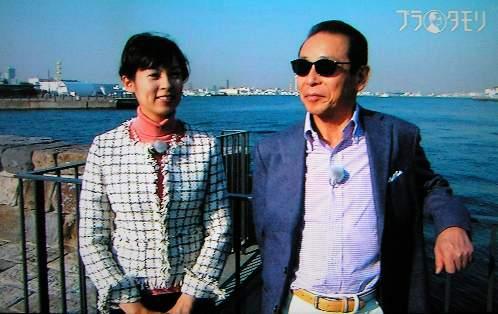
NHK announcer and Tamori on "Buratamori"

NHK announcer and Tamori on “Buratamori”

Here’s this week’s Media Mix, which is about the not-so-subtle sexism behind a lot of media-related work, especially with regard to teenage girls. In the column I discussed a new NHK show, Muchimuchi, which may or may not turn into a series (so far, they’ve only shown one episode, and that was on Aug. 20) but which has attracted a fair amount of criticism for its suggestions of sex and the stereotype of high school girls as being frivolous and ignorant. However, within those complaints in a deeper distrust of TV production techniques, the kind that manipulate reality in order to create a semblance of spontaneity. Among the Tweets that writer Chika Igaya cited in her Huffington Post article about the show was one that mentioned the “whole staged feeling” of the presentation, that the entire setup of the show was suspiciously artificial, which made the viewer also question the truthfulness of the girls’ reactions and responses.

This Tweet illustrates a significant aspect of media literacy, the ability of the receiver of information to sense how that information has been filtered by the medium itself. Japanese TV, and NHK in particular, has perfected this ability to the point where people know that what they’re watching is fake but have somehow been conditioned to accept it as part of the presentation and adjust their comprehension accordingly. The example that comes to mind immediately is NHK’s travel show, Buratamori, in which veteran TV talent Tamori goes to a neighborhood in Tokyo or some other city and explores the history of that place using old maps and existing landmarks. During the show, Tamori and a female announcer walk around the area and inevitably bump into some local expert, who then answers their specific questions. This narrative device is borrowed from Tamori’s other show, the very long-running Tamori Club on TV Asahi, where Tamori always just happens upon a group of comedians on the street who help him address that week’s funny theme. No one, of course, thinks these meetings are spontaneous. If anything, Tamori plays them for laughs, but it says something about the way TV producers’ minds work that everyone copies it, and it follows that they probably have no problem faking or manipulating other things, like the girls’ responses on Muchimuchi, which means that the sexism on display is intentional. I’m not saying that high school girls are all erudite and sexually self-possessed, only that their complexities are necessarily flattened by the prejudices of producers. And as anyone who watches NHK knows, the people there hate surprises.

Posted in Media | Tagged , , | Leave a comment

September 2015 albums

Here are the album reviews I wrote for the September issue of EL Magazine, which was distributed in Tokyo last week.

galactic15hiatusInto the Deep
-Galactic (P-Vine)
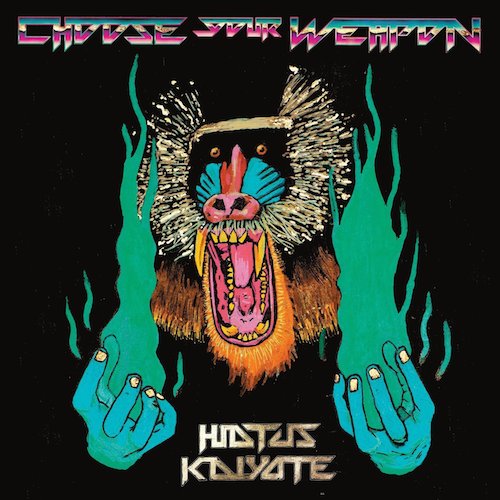
Choose Your Weapon
-Hiatus Kaiyote (Sony)
It says something about the territory Galactic covers musically that their recent Field of Heaven headlining stint at Fuji Rock hardly touched their new album. Though regularly touted as a funk/jam band, the New Orleans collective not only runs the entire R&B spectrum, but also soul music north and south and a respectable corner of the jazz realm. Though Into the Deep isn’t significantly different from past albums in that it samples the group’s tastes liberally and takes advantage of their biz connections with a large and wide variety of guest vocalists, there’s something more intense about it. The opening Mardi Gras raveup, “Sugar Doosie,” lays out their myriad skills in a compact 4 minutes: tight horn harmonies and a greasy rhythmic undercarriage that buoys the beat. What’s especially thrilling is the way the group pulls the old verities into the 21st century. JJ Grey’s frantic reading of “Higher and Higher” hardens its Stax/Volt vibe with crisper keyboards and a fuzz bass that gives it an edge. Macy Gray complements the Band-like country funk of the title song with a vocal that’s alternatingly meditative and desperate. And while Mavis Staples doesn’t sound like the right match for the Caribbean-flavored “Does It Really Make a Difference,” the old girl proved a long time ago she can sing pretty much anything short of Wagner and give you what for, and as the song builds you lose track of the elements and fall right into the toughest groove on the album. “Chicken in the Corn,” a collaboration with Brushy One String, brings the orchestral funk of Isaac Hayes into the computer age. But the record really comes into its own on the instrumentals, which reference New Orleans without being overly reverent to the city’s sonic traditions. They’re not merely the heirs to a legacy any more. They’re one of the most forward-looking bands in America. One might say the same about Hiatus Kaiyote in relation to their native Australia. Smaller and more experimental than Galactic, the quartet is steeped in the kind of avant-funk that George Clinton perfected, but seem less determined to get listeners dancing than questioning their understanding of what funk entails, which, for the most part, means linear structures that work on the booty. Much of the group’s appeal, not to mention its uniqueness, is built around guitarist-vocalist Nai Palm’s personal engagement with the songwriting, which takes in everything from family tragedy to essays on the supernatural. Like Galactic, Hiatus is capable of a wide range of styles, though often they demonstrate this talent in the course of one song. This is a long album, too, 18 tracks and full of so many ideas that it might take years to process them all. I find it kind of daunting, which doesn’t mean it won’t show up on my best-of-year list in January. I just need to give it the attention it deserves. Continue reading

Posted in Music | Tagged , , , , , , , , , , , , , | Leave a comment