Here are the movie reviews I wrote for the May issue of EL Magazine, which was distributed in Tokyo last week.
 The Amazing Spider-Man 2
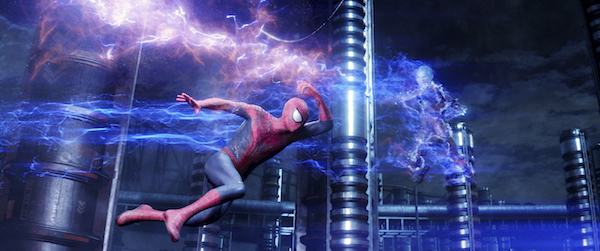
The only justification for making an entirely new franchise of the Spider-Man saga so soon after the first one ended, besides printing money, is that the Tobey Maguire series wasn’t true to the comic’s plot, which meant a lot to the coterie of kids who grew up with it. Peter Parker was the first angst-ridden superhero because he was a teenager with typical adolescent problems exacerbated by the responsibilities that come with special abilities. The biggest change the first series made was eliding Peter’s first girlfriend, Gwen Stacy, and going right to his eternal soulmate Mary Jane Watson. So the second installment is the real test, because it tests Peter’s convictions as a superhero against his love for Gwen. However, the screenplay, written by at least four guys, crams so much incident into its two-and-a-half hours that nothing feels consequential, not Peter’s employment as a news photographer (J. Jonah Jameson only figures as a by-line in an email), not his investigation into the reason for his parents’ disappearance, not the ghost of Gwen’s police chief father, not even the feeling of betrayal that causes Peter’s best friend, Harry Osborne (Dane DeHaan), to turn into the Green Goblin. Even the central standoff between Spidey and Electro (Jamie Foxx) feels as if it’s been shoehorned into the plot as a means of demonstrating how perilous Spider-Man’s public persona is, since Foxx’s character, a nebbish named Max Dillon, is enamored of the web-spinner as only a lonely nerd could be, and when he’s jolted with a huge surge of electricity, thus turning him into a human super conductor, the accompanying sense of power works on his eternally bruised ego, and he imagines Spider-Man as one of his tormentors, even though he once saved his life. But besides the blue glow that Electro gives off, there’s little that’s memorable about him as a super-villain. He’s basically a poor putz who’s going down for all the wrong reasons, whereas Harry, who’s enormously wealthy and powerful to begin with but dying of a genetic disease, is a more monumental bad guy, though Peter still thinks there’s something redeemable beneath the malice. The real subtext of The Amazing Spider-Man 2 isn’t teenage angst, but the nature of celebrity, which isn’t a bad theme but it’s been done to death in our age and neither the army of screenwriters nor director Marc Webb has the patience or the time to treat it with any nuance. Webb has his hands full anyway with all the special effects, which are so overbearing you wonder if any of the actors actually had to work in front of a green screen this time. No one and no thing looks natural here. Maybe it’s time for Marvel to get back to actual comic books, which are unnatural by definition. (photo: CTMG) Continue reading