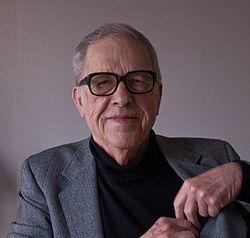
Levon Helm changed my life

The Band was the first rock group I paid any close attention to. While growing up in the 1960s I was as obsessed with AM radio as any other white suburban American kid was; or maybe even more so. At the time music wasn’t really something that boys my age and in my socioeconomic milieu were supposed to be focused on. Most of them were more into baseball. I liked the Mets, but I loved the Supremes. In fact, I pretty much loved anything on Motown, having been mesmerized by the older black kids who hung out in front of my elementary school in the morning before class started, dancing to 45s. I would go to sleep at night with my transistor radio under my pillow, just loud enough to hear but low enough so my parents didn’t know. I would slowly turn the dial through the AM spectrum searching for Motown songs. I liked the Beatles, too, but by the time I was old enough to appreciate music on a visceral level they were ubiquitous. I couldn’t tell you why I preferred Motown. I just did. When Aretha Franklin’s “Respect” came out, I widened my obsession to soul music in general. Continue reading

Posted in Me, Music | Tagged , , , | 1 Comment

Media Mix, Apr. 8, 2012

If you don't pass it, I'll shoot myself

Here’s this week’s Media Mix, which is about the mainstream media’s general support for the government’s plan to double the consumption tax. I should point out that while this support is editorially pervasive it is not complete. The article I cite at the end, written by Masato Hara, adheres to the Asahi Shimbun’s stance but the paper will offer differing opinions depending on the writer and the subject. One recent essay, in fact, seems to challenge Hara’s position, pointing out that Minna no To (Your Party) has been publicly skeptical about the consumption tax plan simply because of Prime Minister Yoshihiko Noda’s avid declaration that his administration should work with the Ministry of Finance after the Democratic Party of Japan had pledged for years that it would not countenance an increase. Such a bold turnabout, without proper explanation, is suspicious, and the essay suggested that Noda had cut some sort of deal with the finance ministry before he became prime minister to push for the increase in exchange for support for the child allowance. If that’s true then the ministry seems to have reneged on its part of the deal. But the essay also expanded on Hara’s assertion that the finance ministry is the “guardian” of Japan’s economic well-being by saying that it, in fact, is the guardian of the whole central government bureaucracy, and thus their ultimate purpose is to pursue their own interests, presumably over those of the country as a whole. Of course, the DPJ’s main election promise was that the party would take control of the country away from the bureaucracy, which is why Minna no To, which has made the same pledge, is so critical of Noda’s intentions.

This morning, Gucci-san, who I also mentioned in the column, weighed in again on the consumption tax issue in his Aera column, saying he was “surprised” when he read Noda’s assertion in a published interview that the consumption tax was the “fairest” means of raising revenues. This is sarcasm. Gucci was not surprised at all, since Noda has been saying that for a while now. What he meant to drive home was the inherent unreliability of Noda’s logic. If Noda were completely honest, he would have said that the consumption tax is the “easiest” means of raising revenue, because the burden falls on those with less power to object, namely the young and the economically marginalized. That, Gucci says, is “clear.” Holding that the consumption tax is “fair” is like saying that “the earth is the center of the universe,” meaning it’s been empirically proved to be false for so long that saying it out loud is bound to evoke the surprise he felt when he read it the first time. More significantly, the nature of a consumption tax contradicts one of Noda’s justifications for it. The prime minister constantly says that we need a consumption tax to pay down the national debt because it’s irresponsible to leave such a debt to future generations. But since the tax penalizes young people now (no assets) more than older people (with savings), it’s already placing a burden on them, even before they “inherit” the debt. There have been a number of articles, especially in the U.S., that have argued whether the current recession exposes a class war or an inter-generational one. In Japan, the two are almost indistinguishable, but anyone, young or old, who is finding it difficult to make ends meet now will find it even more difficult when the consumption tax goes up. It’s the only thing that’s inherently “clear” about the issue.

Posted in Media | Tagged , , , , | Leave a comment

Media Mix, Apr. 1, 2012

Where's Matsui?

Here’s this week’s Media Mix, which is about the war of words going on between the Shimbuns Asahi and Yomiuri over a “scoop” Asahi ran in February concerning the Yomiuri Giants’ baseball team paying huge amounts of money for contract signing bonuses in violation of an agreement with other teams. The point is that all the other major media have decided to let these two heavyweights battle it out on their own and haven’t made as much of a peep either way, editorially speaking. Maybe it’s not worth it. I, for one, think that the Japanese media spends way too much time and resources on baseball, but that fact alone makes it strange that no one else has commented on the contretemps.

Another baseball-related matter that seems to have gone unremarked in the major media–or even in the minor media, for that matter–is Hideki Matsui’s disappearance. Of course, Matsui hasn’t literally disappeared, but ever since the Oakland Athletics dropped him at the end of last season he’s been conspicuously missing from the Japanese sports pages. From what I understand he’s waiting at his home in the U.S. for some team to call him up and offer him a place in their roster, a possibility that becomes slimmer the closer we get to opening day. Matsui’s a nice guy and has always cooperated with the Japanese media (certainly more so than Ichiro), so the only conceivable reason for the absence of Matsui-related news is that reporters don’t want to embarrass him. Though last week’s visit to Japan of the Seattle Mariners and the Athletics to open the MLB season officially was a huge p.r. success for everyone involved, one couldn’t help but think of Matsui. I don’t have any proof, but I’m pretty sure that when the deal was made to bring those two particular teams to Japan, they were chosen because they contained the two most famous active Japanese players in the majors (the two teams played each other for opening day 2011–does that normally happen two years in a row?); but since that deal was made the Athletics cut Matsui loose, which, of course, is their prerogative. I’m sure it was the dream of the Japanese side of the deal to see Matsui bat against his old team, the Giants. I wonder what his old boss, Tsuneo Watanabe, thought about this development. He’s not the kind of man who tends to stay silent when he doesn’t get his way, but this was something that was totally beyond his control.

Posted in Media | Tagged , , , , , | 1 Comment

Fountains of Wayne play to the choir

Yesterday I attended the first of Fountains of Wayne’s two-night stand at Ebisu Liquid Room in Tokyo. Though not sold out, the show was suitably packed to provide the sort of sweaty love-in the group tends to enjoy from its fans whenever they roll into town. Their species of power pop speaks to a slightly brainier, and, I imagine, older cohort in their native United States, which may explain why they didn’t become as popular a group as many people once expected them to be. But even in Japan, where this sort of music is catnip to a wider cross section of rock enthusiasts, FOW has never managed to attract anything beyond their core cult. I mean, this same week, My Morning Jacket, to me the very definition of a cult band, played up the road at the much larger Shibuya AX.

Still, what you get at an FOW concert here is a very intense sort of appreciation. It’s not just that everyone knows the songs backwards and forwards. They also have the choreography down, choreography that seems specific to Japan, since the band doesn’t partake or necessarily encourage it. The syncopated hand-clapping was particularly effective and may have encouraged Adam Schlesinger to invite three members of the audience to play percussion instruments with the band on “Hey Julie,” a gambit that was first met with strange reluctance: they practically had to drag the three volunteers on stage. If American FOW fans seems over-intellectual, Japanese FOW fans are shy by definition? I’d buy that but would need to see more empirical evidence.

So what does that make me? I’m American, and, to a certain extent, brainy. I mean, I’ve written about Fountains of Wayne many times in the past, usually from the standpoint of their tri-state world vision, which happens to dovetail with my own even if the two principal songwriters are 10-15 years my junior. I enjoy their shows because their tunes seem custom made for singalongs and just sound plain good in a live setting. They aren’t particularly avid showmen, unless you count guitarist Jody Porter’s stock of ax-wielding cliches and Keef-styled tobacco-puffing. Chris Collingwood remains an affable and even adorable frontman who, nevertheless, still isn’t completely comfortable with an audience he knows doesn’t understand English as well as they should to appreciate his lyrics. But they understand enough, and, in any case, the words mean a lot less in concert than the band’s patented “do-ya” and “uh-uhh-uh-uh” choruses, which everyone can sing.

So there’s no particular reason why the group has to play pretty much the same set list it has for the last decade. I admit my tastes are rarefied even within the FOW cult, but I think they’ve actually gotten better, material-wise, with each successive album; meaning their latest, Sky Full of Holes, is their best, as far as I’m concerned. Last summer, when I saw them at Fuji Rock, I was disappointed that they only played three songs from the record, but figured, well, it’s a festival and, besides, the record had only been out a week at the time. But they played almost the same set that they did at Fuji, and with only one other song from Sky. They didn’t even play my two favorite songs from the album.

I had thought such disappointments would fade as I became older, but I guess they don’t. In a sense, I think the group takes its position as entertainers a bit too seriously; not so much because they played their obvious “hits,” but because they believe that people like the older songs better. I don’t have much desire to hear “Survival Car” or “Leave the Biker” or “Radiation Vibe,” all from the first album and which the band treats as canonical material, the latter invariably the set closer, augmented by cleverly tossed-off snippets of influential power pop. (“Jet,” “Mad World,” etc.) When the band came back for the encore and played “Cemetery Guns” from Sky, which Collingwood described as a “sad song,” followed by the equally poignant “I95,” I was thrilled, because it promised something more deeply felt. One of the virtues of FOW’s songs, and one they rarely get credit for, is just how honest they come across emotionally. But it was a short-lived thrill, because they had to play “Stacy’s Mom.” I don’t want to second guess Collingwood and Schlesinger’s reasoning for choosing these songs, but cult bands should understand that anything they do is going to be acceptable, and obscure stuff may be even more appreciated. I just wish they had approached their excitable Tokyo fans as real friends rather than just another audience. They don’t need to be won over.

Posted in Me, Music | Tagged , , | Leave a comment

April 2012 albums

Here are the album reviews I wrote for the April 2012 issue of EL Magazine, which was distributed in Tokyo last weekend.

Wrecking Ball
-Bruce Springsteen (Sony)
Voice of Ages
-The Chieftains (Hear/Universal)
That Bruce Springsteen would make his latest claim for immortality with an album of songs addressing the current social atmosphere of gross economic inequality and cultural chauvinism seems hardly a reason for so many to pay such niggling close attention to the message on Wrecking Ball. We’ve been here many times before, and one could make a solid case that his entire reputation post-Born to Run has been built on his defense of the working-man ethic and ethos. What has changed over the past decade is Springsteen’s musical approach, which has moved away from the urban stylings of the radio pop he grew up on—let’s call it the Italian side of his heritage—toward the folkier stylings of the artists who had a more profound effect on his development as a political animal—let’s call it the Irish side of his heritage. So much of the material here has more in common with the boisterous instrumental power of The Seeger Sessions than anything he’s done with the E Street Band. Flogging Molly could cover “Easy Money” or “Death to My Hometown” without having to cut down on the beer. It fits the intellectual and emotional tenor of the songs, too, which splits the difference between hopelessness and an attitude that says you party til you drop, regardless of why you’re partying. Maybe this is an Irish stereotype, but Springsteen’s never been averse to using truisms or cliches to get his admirable points across. It’s what makes him both approachable and sturdy as an artist, if not as a superstar. Still, as powerful as these songs are sonically we’ve heard them before, even by others. We’ve also heard most of the songs on The Chieftains’ new material before, but that’s sort of their mission in life. As the most famous trad Irish group in the world, Paddy Moloney and Co. get away with rerecording a repertoire that’s been canonized to the point of religious piety because in many ways they’re the reason most non-Irish people know these songs at all. As with many of their albums, Voice of Ages is mostly the Cheiftains backing up a roster of well-known acts, which in this case represents the alternative indie crowd: Bon Iver, Pistol Annies, The Low Anthem, The Civil Wars. And while most of these artists avail themselves of the usual Irish airs and ballads, a few take the opportunity to stretch the theme. The Decemberists tackle Dylan’s “When the Ship Comes In” and the Carolina Chocolate Drops allow the Chieftains to enter their stylistic sanctum on “Pretty Little Girl.” The result is even more dilute than the usual Chieftains production, since they don’t sound like themselves on the non-Irish tunes and sound familiarly safe on the Irish ones. You have to wait until the closing 10-minute-plus “Chieftains Reunion” for their patented pub freakout. The only question is: Why didn’t Bruce get a shot at “The Banks of the Quay”? Continue reading

Posted in Music | Tagged , , , , , , , , , , , | Leave a comment

Media Mix, Mar. 25, 2012

"onee" talent Mitsu Mangrove

Here’s this week’s Media Mix, which is yet another discussion of how LGBT issues and people are covered in the media, TV in particular. My use of the American TV drama series Glee and a Japanese variety show featuring “onee talent” could be seen by some as comparing apples to oranges. On Glee, the gay character, Kurt, is bullied at school because of his sexual orientation and the fact that he doesn’t hide it. For dramatic purposes, Kurt’s homosexuality is his most salient characteristic, but the incorporation of Kurt’s gayness into the stories has to do less with how he handles it than with how others do. It places his situation in a social context, but as a character he is fully formed. Onee talent, on the other hand, only seem to exist in the rarefied world of show business. In other words, what makes them special as TV talent is never given a social context. Moreover, their appeal is based on a perception of incongruity, the fact that they were born male but act female; which isn’t to say their individual personalities don’t reveal themselves on television, but that isn’t why they’re there. (And explains why there are no female-to-male cognates for onee talent.)

The lesbian couple profiled on the NHK show, Heart TV, provides the social contrast to the article’s discussion of LGBT issues in Japanese media. The most immediate contrast is in visibility: onee talent are popular because they are highly noticeable. They want to be since they are, by definition, flamboyant, thus making them natural subjects for entertainment shows. But the vast majority of LGBT individuals are not entertainers, as Kanae Doi, the Japan representative of Human Rights Watch, recently wrote in an Asahi Shimbun editorial. Though viewers like onee talent, the average person sees them as something that only exists on TV, and Doi makes the assertion that the media in general avoids discussing LGBT issues unless they have something to do with a special event, such as a lesbian-gay film festival. Consequently, lesbians, gays, bisexuals, and transgenders will always be characterized in people’s minds as being outside of society, when in fact they are everywhere living lives that are the same as the “heterosexual majority.” Doi argues that social discrimination against LGBT people, as opposed to institutional discrimination, is similar in character to social discrimination against the poor, shut-ins, the disabled, and “foreigners” who were born and raised in Japan, since, like LGBT, these “minorities” are seen as existing on the margins of “normal society.” She believes the solution is for the media to address the “real lives” of LGBT, and I imagine she would approve of the NHK documentary. That said, it should also be noted that “the poor” are no longer (if, in fact, they ever were) a minority, but that may be something the media isn’t comfortable with covering either.

Posted in Media | Tagged , , , | 1 Comment

April 2012 movies

Here are the movie reviews I wrote for the April issue of EL Magazine, which will be distributed in Tokyo tomorrow.

The Artist
The general opinion about this Oscar-winning, French-produced homage to Hollywood is that it gets by on sincerity. Having barely survived the post-modern era of all-irony-all-the-time, the folks in Tinseltown were more than ready to embrace an entertainment that not only paid tribute to all those values they had forgotten, but did it in a way that didn’t make them feel cheap or put-upon. All this implies that The Artist has no substance, and while it’s true that everything it has to offer is on the surface, it’s a pretty crowded surface, especially when you’ve got a lead like Jean Dujardin, whose mugging as a Bond manque in director Michel Hazanavicius’s previous spy parodies turned out to be perfect training for his turn as silent movie star George Valentin, who wakes up every morning in his Beverly Hills mansion with a smile on his face, a spring in his step, and a nod of thanks to the huge portrait of himself in the hallway. Valentin’s self-regard isn’t offensive, though. He knows he’s lucky, but his talent is also apparent—the title is even less ironic than the movie. Dujardin plays this affable fellow with all the melodrama Valentin brings to his adventure films, and Berenice Bejo does the same as the chorus girl Peppy, whom Valentin impulsively kisses as she waits along the red carpet at one of his premieres, getting her picture in the paper. The next day, as she’s trying out for a job as an extra on Valentin’s new movie, he recognizes her, and they do a delightful dance that not only makes the scene but explicates the entertainer ethos of the day. Hazanavicius elaborates on this idea as he shows Valentin and Peppy doing multiple takes of a scene, each one unique, and instrumental in not only demonstrating the methodology of silent filmmaking, but developing the relationship between the two central characters. To make a long story short, when talkies arrive, Valentin can’t adapt and Peppy becomes a star in her own right. The actor’s downfall is not presented as his just desserts. He’s proud, but not heartless, and as he falls into destitution and depression, the melodrama is no less effective for being melodramatic—and silent. If only everybody else involved were as dedicated to the form as Dujardin and Bejo. The Americans—Penelope Ann Miller as Valentin’s icy wife, John Goodman as the practical-minded studio head, James Cromwell as Valentin’s faithful chauffeur—don’t go far enough with the caricature, and seem out-of-sync when they share the screen with the two French actors, or for that matter with Valentin’s hyperactive terrier. The hallmark of silent film technique was the way it exaggerated real life to make up for the lack of spoken dialogue, and when Dujardin flashes that incredible smile, you know he understands exactly what’s needed. (photo: La Petite Reine, Studio 37, La Classe Americaine, JD Prod., France 3 Cinema, Jurour Prod.) Continue reading

Posted in Movies | Tagged , , , , , , , , , , , , , , , , , | Leave a comment

Media Mix, Mar. 18, 2012

Ishikawa 2007

Here’s this week’s Media Mix, which is about earthquake insurance. At the end of the second paragraph I mention that the number of policy holders has tripled since last year’s Great East Japan Earthquake, but that’s a misleading statement. Actually, sales of policies have tripled in the last year, though I’m not sure how that translates to the amount of increase in actual policy holders. In any case, the point is that nothing increases commerce in a product as effectively as clear proof that the product is needed. But the trouble with insurance as a product has always been the dynamic between what buyers expect to get from it and what sellers are willing to give.

Japan is famous for being a great insurance market. It’s why the United States has always pressured the Japanese government to dismantle at least part of its publicly subsidized health insurance schemes. The American insurance industry thinks of such schemes as being anti-competitive, but they also know that they can sell a lot of policies if consumers thought their national health insurance didn’t cover everything. It’s the key to the success of companies like Aflac, which sells supplemental health insurance. Property insurance, however, is a completely different story. As pointed out in the column, insurance companies had to be persuaded by the government to offer earthquake insurance. The industry understood that it could not afford to pay for damage from the massive earthquakes that visit Japan on occasion, so the government promised to back them up. Nevertheless, until the Great Hanshin Earthquake, sales of such policies, which are basically add-ons to fire insurance and limited in terms of payouts, were low, and it’s because most people don’t really believe that insurance companies are going to willingly give people money in the event of an earthquake. In the Asahi Shimbun article, a journalist who covers the insurance industry told the newspaper that most people’s experience with non-health and non-life insurance is limited to auto insurance, since it’s mandatory if you own a car. These people know how difficult it is to get insurance companies to pay after accidents and all the trouble you have to go through with forms and inspections. They know insurance companies don’t want to pay, so most likely they feel the same way about earthquake insurance, meaning that if they take out a policy and their home is damaged in a quake, it will be difficult to get the money out of the company.

And that seems true up to a point. The media, of course, makes a lot of money from insurance ads, though mostly from supplemental health insurance and to a lesser extent (satellite TV) auto insurance. I don’t think I’ve ever seen a property insurance ad, which makes you wonder if the industry thinks it’s even worth trying to sell. This isn’t to say that consumers automatically assume insurance companies are going to try and swindle them; only that people probably understand that there isn’t much anyone except the government can do in the event of a disaster like the one that struck last year. The product of this kind of mixed mindset–insurance companies reluctant to push earthquake insurance, consumers suddenly aware of the risk to their property–results in the sudden sales burst and then media coverage of what earthquake insurance actually provides. In truth, it doesn’t provide much of anything except maybe a little more peace of mind until disaster actually strikes. The real issue that emerges from this coverage of quake insurance is the level of financial preparedness for the Big One. If insurance companies can’t be expected to cover all that damage, what can individuals do to ensure that their lives won’t be totally destroyed afterwards? This is the crux of the whole “individual responsibility” (jiko sekinin) dogma and its attendant obsession with “moral hazards.” The media, the government, and the citizens have to talk about it, but first they have to admit openly that the Big One is coming and they aren’t prepared for it. Talking only about the consumption tax is like discussing funeral arrangements for a living person without saying anything about that person’s health.

Posted in Media | Tagged , , | 1 Comment

Happy to be a tourist: What Michelle Williams doesn’t know about Marilyn

These days most of the Tokyo press conferences for Hollywood movie stars take place in Roppongi at either the Midtown Ritz-Carlton or Roppongi Hills Hyatt, which is good because it saves me the trouble of trucking out and up to the 35th floor of the Hyatt in Shinjuku (where Lost in Translation was filmed), which used to be the default venue for these events. The Hyatt, however, replaced the Imperial Hotel in Hibiya as the default venue, so it was like old times when it was announced that the press conference for Michelle Williams and My Week With Marilyn would be held at the Imperial. My Week With Marilyn is about Marilyn Monroe’s trip to England in 1956 to film The Prince and Showgirl, which was directed and by starring Laurence Olivier, and the Imperial is where, several years earlier, Monroe has spent her honeymoon with baseball great Joe Dimaggio.

The connection, or the “synchronicity,” as Williams, who played Monroe and was nominated for an Oscar for her effort, put it, didn’t really get as much play as you might expect, so those journalists who may not have known about the fact beforehand will have to work it into their stories through their own research. When asked how it felt to stay in the same hotel, the actress tried to give a useful answer. “I was 30 when I made this movie, and Marilyn was 30 when she made The Prince and the Showgirl. We shared a dressing room at Pinewood Studios. We shot at many of the actual locations, so being here in the same place, the same hotel, feels like another slightly magical event along the road.” Since she basically answered two question with that one answer, you could sense a rustle among the reporters as they tried to think of a different question than the one they had already prepared. Continue reading

Posted in Media, Movies | Tagged , , , , , , | Leave a comment

Diplomatic: Meryl makes Maggie in Tokyo

Considering that Meryl Streep had just won the Oscar a little more than a week before, the Tokyo press coference for The Iron Lady, in which she portrays former British Prime Minister Margaret Thatcher, wasn’t as packed as one would have expected. It also wasn’t as long as one might have hoped: barely 25 minutes covering a grand total of six different questions, and since two of those were from media that are big enough to score individual interviews, it seemed like a wasted opportunity. Streep and her director, Phyllida Lloyd, had come a long way, and though I imagine the time limit was imposed for the star’s sake, I also imagine the only reason she came was to promote a film that needed all the help it could get, which isn’t to say The Iron Lady is a bad film or uninteresting; but, like most biopics of non-show biz personalities, it hasn’t exactly burned up box offices and the relatively late opening in Japan could rectify that somewhat since it’s so close to Streep’s Academy Award win, which many didn’t expect. (It should be noted that the p.c. was not unexpected. I received my invitation the afternoon of the Oscar ceremony.) But I wouldn’t count on it.

Entering to the strains of “Shall We Dance” from The King and I, which I vaguely recall from the movie was a favorite song of Margaret Thatcher’s, Streep and Lloyd struck a pleasing contrast. The American actress, wearing stylishly over-sized black-framed glasses, looked much more glamorous than she did the last time she was in Japan plugging Mamma Mia!, which Lloyd also directed but didn’t promote in person here. The director, with her Scandinavian features and sensible bob, looked like the wonky technician in comparison, and you could tell they were attuned to each other in a very natural way. It might have been interesting to hear them discuss frankly their views on the subject of their project, a “character” whom Streep described as being “both loved and reviled” in Great Britain “in equal measure.” The judiciousness of the remark would characterize the press conference in that neither woman betrayed any hint of her personal opinion of Margaret Thatcher. Given the even-handed coherence of the answers, this was obviously by design. How different from the Mamma Mia! press conference, where Streep riffed and joked and mostly exercised her theretofore unrecognized capacity for making fun of her straight-back image. Maybe it was just as calculated. I mean, anybody who takes Mamma Mia! seriously is a chump. Continue reading

Posted in Movies | Tagged , , , | 1 Comment