Media Mix, Nov. 6, 2011

Kyodo photo

Here’s this week’s Media Mix, which is about two child abuse cases that have been covered extensively in the media in recent months. As I imply, there are many other similar cases reported on an almost daily basis, and most involve children born into strained circumstances–parents who are poor or underemployed, single mothers who depend on male lovers. Of course, child abuse is not restricted to low-income families, as shown by the NHK special I mentioned in the piece. Some of those women were from middle class backgrounds and married to men with steady jobs.

The thrust of the column was the authorities’ ineffectiveness in addressing child abuse as a recurring problem in these young victims’ lives, and the Asahi interview with Yukiko Tajiri, the head nurse of Jikei Hospital in Kumamoto, was instructive on this point, even if the interview was ostensibly about something else. Tajiri said that the main purpose of the “baby hatch,” which Jikei installed in 2007 to receive unwanted babies anonymously, is to save lives, though its corollary purpose has become much more significant, and that is to provide a venue where expectant mothers can discuss their fears openly. Tajiri estimates that the hospital has done much more to convince women to keep their children or, at least, give them up for adoption than it has receiving babies anonymously. At one point she says the fear these expectant mothers feel has the same source as “the increased incidence of child abuse” that has been noted in the media: loneliness and ignorance. Actually, loneliness and ignorance are exactly what child welfare consultation centers are supposed to address, but because these centers are associated with authority many women are reluctanct to call them. Nevertheless, this notion implies that women who are having a problem with child abuse recognize it as a problem and want to deal with it. Tajiri’s comments about the ineffectiveness of the authorities with regard to adoption is important to understanding their ineffectiveness with regard to preventing abuse, since both deficiencies spring from a desire to keep the family whole at any cost. But as with the NHK special, she takes for granted the idea that mothers can only receive help if they ask for it.

However, what seems to tie all these high profile child abuse cases together is a consistent denial on the part of the guardians that abuse is really taking place. In other words, they don’t seek help, and it’s because they don’t necessarily feel guilty. In such instances child welfare centers must step in and take over, by force if necessary. And this brings up back to the belief that child abuse cases are somehow on the increase. I’m not alone in thinking that this perception is due to the fact that the media over the past few decades has become more aware of child abuse as a social problem and is thus reporting it more often. In turn, more people are recognizing something they used to think of as normal–call it “discipline,” if you want–as now being abnormal. There’s nothing cynical about this development. Civilization is built on the premise that life improves over time as people become more self-knowing. When I was a child it was fairly common for parents to strike their children when the children did something wrong. One hundred years ago, before the current idea of the “innocent child” was formulated, children were nothing more than short adults, and parents did with them what they wanted to do. No one complained. We are better now than we used to be, but Japan’s child welfare authorities still think parents have the right to do with their children as they see fit, even if the child suffers terribly as a result.
Posted in Media | Tagged , , | Leave a comment

November 2011 movies

Here are the reviews I wrote for the November issue of EL Magazine, which was distributed in Tokyo on Nov. 25. The movies open in Tokyo from late October to mid-November.

Another Year
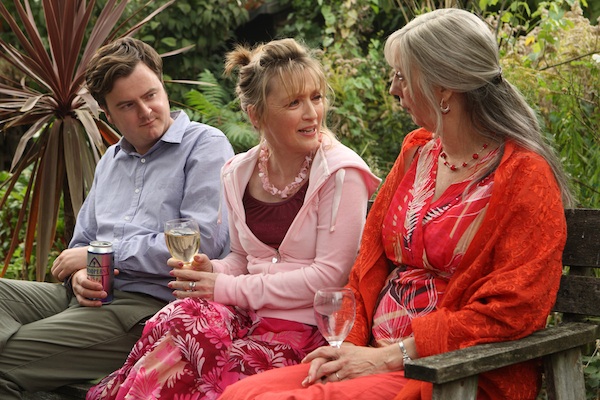
Much has been made of Mike Leigh’s peculiar method of filmmaking, which has more to do with theater than the movies; especially the way he has his actors develop their characters organically over many months while writing dialogue that suits those characters. Whatever this method produces in terms of “realism” it mostly has the effect of preventing Leigh’s characters from turning into symbols. In his newest movie, the central couple, Tom and Gerri (Jim Broadbent, Ruth Sheen), have been happily married for almost fifty years. They are fulfilled in their work–he as a geologist, she as a therapist–have raised a well-adjusted son who loves them, and spend their leisure time tending to a vegetable garden allotment in London. There is no conflict in their lives, and the movie is formally episodic, so the dramatic thrust is provided by the people they know, people whose lives of desperation stand in stark contrast to theirs. Of these lonely people, who fans of Leigh’s will realize are something of an obsession with the director, Mary (Leslie Manville) stands out. Mary has worked with Gerri for years, and remains unattached as she enters middle age. She drinks too much and then frets in a dramatic fashion, and Tom and Gerri, who often entertain her at their home, listen and commiserate, sometimes at cross purposes. Some will find the couple patronizing, while others will simply conclude it’s all you can do with someone like Mary. While we may envy the happiness that Tom and Gerri enjoy, we don’t always like them. One of the only real plot lines in the movie, which spans an entire year, is Mary’s crush on Joe, the couple’s lawyer son, who looks upon Mary more as an aunt. When Joe brings home a steady girlfriend whom Tom and Gerri immediately adore, Mary, who happens to have dropped in unannounced, is devastated, though it’s only the audience that realizes this. The couple takes no notice of their friend’s pain, and later, when Gerri finds out about those feelings, she shuts Mary out, though Leigh doesn’t fully explain what actually triggered this resentment. The stilted “compassion” Gerri expresses can’t hide the sudden contempt she feels toward her colleague, and it’s as disturbing to the viewer as it is to Mary. To say this scene gives rise to complex emotions is an understatement: Mary, though sympathetic, is also insufferable. Though Leigh’s process has given rise to criticism that it makes for over-cooked performances–Manville is often just painful to watch–the main difficulty of his films is that they provide too much that’s familiar. If we don’t like his movies or his characters, it’s probably because we recognize in them what it is that we don’t like about ourselves. (photo: Untitled 09 Ltd., UK Film Council, Channel Four TV Corp.) Continue reading

Posted in Movies | Tagged , , , , , , , , , , | Leave a comment

TIFF interviews

Here are links to the interviews I did for the Tokyo International Film Festival website. This year they wanted to concentrate on films in the Japanese Eyes section, for obvious reasons, but in any case the selection wasn’t that good. I had one extra opportunity to interview someone of my own choice and I asked for Michael Winterbottom, whose “Trishna” was shown previously at Toronto but had since been reedited, so the version in Tokyo was for all intents and purposes the world premiere of the movie the rest of the world will see. It’s an edited version of our conversation, and maybe later I will publish the whole thing, which is quite interesting. Right now I just want to get these up.

Michael Winterbottom, “Trishna”

Yasuaki Kurata & Takanori Tsujimoto, “Monster Killer”

Junko Kobayashi, “Between Today and Tomorrow”

Kyoshi Sugita, “A Song I Remember”

Juichiro Yamasaki, “The Sound of Light”

Shinju Sano & Erlan Nurmuhambetov, “The First Rains of Spring”

Posted in Movies | Tagged , , | Leave a comment

November 2011 albums

Here are the albums I reviewed for the Nov. 2011 issue of EL Magazine, which was distributed in Tokyo last week.

Pull Up Some Dust and Sit Down
-Ry Cooder (Nonesuch/Warner)
Hard Bargain
-Emmylou Harris (Nonesuch/Warner)
Ry Cooder came late to composing. During his heyday in the late 60s and 70s he was a prized session guitarist (rumor has it, he was asked by Keith Richard to join the Stones, not once but twice) whose solo records were retro affairs. As far as I know Pull Up Some Dust and Sit Down is his first album of all self-written material, and the guy obviously learned a lot over the years. Much of the material Cooder used to cover was from the Great Depression, and these songs posit a second Great Depression with specific references to the president, though, to be fair, the POTUS he’s mainly referring to is Bush Jr. since he mentions Crawford, Texas by name. What’s impressive about Cooder’s writing is not so much that these songs sound credibly vintage (his well-weathered, often wacked-out singing voice make it possible) but that they’re brutal. He lets the financial community have it right between the eyes on “No Banker Left Behind,” and two songs about America’s penchant for overseas military adventures show no mercy at all. The thing is, they’re funny, too; in the way that antisocial 60s folksingers like Country Joe McDonald were funny. Cooder’s facility with every stringed instrument under the sun is just gravy, and his percussionist son Joachim provides able rhythmic assistance, especially on the upbeat rock numbers, which are so potent you wish Cooder would just do an entire album of them. (He also does norteno and straight blues here) But if he’s learned things from Woody Guthrie and Lieber & Stoller, on the hilarious “Simple Tools” he almost beats Randy Newman, a former employer, at his own game; well, let’s just say it’s Randy Newman if he decided to parody Jimmy Buffett. Emmylou Harris isn’t the sort of interpretive singer who’s likely to make fun of anybody, but in any case, she didn’t do much songwriting back in the 70s either. On her new album, she pens all the tracks except two, one of which is the title song, a Ron Sexsmith tune. However, Harris’s model is the blues-based singer-songwriters of the first rock era, including Dylan, only without Dylan’s mildly disarming sense of humor. Of course, no one is going to joke about Emmet Till or Katrina-destroyed New Orleans, and while Harris addresses these subjects with poise and passion, they have the effect of sounding like issues in search of a champion, and both, not to mention the more general tragedy of homelessness, another topic she tackles, have plenty of other, more articulate champions. Harris does better with subjects she’s close to, such as her brief time with Gram Parsons (“The Road”), and while the production may be too tasteful owing to the seriousness of her vision, the backing tracks by Jay Joyce and Giles Reaves honor the songs and the singer, who still sounds as composed as Cooder sounds pissed. Continue reading

Posted in Music | Tagged , , , , , , , , , , , | 1 Comment

Media Mix, Oct. 23, 2011

Here’s this week’s Media Mix, which is mainly about Shukan Shincho’s reaction to health minister Yoko Komiyama’s comment that she thought it “strange” that full-time housewives received a special dispensation from paying pension premiums if their husbands are contributing to the kosei nenkin program. Some readers will understandably be confused by the column if they have no background into Japan’s knotty pension problem, so below I’ve provided some links to things I’ve written in the past about the topic.

On the pension waiver for housewives

On the planned overhaul of the pension system

On the 2004 DPJ plan for overhaul

On the social roots of the pension system breakdown

Posted in Media | Leave a comment

BIFF Oct. 10

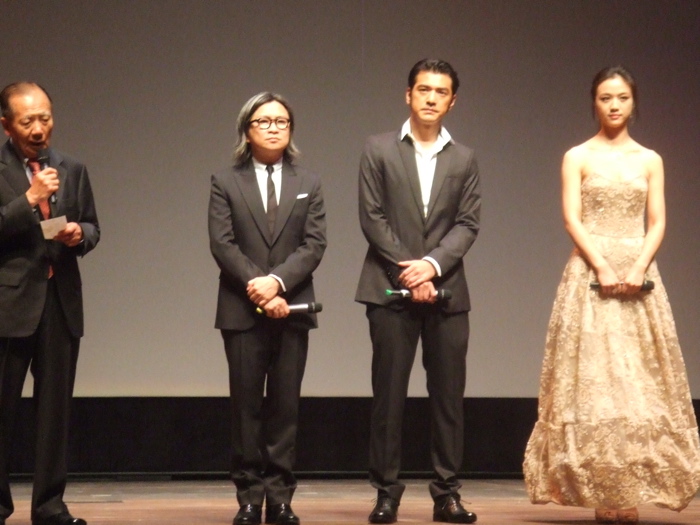
Guests say hello before "Wu Xia" screening

I finally got a chance to see a movie in the new cinema center. Actually, I think the multiplex theaters are better quality, at least in terms of movie-watching: the screens are larger and the seats more comfortable. This one had a stage, too, so the screen is recessed, and I thought the picture quality wasn’t as good as it would have been had it been shown in a multiplex. And this was definitely a multiplex sort of movie: Peter Chan’s “Wu Xia.” Unfortunately, the print that was shown was the one for commercial distribution in Korea, meaning it had no English subtitles, a fact that the organizers neglected to point out beforehand so a lot of journalists walked out as soon as they realized it. I stayed and enjoyed what I saw, even if the “detective story” didn’t make any sense to me. Though I would have to see it again with subtitles, either English or Japanese, in order to make a fair judgment, I think there’s a limit to the creative breadth that a martial arts movie can offer, even one as ambitious as this. The action requirements are so strict that even the most subtle characterizations and plot details get lost in the mayhem. “Wu Xia” is pretty impressive–for a kung fu movie. Continue reading

Posted in Uncategorized | Leave a comment

BIFF Oct. 9

Mourning

Yesterday while working in the press center I was cornered by a perky young reporter from Hong Kong and her cameraman. They wanted my opinion on the new Cinema Center, as well as the festival’s general organization. This has happened to me before, at least twice, and I tend to say the same things, that the organization is probably as good as can be expected but that some things just don’t get done–like interview requests (we’re supposed to go through foreign press liaison, but I’ve only had success with them once in all my times coming here; now I just do what everyone else does, go directly to the source or their representative, even though it doesn’t matter this year because I’ve only got 600 words). As for the Cinema Center, I haven’t had time to explore it at any length, and apparently it isn’t finished. I don’t really like the way it looks; it’s institutional in an anachronistic way–all concrete and big windows. It doesn’t feel new at all. Continue reading

Posted in Movies | Tagged , , , | Leave a comment

BIFF Oct. 8

The Day He Arrives

When I told the foreign press liaison that my flight would be arriving at Busan at 9:30 p.m. she said the film festival counter at the airport might be closed by then, so could I please take a limousine bus on my own? No problem, I’ve done it many times before. What she didn’t seem to know, however, is that the last limousine bus into town leaves at 9:30. The counter, in fact, happened to still be open but the person there was less helpful than in the past. Though I’m not a “guest” in the technical sense, the festival has on occasion treated me as one, and if it were, say, five years ago I’m sure they would have put me in one of their official cars and taken me direct to the Grand Hotel. Not any more. She suggested I share a taxi with another stranded latecomer, a festival programmer from Los Angeles. The airport was swarming with drivers of “special” taxis, the ones that seem to overcharge but it’s difficult to tell. The guy that attached himself to us gave us a flat rate of 50,000 won, which is only about ¥4,500, a bargain by Tokyo standards, but a lot more than the bus, which is only 6,000 won.

I managed to make it to the hotel by 10:30, just in time for the opening reception party, which was being held there. Cars lined the little potholed-filled streets around the Grand and lots of rubberneckers filled the lobby snapping pictures with their cell phones of people I assume were movie stars, but I didn’t recognize any. The press liaison was waiting for me to make sure I could get into the party, since I hadn’t made any gesture about wanting to go. I usually don’t, but I was hungry and the 25,000 won taxi ride, as small in yen terms as it was, had put a sizable dent in my strict budget. Japan Times wasn’t paying much this year and finances are pretty dire in my household. I ate and drank more than my fill, and spent most of my time talking to a guy from Finland who programs something called the Antarctica Film Festival, the only one on the continent, apparently; news that I found unsurprising. Continue reading

Posted in Movies | Tagged , , , , , | Leave a comment

Media Mix, Oct. 2, 2011

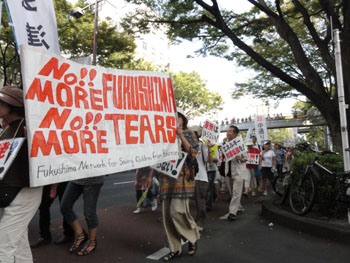
photo: Kazuaki Nagata

Here’s this week’s Media Mix, which is about coverage of the Sept. 19 antinuke demonstration in Tokyo. That the column is next to a long interview with journalist Satoshi Kamata, who talks about the same thing, is more or less an accident of timing. Though I was aware the Kamata piece would be in the same newspaper I didn’t know the content. Still, I could have predicted it seeing that Kamata was one of the organizers of the demonstration and contributed at least one opinion piece to the Tokyo Shimbun. One of the points he made in that piece, though he only hinted at in the Japan Times interview, is that the mainstream media’s “low-key” coverage of the event is basically an insult to the people who demonstrated. A similar opinion was advanced in the same newspaper by attorney Ikuko Komchiya, who stated that the news value of the demonstration as shown by the number of people who showed up was denied by most of the media, which means the press ignored the way people “live in the world.” Both comments are to a certain extent as sentimental as the TV Asahi coverage I cited in the column, but there is an important difference. The TV Asahi coverage was presented on its morning wide show, where sentiment is acceptable. Elsewhere, in media that is ostensibly “serious,” sentiment is suspect. That may explain why NHK has yet to even run an in-depth feature on the demo. I expected to see something on “Closeup Gendai,” but so far NHK has chosen to ignore the demo. Except for Tokyo Shimbun and, to a lesser extent, the Mainichi and Asahi, coverage in newspapers was limited to the back-of-the-issue “society” page, which is usually reserved for what in the West are called human interest stories. So while sentiment has some news value, the implications of the people’s will in this case seems to have been slightly unsettling to the mainstream media, above and beyond whatever obligations they feel they have toward the government and the energy industry. Despair as expressed by individuals who are the vicims of official policy is OK to cover, but collective anger at such policies is not. This paradox deserves more and better analysis than I can give it at this particular moment. Maybe later…

Posted in Media | Tagged , , , , , | Leave a comment

October 2011 movies

Here are the movies I reviewed for the October issue of EL Magazine, which was distributed in Tokyo last Sunday.

L’age de raison
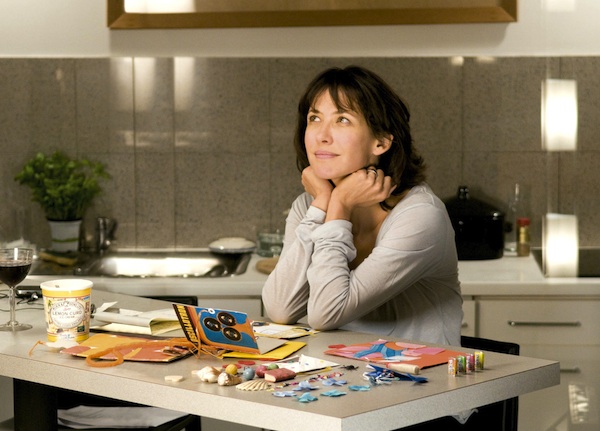
Sophie Marceau is Margaret, a go-go executive for a French nuclear plant manufacturer who, whenever she suffers a loss of self-confidence, references strong women from history, like Joan of Arc and…Ava Gardner? Though ostensibly a comedy with lots of whimsical visual touches by director Yann Samuel, L’age de raison quickly descends into sentimental mush after a country notary who is disposing of an abandoned estate delivers to Margaret a package of letters that she wrote at the age of 7 to her future self. Confronted with her girlhood dreams she suffers a crisis of identity and starts to doubt what she’s turned into, but only for as long as it takes Marceau to exhaust her store of tantrum modes. One hopes all this self-reflection might lead Margaret to doubt her own career path–the name of her company, after all, is Pandora–but except for toughening her BF/colleague (Marton Csokas) to demand a higher safety standard from a Chinese client, there seems very little real effect on the direction of the good life she’s already got. (photo: Nord-ouest Films, France 2 Cinema, Artemis Prod., Rhone-Alpes Cinema, Mars Films) Continue reading

Posted in Movies | Tagged , , , , , , , | Leave a comment