Review: Àma Gloria and Strange Way of Life

The process of parental imprinting is an easy to comprehend miracle, but it’s rarely been explicated as effortlessly as it is in Marie Amachoukeli-Garsacq’s second feature, Àma Gloria. The parent, in this case, is not biological, but rather a nanny for a little girl she has essentially raised since infancy. Six-year-old Cléo (Louise Mauroy-Panzani) lost her mother to cancer when she was a baby, and her father, though loving and thoughtful, is a busy man, and so he hired Gloria (Ilça Moreno Zego), a middle aged immigrant from Cabo Verde, to take care of her in their Paris home. Cléo’s adoration of Gloria is so impeccable that you wonder if the child has appropriated the older woman’s hairstyle (minus the dashing shock of yellow) in order to make the identification more material. And being a six-year-old, Cléo cannot really fathom that Gloria might have a life away from her. One day, Gloria receives a phone call saying that her mother in Cabo Verde has died, and so she must go back permanently to be with her own two children, the older of which is pregnant. Cléo refuses to understand the situation so Gloria sets up a compromise with the permission of her father: Cléo can come to Cabo Verde to visit during summer break and get to know Gloria’s children.

As could be expected, the visit is awkward in more ways than one. Cléo, who has been somewhat spoiled by Gloria, demands her time, but this isn’t Paris, where Cléo was her only responsibility. In addition to taking care of her two children and spending time with their father, Gloria is using the money she made in France to build a hotel. Since much of the movie is told through the POV of Cléo, many of these scenes are purposely vague, but the idea gets through that Cléo’s confusion masks resentment, especially toward Cesar (Fredy Gomes Tavares), Gloria’s adolescent son who mutually resents Cléo for having monopolized his mother’s life while he himself was a child. Amachoukeli-Garsacq attempts to put across these inchoate feelings with colorful animated sequences that illustrate certain points in the relationships being presented, and while they sometimes make matters more confusing, they also prepare us for the coming-to-terms that all parties, especially Cléo, must navigate before proceeding with their lives. Obviously, Cléo is incapable of articulating these matters, but the director makes us understand not only how Cléo’s mind works, but how she comes to see that growing up is painful.

Most importantly, Amachoukeli-Garsacq grounds us in the culture of Cabo Verde in order to imprint on the audience the sense of Gloria having a settled, permanent life there. If anything, Paris was the anomaly, and while Gloria loves Cléo just as much as she does her own flesh-and-blood, there’s not much in the former Portuguese colony that Cléo can identify with. Inevitably, it will require a crisis or two—at one point Cléo invokes “spirits” to kill Gloria’s new grandchild—in order to make her realize that other people, like Gloria, have their own unique existence apart from herself. Amachoukeli-Garsacq seems to be telling us that this realization is the most monumental one we will ever experience. 

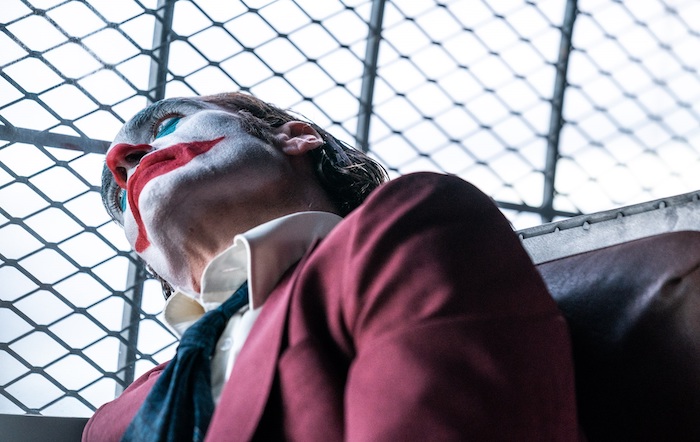
The coming-to-terms in Pedro Almodóvar’s 31-minute English-language western, Strange Way of Life, happens much later in the central characters’ lives, and involves both sex and violence, in that order. Pedro Pascal and Ethan Hawke play two former ranch hands who reunite many years later to consummate, probably not for the first time, the love they felt for each other when they were young bucks. The difference now is that Jake (Hawke) is the sheriff of an unnamed town and Silva (Pascal) is the father of a fugitive wanted for murdering Jake’s widowed sister-in-law, so the tumble in the hay immediately takes on the cast of an ulterior motive, at least on Silva’s part. But as in all things Almodóvar, it’s never that simple.

Apparently, Almodóvar was initially given the chance to direct Brokeback Mountain and passed on it, thinking that Hollywood would not really go for what he wanted to do with Annie Proulx’s short story. Years later, this is basically what he had in mind; or, if it isn’t, it’s what he thinks a story about two cowboys in love could lead to. And while his idea of the lives these two could have led is compelling and his visual and aural choices are, as always, superb, his treatment of western cliches is half-baked if not downright condescending. Reportedly, he greatly respects what Ang Lee did with Brokeback even if he doesn’t necessarily agree with it. This short exercise in what might have been indicates that Lee was probably the better choice.

Àma Gloria, in French and Portuguese, opens July 12 in Tokyo at Human Trust Cinema Yurakucho (03-6259-8608), Bunkamura Le Cinema Shibuya Miyashita (050-6875-5280).

Strange Way of Life, in English and Spanish, opens July 12 in Tokyo at Human Trust Cinema Yurakucho (03-6259-8608), Human Trust Cinema Shibuya (03-5468-5551), Cinema Qualite Shinjuku (03-3352-5645).

Àma Gloria home page in Japanese

Strange Way of Life home page in Japanese

Àma Gloria photo (c) 2023 Lilies Films

Strange Way of Life photo (c) 2024 El Deseo D.A. S.L.U.

Posted in Movies | Tagged , , | Leave a comment

Review: Smugglers

It’s easy to see why Kim Hye-su is the most popular female actor in Korea. In a culture where a certain beauty standard dictates how women who spend their time in the public eye (not to mention men) are supposed to look, Kim’s distinctive, almost theatrical features—a full mouth and large, wide-set eyes—allow her to take on a broader range of parts, and she always puts them across. She can portray a professional woman of high position or a poverty-stricken object of abuse with equal credibility. In this lively action entertainment she plays a woman who has had to fend for herself since she was 14 and thus acquires a set of survival skills that are often identified with shysters and con men, attaching those skills to conventional feminine wiles. Since the movie takes place in the 70s, political correctness is not a problem (though it rarely is in Korean productions), and the director, veteran blockbuster master Ryoo Seung-wan, exaggerates the fashions and colloquialisms of the time to bring out the comic and ironic elements in the story. Kim, augmented with an array of flamboyantly coiffed wigs, just runs away with them.

Genre-wise, Smugglers is a crime caper, though one in which the central female characters are both perpetrators and victims. Kim plays Chun-ja, a woman who dives for abalone and sea urchin off the coast of a fictional town with half a dozen other women. In recent years, a chemical plant has started operating nearby, polluting the water and ruining the catch, so an enterprising truck driver suggests they dive for contraband. Ships pass through the area and often dump crates into the sea containing imported goods subject to customs tax. The women haul these crates up and the driver brings them to Seoul where the goods enter the black market. As with many period genre films, this one teaches you something about Korean history, namely how average people, especially merchants, relied on the black market in the 60s and 70s just to get by. Chun-ja and her best friend, fellow diver Jin-sook (Jung-Ah), whose father owns the boat they use, rake in the cash and, for a short while, at least, enjoy the related perks, but someone tips off the custom authorities, and the crew is busted in the act at sea. Even worse, Jin-sook’s father and brother are killed during the raid, while Chun-ja escapes into the sea, trailing rumors behind her that she was the one who squealed. Obviously, you can’t keep a woman like Chun-ja down, and she eventually becomes an independent black marketeer in Seoul, only to tread on the territory of the infamous smuggler Sergeant Kwon (Zo In-sung), who threatens to disfigure Chun-ja with the huge Bowie knife he once used to kill Vietnamese. Chun-ja convinces him that she can help him sidestep Busan, where much of his merchandise is confiscated by customs, by diverting it through her home town, but that means she has to go back and face the music orchestrated by Jin-sook, who still thinks she betrayed the divers. 

The script, by Ryoo and Kim Jeong-yeon, twists and turns without straining the viewer’s ability to suspend disbelief, and mostly rides on Chun-ja’s ability to the play the various bad guys—in addition to Kwon there’s a young deckhand-turned-punk-gangster and the avaricious head of local customs—against one another while trying to keep herself from being killed by Jin-sook and the other female divers. It doesn’t take too much imagination to figure out that comeuppance is the main purpose of the dramatic development, and it works, climaxing in an action set piece at sea that includes guns, sharp objects, and sharks. You’ll never have a better time watching male assholes get theirs. 

In Korean. Opens July 12 in Tokyo at Kadokawa Cinema Yurakucho (03-6268-0015), Shinjuku Piccadilly (050-6861-3011).

Smugglers home page in Japanese

photo (c) 2023 Next Entertainment World & Filmmakers R&K

Posted in Movies | Tagged , | Leave a comment

Review: Richland

For those who found Oppenheimer less than forthcoming about its subject’s real feelings toward the use of his terrifying invention at the end of World War II, this documentary on the town created by the U.S. government to produce the plutonium used in the device that destroyed Nagasaki may suffice as a thematic antidote, though I also found it to be oddly complementary in tone and style. Richland was established by the U.S. Department of Energy in 1943 to house the men and women who worked at the Hanford nuclear reactor, which was located on a vast Indian reservation on the plains of Washington state. Even after the war was over it was maintained to provide fuel for America’s nuclear arsenal, producing over time some 17 metric tons of weapons grade plutonium. Director Irene Lusztig strikes out on two paths. The first profiles Richland’s distinctive image of itself as a pioneering “home town” of the nuclear age, with a high school sports team called the Bombers (B-52s figure prominently on the uniforms), a town logo that utilizes a mushroom cloud, and a general attitude, at least among its older residents, that very important work goes on here. The second path explores what the town’s industry has wrought, including the largest environmental cleanup project in the world, an epidemic of cancers that most people are reluctant to talk about, and a world reputation as a place that stands for horrible, violent death.

Lusztig cleverly uses a published book of poems by local writer Kathleen Flennikin, read by various residents throughout the film, to comment on the schizophrenic nature of the town, since Flennikin clearly feels warmly about her upbringing while harboring fear and loathing for what the homey facade hides. The authorities who built the fine ranch houses and excellent infrastructure saw it as representing the fulfillment of the American Dream that the nuclear age implied—JFK visited Richland only weeks before he died—and people were grateful even while they were being tested on an almost daily basis, because, in the end, they were all willing guinea pigs. At one point a local woman shows Lusztig a graveyard filled with babies born in the late 40s and early 50s, a testament to how the people who managed the project were learning as they went along. Lusztig also spends time listening to the Native Americans whose land was taken and then poisoned, and which they are now reclaiming inch-by-inch as engineers and technicians go through the back-breaking labor of testing and removing thousands of tons of soil. “Actually, all they can do is move it,” says one elder about the task. Another goes as far as to identify with the Japanese victims of the initial product of Hanford, though he admits that the Japanese “got the worst of it.” 

Richland eschews an onslaught of statistics and hardcore facts for an impressionistic overview of an American mindset that will be perfectly recognizable to viewers who aren’t Americans. Old-timers, including one Black man who worked his whole life at the plant, speak in frankly racist terms about how the victims of the bomb got what they deserved but that it is all now just water under the bridge. (“If not, we’d all be speaking Japanese”) One former school teacher who campaigned to remove the mushroom cloud logo from the town’s iconography and was ostracized for doing so nevertheless vehemently justifies the use of the bomb on camera. As a corrective, Lusztig has a group of multi-ethnic high school students sit in a circle and discuss their own feelings on the subject. They invariably mock the attitudes of their parents, with one girl saying that the only people who discuss the issue of the town’s problematic legacy are those who have no power to do anything about it, but Lusztig does manage to find one voice that cuts through the fog of curated nostalgia. Yukiyo Kawano, a Japanese artist whose family is from Hiroshima and who now lives in Portland, has fabricated an installation in the shape of the atomic bomb made from the hair and kimonos of her grandmother. During a public presentation in Richland she says that “reconciliation is essential,” but is also quick to express her discomfort with the way the town still glorifies its being and purpose, and there is nothing that anyone present can say to refute her. 

Now playing in Tokyo at Theater Image Forum Aoyama (03-5766-0114).

Richland home page in Japanese

photo (c) 2023 Komsomol Films LLC

Posted in Movies | Tagged | Leave a comment

Review: Bleeding Love and Scrapper

Someday, maybe soon, there is bound to be a special section on Prime Video or even the Criterion Channel dedicated to movies starring real-life parent-offspring acting teams ideally playing parents and offspring. Though Ethan Hawke has directed his daughter Maya, I await the day they appear on screen together the way that Sean Penn and Dylan Penn acted as father and daughter in Flag Day, which Penn pere also directed. Included in this special section will surely be Bleeding Love, which stars Ewan McGregor and his daughter Clara McGregor playing an estranged father and daughter on a road trip through the American Southwest. Movie fans looking for subtext will certainly latch on to the intelligence that Ewan and Clara’s mother separated some time ago and in the meantime Ewan remarried and started a new family, so there is a certain amount of added value frisson to the plot, which has the unnamed father, a recovering alcoholic who left his wife and daughter some years ago to start a new family, showing up suddenly at the hospital where the daughter herself is recovering from an overdose, and then deciding to take her to Santa Fe to visit an artist friend on the spur of the moment in order to rekindle her creative mojo as a means of steering her away from drugs, since she was once an aspiring painter. Perceptive viewers will find this m.o. suspicious and quickly figure out the father’s real intentions, but until that point we are treated to some fairly intense sequences of awkward silences and even more awkward attempts by the father to recapture the intimacy these two felt when he was a happy drunk and she was a little kid.

The McGregors are totally dedicated to and credible in the roles they assume, but the dialogue and the situations written by Clara, Ruby Caster, and Vera Bulder does them no favors. Aside from the hackneyed addict cliches that the script ticks off like items on a shopping list, the whole road trip structure reveals a lack of imagination. There’s the detour to the trailer park full of poor folk with their own substance (and gun) problems, a big dustup in a motel room that results in Clara hitting up a creep at a liquor store for a free high, and lots of flashbacks showing seemingly better times that feel fake, if only because McGregor’s Scottish accent makes it difficult for us to believe he’s an All-American blue collar type obsessed with baseball. Even the running joke of the daughter’s constant need to urinate at the side of the truck loses steam and meaning early on. Director Emma Westenberg’s attempts at impressionism, as when a sex worker does an interpretive dance in the headlights of the father’s pickup truck, come across as non sequiturs rather than instances of shared purpose among characters whose most pertinent trait is desperation in the face of shattered dreams.

Another estranged father-daughter duo is at the center of the British indie Scrapper, but the actors who play 12-year-old Georgie (Lola Campbell) and her ne-er-do-well father, Jason (Harris Dickinson), are not related, and Jason has had nothing to do with Georgie’s life since Georgie’s mother pushed him away before she was born. After the mother dies, Georgie, as headstrong a kid as you’re likely to meet in any movie, endeavors to live by herself by making up an uncle-guardian named Winston Churchill to stave off social services and selling boosted bicycle parts for cash. When Jason hears of the mother’s death he shows up on Georgie’s doorstep—or, more precisely, climbing over her back fence—but Georgie won’t have him. So he has to blackmail her into letting him stay, which is, frankly, pretty easy to do given her circumstances

Since there never seems to be a lot at stake, the relationship is free to make its way to the inevitable coming-to-terms, and director-writer Charlotte Regan is hard put to create believable conflicts, which means she has to fall back on her characters, who are appealing in that they know how to get around the system and even the law without actually making anyone suffer. It’s implied strongly that Jason’s past is checkered and that he’s somehow turned himself around, but Regan is reluctant to go into details, as if finding out, say, that Jason might be a felon would darken the viewer’s opinion of him. Georgie, of course, has an excuse for her larcenous, dissembling ways—she’s a kid, and we accept the precociousness because she’s got to survive. But everything is on the surface with these two as far as emotional maturity goes, which means they end up bonding over practical matters: Jason agrees to help Georgie steal a bicycle, seemingly because he really wants to prove he loves her in his own weird way. It’s an angle that Regan should have explored more boldly. 

Bleeding Love now playing in Tokyo at Shinjuku Piccadilly (050-6861-3011), Yebisu Garden Cinema (0570-783-715).

Scrapper now playing in Tokyo at Shinjuku Musashinokan (03-3354-5670), Human Trust Cinema Shibuya (03-5468-5551), Human Trust Cinema Yurakucho (03-6259-8608).

Bleeding Love home page in Japanese

Scrapper home page in Japanese

Bleeding Love photo (c) 2024 Sobini Films, Inc.

Scrapper photo (c) Scrapper Films Limited, British Broadcasting Corporation and the British Film Institute 2022

Posted in Movies | Tagged | Leave a comment

Review: Ferrari

No pun intended, but Michael Mann has always been a man’s director. His protagonists deal in conflicts that seem particularly masculine in nature, which is why, I suspect, he likes stories set in a past where gender distinctions were more obvious and acceptable. This mini-biopic (it only covers three months) of the auto entrepreneur Enzo Ferrari (Adam Driver) almost seems to exaggerate its mileu with stereotypical macho flourishes often associated with Italy. Ferrari is terse in speech, succinct in manner, and severe in appearance—his fine suits and heavy sunglasses making more of an initial impression than his actual behavior. Driver’s Italian accent, the only one that wasn’t derided in House of Gucci if only because his co-stars sounded like Chico Marx in comparison, is subtle but forceful, effectively conveying Ferrari’s single-mindedness. The businessman-engineer-driver’s attention is laser-focused on racing, as he points out in the film’s most trailer-ready quote: “Most manufacturers race to sell cars; I sell cars to race.” Mann makes the most of montages showing Ferrari worrying over technical and mechanical details of his cars, like the suburban dad on a Sunday afternoon changing the oil or adjusting the carburetor on the family station wagon.

Mann fortifies this image by juxtaposing Ferrari’s automotive concerns with his domestic situation, which is complicated as only a southern European could make it. Ferrari is raising a young son, Piero, with his mistress (Shailene Woodley), while remaining married to his business partner, Laura Ferrari (Penélope Cruz). Moreover, the film is set in 1957, only a year after the couple’s son, Dino, died from a rare disease, and Ferrari still mourns him deeply. The matter of succession for a proudly patriarchal type like Ferrari is almost obsessive, and a good deal of the drama centers on Laura’s objection to Piero as the natural heir to the Ferrari name and business, which isn’t assured since, as the story opens, the company is close to bankruptcy, and—another nod to the different sensibilities that ruled the past—the only hope is for Ferrari to boost his brand by winning the Mille Miglia, a famously dangerous, multi-day road race across Italy. So stitched into the family melodrama and business-oriented intrigue is a pulse-quickening motor sports epic for which Mann seems to have been preparing his whole life. And even within that sub-plot there are layers of emotional resonance in Ferrari’s interactions with his drivers, the high-born, impulsive Spaniard, Alfonso de Portagol (Gabriel Leone), and Ferrari’s veteran pain-in-the-neck, Piero Taruffi (Patrick Dempsey). The dance that these three men’s men carry out in trying to prove their worth in a highly competitive and deadly sport should have been the subject of its own movie.

Which isn’t to say Ferrari is stretched thin by its overlapping thematic tensions. Mann’s dedication to the whole idea of Enzo Ferrari, which he’s supposedly been working on for 20 years, is easy to parse given his past thematic interests, and Mann is nothing if not a self-consciously careful filmmaker, so he understands the pitfalls of taking on too much. For sure, some of the more important plot details are ground up in the gears of the action prerogatives, but as an immersive cinematic experience Ferrari holds its own very well. 

Opens July 5 in Tokyo at Toho Cinemas Nihonbashi (050-6868-5060), Toho Cinemas Hibiya (050-6868-5068), Toho Cinemas Shinjuku (050-6868-5063), Kino Cinema Shinjuku (03-5315-0978), Toho Cinemas Shibuya (050-6868-5002), Toho Cinemas Roppongi Hills (050-6868-5024).

Ferrari home page in Japanese

photo (c) 2023 Moto Pictures, LLC. STX Financing, LLC.

Posted in Movies | Tagged , , | Leave a comment

Review: The Moon

Last year, this big-budget production was the whipping boy of the failed post-pandemic Korean box office, whose unexpectedly low numbers were initially blamed on a movie-going public still stuck on streaming. Actually, the crappy performance of The Moon, the flagship domestic release of the summer of 2023, had more to do with hubris and the inability of big studios to read its audience. Watching the movie a year removed from the debacle it’s easy to see why. It essentially has all the ingredients that stereotypically make a successful mainstream Korean movie—a plot built around retribution of some kind involving characters who are related by blood, suicide as an act of taking responsibility, self-flagellating nationalistic sentiments, scene upon scene of people weeping uncontrollably, forced comic relief, even the requisite car chase (on the lunar surface!)—and Korean movie lovers, obviously clued in on these attributes, decided they’d stay away. 

The plot and the set pieces are mostly lifted from other, better space travel movies, namely Hollywood productions like Gravity and Apollo 13. The back story, in fact, shows more potential: sometime in the future, South Korea’s small but determined space program attempts a moon launch and ends up killing its astronauts. Chastened but still determined, the program tries again five years later without the approval of NASA, which is portrayed here as a bullying global space overseer who doesn’t want competition. The movie begins in the middle, as two of the three astronauts happy-go-luckily repair the solar panels on their moon-bound spacecraft that have been damaged by solar flares. During the repair, the two men are killed, leaving their younger colleague, Hwang (Doh Kyung-soo), a former Navy SEAL who lacks much of the technical know-how to pilot the ship, on his own. While mission control tries to figure out how to bring him back to earth in the damaged craft, Hwang decides unilaterally to complete the mission and land on the moon’s far side. When Kim (Sul Kyung-gu), one of the designers of the previous, disastrous mission, is called in to help Hwang in his seemingly wrong-headed endeavor, we learn that Kim quit the program because his engineering partner—and Hwang’s father—killed himself in shame. From that point, the story lurches from one impossible feat to another in a spiral of alternately heroic and desperate moves on the part of various characters to keep both Hwang and the mission alive, and while director Kim Yong-hwa demonstrates more than the usual comepetence with the film’s action prerogatives he can’t assemble them into a credible whole. The production itself feels as desperate as the fictional moon shot, as if South Korea’s entire international image is riding on this movie. Moreover, the CGI is inferior to that which featured in the above-mentioned Hollywood films. 

The retribution that is often baked into these Korean blockbusters centers not only on Hwang righting the incompetence laid on his father, but also on Korea showing up its masters at NASA (where Kim’s ex-wife works under racist management that clearly views her participation as suspicious by default), and the combination of the two wears the drama down to a dull nub. There’s only so many tears one can shed for 130 minutes, and The Moon means to wring every last one out of you. Korean audiences, apparently, have had enough of that sort of thing. 

In Korean and English. Opens July 5 in Tokyo at Shinjuku Wald 9 (03-5369-4955), Human Trust Cinema Shibuya (03-5468-5551).

The Moon home page in Japanese

photo (c) 2023 CJ ENM Co., Ltd., CJ ENM Studios, Blaad Studios

Posted in Movies | Tagged | Leave a comment

Media watch: Will the new bills make their own existence unnecessary?

On July 3, the Bank of Japan will start circulating new paper currency, which is something it does every 20 years or so. The ostensible reason is to check counterfeiting, a Sisyphean task since the fact that the bank has to redesign the notes every two decades automatically indicates that counterfeiters eventually learn how to work with the new design and its attendant technology—in this case, holographic images incorporated into the paper. We can assume that North Korea is already on it. 

However, if you read various business-oriented media there are other purposes this time around: reducing cash hoarding and promoting cashless payments. At first blush, this latter purpose sounds odd. How would printing shiny new bills push people into using e-money and credit/debit cards? More to the point, why go to all the trouble and enormous expense of circulating new bills if the endgame is not to use them?

A relevant newsletter from the Nomura Research Institute, which is attached to Nomura Securities, explained the basics of the new bills, including the holograms and their use of “universal design,” meaning that they are easier to use for “everyone” because vision-impaired people can recognize the bills by touch and the numbers are printed larger than they were in the past. 

The newsletter also says that the new bills will boost the economy, though one has to wonder at whose expense. As has already been reported by many mainstream media outlets, including the New York Times, companies that rely on vending machines as well as ATMs and ticketing machines will need to spend a lot of money either adapting their current devices for the new bills or buying all new machines. The fortunes this change will boost is that of companies that make and service these machines, but it may be a significant tradeoff. We’ve already seen how users of such machines mostly put off updating them when new ¥500 coins were circulated in 2021. Because many companies decided the expense wasn’t worth it at the time, they didn’t adapt their existing machines for the new coin’s changed material and design since they were aware that new bills would be coming in 2024, so it would be cheaper to make both changes at the same time. According to NRI, only 70 percent of all machines that accepted cash at the time were adapted or changed for the new coins. Of course, ATMs couldn’t refuse the new coins, so banks had to swallow the expense, not to mention public transportation companies, but you still come across many vending machines and stand-alone change-making machines that don’t accept the new coins. A 2021 article in the Minami Nippon Shimbun reported that it cost between ¥30,000 and ¥40,000 to adapt a machine to accept both the old and new ¥500 coins, which sounds reasonable until you realize that companies that use vending machines tend to use a lot of them. Particularly problematic is beverage retailers. Of the 2.2 million drink vending machines in Japan, only 30 percent had made the change after the new coins came into use. In contrast, changing a machine to accept the new bills will cost about ¥100,000 per machine. 

To put the expected boost into numbers, the Japan Vending Systems Manufactures Association calculated that it would cost ¥770 billion to create the technology needed to accept the new bills, compared to ¥490 billion already spent to design the tech needed for new coins. Changing ATMs to handle new bills will cost ¥371 billion. Nomura estimates that all this spending will add 0.27 percentage points to Japan’s nominal GDP. 

Another hoped-for effect of the new bills is that they will reduce the amount of cash that Japanese people keep at home. This phenomenon has always been a problem for the BOJ, which would prefer that people keep their money in a financial institution or, even better, invest it. So far, they’ve been unsuccessful in getting the public to trust fully in such institutions and practices. In 2004, the BOJ estimated that households held about ¥44 trillion in cash. This amount grew to ¥78 trillion by 2014 and ¥109 trillion by the end of last year. It’s not clear from the various media how the new bills will persuade people to either spend their cash or put it in a bank, but the most likely idea is that people might mistakenly think the paper money they keep in their wardrobes or underneath the tatami is no good any more, but even in that case there’s no reason to think they wouldn’t just do the same thing with the new bills. 

Then there’s the purpose of spurring a cashless society, and the media that has explained this idea the best is the home page of office automation manufacturer Ricoh, which thinks that companies presently using machines to handle cash may ponder the above-mentioned cost of changing over and decide it might be cheaper to adopt a cashless system. For instance, many retailers now, especially supermarkets, use self-checkout systems to deal with the labor shortage, so rather than adapt all their checkout machines for the new bills, they just adapt one or two of them and make the rest cashless. The same could eventually happen with ticketing machines and even vending machines, many of which already handle cashless payments. Though retailers would still have to bear the fees that credit card companies and other cashless payment systems charge, this solution to the expense of adapting machines to accept the new bills could still be a nudge toward a cashless society. The real issue is whether the Japanese public would think it’s a nudge or a shove.

Posted in Media, Money | Tagged , | Leave a comment

Review: Walk Up

Hong Sangsoo’s newest Japan theatrical release could have been titled Quitting, just like Zhang Yang’s criminally overlooked 2001 feature about an actor on the verge of actually cracking up. It’s one of the few Hong movies of recent memory where dramatic themes take precedence over form and style, and for the most part the main characters are all in the process of giving up something, namely their vocations as creatives. The title he chose describes the small apartment building where all the action takes place, a structure without an elevator, thus necessitating ambulatory movement between floors, which sort of mimics the life trajectory these people follow. Real estate as real life. 

Byung-soo (Hong regular Kwon Hae-hyo) brings his adult daughter, Jeong-su (Park Miso), to the building to meet the landlord, Mrs. Kim (Lee Hye-yeong), a successful interior designer, to see if she might advise Jeong-su on pursuing a similar career. Jeong-su studied painting in university but decided that there’s no money in art, or, at least, not in fine art. During one of Hong’s typical, prolonged drinking sessions, we learn that Byung-soo, a moderately successful film director, has been estranged from Jeong-su’s mother, and, effectively, from Jeong-su, too, for about a decade. When Byung-soo is called away temporarily, Jeong-su and Mrs. Kim continue drinking and opening up to each other about Byung-soo, but also about Jeong-su’s uncertain future (“You just need to have taste”), and Mrs. Kim drunkenly takes her on as an assistant. However, when Byung-soo returns, we soon realize that it is years later, and that Jeong-su has quit her job with Mrs. Kim and is now doing something entirely different. Byung-soo is merely dropping in to see his old friend and, again, they start drinking, this time with Sunhee (Song Seon-mi), the proprietor of the small restaurant that rents space in the building. Like Jeong-su, Sunhee once wanted to be a painter but found it wasn’t for her, and as the wine flows she becomes overly solicitous of Byung-soo, claiming she’s seen every one of his films and found them very enjoyable. (“There’s lots of dialogue, so I drink while I watch them”) At the same time, Byung-soo expresses frustration with the whole business of making films since he has to spend so much time finding financial backers. Following another time slip, we see Sunhee driving Byung-soo’s beloved vintage Mini Cooper and understand they are now married and renting an apartment in the building. Moreover, Byung-soo has essentially given up films and is taking time off for his health, a situation that causes friction not only between him and Sunhee, but between the couple and Mrs. Kim, who it turns out is a lousy landlord.

This elliptical journey of dissipation doesn’t end there. Sunhee is eventually replaced in Byung-soo’s life by a real estate agent, Jiyoung (Cho Yun-hee), who happily indulges all his worst habits, thus sealing his fate as a has-been who not only has no future, but no real past, because everyone has abandoned him and he doesn’t seem to care. That is, except Mrs. Kim, who herself gave up interior decorating, but is still a bad landlord. Hong’s tone throughout is resolutely sardonic, nowhere more so than during a non sequitur scene in which Byung-soo, napping off a late afternoon alcohol buzz, imagines in voiceover how he will either break up or make up with Sunhee, a fantasy whose manifestation we don’t see. As others have already pointed out, Hong banishes the most important incidents of his plot offscreen, and all we see is the intentions leading up to these momentous decisions and what it is they leave behind. 

In Korean. Now playing in Tokyo at Human Trust Cinema Yurakucho (03-6259-8608), Shinjuku Cinema Qualite (03-3352-5645). 

Walk Up home page in Japanese

photo (c) 2022 Jeonwonsa Film Co. 

Posted in Movies | Tagged | Leave a comment

Review: Anselm

Wim Wenders’ portrait of Anselm Kiefer sketches in several biographical details of the septuagenarian Austrian-German multimedia artist, but for the most part dwells on his work and what that work means in the world. Consequently, there are holes in my understanding of Kiefer that would probably require a bit of in-depth reporting, such as how does he afford the cavernous warehouse-ateliers he uses as workshops—he uses bicycles to get from room to room—not to mention the staff they require. Anyone familiar with Kiefer’s work understands that the most apt adjective to describe it is “enormous,” with some mixed media paintings taking up entire walls and requiring movable platforms to work on, not to mention the vast outdoor installations. I know it’s crass to talk about the financial aspects of how art comes into being, but the documentary makes clear that Kiefer’s work is not designed as decoration, and the political subtexts, if not the overt content, is meant to be discomfiting. The movie made me appreciate the art and therefore I want to know more about the commerce.

Wenders’ concern is the way Kiefer incorporates into his art 20th century German history, whose depiction is referred to by one reporter as an “open wound.” Using relatives of the artist and the director to play him at various times in his life, Wenders dramatizes how his environment—he moved from Austria to Germany after the war when he was a boy—affected his creative impulses. An excellent draftsman as a young man who used some prize money to make a pilgrimage to study the life and work of Van Gogh, Kiefer eventually confronted his heritage with an infamous series of staged photos of himself giving the Hitler salute at various European landmarks related to Nazism as a “protest against forgetting.” And he didn’t stop there. “Germans have always had a problem with it,” he says of his art, which just became bigger and bigger over the years. Some of his museum installations are so large they have to be cut a certain way in order to allow people to enter and leave the room. Wenders doesn’t show the mechanical process of the installations, though he does show Kiefer working on parts of individual pieces. He also inserts archival footage, mainly of ruins after the war, sometimes with children playing in them, without comment as counterpoint to some of Kiefer’s “landscapes,” which can be forbidding, but more in what they suggest than what they show (“This is a scene where tanks have already driven through”). 

Kiefer’s spiritual indebtedness to the Jewish poet Paul Celan and his obsession with the Nazi-tolerant philosopher Martin Heidegger are covered mainly to provide points of influence on his thinking but come across as arcana in relationship to the art we see. Wenders obviously thinks we should draw our own conclusions, and he’s right in thinking that difficult art can’t be properly explained in a 90-minute film, but Kiefer’s work is so confrontational that I think the viewer can stand a bit more contextual explication without feeling as if they’re being led by the hand. Given that portions of the doc are filmed and presented in 3D, some of this stuff is bound to be overwhelming (the press screening I attended was in 2D), and in that regard you will probably want to know as much as you can about what drove the artist to create it. 

In German and English. Now playing in Tokyo at Toho Cinemas Hibiya (3D, 050-6868-5068), Shinjuku Musashinokan (03-3354-5670), Human Trust Cinema Shibuya (3D, 03-5468-5551).

Anselm home page in Japanese

photo (c) 2023 Road Movies

Posted in Uncategorized | Tagged , | Leave a comment

Review: Bad Boys: Ride or Die and The Watchers

Since the last installment in this bombastic comedy-action franchise practically determined that its two heroes, the buddy cop team of Marcus Burnett (Martin Lawrence) and Mike Lowery (Will Smith), were on the retirement track, this fourth episode feels kind of desperate, as if it were custom made to bring Will Smith, who’d effectively been cancelled since that Oscar slap, back to box office glory, which it did. More likely, the folks behind the franchise have been planning this movie since before the slap (which, by the way, is awkwardly but effectively incorporated into the action near the end) since there were a few loose ends at the close of the previous movie that could justify another go. Most critics I’ve read so far have been charitable with the movie probably because the filmmakers and the cast seem so invested in the appeal of the characters, their sardonic give-and-take, and the patently ridiculous action set pieces. It’s nothing if not earnest, and may be a step less intolerably loud than the two Michael Bay-helmed installments, but it’s still teeth-gratingly convoluted and, at times, downright stupid. 

And while the duo’s put-upon mentor, Captain Conrad Howard (Joe Pantoliano), is already dead, his spirit keeps the plot going in the new one. With Mike marrying his sweetheard, Christine (Melanie Liburd), who barely appears in the movie after the ceremony, and Marcus suffering a heart attack at the wedding that puts him in a temporary coma, the two are haunted by the captain in their dreams just as an investigation into his aborted search for a cartel mole in the Miami police force is instigated, threatening to soil Howard’s legacy, which Mike and Marcus won’t stand for. The increasingly involved plot eventually takes in an evil cartel enforcer, McGrath (Eric Dane), who is framing Howard’s memory; Mike’s criminal son, Armando (Jacob Scipio), who has inside knowledge of the cartel in question; a Miami politician (Ioan Gruffudd) who is now going out with Mike’s ex (Paola Nunez), who also happens to be his new boss; and Howard’s daughter (Rhea Seehorn), a U.S. Marshall, as well as her daughter (Quinn Hemphill), because the movie is nothing if not a family affair. 

The Moroccan-Belgian directing team of Adil & Bilall try to leave their stamp on the action with funny camera moves and colors you’ll remember from 90s techno raves, but the best you can say about the style of the movie is that it isn’t as nerve-wracking as what Bay produced. Then again, I don’t really think people come to Bad Boys for that kind of thing. They come for the Lawrence-Smith chemistry, and in that regard Smith’s annoyed straight man shtick remains effective, while Lawrence’s increasingly unhinged purchase on reality (Marcus believes here that, having survived a heart attack, he’s now invincible) will either have you in stitches or looking for the nearest exit. I left a long time ago.

Though fantasy fever dream The Watchers isn’t part of a franchise, it was written and directed by M. Night Shyamalan’s daughter, Ishana Night Shyamalan, and produced by M. Night, so it also feels as if it takes place in the Shyamalan alternate universe, where pretty much anything weird can happen. The source novel by A.M. Shine doesn’t seem to lend itself to an easy transfer to the screen, and a lot of the plot points feel forced, the most glaring one being the lead character, Mina (Dakota Fanning), a depressed young American woman living in Galway on the west coast of Ireland, a fine city that nevertheless would be the last place a depressed young American woman would probably choose to live. Mina spends her days working in a pet store and her nights dressing up as someone else and hanging out at bars. Ordered to deliver a parrot, she gets lost in a dense forest and her car breaks down. While being chased by some unseen force, she comes across a bunker, where she is met by an older woman named Madeleine (Olwen Fouere).

There are two other people in the bunker, Ciara (Geortina Campbell) and Daniel (Oliver Finnegan), who inform the new arrival that they are trapped in what they call “the coop” and must display themselves in front of a bunker-long one-way mirror for the denizens of the forest after nightfall. During the day, they can go wherever they want, but at night they must be in front of the mirror. If they aren’t, they are promised a violent death. 

Basically, Shine’s story is about mythical creatures and how they’ve entered our folklore, but the younger Shyamalan doesn’t seem to know how to work with allegory. Everything about Mina is trite and obvious, from her trauma-filled back story to her habit of talking to herself as a means of providing plot exposition. Though there are a few tense scenes the scares never make a deep impression. Most annoying is the lack of any real substance to the titular monsters’ existence, which is explained every which way but coherently. And the suggestion that they may, in fact, be creatures of somebody’s imagination is just insulting. 

Bad Boys: Ride or Die now playing in Tokyo at Toho Cinemas Nihonbashi (050-6868-5060), Toho Cinemas Hibiya (050-6868-5068), Marunouchi Piccadilly (050-6875-0075), 109 Cinemas Premium Shinjuku (0570-060-109), Shinjuku Wald 9 (03-5369-4955), Shinjuku Piccadilly (050-6861-3011), Toho Cinemas Shinjuku (050-6868-5063), Toho Cinemas Shibuya (050-6868-5002), Toho Cinemas Roppongi Hills (050-6868-5024).

The Watchers now playing in Tokyo at Toho Cinemas Nihonbashi (050-6868-5060), Toho Cinemas Hibiya (050-6868-5068), Marunouchi Piccadilly (050-6875-0075), Shinjuku Piccadilly (050-6861-3011), Toho Cinemas Shinjuku (050-6868-5063), Shibuya Humax Cinema (03-3462-2539), Toho Cinemas Roppongi Hills (050-6868-5024).

Bad Boys: Ride or Die home page in Japanese

The Watchers home page in Japanese

The Watchers photo (c) 2024 Warner Bors. Ent.

Posted in Movies | Tagged , , , | Leave a comment