Review: Paragraph 175

Originally released in 1999, Rob Epstein’s and Jeffrey Friedman’s documentary was another in the directors’ explorations of gay history and themes, with The Times of Harvey Milk (1984), The Celluloid Closet (1995), and the Oscar-winning Common Threads (1989) being their best known works. The title, Paragraph 175, refers to the German penal code that forbade homosexuality, though as the script, soberly narrated by Rupert Everett, points out, the law almost exclusively targeted gay men, as they tended to represent everything the Nazi sensibility seemed to abhor by “depriving Germany of the children they need.” (Lesbians were considered “curable” in that they were capable of giving birth.) 

As someone whose adolescent eyes were opened to the wider possibilities of sexual freedom by Cabaret, I found it fascinating to learn how vibrant the gay community was in Berlin between the wars. “So much joy!” as one witness remembers it. For the most part, the gay denizens of Berlin waved off anti-sodomy laws and the authorities tolerated their free spirits. There was a campaign to abolish paragraph 175 that seemed destined to succeed until the 30s rolled around and Hitler took over. Aryan purity became the thing. Abstinence was a virtue, and the new order looked askance at trendy youth movements that advocated for nudism (“nature and friendship”) and Zionism. Ironically, one of Hitler’s right-hand men was a well-known homosexual who actually organized the Storm Troopers. Hitler ignored his sexual predilection while he was useful and then arrested him when that usefulness ended, and he was put to death. The regime destroyed one of the most advanced research centers for sexual studies after the Reichstag fire and then the SS targeted every gay meeting place in the country, rounding up all the men they found and sending them off to the newly established archipelago of concentration camps. Because homosexuals weren’t always labeled as such, statistics were difficult to nail down, but it’s estimated that 100,000 were arrested and up to 15,000 were locked up in camps, where many perished. 

The story is mostly explicated by the dozen survivors that the directors located. Almost all are men who don’t necessarily trust their interlocutors. “You have to see this romantically,” one insists, and goes on to describe how the terrors of Nazism and the war in general brought these men (and boys—the movie isn’t squeamish about the love between minors and adult men) together. “We had sex on the train,” another says forcefully when the interviewer fails to get his drift. A French nonagenarian reveals he still can’t talk to anyone with a German background. The archival footage is extensive and remarkably evocative, but it’s the descriptions that carry the film. One man recalls the “singing forest” where Nazis captured gay men and tied them to trees, torturing them to death. Another admits to enlisting in the German Army because that’s where all the men were. Many survived the war only to end up in prison for violating paragraph 175, which wasn’t rescinded until 1969. (For a more dramatic recreation of that postwar milieu, see the Austrian film, Great Freedom.) There is even one woman who tells the heartbreaking story of receiving a precious travel permit to England from her lover, a woman who “looked like Marlene Dietrich.” Though the witnesses are probably dead by now, this topic can never be exhausted. 

In English, German and French. Now playing in Tokyo until March 29 at Shinjuku K’s Cinema.

Paragraph 175 home page in Japanese
Posted in Movies | Leave a comment

Review: Call Jane

In 2024, almost two years after the U.S. Supreme Court overturned Roe v. Wade and sent the question of abortion back to the states, a movie about how women accessed the procedure before it became constitutionally protected in 1973 will have to tread lightly, but this peculiarly conventional indie feature was made before that momentous decision while seeming to presage it. The oddness of tone, however, has less to do with political realities now than with how the filmmakers (mostly women) use watered-down emotional cues and even comedy to score political points. Hindsight has much to do with it, but so does a cinema culture that tries to be even-handed at all costs, even when the material begs for something more contentious. 

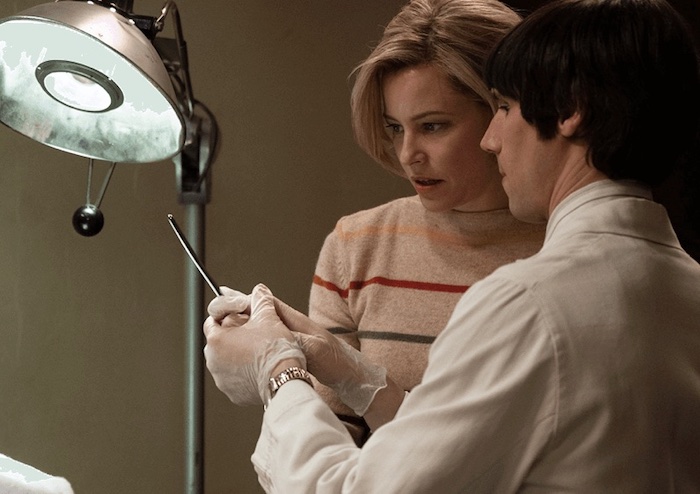
Joy (Elizabeth Banks) is a homemaker living in the suburbs of Chicago in the late 60s. Though she studied to be a lawyer, she has settled into domesticity with her fair-minded but patriarchy-enjoying husband Will (Chris Messina), who is a full-time lawyer. The subtle assault to Joy’s status is that she works pro bono for Will by writing his briefs. She’s introduced to the counter-culture by way of Yippies being beaten up by cops outside the Democratic Convention, but the real challenge to her privilege, not to mention her gender, is more personal. After discovering she is pregnant, a development that is unplanned, she also learns that the pregnancy is possibly life-threatening, but her hospital, or, more precisely, the male physicians who run it, decide they can’t approve a therapeutic abortion, which was the only legal kind there was at the time. After a bit of drama that involves Joy going to the seedy side of town to obtain a back alley abortion and chickening out, she calls a number she finds on a phone booth window for “Jane” and becomes acquainted with an underground operation run by a woman, Virginia (Sigourney Weaver), who understands the environment and guarantees safety, if not necessarily affordability. Joy undergoes the “service” blindfolded, though she doesn’t have to see the young white doctor (Cory Michael Smith) to understand he’s in it more for the money than for the principle. Eventually, Joy becomes a factotum for Jane (who is not a person but rather a collective of card-carrying and nascent feminists), first as a driver and eventually as an abortionist herself, thus sending her into streams of illegality that become more perilous to navigate. The subterfuge of attending art classes when husband and adolescent daughter (Grace Edwards) ask why she spends so much time out of the house seems mainly incorporated to emphasize how much society expects her to adhere to middle class roles, but in the end it is just a lazy plot device that can easily be tooled for laughs. 

Given all the wrong things that can happen under these circumstances—which include payoffs to the mob and the service’s ambitions toward actual expansion—the movie should evince a palpable sense of anxiety, but for the most part the movie putters along with only the slightest bumps of unease due to the producers’ insistence that the abortion movement embodied by Jane is just one element of the revolutionary spirit of the time. Undergoing a prohibited procedure outside of a medical facility is certainly more fraught than smoking pot and digging the Velvet Underground, but the movie places all these activities along a continuum of implied righteous transgression. If the movie gets anything very right, it’s the way it portrays how women, whatever their background or economic wherewithal, could only count on one another for help with matters that the aforementioned patriarchy would prefer to not even think about. In that regard, Call Jane definitely still has something to say about our current situation. 

Now playing in Tokyo at Toho Cinemas Chanter Hibiya (050-6868-5001), Shinjuku Piccadilly (050-6861-3011).

Call Jane home page in Japanese

photo (c) 2022 Vintage Park, Inc. 

Posted in Movies | Tagged , | Leave a comment

Review: Count Me In

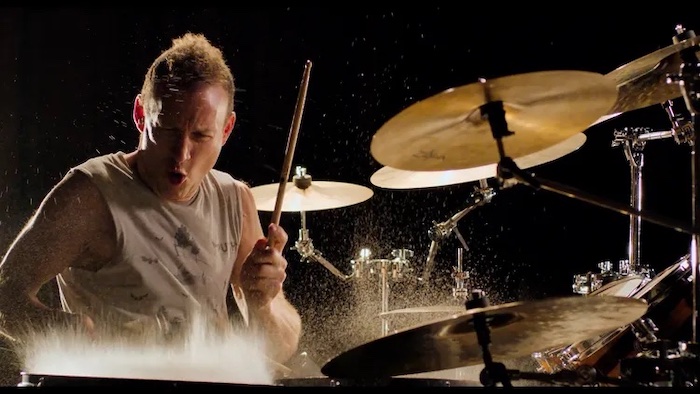
As James Brown would always say to his audience at a show, “Give the drummer some,” and this documentary attempts to do just that, though its range of appreciation is fairly narrow. For one thing, none of JB’s drummers, who practically invented modern funk, are even mentioned in the film. In fact, the only Black drummers cited are jazz innovators like Art Blakey and Max Roach, which means no Clyde Stubblefield, no Benny Benjamin, no Bernard Purdie (and his seminal “Purdie shuffle”), no Questlove. Props to the producers for highlighting currently active female drummers like Jess Bowen and Cindy Blackman, but even in those cases the focus is on rock, and rock of a certain type. This focus makes sense when you check out the provenance of the film, which is the UK. Though lots of famous drummers are interviewed and each offers insight into the profession and musical interpretation in general, the core through-line is the history of rock drumming from Ringo to Watts to Baker to Moon to Bonham. Except for a few detours by way of people like the Clash’s Topper Headon, who ably describes punk’s reduction of everything to rhythm, it’s mostly the 1960s British male rock drummer who is considered the template for an entire industry.

A lot of lip service is given to gear, which isn’t to imply that the producers have something to sell, but rather that in the movie’s chosen context drummers are more associated with their instruments and their technical skills than with their inventiveness and, dare I say, soul. Even more lip service is lent to concepts like groove and swing, but it’s Bonham who epitomizes the film’s purview since, as more than one drum-head here comments, he was the master of “power and speed.” At one point, when the history lesson veers into new wave and post-punk, Stewart Copeland, probably the most articulate practitioner on display, avers that pop and rock drumming “became more African,” though the movie doesn’t really take that cue to the next logical level (or, for that matter, the previous logical level). Instead, it goes into the realm of drum machines, a technology that the film suggests set drumming as a vocation back ten years; that is, until Dave Grohl recaptured the mojo with his monk-like mindset about always being in the hard rock zone with Nirvana, which looked particularly dynamic on MTV. 

The most derided cliche in classic rock is the 10-minute drum solo, which the people who put together Count Me In probably think of as the ultimate test of skill and showmanship. To those of us who dig songs over everything else, long rock drum solos are a distraction that only make sense when you’re in a large venue and high on drugs, an insight the movie overlooks in favor of other cliches, like driving your parents and neighbors crazy after you get your first kit for Christmas and later achieving success through “conviction and hard work,” which in the end make it a typically didactic American documentary.

Now playing in Tokyo at Human Trust Cinema Shibuya (03-5468-5551), Shinjuku Cinema Qualite (03-3352-5645), Human Trust Cinema Yurakucho (03-6259-8608).

Count Me In home page in Japanese

photo (c) 2020 Split Prism Media Ltd. 

Posted in Movies | Leave a comment

Review: Greenhouse

Lee Sol-hui’s impressive debut feature is formally characterized by ellipses. Though initially presented as a psychological drama about the fragile bonds of family, Lee’s concerted habit of leaving out crucial plot information has the effect of turning the story into a thriller, and while this device in the end gets away from the director, the movie does accumulate a potent mood of comic dread. In fact, it might have been more effective had Lee played up those elements that come across as cosmic jokes and made them into real jokes, but I imagine she thought of the story from the beginning as a thriller, with every decision turning on the notion of intensifying the creep factor.

The overarching joke may be the best: Life has dealt our protagonist, Moon-jung (Kim Seo-hyung), a truly miserable hand. Kim is squatting alone in an agricultural greenhouse until she can get enough money together to rent an apartment for her and her teenage son, who is about to be released from a juvenile detention center where he is confined for an unnamed offense. The boy, Jung-woo (Kim Geon), initially seems ambivalent about living with his mother, who suffers from occasional emotional flare-ups that manifest as self-harming behavior. Unable to afford the one-on-one psychiatric care she needs, she joins a free therapy group for similarly afflicted people whose weirdly upbeat leader treats each meeting as if it were a personal accomplishment, and against her better judgement Moon-jung befriends another member, a young deluded woman named Soon-nam (Ahn So-yo), who turns out to be a bit too clingy and is in an abusive relationship with her former doctor. In order to earn money to rent an apartment, Moon-jung works as a caregiver for an elderly, well-off couple—near-blind Tae-kang (Yang Jae-sung) and his senile and paranoid wife Hwa-ok (Shin Yun-sook). Moon-jung becomes a kind of daughter to Tae-kang, who, understanding that he’s entered the early stages of Alzheimer’s, offers to help her with the money needed for the deposit on the apartment. As it stands, his own son, Kyu-sang (Seo Hong-seok), seems indifferent to his worsening condition and Moon-jung’s mother, Choon-hwa (Won Mi-won), is herself confined to a facility for people with severe cognitive dysfunction. 

The movie’s strong suit is how it supplies credible emotional connections among these various disparate characters, but, as already pointed out, Lee doesn’t give the viewer much basic background on the actual physical connections among them, which means situations play out in ways that require us to draw our own conclusions about how those connections came about without much in the way of clues. As Moon-jung’s plans fall apart and she exacerbates her problems with a subterfuge that is too laughably foolish to take seriously—not a cosmic joke, but one she inadvertently plays on herself—the viewer has to trust to inertia to get to the shocking climax in one piece. It’s still an impressive feat, because at any given moment the movie’s train of thought seems as if it’s about to run off the rails, and I suppose in the end it does, but by then the big crash is Moon-jung’s already volatile state of mind. 

In Korean. Now playing in Tokyo at Cinemart Shinjuku (03-5369-2831), Human Trust Cinema Shibuya (03-5468-5551), Human Trust Cinema Yurakucho (03-6259-8608).

Greenhouse home page in Japanese

photo (c) 2022 Korean Film Council

Posted in Movies | Leave a comment

Review: Migration

Since the whole point of talking animals in animated films is to anthropomorphize typical critter behavior, children who view such films form the opinion that animals are just like us and probably are taken aback when they eventually discover they aren’t. The latest offering from Illumination Studios is quite bold in this regard. Its center of attention is a family of mallards named the Mallards who live in a pond in New England the year round because the paterfamilias, Mack (Kumail Nanjani), is too paranoid to leave familiar environs to migrate south, which is what mallards do in the winter. Not much mention is made of what the Mallards do in the winter, though I imagine they get very cold; but such a supposition already accepts the logic of the natural world posited by the movie, which means I’m already being sucked into that world against my better judgement. If I, a bona fide senior citizen, can fall for such subterfuge, what chance does an 8-year-old have?

Maybe more than I would normally give an 8-year-old credit for. The adventure that ensues when the rest of the Mallards—wife Pam (Elizabeth Banks), Uncle Dan (Danny DeVito), teenager Dax (Caspar Jennings), and little Gwen (Tresi Gazal)—convinces Mack to grow a pair and start flapping those wings south, may not be exciting enough to stimulate an imagination already conditioned by Pixar and Disney, not to mention some of Illumination’s more inventive films. First of all, the duck family ends up lost due to inexperience in bird navigation and find themselves in New York, where they get bullied by a bunch of pigeons (or “vermin” as Mack calls them, already showing the prejudice born of a parochial life) and turned on to a parrot from Jamaica (Keegan-Michael Key) who endeavors to tell them how to get to his native island. Unfortunately, the parrot is imprisoned in a cage in an upscale restaurant whose specialty is Duck L’Orange, so freeing the parrot comes with a certain measure of danger that the filmmakers fail to capitalize on. 

That lack of tension may come with the brand. Illumination, whose trademark is the yellow, pill-shaped Minions, mainly trades in broad slapstick-oriented comedy, of which there is much in Migration, though none of it connects as easily as it does in the Despicable Me franchise—or even as easily as it did in last year’s The Super Mario Bros. Movie, the studio’s biggest hit to date. Migration is a relatively minor effort, and I imagine my hypothetical 8-year-old would prefer a documentary about migration. Give credit where credit’s likely due. 

In Japanese subtitled and dubbed versions. Opens March 15 in Tokyo at Toho Cinemas Nihonbashi (050-6868-5060), Toho Cinemas Hibiya (050-6868-5068), 109 Cinemas Premium Shinjuku (0570-060-109), Shinjuku Wald 9 (03-5369-4955), Shinjuku Piccadilly (050-6861-3011), Toho Cinemas Shinjuku (050-6868-5002), Toho Cinemas Roppongi Hills (050-6868-5024).

Migration home page in Japanese

photo (c) 2023 Universal Studios

Posted in Movies | Tagged | Leave a comment

Review: The Night of the 12th

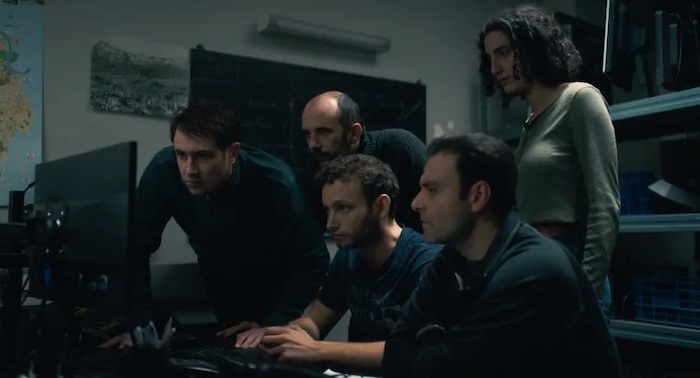
With a title that calls to mind the intense streaming drama, The Night of…, which has conquered three different markets (UK, US, Korea), Dominik Moll’s award-winning French police procedural suggests a ripped-from-actual-headlines thriller. Inspired by a true story, Moll refuses to allow the usual detective cliches to steer the plot into realms that might appear over-determined, a consideration that makes for a frustrating balance, because as consumers of fiction we’ve become conditioned to expect closure in crime stories, and Moll seems adamant that he isn’t going to provide that. In fact, you can almost sense it early on in this story about the murder of a young woman late at night in the town of Grenoble. Police investigators from outside are brought in to solve the crime and are almost immediately met with a surfeit of possible suspects that complicates the job in ways they can’t overcome.

Part of the problem is that the head of the investigation, Yohan (Bastien Bouillon), is new to the position, having just replaced the recently retired chief of detectives. He needs time to bring the rest of the investigative team into his confidence, and suddenly this maze of a case is dropped in his lap. His only confidante is the veteran policeman Marceau (Bouli Lanners), a gruff, emotional man who happens to be going through a difficult divorce at the time. Though the two professionals form a bond of mutual intent, their temperaments are too different, and in eventual frustration at how the investigation keeps running into dead ends, Marceau quits the force and practically disappears from the movie. Given how Moll has presented the murder in an almost clinical way—the girl is approached by a masked man who douses her with a flammable liquid and sets her on fire—he instills in the viewer the same level of outrage that impels the investigative team. As it turns out, the victim was sexually profligate and her assorted lovers have some reason to resent her, though all have alibis that, taken as a whole, constitute a refutation of Yohan’s approach to the criminal mindset. All the evidence he compiles is circumstantial, and he can’t bring himself to apply it to some sort of prosecution. 

At the heart of Moll’s own intentions is that something is broken between men and women, a simplistic treatment of the case that he nevertheless explores with cunning conviction. It’s obvious that the victim was killed because she was a woman, and everyone who is involved with the matter realizes this without actually confronting it; except for Yohan, who, due to lack of funds or human resources, can’t pursue the matter in the way it should be pursued, i.e., as a hate crime. Even when a female judge, understanding what he’s up against after two years of fruitless work, offers to support whatever he wants to do, he has no way of satisfying her because he is a moral man who sticks to the letter of the law, which does not account for misogyny. Though on the surface, The Night of the 12th feels like the anti-Dirty Harry, its cinematic conceits are every bit as contrived. Some cases, Moll implies, are not meant to be solved. 

In French. Opens March 15 in Tokyo at Shinjuku Musashinokan (03-3354-5670), Human Trust Cinema Yurakucho (03-6259-8608). 

The Night of the 12th home page in Japanese

photo (c) 2022 – Haut et Court – Versus Production -Auvergne-Rhone-Alpes Cinema

Posted in Movies | Tagged | Leave a comment

Media watch: Tamori edges closer to full retirement

On Feb. 14, NHK announced that its regular program, “Buratamori,” would end in April. The official explanation is that Tamori, the show’s star, who is now 78 and reportedly still in good shape, feels the format of the show is too much of a strain, since it requires him to walk around outdoor locations for long periods of time, as the title suggests (bura is a morpheme that means “walking here and there”). The weekly magazine Flash ran an article on Feb. 20 saying that NHK is quite disappointed since the show is popular. It still commands a 10 percent share, which is very good for NHK shows that aren’t the Sunday night historical drama. The public broacaster will replace it with “New Project X: Challengers,” a spin on another old favorite, “Project X,” which celebrated Japanese ingenuity and entrepreneurship, but Flash insists that NHK would prefer Tamori stay, and not just because of the show’s ratings. “Buratamori” is fairly inexpensive to make (Tamori’s own guarantee isn’t revealed, but everyone knows that NHK is pretty cheap when it comes to talent), since it simply places Tamori, a female staff announcer, and that week’s “expert” in a neighborhood, usually in Tokyo, and has them walk around and talk about the sights. Unlike other travel shows of this ilk, what they look at and talk about is the geological/geographical makeup of the neighborhoods, which tend to be off the beaten tourist paths. Tamori loves that kind of stuff and, even more, he loves showing off his knowledge of that kind of stuff, be it secret streams that still run below the pavement or archeologically significant sites that exist in broad daylight. One of the show’s beaten-to-death cliches is the moment or moments when Tamori is asked a question by the expert and he has the answer ready, thus evoking shock and a comment along the lines of, “Wow, you really know a lot!”

Kazuyoshi Morita, better known by his stage name, Tamori, has come one step closer to calling it a career. Tamori used to be one of the most ubiquitous personalities on Japanese television. With his trademark shades, sharp wit, and genuine appetite for intellectual stimulation, he often rose above the basic requirements of a TV host, though unlike the other two male TV personalities who dominated screens over the last 40 years, “Beat” Takeshi Kitano and Sanma Akashiya, he was not a comedian in the strictest sense. He was more of a raconteur who comes across as a libidinous salaryman with an id that’s been set free, but he could talk openly and with considerable authority about everything from American jazz to the natural sciences when the occasion called for it. 

Flash assumes that Tamori’s reasoning for ending the show is bogus. The writer of the article says he saw with his own eyes Tamori walking around Tokyo the day after the announcement in a jaunty mood, as if such actions put the lie to his statement that he was tired of walking around; but, in any case, his decision is hardly surprising. He doesn’t need the work and likely his interest in the show has cooled over time—”Buratamori” became a regular program in 2015 after being an occasional special since 2008. Flash says that, in fact, he wanted to end it earlier, but may have put it off as a favor to former SMAP member Tsuyoshi Kusanagi, who does the voiceover narration for the show. When SMAP broke up in 2016 and Kusanagi left his agency, Johnny & Associates, “Buratamori” became his only regular TV gig for a while. The two had been close since Kusanagi was a regular on Tamori’s most popular venture, the Fuji TV daytime variety show “Morita Kazuyoshi Hour: Waratte Iitomo!”, which went off the air in 2014. Johnny’s is no longer breathing down Kusanagi’s neck due to the big sexual abuse scandal, and the former idol has recovered fully as an in-demand actor (in fact, he’s one of the stars of NHK’s current morning drama), so he doesn’t need the “Buratamori” job either. After “Waratte” ended and another Tamori perennial, TV Asahi’s late night variety show, “Tamori Club,” called it a day last year, it appears Mr. Morita is winding down his career in anticipation of turning 80. The only regular show he still helms is TV Asahi’s “Music Station,” which will celebrate its 40th anniversary in 2026. TV Asahi has indicated it would like for Tamori to stay until then, but he said he wants to be out of the business by next year. 

Continue reading
Posted in Media | Tagged | Leave a comment

Review: Dogman

Having been hypnotized by Caleb Landry Jones as a mass murderer in the 2021 Australian feature Nitram, I passed over the fact that this similarly themed movie was written and directed by Luc Besson and gave it a whirl since Jones played the lead character, a disabled, gender-fluid individual who communes with dogs on an almost telepathic level for gore and profit. And, yes, Jones is worth seeing in a role that was obviously inspired by Joaquin Phoenix’s Joker, but Besson can’t help being Besson and the overall story and vibe are such a mishmash of twisted-talent cliches and calculated self-pity that it makes Joker look like the highbrow character study it thought it was. Whatever one thinks of early hits like Leon and The Fifth Element, Besson’s misguided attempts to appropriate Hollywood excess to further the cause of Euro-pop cinema has always felt immature and crass.

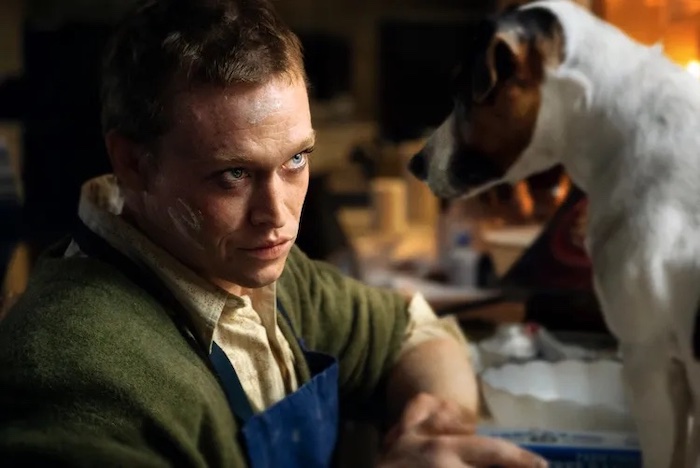
Jones’s character, Doug, is an emotionally damaged autodidact who survived a horrible childhood in a New Jersey home full of Bible-thumping fanatics with a paterfamilias who trains fighting dogs. Having lived in a cage with the animals for much of his boyhood, Doug lost the use of his legs but got the bloody revenge he needed and in the process became man’s best friend’s best friend. His adolescence is spent in a juvenile facility where he forms a crush on a theater teacher (Grace Palma) who turns him on to Shakespeare and provokes an interest in cross-dressing, a predilection that later helps him secure the only work that will have him, lip-syncing to Piaf and Dietrich recordings in a drag club. Meanwhile, Doug uses his canine gang to filch jewelry and other valuables from rich bastards’ and bitches’ homes and occasionally disembowel bullies.

The entire movie is told in episodic flashback mode after Doug, dressed in a bloody shift and wig, is picked up by the police with dozens of dogs in a van. His languorous confession is eventually taken by a psychiatric case worker (Jojo T. Gibbs) brought in to make some sense of this uncooperative mope, and he obliges her by relating the aforementioned big fish tale. Though the climax, which involves Doug’s maze-like, makeshift kennel being invaded by a gang of thugs with a bone to pick, shows a certain flair for choreographed retribution mayhem, it’s as silly as the rest of the movie to no great purpose except to make the audience think they didn’t waste all their money. I might be tempted to see the movie again just to concentrate on Jones’s fully inhabited Kier/Kinski-esque performance. He makes the most of those closeups.

Now playing in Tokyo at Marunouchi Piccadilly (050-6875-0075), Shinjuku Wald 9 (03-5369-4955).

Dogman home page in Japanese

photo (c) 2023 – LBP – EuropaCorp – TF1 Films Production

Posted in Movies | Tagged , | Leave a comment

Review: Maybe I Do

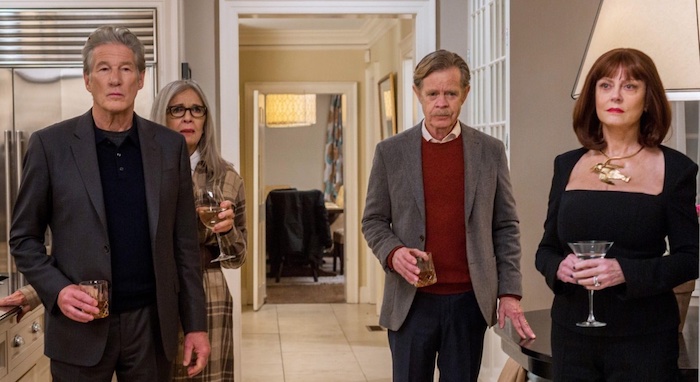
Despite certain heated discussions to the contrary, boomer movie stars, including women, continue to show up in leading roles as they enter their respective eighth or ninth decades on the planet; which isn’t to say they’re getting the quality of work that made their names back in the day, but producers obviously believe they still have something audiences want. I tend to think this kind of dynamic is the reason for so many romantic comedies these days—mostly British in provenance—involving senior citizens. Maybe I Do is strictly American and something of a predictable lemon, but not necessarily because it seems to waste its famous cast. Based on a play by the man who directs it, Michael Jacobs, the movie feels totally derivative in a way that’s almost offensive. 

We have two couples who are supposed to be in what I assume to be late middle age—Grace and Howard (Diane Keaton, Richard Gere) and Monica and Sam (Susan Sarandon, William H. Macy). As with most late middle age couples, the spark has gone out of their relationships, and as the movie opens we learn that Howard has been having an affair for about 6 months with Monica and is thinking of breaking it off. Meanwhile, Grace and Sam meet cute in a revival art house cinema where they sometimes go by themselves in the afternoon. Though nothing physical happens between them, the thought is there and it definitely counts. Jacobs’ dialogue is so stage-bound the screen practically reeks of sawdust, but besides being weighted down with the kind of diction no one uses in real life, the lines are meant to convey certain philosophical truths that might have been provocative had they been in service to a more interesting story. Naturally, both couples are well-off and (spoiler alert—though reportedly the following intelligence is revealed in the trailer) as it turns out their adult children, Grace and Howard’s Michelle (Emma Roberts) and Monica and Sam’s Allen (Luke Bracey), are planning on getting engaged, and it isn’t until the two sets of parents meet for the first time that they realize they’ve been dallying with future possible in-laws. Emotional chaos ensues but not hilarity. 

As it turns out, the main complication is not these couples’ infidelities but rather Michelle’s cold feet. She’s already having second thoughts about jumping into matrimony and the old folks’ somehow conclude that they’re to blame for that by having set poor examples, and they do have a point in that regard. But a more serious problem than the paucity of chuckles is that Jacobs’ view of love, be it young or mature, seems culled from romantic movies and not from life, which isn’t necessarily a bad thing but romantic comedies are sold on fantasies that at least bring the viewer out of their own world. Maybe I Do wants its half-baked squirm comedy and its supposedly gimlet-eyed view of marriage in equal measure, and ends up delivering neither. 

Opens March 8 in Tokyo at Shinjuku Musashinokan (03-3354-5670), Human Trust Cinema Yurakucho (03-6259-8608), Yebisu Garden Cinema (0570-7830715).

Maybe I Do home page in Japanese

photo (c) 2023. Fifth Season, LLC

Posted in Movies | Tagged , , , , | Leave a comment

Review: Argylle

It wasn’t until after I had seen Matthew Vaughn’s star-studded secret agent parody that I read the New Yorker feature explaining its premise and how it was conceived as the launch of a franchise—the creation of a hopefully lucrative IP. The article explained a lot of points in the story that made no sense to me while I was watching it, but I didn’t find the movie exciting or even funny enough to want to revisit it in order to understand what the producers were really trying to do. An entertainment such as this that can’t exist on its own as an integrated work—meaning it needs to be considered within some kind of imaginary context to be fully appreciated—doesn’t really stand a chance.

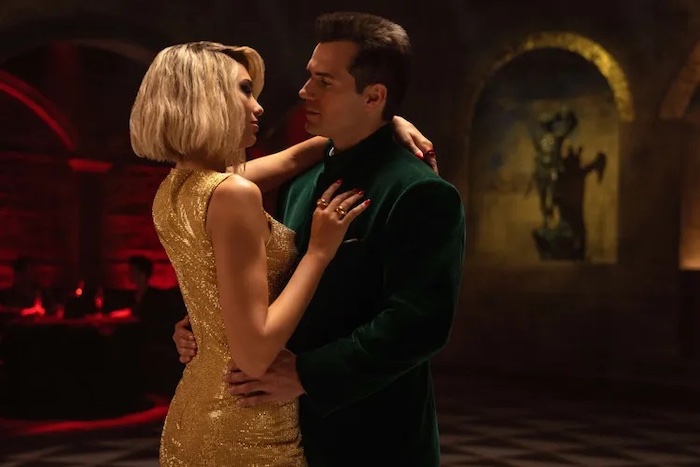
Ostensibly, the story is about a successful but cripplingly neurotic pulp spy novelist named Elly Conway (Bryce Dallas Howard), who eventually comes to realize that the plots of her books follow actual events in the real world. The upshot is that a villainous organization helmed by a man named Ritter (Bryan Cranston) has decided that Elly has to be assasinated, but just as that plan is being carried out she is saved by a good guy spy with a disarmingly breezy attitude named Aidan (Sam Rockwell). As Aidan and Elly fall deeper into the intrigue of the chase, the fictional hero of Elly’s series, a Bond-type mannequin with an exaggerated buzz-cut and widow’s peak named Argylle (Henry Cavill) occasionally shows up in parallel universe mode to illustrate how his predicament mirrors Elly’s, but the script is so poorly structured that it’s often impossible to distinguish between what’s real—at least within the universe of the “movie”—and what’s the product of Elly’s imagination. As it turns out, this lack of differentiation is the core of the film’s high concept, but its immediate effect is total confusion, which makes everything around it a chore to keep up with. Argylle is a movie that constantly detours into new realities that have no coherence, even in relation to one another.

It also means the action, of which is there is plenty, has no real coherence either. Shoot-outs start and stop without reason; vehicular mayhem has no purchase on the viewer’s anxiety (Elly’s portable, mostly CGI cat, always contained in a bubble-backpack, is subjected to the most peril); and new characters working at cross-purposes through hackneyed double-crosses and playing both sides against each other keep popping up to further confound your grasp of what’s supposed to be going on. Since nothing is as it seems, there is no danger to get worried about—or involved in. Unlike me, moviegoers with a more acute sense of the logic that fuels most IP franchises may know what this is all leading to well before the so-called climactic reveal, but I wonder if they will feel compelled to follow it any further. 

Now playing in Tokyo at Toho Cinemas Nihonbashi (050-6868-5060), Toho Cinemas Hibiya (050-6868-5068), 109 Cinemas Premium Shinjuku (0570-060-109), Shinjuku Wald 9 (03-5369-4955), Toho Cinemas Shinjuku (050-6868-5063), Shibuya Cine Quinto (03-3477-5905), Toho Cinemas Roppongi Hills (050-6868-5024).

Argylle home page in Japanese

photo (c) Universal Pictures

Posted in Movies | Tagged , , , | Leave a comment