Fuji Rock 1999

For only the second time since 1998, I am not attending the Fuji Rock Festival (I don’t count last year’s, which I also didn’t attend, because it was seriously circumscribed by COVID restrictions), and I admit I miss it, so I dug out the summary review I wrote for the Japan Times about the third festival in 1999, which also happened to be the first one in Naeba, where it would remain permanently from then on. Structurally, the changes to the festival since then have been considerable, but the vibe never changed substantially. Enjoy.


“Did you see that about Woodstock last week?” Chris Collingwood, the lead singer of Fountains of Wayne, asked the Japanese audience. “Bunch of yo-yos burnt stuff up?”

It wasn’t the only mention of Woodstock that I heard at the 1999 Fuji Rock Festival, which was held at the Naeba ski resort in Niigata prefecture July 30-Aug. 1. Woodstock 99’s topicality at the festival was due to its temporal proximity and its postmortem publicity. In contrast, FRF’s topicality has been non-existent, even in Japan. When I returned to Tokyo after the weekend and told people where I’d been most of them said, “Oh yeah, I forgot about that. How was it?” Everybody else hadn’t even heard of it. There was nothing in the papers, nothing on TV.

Of course, the media could have covered it as a kind of antidote to Woodstock 99, which would have been understandable since Japanese news shows like nothing better than to show how peaceful and civilized Japan is compared to the rest of the world. They could have said that out of the 70,000 people who attended the event over the three days, there were about a dozen “casualties” and only one concertgoer who required hospitalization (from too much drinking; he was released the next day and went straight back to the party). And, of course, no stuff was burnt up.

Such coverage, however, boosts positives on the back of negatives instead of addressing them directly. Something truer could have been revealed had a TV camera crew walked along the main pathway of the festival grounds, from the congested campground on the grassy hill behind the gargantuan Naeba Prince Hotel down to the dinky little Levi’s New Stage for up-and-coming Japanese bands to the tree-lined food service area and the Virgin Dance Tent and on over the huge foothill that spread out before the main Green Stage; and then through the dense woods and over the pristine creek to the smaller open area where the secondary White Stage was erected; and finally up a rise and around a bend and down into the Field of Heaven. I did that long walk early Sunday morning, and I didn’t find a scrap of garbage on the ground, though I did find lots of sleeping bodies in the most unlikely places and in the weirdest positions.

FRF 99 was as close as I’ve ever come to what we like to think festivals are all about: community, experience, celebration. The original Woodstock translated these ideals as love, peace, and free expression, probably because they had already become hallmarks of the 60s. They subsequently turned into cliches for a kind of empty-headed hedonism that a lot of people today find laughable — or even contemptible. Every music festival has somehow had to put up with Woodstock’s legacy. FRF bypassed it for something more prosaic but no less idyllic.

Masa Hidaka, the president of major promoter Smash Corp. and the man who thought up FRF, is of the generation who came of age in the 60s, but his concept for the festival is less hippie idealism than old-fashioned enlightened humanism. He envisions it as an event where for a few days you chuck your quotidian trappings, sleep under the stars, listen to some music, get in touch with nature, and make new friends. If that sounds like empty-headed hedonism then it’s because we’ve grown so cynical over the years that we don’t believe you can get thousands of young people in one contained area and expect them to behave themselves, much less get in touch with their inner hippie.

The camping out part is essential to the vision, which is why last year’s festival, though a logistical success, was treated as a one-off by the festival’s creators. FRF 98 was held for two days on landfill at the Tokyo Waterfront.

I encountered a few wet blankets who said that things at FRF 99 wouldn’t have been so rosy had it rained. The Field of Heaven, for one thing, would have quickly turned into a bowl of mud. But why make something out of fate that it ain’t? The first festival, in 1997, was perhaps closest to the ideal, since it actually was within sight of Mt. Fuji; but it was truncated by an unexpected typhoon. Maybe 1999 was payback, karma. I remember watching Tricky’s performance Sunday night as dark clouds rolled in overhead, thinking “it’s finally come.” It didn’t, but the threatening weather made Tricky’s already dark performance — both thematically and literally, since the lighting was purposely dim — even darker. Nature and artifice combined for a sublime aesthetic outcome that one could never have experienced in a club or concert hall.

But it was Phish, the American jam band, that best represented the vibe of the festival while at the same time being least representative of the general tone of its music. That’s why they were essentially given the presciently named Field of Heaven. As heirs to the Grateful Dead in both sound and sensibility (there was a small fenced-off area next to the sound tent for private tapers), Phish played from 7:00 to 11:00 each night. The field was lined with booths that sold hemp products and candles and other organically-identified items, and a security person at the entrance to the field handed out sprigs of fragrant lavender.

More aggressive groups like Limp Bizkit, Atari Teenage Riot, and Hi-Standard commanded larger audiences and kicked up more of a potential for bodily injury, but I never got the impression that the kids who listened to them were themselves more aggressive. Often I stood next to the stage and watched the burly American servicemen who comprised the security contingent handle the mosh pit. Bodies would sail over the barriers into their arms. Sometimes they saw someone in trouble and leaned over the churning morass to pull them out, as if they were plucking laundry from a spinning clothes drier. The kids would fall on the cushions dazed, get up laughing, and run back around the barrier to do it again.

It was wild, but not careless. These kids were enjoying their music with the same attitude that the swaying bodies over at the Field of Heaven were enjoying theirs. The difference, like the music, was one of style not temperament.

One night while was I talking to Trey Anastasio, Phish’s guitarist, members of the Boredoms, Japan’s (hell, the world’s) premiere thrash-noise band, dropped by to extend their compliments. Both bands, to my surprise, were fans of each other’s music, and they started talking about jamming together someday. I then mentioned that, except for Rage Against the Machine, most of the kids I’d talked to had come to see Phish.

“Did you see them?” Asastasio asked me.

“Who, Rage?”

“Yeah.” He shook his head in disbelief. “Weren’t they absolutely incredible?”

They were. It was the first time I’d ever seen them perform live. Previously, they had been a band I liked in principle but not in fact. Then I was standing on a rise of land overlooking the audience — more than 20,000 people jumping up and down under colored lights — and the band’s convictions hit me with the force of a truck. Zack de la Rocha’s celebrated political dogma was inseparable from the band’s blistering metal attack, and for once I think the crowd got both simultaneously. “Everything for everyone,” de la Rocha shouted, paraphrasing the Zapatista slogan, “and nothing for ourselves.”

Of course, not everybody got it. I thought back to what a colleague of mine had told me earlier that evening. She was doing random interviews in the crowd and had been approached by someone from one of the US bases. “They should give American service people a discount, because it’s too expensive.” Everything for everyone, and a little something more for ourselves.

“Do what they told you,” Zack continued, “do what they sold you,” and finally, “from the people who brought you Hiroshima and Coca Cola.” Though I knew he was talking about a general mindset rather than particular Americans, I couldn’t help but think to myself: And don’t forget Woodstock 99.

Posted in Music | Tagged , , | Leave a comment

Review: The Family

In most cinematic worlds, the bureaucracy is a cold and sometimes malevolent thing. At best it’s portrayed as a necessary evil, a facilitator of the social contract that has the dirty job of making contentious interactions work, even if that means some of those involved are not going to be happy with the results. In Fabien Gorgeart’s melodrama The Family, the French equivalent of child services doesn’t really exert its full power until the end of the movie, but its presence is manifest throughout the plot development, adding a touch of suspenseful anxiety that Gorgeart and his very able actors exploit to full dramatic effect.

The titular unit is almost boringly average: Anna (Melanie Thierry) and Driss (Lyes Salem) live in a leafy suburb in middle class bliss with their three young children, Adrien (Idriss Laurentin-Khelifi), Jules (Basile Violette), and Simon (Gabriel Pavie). Simon, however, is a foster child who has been in the couple’s care since he was 18 months old, when his mother died and his father fell into a depression that prompted child services to remove Simon from his care. Now 6, Simon thinks of Anna and Driss as his parents, calling them mom and dad, and considers Adrien and Jules his siblings. Because they are good, educated people, Anna and Driss have never hidden Simon’s provenance from him, but the possibility that their idyll will be broken is something they don’t seem to have contemplated. Eventually, Simon’s father, Eddy (Felix Moati), recovered, writes to the judge in charge of his case asking that Simon be returned to his care. Things go slowly at first. Eddy gets afternoons with Simon who understands who he is but is not entirely comfortable. Eddy also understands what Anna and Driss mean to Simon and acts accordingly, allowing child services to speak for him in terms of asserting his rights as the biological father.

When the reckoning comes, it’s not pretty, mainly owing to a gross miscalculation on Anna’s part. Now, child services takes over. Their aim, as they put it so bluntly, has always been that a child be raised by their biological parent, and Anna always knew this. Her actions, they decide, have deliberately been an attempt to subvert this process, and she and her family have to pay the consequences. 

What’s both affecting and frustrating about The Family is its matter-of-fact attitude toward the mission of public welfare, and how Gorgeart tries so hard to undermine our belief in that mission by piling on every sentimental cliche attached to the so-called ideal family. Until Eddy reenters Simon’s life, there is absolutely nothing wrong with the family he’s provisionally joined—no marital strife, no financial hardships, no sibling rivalries or resentments—and, in fact, much is made of how the knowledge of his provisional presence is what makes him more worthy of affection. In the end, though, we can’t blame child services, because they’ve been clear from the beginning what the stakes are, and the problem is simply one of unbounded maternal love, which is its own cliche, but one that Thierry handles with uncommon skill and, dare I say, restraint. There’s really no reason why The Family should be as emotionally devastating as it proves to be.

In French. Now playing in Tokyo at Toho Cinemas Chanter Hibiya (050-6868-5001).

The Family home page in Japanese

photo (c) 2021 Deuxieme Ligne Films – Petit Film

Posted in Movies | Tagged | Leave a comment

Review: Jurassic World Dominion

The narrative idea that has made the Jurassic Park/World franchise so ludicrously successful from a financial point of view is not really the presence of dinosaurs in our world, but rather the insatiable desire of “science” to fiddle with the building blocks of existence, meaning genetic information. Of course, people go for the big set pieces depicting reptiles threatening the stupid humans, but the reason these humans deserve to be threatened is because they just have to act like God. Otherwise, what’s the point of living in the 21st century? Four years after the previous installment showed the destruction of the huge island resort where tourists could observe dinosaurs “in the wild,” the lizards are at large in the world and terrorizing humans as a matter of course. It’s a natural, albeit too fast, result of the decisions that have anchored the franchise, and would not have required much in the way of imagination to make the concept work as a new installment, but the producers want more: another big arrogant corporation that is trying to monetize genetic engineering, though in this case, not of dinosaurs per se, but of the food supply. Despite its relevancy to how we live today, the concept has been done so many times before it feels old and tired. 

The first third is certainly the most entertaining portion of the film while remaining quite confusing, since it grapples with a world where dinosaurs have become so ubiquitous that there’s already a healthy black market in dino trafficking and the attendant PETA-like do-gooder types, which brings our heroes, the dino wrangler Owen (Chris Pratt) and the former resort manager Claire (Bryce Dallas Howard), out from their secluded forest Eden into the world to recapture some poached creatures and the adolescent girl they are raising by proxy. The girl (Isabella Sermon), Maisie, is the cloned daughter of the biogenetics scientist Charlotte Lockwood, whose provenance in the story I don’t remember (4 years, you see), but whose work is at the center of the intrigue. The head of a company called Biosyn Genetics, Dodgson (Campbell Scott), kidnaps Maisie in order to study her sequencing to understand how Charlotte did it and then corner the market on…what, exactly, is never specified, but Dodgson has already created a species of giant locusts in what can only be described as an “oops” project, since, if let loose, they can destroy most of the world’s food supply.

Director Colin Treverrow’s job is to make the various plot threads, which also includes the reentry-for-the-hell-of-it of three original Jurassic stars, Ellie (Laura Dern), Alan (Sam Neill), and Ian (Jeff Goldblum), who all come together in a big, violent denouement where stray dinos wreak havoc on the Biosyn facility, thus threatening to let loose all these deadly locusts. It’s a total clusterfuck of competing action vectors and impenetrable motivations. Goldblum, who can be counted on at this point in his career to offer immediate comic relief has no real purpose and just happens to be at the Biosyn lab doing things against his better interests. But it’s not a spoiler to say that he survives the mayhem, because it seems they want to bring everyone back for another round of dino pursuit and gene-manipulating nonsense. The world can’t end too soon.

Opens July 29 in Tokyo at Toho Cinemas Nihonbashi (050-6868-5060), Toho Cinemas Hibiya (050-6868-5068), Marunouchi Piccadilly (050-6875-0075), Shinjuku Wald 9 (03-5369-4955), Shinjuku Piccadilly (050-6861-3001), Toho Cinemas Shinjuku (050-6868-5063), Toho Cinemas Shibuya (050-6868-5002), Toho Cinemas Roppongi Hills (050-6868-5024).

Jurassic World Dominion home page in Japanese

photo (c) 2021 Universal Studios

Posted in Movies | Leave a comment

Media watch: Akihabara rampage ground zero for a certain type of criminal motivation

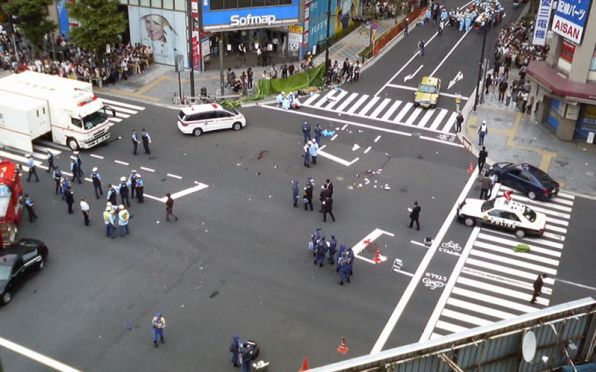
On Tuesday it was reported that Tomohiro Kato, the man who in 2008 killed 7 people and injured 10 others on a crowded street in the Akihabara section of Tokyo, was executed at the Tokyo Detention Center. The hanging was notable to the media for two reasons. One was that he was the only prisoner on death row executed that day. In recent years, the justice ministry has usually chosen to put to death more than one condemned person on days when they carry out executions. The other note of interest is that Kato’s execution comes very quickly on the heels of the killing of former prime minister Shinzo Abe, as if it were some kind of reaction.

Though the motives and m.o.s of Kato and the man arrested for Abe’s murder, Tetsuya Yamagami, are quite different, there is one similarity that seems unavoidable. Both men carried out their lethal acts with the expectation of being caught and punished for them. And while it is not clear at this time if Yamagami’s real motivation went beyond punishing someone for the victimization he felt at the hands of the Unification Church, he must have certainly understood that he could face the death penalty, even though capital punishment is rarely administered to people who kill only one person. Abe’s status as an important Japanese statesman and historical figure, however, makes his killing special in a way. At the moment, Yamagami is being psychiatrically evaluated.

In that regard, Kato was a kind of archetype, since he not only expected to get the death penalty, but, based on media reports that have circulated ever since the Akihabara killings, he welcomed the possibility and may even have carried out the murders for the purpose of being put to death. That’s why many reporters and commentators have called what he did “suicide by capital punishment.” The idea of purposely leaving this plane of existence while taking a number of people with you is not a new one, though it seems to have become more commonly applied owing to media ubiquity and, in the U.S., at least, the free availability of firearms to anyone regardless of age, criminal past, or psychological disposition; but in many cases in the U.S., the perpetrators of mass killings commit suicide by their own hand. In Japan, there have been a number of murders and attempted murders since Kato’s rampage where the alleged killer seems to seek self-annihilation through state action. Prior to the Akihabara massacre, there was the horrific killing of 8 elementary school children in Osaka in 2001. The perpetrator, Mamoru Takuma, was sentenced to death in 2003 and executed the following year, though there is ample documentation that he was mentally ill and had already committed various acts of violence, so it isn’t clear if he killed with the aim of being put to death. He definitely hated humanity and wanted the world to know it. 

Continue reading
Posted in Media | Tagged , | Leave a comment

Media watch: Prosecutors emboldened by death of Abe

Haruyuki Takahashi

The media is now closely watching a criminal investigation that involves one of the former executives of the Tokyo Olympics and Paralympics organizing committee. According to the Yomiuri Shimbun, Haruyuki Takahashi is suspected of receiving ¥45 million from clothing maker/retailer Aoki Holdings, one of the official sponsors of the Games. Takahashi is a former Dentsu Advertising executive who now runs his own consulting firm, and supposedly the money was related to a contract signed between the company and Aoki for consulting work that had nothing to do with the Olympics. Executive members of the organizing committee in Japan are deemed to be civil servants, and the Tokyo prosecutor suspects that the money Takahashi received was paid to help Aoki attain a sponsorship deal, which would be illegal. Takahashi vehemently denies the allegation. 

What is especially interesting to the media is the timing of the investigation. According to an article that appeared on the website Gendai Digital on July 21, the day after Yomiuri broke the story, the death of former prime minister Shinzo Abe earlier this month has opened a “Pandora’s box” of possible investigations by the Tokyo prosecutor into various matters that were considered off limits when Abe was alive. These include Olympics-related matters, since Abe was instrumental in winning the hosting gig for Tokyo, but now that he’s dead all bets are off. 

Continue reading
Posted in Media | Tagged , | Leave a comment

Review: A Serbian Film

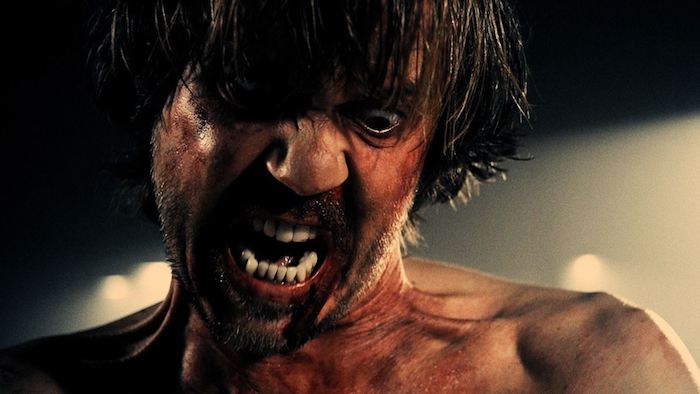
Originally released in 2010, Srdan Spasojevic’s purposely repulsive meditation on his country’s spiritual rot is being rereleased in Japan in a sparkling renovated 4K version that seems hardly necessary given what the viewer has to watch, and yet much of A Serbian Film‘s transgressive energy relies on the way its visual tone changes from one medium to another, since much of what takes place on screen is something recreated either on old tape, new tape, or within the mind of the protagonist, a semi-retired porn star named Milos (Srdan Todorovic). Moreover, the parts of the film that are supposed to be taking place in the cinematic “present” are carefully lit for maximum effect so as to throw the viewer off the scent of where the story is going.

That story starts out simply enough. Retirement for Milos, considered the greatest porn actor of his generation, at least in Serbia, isn’t quite as relaxed as he had hoped. He finds it difficult to support his wife, Marija (Jelena Gavrilovic), a freelance translator, and young son, and when an offer comes through an old associate to do one last film with a shadowy but hilariously pretentious director named Vukmir (Sergei Trifunovic) for a lot of money, he reluctantly takes it, even though he doesn’t really know what the movie will entail except that, as Vukmir explains, it will be a work of art like nothing ever produced in Serbia, which he describes as being “one big shitty kindergarten.” But once production of the movie starts in earnest, A Serbian Film abandons its linear development for a more patchwork structure that seems to be dictated by Milos’s drug-addled consciousness, or lack thereof. The film is being shot in an institution for orphans and abused children, who end up figuring heavily in many scenes, and not just as witnesses to the violent debauchery that Vukmir stages and Milos, pumped up with cattle aphrodisiac, partakes in with little of the professional nuance he brought to his more conventional work. In fact, he sometimes wakes up bloody and doesn’t remember what he did, and thus has to clandestinely secure the tapes and watch the horrors on a camcorder screen. 

What most viewers take away from A Serbian Film is Spasojevic’s willingness to push every taboo way past its acceptable limit, which is to say that while it gets really disgusting you never entertain the notion that these scenes are anything more than ingeniously staged slices of horror, and thus lack the truly disturbing element that Gaspar Noe brings to his own peculiar brand of transgressive cinema. But while the movie doesn’t impress as much as Spasojevic—who, I suspect, used himself as Vukmir’s scummy model—likely thinks it does, its jaundiced portrayal of a larger society through a very circumscribed subculture is convincing. I imagine Serbians don’t appreciate Spasojevic’s title, which implies the film is some sort of last word, but even if I don’t have firsthand experience with his country, I understood exactly what he was trying to say. (Note: The press screener I saw was the uncut version, which is banned in most countries. The new Japanese version for public consumption may be altered somewhat, but no scenes will be taken out.)

In Serbian. Now playing in Tokyo at Cinemart Shinjuku (03-5369-2831), Human Trust Cinema Shibuya (03-5468-5551.

A Serbian Film home page in Japanese

photo (c) 2010 Contrafilm 201

Posted in Movies | Leave a comment

Review: Be Natural: The Untold Story of Alice Guy-Blache

Because of its function as a recording medium, cinema’s entire history is fairly well represented. Pamela B. Green’s documentary purports to bring to the public’s attention a woman filmmaker whose pioneering accomplishments, because she was a woman, have mostly been ignored, though if you run a cursory Google search you’ll find lots of information about Alice Guy-Blache, including extensive collections of her works available for sale and streaming. This isn’t to say that Guy-Blache has received her due at the same level as her male contemporaries and heirs, but only that if her story is approached from the standpoint of the development of cinema, she’s already, relatively speaking, something of a star. Even Hitchcock was a fan.

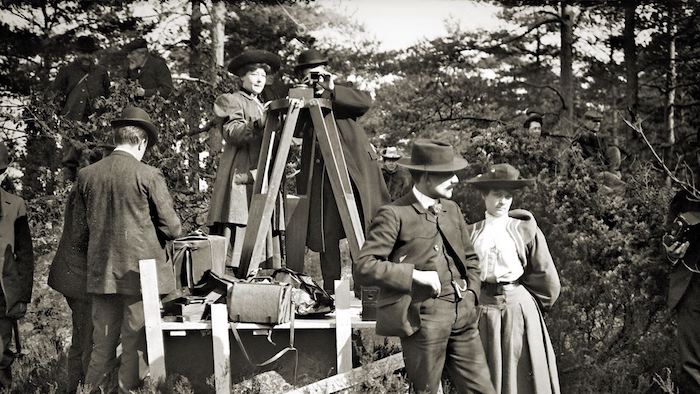
Her tale is certainly fascinating. Born in France to Chilean parents, Alice Guy was hired as a secretary in 1894 for a camera company that was eventually bought out by four men, including the early entrepreneur Leon Gaumont, who started using the company to produce films. Guy worked her way up to the production side of the business and, frustrated by the company’s fixation on film as a novelty, she became one of the first visionaries to see it as a story-telling medium. She started directing films, but Gaumont neglected to give her proper credit for her contributions, even after she ascended to head of production after the turn of the century. She eventually moved with her husband, Herbert Blache, to the U.S. to head Gaumont’s American operations, but in 1910 they struck out on their own and set up Solax Studio, first in Flushing, New York, and then in Fort Lee, New Jersey, which, thanks to her efforts, became the center of film production in America, well before the emergence of Hollywood. Her success as both an artist and a businessperson was notable, though her husband took much of the credit for her work. By the time she divorced him and the studio became insolvent in the 1920s, she had made about 1,000 movies and in the process invented many of the narrative film techniques that we now take for granted.

Much of Green’s film is narrated by Jodie Foster, whose command of French, especially while reading the epistolary materials, gives the doc a gravity it might not otherwise have. Green manages to talk to almost every scholar who has a stake in Guy-Blache’s legacy, but she also talks to well-known actors and filmmakers whose input mostly comes down to, “Wow, I never knew about this woman!” She also frames the development of the second half of the film around her detective work in tracking down relatives of Guy-Blache who may still have relevant artifacts hidden in boxes in the attic. None of this is boring, but it tends to reduce Guy-Blache’s story to a mystery that, in fact, was solved years ago, even if Green’s own sleuthing uncovered several film fragments that were thought to be lost. Of course, any movie nut who knows nothing about Guy-Blache will definitely want to check out Be Natural, but it sometimes feels a bit cluttered, like one of those attics. 

In English and French. Opens July 22 in Tokyo at Uplink Kichijoji (0422-66-5042)

Be Natural home page in Japanese

photo (c) 2018 Be Natural LLC

Posted in Movies | Leave a comment

Media watch: Politicians’ association with the Unification Church shouldn’t be surprising

Shinzo Abe offering a pre-recorded message for an event affiliated with the Unification Church

A week or so before the recent Upper House election, my partner, M, received a call from a neighbor who asked her to vote for the ruling Liberal Democratic Party. M said she had already voted by pre-election ballot for another party. Then the neighbor invited her to a seminar about “making your family stronger.” M expressed little interest, though the neighbor kept explaining the benefits of the seminar and other details. M repeated she wasn’t interested, but afterwards she did some research based on what the neighbor had revealed about where the seminar was taking place and realized that it was being held by the Family Federation for World Peace and Unification, which is more commonly known as the Unification Church. 

At this point there seems little we don’t know about the grudge that Tetsuya Yamagami, the man arrested for killing former prime minister Shinzo Abe during a campaign stop in Nara on July 8, held for many years against the Unification Church. Though some people still describe Abe as a martyr, the murder appears to have been motivated by purely personal enmity rather than anything political or ideological. Yamagami said the church had cheated his mother out of ¥100 million in the past, thus bankrupting his family, and Abe was one of the most prominent Japanese figures he associated with the church, though the former prime minister was not a member himself. Apparently, Yamagami didn’t always have Abe in his sights, though he’d been planning to do something against the church for a while. The Upper House election campaign made Abe more accessible and Yamagami took his shot—literally. At first, the media was more interested in how Yamagami built his primitive shotgun, since it’s almost impossible to own a firearm in Japan, but eventually they grew tired of the topic and concentrated instead on the church angle, which has turned out to be a bottomless source of tabloidy gossip and intelligence.

Continue reading
Posted in Media | Leave a comment

Rage Against the Machine, July 2000, Makuhari Messe, Chiba, Japan

Rage Against the Machine is now in the midst of their long-delayed comeback tour in the U.S., so I’m taking the opportunity to post a review I wrote for the Japan Times in 2000 of one of their shows. For reference, I had seen them a year previously when they headlined at Fuji Rock. That performance remains the best I’ve ever seen in the 20+ years I’ve attended the festival.

Continue reading
Posted in Music | Tagged , , | Leave a comment

Review: Boiling Point

For those of us who never go out to indulge in haute cuisine, the desperation that director Philip Barantini brings to this study of a particularly bad night-in-the-life of a restaurant owner-chef isn’t going to make as much of an impression as he might expect, but we can definitely appreciate that the protagonist is, despite his culinary talents, in way over his head as a businessman, and that’s what keeps the movie intriguing rather than its technical virtuosity (supposedly all done in one take) and relentless pace. Andy Jones (Stephen Graham) is an excellent chef who started out at the bottom and doggedly worked his way up. He has a keen understanding of how you get people in a kitchen to do what you want because he was once in their place. But he is heavily in debt to the backers of his relatively new restaurant, a situation that, apparently, has destroyed his marriage and his peace of mind. As we first encounter Andy, hustling through the streets of London on his way to work, he is trying to communicate with his ex-wife over his cell phone about a problem involving his young son that needs attention immediately, but since he’s late and it’s the Friday night before Christmas, the work takes priority.

What follows is a whirlwind of circumstance and crossed signals, as Andy supervises a full staff of people who trust him as one of theirs but who also know what the food service business requires of you. Consequently, every small problem snowballs into a catastrophe, especially when passing through the interface between the kitchen and the dining area. The latter realm is populated by a careful selection of the types that give “dining out” a bad name: smarmy self-important critics, influencers who overestimate their actual influence, and persons with money who think of service as being absolute and unconditional. The maitre’d is thus more than the face of the establishment. He’s the negotiator-in-chief, and while Barantini places too much of a dramatic burden on the wait staff in their dealings with a fickle clientele, he successfully shows how their frustrations are transferred to the kitchen, where Andy has to translate specific orders into meals. And while a chef is really more of an organizer than an artist, Andy is so put upon by the demands of both customers and employees that you can see him fail in real time.

Boiling Point is not a movie for anyone with acute anxiety issues, even if some of its most important plot points—a food allergy screwup turns into a disaster of Biblical proportions—feel contrived. But both Barantini and Graham generate an atmosphere where the personal and the professional are inextricably linked in a visceral way. This really is Andy’s life, and while some of us who think of food as sustenance first wouldn’t normally take the monumental struggles depicted here that seriously, there are real people of lesser means who depend on this kind of business to maintain their existence, and Barantini gives them his full attention. The fact that the production is all too-much-too-fast is probably the point: This is what front-line workers have to put up with, so you should abide.

Opens July 15 in Tokyo at Human Trust Cinema Yurakucho (03-6259-8608), Shinjuku Musashinokan (03-3354-5670).

Boiling Point home page in Japanese

photo (c) MMXX Ascendant Films Limited

Posted in Movies | Tagged | Leave a comment