For several years the Japanese government and, more specifically, the new digital agency has been trying to sell the public on the My Number system, which assigns a 12-digit ID number to everyone who lives in Japan. Assigning the numbers was the easy part: bureaucrats generated the numbers and sent them out on small paper cards. The idea was that these would be used, as are social security numbers in the U.S., for various government functions to streamline procedures, such as filing tax returns, using national health insurance, and applying for public services. The problem has always been that a certain cross-section of the public doesn’t feel comfortable with the number, since it smacks of government overreach and control, and, despite the ruling party’s continuing success at the polls, the public for the most part doesn’t trust the authorities, which is understandable. Twenty years ago, for instance, the welfare ministry discovered it had lost millions of pension records, thus necessitating a years-long retrenchment of the whole system that inconvenienced thousands of retired people. How would such officials handle numbers that in principle were supposed to connect to the most personal data the government keeps under virtual lock and key?
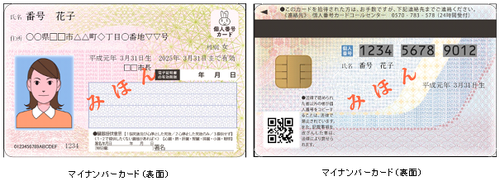
Consequently, the relevant authorities have had their hands full trying to proceed to the next step of the My Number system, which is to get dedicated My Number cards in the hands of everyone in the country. The card is more elaborate than the little paper thingy, which simply has the holder’s name, address, and number printed on it. The real cards, which are plastic, look like a genuine piece of ID, with a photo of the holder and a chip that makes it usable on digital devices to connect to a central database. This, apparently, is a bridge too far for many people, and the penetration rate for card application has been much lower than the government had expected. According to various media reports, as of May, only 44 percent of people who should have the cards have applied for and/or received them, which is pretty sad because the expressed goal is to have cards in everybody’s hands by the end of fiscal 2022.
I received mine about a year ago. Call me an easy touch, but I think the basic concept is good. As an American, the My Number card just sounds like a supercharged social security card, which many Americans find scary, too, but as someone who actually pays their taxes in full and on time, I figure I have nothing to fear from Washington (unless they read this blog, which I doubt), so, naively perhaps, I don’t really think the Japanese government is going to come after me. (By no means do I speak for all foreign residents.) Having an all-in-one card that I can use to pay my taxes, handle my health insurance payments, and access government documents sounds like a fine idea. And it was a painless, easy process. After receiving an application in the post from my local government I sent it in with a photo and a few months later went to my local city office to pick up the card. There I registered a password and received a short lecture on how to use the card. That was it. In the past year, I’ve used the actual card only once (the number itself I’ve used several times), when I applied for my vaccination certificate for overseas travel.
Continue reading