Review: The Roads Not Taken

Getting the viewer to believe Javier Bardem is the father of Elle Fanning is only the first of many points that director Sally Potter tries and fails to put across in her movie about a day in the life of a young woman taking her dad, who is stricken with early onset dementia, to a dentist’s appointment. Fanning’s Molly exhibits a Ulysses-like fortitude in the face of one ridiculously complicated trial after another, while Bardem’s Leo is lost in his own confusion, which is partly explained to us when we occasionally drift into his unconscious, where, despite his affliction, he explores the possibilities pondered in the movie’s title. None of it really works and, frankly, I didn’t fully understand why Potter would think it would. It’s not just a slog, but a tediously frustrating one.

We eventually come to learn that Leo is a semi-famous novelist who grew up in Mexico before crossing the border illegally. How he ended up marrying Rita (Laura Linney) and raising Molly we never learn, and the lack of backstory poses its own questions, like why doesn’t Molly understand any Spanish (which Leo babbles a lot in his state) and why is Rita such a bitch about her ex-husband’s condition? We do, however, learn something about his life in Mexico, since he imagines what might have happened had he married his first love, Dolores (Salma Hayek), and also why his marriage to Rita didn’t last, since he also imagines what might have happened had he carried out his plan after Molly was born to abandon his family and move to Greece. Obviously, none of these things happened—or, at least, they didn’t happen the way he imagines them—but they point up Leo’s sense of crisis as he got older and, by implication, his writing skills dried up, but since we have no idea what he’s written or what Mexico and Greece really mean to him, most of this development just feels like running in place. 

The real drama is in the here-and-now as Molly struggles to keep her job as the trip to the dentist in New York City really does become an Odyssey potholed with rude doctors, locked doors, abusive cab drivers, and an ex-wife whose flip attitude makes her daughter seethe with anger. The through line is Leo’s incomprehension of the outside world, but his inner world is not particularly coherent, and neither is Potter’s movie. 

In English and Spanish. Now playing in Tokyo at Human Trust Cinema Yurakucho (03-6259-8608), Shinjuku Piccadilly (050-6861-3011).

The Roads Not Taken home page in Japanese

photo (c) British Broadcasting Corporation and the British Film Institute and AP (Molly) Ltd. 2020

Posted in Movies | Tagged , | Leave a comment

Review: Ushiku

Ian Thomas Ash’s documentary about foreign detainees in Japan’s immigration facilities is a pointedly activist work. In interviews Ash has said that his main purpose was to make the Japanese people understand what their government is doing in their name, and much of the footage depicts unnecessary cruelty in the carrying out of what the authorities deem their legal obligations to the state. In fact, it’s easy while watching the doc to get the feeling that the whole idea of basic human rights means something completely different to the Japanese authorities than what it means to most of the rest of us—including the average Japanese citizen—who have grown up in what is generally referred to as liberal democracy. Ash is counting on this dynamic to gain traction with Japanese viewers, so the difficult part is getting them to see the movie in the first place.

He’s thus undertaken a Japanese media blitz that has been successful on the one hand—almost all of the press outlets who would likely be sympathetic to his cause have covered the movie uncritically—but on the other hand that coverage may be counterproductive in that many of these outlets have dwelled more on the process of the filmmaking than on the theme of human rights abuse. The Mainichi Shimbun, for instance, which is perhaps Japan’s most left-center national daily, ran an article recently that focused on the fact that Ash recorded much of the footage inside the East Japan Immigration Center in Ushiku, Ibaraki Prefecture, without permission, since cameras are not allowed in the facility. Though Mainichi acknowledges the cruelty on display and that the average Japanese person probably should know more about it, by concentrating on Ash’s subterfuge it makes the movie out to be something that it really isn’t. Ash is not trying to set anyone in the system up. He is simply trying to convey a truth that’s hidden. Reading the Mainichi report, I got the sense that the reporter was slightly bothered that Ash had broken rules to get what he needed, no matter how laudable the end result may be.

That end result is all the more effective for the way Ash interacts with his subjects, the detainees themselves, who represent a wide range of nationalities and sensibilities. There are several disturbing images of immigration staff subduing “uncooperative” detainees with brute force. The facility’s explanation is always the same and they count on people’s acceptance of this work as “protecting” the public rather than administering immigration protocols, the implication being that these detainees are criminals, though for the most part the only things they did wrong was coming to Japan without proper pre-vetting and/or messing up on their paperwork. (Not to mention that many are forced by necessity to work illegally for Japanese employers who are never prosecuted for hiring them.) Most of the detainees came to Japan seeking asylum without fully understanding that Japan does not consider itself a “refuge,” even though it has signed agreements with international bodies to accept refugees. If Ushiku has a drawback it’s that it doesn’t fully explain the bureaucratic mindset that’s behind the cruelty—the idea that while oppressed people should have their human rights respected, it’s difficult to guarantee within Japan’s vaguely defined concept of civil rights, which only exist for native Japanese people. In other words, refugees’ (or any foreign person’s) human rights don’t supersede the Japanese state’s “obligation” to protect itself from what it sees as disruption to public order, which is what foreigners still represent to a certain degree. That kind of edification, however, is not really Ash’s purview, and as far as his movie being a visceral condemnation of Japanese policy rather than an intellectual one, he was right to listen to his conscience. 

In English and Japanese with English and Japanese subtitles. Now playing in Tokyo at Theater Image Forum Aoyama (03-5766-0114).

Ushiku home page in Japanese and English

photo (c) 2022 Ushiku

Posted in Uncategorized | Leave a comment

Review: Cyrano

Though I wasn’t surprised that someone had finally decided to adapt Edmond Rostand’s play as a musical, I was surprised that the producers of the original stage production adapted for this movie chose twin brothers Bryce and Aaron Dessner of the rock group The National to write the music. Though The National’s music can be quite dramatic, it’s also built for the kind of singer I don’t normally associate with musical theater, and in that regard the songs here don’t quite make up for the lyricism that is supposed to be a hallmark of the title character’s poetry. That said, Peter Dinklage in that role gets by just on the strength of that amazing face of his, and director Joe Wright, who loves to show off as much as Cyrano does, makes much of Dinklage’s craggy features and moony eyes. 

The actors Wright chose to play Roxanne (Haley Bennett), the object of Cyrano’s hidden affections, and Christian (Kelvin Harrison Jr.), the handsome young soldier who recruits Cyrano’s literary skills to woo Roxanne, are a little too generic, especially when they have to share scenes with Dinklage. Only Ben Mendelsohn, playing the nobleman De Guiche with lots of pancake makeup and rouge, holds his own with Dinklage, but their scenes together are few and far between. For sure, the juxtaposition highlights Christian’s simple-mindedness to the point where you can’t believe that Roxanne doesn’t see through the ruse earlier than she does. 

If Wright can be commended for anything it’s the way he folds the backdrop of war into a story that most adapters tend to relegate as historical baggage and atmosphere. The National’s songs, which always contain a heavy dose of melancholy, work quite well in this context and while Wright seems to enjoy himself more when staging comedy (and Dinklage is also a great comic actor) he understands the ending is almost pointless without the sense of loss that war brings. His movie will never be the last word on this classic play, but the imagination at work is commendable at times. 

Now playing in Tokyo at Toho Cinemas Nihonbashi (050-6868-5060), Toho Cinemas Hibiya (050-6868-5068), Shinjuku Wald 9 (03-5369-4955), Toho Cinemas Shinjuku (050-6868-5063), Shibuya Cine Quinto (03-3477-5905), Shibuya Parco White Cine Quinto (03-6712-7225), Toho Cinemas Roppongi Hills (050-6868-5024).

Cyrano home page in Japanese

photo (c) 2021 Metro-Goldwyn-Mayer Pictures Inc. 

Posted in Movies | Tagged , , | Leave a comment

Review: Gagarine

Sometimes, the circumstances surrounding the making of a film help make the experience of watching it richer. The most obvious example that comes to mind is Jafar Panahi’s Offside, a movie that was set and filmed during an actual 2006 World Cup qualifying match between Iran and Bahrain. In the final tense scenes, as a group of young women who have attempted to illegally sneak into the game are carted away by the police, the whole city of Tehran explodes in celebration when the Iranian team wins. Knowing that the revelry was not staged makes all the difference.

Directors Fanny Liatard and Jeremy Trouilh attempt something similar but more complicated. Their debut film is set in Cite Gagarine, a housing estate that was built on the outskirts of Paris in 1961, the year that Russian cosmonaut Yuri Gagarin became the first man ever to venture into outer space and after whom the housing project was named. The film itself takes place as the projects were being torn down in 2019, and yet most of the action is set within its walls. Our hero, 16-year-old Youri (Alseni Bathily), also named after Gagarin, has lived in the projects ever since he immigrated to France as a young child; it’s the only home he’s ever known. True to his namesake, he’s obsessed with outer space, and studies the stars with a native intelligence that’s extended to the practical. He builds an observatory on the roof and helps neighbors set up satellite dishes to catch broadcasts and even repairs the elevators and replaces lightbulbs. During the course of the film, most of Youri’s neighbors, also immigrants from a wide range of backgrounds, move out to new digs as the building around them is prepared for demolition, but Youri stays, a squatter in a homemade plastic curtained cubicle filled with technology of his own devising. 

Mostly abandoned by his mother, who’s off with a new boyfriend, Youri’s only companions are his best friend Houssam (Jamil McCraven) and Diana (Lyna Khoudri), a girl from the local Roma community, meaning she doesn’t have a fixed address by definition. Together, they create their own separate world thanks to Youri’s “spaceship,” for want of a better word, which contains its own greenhouse and facilities for providing sustenance amidst the general extinction. 

Unlike other recent movies about the banlieues, Gagarine is hopeful and buoyant, even when Youri’s schemes turn to sabotage. And while its air of magical realism can sometimes feel forced, it honors the hopes and dreams of France’s marginalized communities without trivializing them. In the end, Youri wants to do right by the people he knows, and even the authorities are forced to bend to his ingenuity. Though it’s mostly unrealistic, Gagarine is a perfect tribute to the power of the unique imagination. 

In French, Romany and Russian. Now playing in Tokyo at  Human Trust Cinema Yurakucho (03-6259-8608), Shinjuku Piccadilly (050-6861-3011).

Gagarine home page in Japanese

photo (c) 2020 Haut et Court – France 3 Cinema

Posted in Movies | Leave a comment

Media watch: Secret births wreak havoc on bureaucratic protocols

Jikei Hospital baby hatch (Jiji)

In 2007, Jikei Hospital in Kumamoto installed a “baby hatch” where infants could be deposited anonymously, presumably by parents who are unable to raise them for whatever reason. Since then, the hospital has received about a dozen babies every year through the system. The purpose has always been to give new mothers who feel they cannot have the child they are carrying an option other than abortion, but, more significantly, it allows the mother (or father, for that matter) to remain anonymous, since one of the reasons mothers don’t give their babies up for adoption is that they don’t want to be identified in official documents, such as the family register (koseki). The baby hatch has always been controversial.

In an interview with the Asahi Shimbun that appeared Feb. 21, the head of the hospital, Dr. Takeshi Hasuda, who came up with the idea for the baby hatch, talked at length about “isolation births” (koritsu shussan), meaning those instances when a woman gives birth alone and, usually, in secret. As with infants dropped off at the baby hatch, the reason a woman may have a child in isolation is to keep it hidden from others, and, as Hasuda points out, giving birth is often dangerous, even when done in a medical institution. Isolated births are thus doubly dangerous to both the mother and the child. In recent decades, the practice of isolated births has become more of a problem as parents found it ore difficult to sidestep bureaucratic requirements. When births happened at home and were assisted by midwives, a woman could manipulate the birth registration with the help of the midwife. So if the mother was, say, unmarried or underage, the child could be registered as the issue of an older married sister or even the birth mother’s own mother. In some cases, the baby chould be given to a third party without the authorities knowing. However, nowadays almost all births take place in hospitals, so such subterfuges are much more difficult, if not impossible. Consequently, many teen pregnancies end with mothers giving birth in isolation. 

This phenomenon was broadly discussed in the media after a Vietnamese technical trainee, who believed she would be deported from Japan if it were known she was pregnant, gave birth to twins in 2020 in secret and the twins died. (We have already written about this story here.) Though the trainee’s circumstances were different from those of most Japanese women who opt to give birth in isolation, the dangers are the same. More to the point, medical institutions that want to address the problem have to contend with its main cause—the registration of the child’s birth, which is mandated by law and requires the name of the mother. As Hasuda told the Asahi reporter, there are no laws in Japan that even acknowledge such a phenomenon. All births in Japan must be reported to the relevant local government within 14 days, and if the required documents are not filled out “properly,” they can be “rejected.” What Hasuda meant was those situations when documents are submitted without a mother’s name. In that case, the baby cannot be placed in a family register and, for all intents and purposes, does not exist as far as the authorities are concerned. 

Continue reading
Posted in Media | Tagged , , | Leave a comment

Review: Ballad of a White Cow

According to various human rights groups, Iran is believed to execute the most people per capita of any country in the world. The list of crimes subject to capital punishment seems endless, everything from murder to homosexuality to apostasy, and when the country’s celebrated filmmakers, whether accepted or banned, address the subject they tend to focus less on the condemned than on the system itself. One of the most startling depictions of capital punishment was in Saeed Roustayi’s 2019 film Just 6.5, which was not only allowed to be screened in Iran, but went on to be the biggest non-comedy box office hit in the country’s history. The movie is not about the death penalty. It is a police thriller about the various means, both legal and extralegal, that the narcotics forces use to bring drug pushers to justice, and much of it takes place in Iran’s notoriously crowded prisons. Roustayi didn’t flinch from anything, including the methods used for mass execution, which are truly horrific. Perhaps it’s because the people who are being killed are seen in the movie to be addicts and dealers that the authorities felt it was OK to release the movie as it is—it certainly could be seen as a deterrent of sorts—but, then again, the authorities banned Mohammad Rasolouf’s 2020 Berlinale winner, There Is No Evil, whose depiction of mass hangings wasn’t as graphic. What they objected to was Rasolouf’s overall theme, which is that the death penalty destroys the souls of the people who, as the movie so colorfully puts it in its four separate stories, “pull the stool out” from under the prisoners. By extension, the entire nation’s soul is compromised.

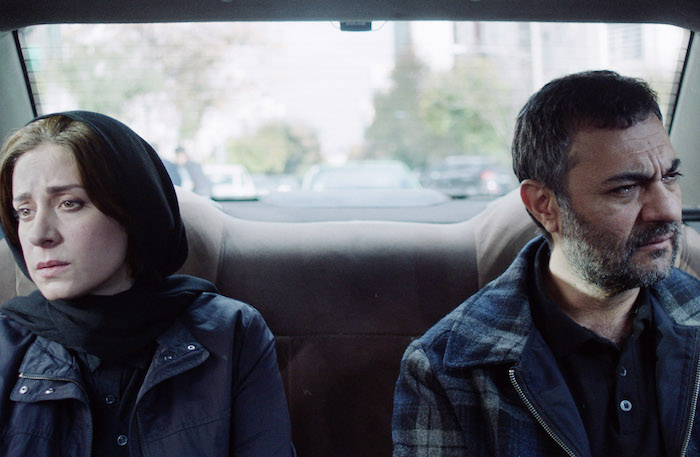
Maryam Moghaddam and Behtash Sanaeeha’s Ballad of a White Cow isn’t as accomplished as Rasolouf’s film, but it does attempt to come to grips with the moral destruction wrought by state-sanctioned murder. Whereas Rasolouf dealt directly with the executioners, Moghaddam and Sanaeeha take a wider look at the bureaucracy that oversees the justice system carrying out these killings, but they do so in a manner that allows for a more nuanced dramatic reading of the issue. Moghaddam herself plays Mina, a single mother whose husband has been executed for killing a moneylender. A year after his death, Mina and her brother-in-law (Pourya Rahimisam) are summoned to the justice ministry’s chambers where they are told that a mistake was made, and that the real killer of the moneylender has confessed. (Mina’s husband did attack the moneylender, but the fatal blow was delivered by another man who showed up later with, presumably, a similar grudge.) At first devastated and then righteously incensed, Mina demands an apology in addition to the meager compensation she receives, but none is forthcoming from the stolid bureaucrat, who simply says it was “God’s will,” which turns out to be a leitmotif in explaining many of the hardships that Mina and her 9-year-old daughter, Bita (Aviv Puffaoufi), who is deaf and unaware that her father is dead, suffer at the hands of Iranian society, which cannot countenance a fatherless family, regardless of the circumstances that made it so. 

Struggling to pay the rent with a low-paying job in a milk factory and staving off her brother-in-law, who believes she is hiding her dead husband’s money, Mina is at her wit’s end when a mysterious man shows up at her door saying he is an old friend of her husband’s who has come to repay an ancient debt. This middle aged man, Reza (Alirez Sanifar), gradually insinuates himself into Mina’s life, helping her find a new apartment when she’s kicked out of her old one and endearing himself to Bita, who has come to understand without being told that her father is never coming back from “abroad.” Meanwhile, the bureaucracy grinds on and while Mina does exact some satisfaction, she is continually set upon by other forces, not least of which is her in-laws, who now want custody of Bita. Reza, as it turns out, can help there, too.

Plot-wise, Ballad of a White Cow often shortchanges its characters’ motivations: The viewer may wonder why Mina doesn’t see through Reza’s subterfuge given how intelligent and even hard-headed she is portrayed to be. Moreover, Moghaddam and Sanaeeha give Reza a back story that seems conveniently and conventionally tragic, thus setting an unsubtle dramatic tone that’s retrofitted to justify Mina’s burgeoning feelings for him. Nevertheless, as a snapshot of Iranian society the movie has the power to infuriate, thus reinforcing its main point, which is that the death penalty is so easy to apply here because the people it nominally protects are so cold. In that sense, it conveys the banality of evil behind the system more forcefully than does Rasolouf’s film. In one scene, Mina visits a realtor whose office is modern and flashy and who tells her in a matter-of-fact way that none of the landlords he represents will rent to a widow. Your first impulse is to laugh because the cruelty seems so automatic.

In Persian. Opens Feb. 18 in Tokyo at Toho Cinemas Chanter Hibiya (050-6868-5001).

Ballad of a White Cow home page in Japanese

Posted in Movies | Tagged , | Leave a comment

Review: Los Bando

For such a small film with modest comic goals, the Norwegian road movie Los Bando takes on a lot. Ostensibly, it concerns the ambitions of a group of small-town teenagers who yearn to play rock n roll and intend on competing in a battle of the bands contest in a city on the other side of the country, but it also takes the time to explore each band member’s personal investment in the journey, which isn’t a bad idea except, as mentioned above, it’s supposed to be a comedy and the laughs are often sacrificed to make trite points about what a drag it is growing up.

The environment here has something to do with it. The band’s guitarist, Grim (Tage Johansen Hogness), is a talented instrumentalist but sucks as a singer, except he doesn’t know that and his best friend in the band, drummer Aksel (Jakob Dyrud), is too chicken to tell him. Besides, good singers are almost as scarce in their home town as bass players, which is why they recruit Thilda (Tiril Marie Hoistad Berger), who may be only 9 and plays cello rather than bass, but she’s a badass on that cello. A power trio with a crappy singer and a kid cellist is better than no power trio at all, so they conspire to secretly make it to Tromso for the competition, but how to get there? That’s where Martin (Jonas Hoff Oftebro) comes in. A motor sports aficionado with no drivers license but a secret music jones, he steals his missionary brother’s “Jesus van” to help Los Bando Immortales realize their dream, thus setting in motion not only a road movie of self-discovery, but one that involves three chase elements: Martin’s brother; the police, since Thilda has been reported kidnapped; and various parents and concerned adults. As it happens, each member of the band has an agenda that the competition is meant to assuage, either a girl or a mentor that needs impressing, a parent whose neglect needs to be called out, or simply a means of proving one’s worth to oneself. And while the movie hits all the required beats on its way to satisfying all these needs, including side trips to save a bride in distress and a karaoke contest to earn gas money, it tends to do so without any dramatic strain, making the whole movie somewhat pedestrian in style and tone. Even the music, which you’d expect to be pretty cool since Norway is the birthplace of death metal, is limp. Only Thilda rocks out convincingly. 

In Norwegian. Now playing in Tokyo at Shinjuku Cinema Qualite (03-3352-5645).

Los Bando home page in Japanese

photo Filmbin AS (c) 2018 Alle Rettgheter Forbeholdt

Posted in Movies | Leave a comment

Review: The Rescue

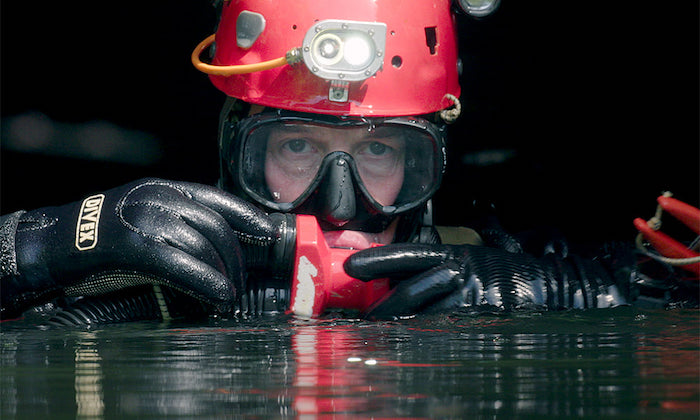
Though conventional Hollywood action films are most viewers’ go-to source for visceral entertainment, you really can’t beat a good documentary that thoroughly examines an incident involving extreme danger. Because it was produced by National Geographic, Elizabeth Chai Vasarhelyi and Jimmy Chin’s The Rescue is pretty wonkish in its detailed depiction of the rescue of 12 young soccer players and their coach from a flooded cave in northern Thailand in 2018, but without explicitly drawing attention to the inherent drama of the incident, it’s harrowing in the most direct way, even when you know how it turned out due to the extensive coverage it attracted from world media. The main reason for this is that the rescue was considered impossible for the longest time, and the film explains why over multiple episodic sequences where various rescue experts, including Thai’s version of the Navy Seals who helped coordinate the operation, frankly expressed doubt that they could pull it off. Even U.S. Special Forces, whose assistance was also requested, didn’t provide much hope.

The two people who did have hope and, by extension, become our hosts through this complicated process, were British cave divers Rick Stanton and John Volanthen, who discovered the boys deep in the cave system (they had apparently been exploring the caves as tourists when a flood occurred, trapping them). The discovery, however, was the easy part. What proved extraordinarily difficult was getting them out, since it would involve transporting them underwater through a series of very narrow passageways. Consequently, the directors and their crew could not film the rescue firsthand, and thus had to rely on Stanton, Volanthen and their crew to both record whatever they could and then describe afterwards how they did it, and the pair, fortunately, are articulate, succinct, and, most importantly, vivid in their sharing of the experience. These are men who absolutely love what they do, which is why they’re so good at it, and while their determination to save the boys sprang from their basic humanity, it was stimulated by their natural desire for challenge. 

The drama is automatic: the waters weren’t going to subside anytime soon since monsoon season was starting, and the clock was ticking since oxygen in the cave was limited. The two divers had a bit of luck in preparing for the rescue when they discovered, almost by accident, a quartet of public workers also trapped in the cave but closer to the entrance. While trying to help them out of the cave some panicked, which prompted the rescuers to adopt a radical but necessary method to save the boys: make them unconscious before bringing them out. This is why the Seals and the Special Forces were enlisted, despite their initial doubts, because it required split-second timing. In addition, an Australian doctor was recruited to devise a special drug protocol to sedate the boys for something that had never been done before. The divers themselves had to administer these drugs, which meant they need training, too.

Throughout the movie, the pessimism that ruled the moment is offset by not just the amazing bravery of the rescue team, but also by the incredible ingenuity they used to address each problem as it arose. This is the kind of dramatic dynamic that fictional filmmakers can only imagine, a constant push-pull of hope and despair that keeps mounting. The Rescue is simultaneously exhausting and exhilirating. 

In English and Thai. Now playing in Tokyo at Shinjuku Musashinokan (03-3354-5670), Kadokawa Cinema Yurakucho (03-6268-0015).

The Rescue home page in Japanese

photo (c) 2021 NGC Network US, LLC

Posted in Movies | Leave a comment

Review: Blue Bayou

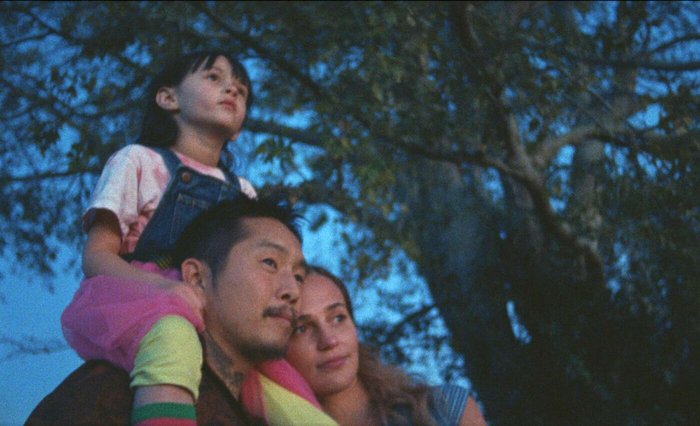
As a movie about anti-Asian racism in America, actor Justin Chon’s directoral debut takes a heavy-handed approach that doesn’t do its theme any favors. The bad guys are bureaucrats and employers who clearly see the main character, Antonio (Chon), as representative of an inferior human subset. Chon, who also wrote the screenplay, intensifies this aspect matter by lending Antonio a backstory that essentially gives these bigots an excuse to reject him: Adopted from Korea, raised in a broken home, handicapped by a criminal record, and possessed of no viable education. On top of all that, the only “bankable” skill Antonio has is tattooing, an art that many people have a problem with because of the “kind of people” who get tattoos, especially in the South, where Antonio has lived almost his entire life. 

It’s a lot of baggage to carry for a first-time director, and while Chon’s passion for the project is apparent in his portrayal of Antonio, the movie buckles under the load. The crux of the plot is Antonio’s resident status. When he was adopted by an American couple, they neglected to file the proper documentation that would ensure his citizenship, so when he is arrested for ignoring the racist come-ons of a literally stupid cop (Emory Cohen), his case is tagged by ICE, which, since this is during the Trump administration, sets the wheels in motion to have him deported, even though he knows no language other than English and left Korea when he was a toddler and thus has no known relatives there. His only legal hope is his family—wife Kathy (Alicia Vikander) and step-daughter, Jessie (Sydney Kowalske)—and the child Kathy is expecting. Antonio’s lawyer (Vondie Curtis-Hall) tries to get the court to see that if he is deported, his children would be left without a father, but given that Antonio is not as gainfully employed as his wife, who’s a nurse and whose ex-husband (a cop) could be tapped for child support, and doesn’t have much in the way of employment prospects, his suit isn’t a very strong one. Chon further stirs the pot by giving Antonio a combative personality that fires up with the slightest spark of resentment. Desperate for money to pay his legal fees, he returns to a life of crime, thus seemingly sealing his fate, or at least as far as these kinds of movies go.

The heavy-handedness seems hardly necessary given the movie’s subtheme of Antonio being not only stateless, but drifting in a world that won’t have him because our existence is so dependent on labels that precede us. He introduces an older woman, Parker (Linh Dan Pham), a refugee from Vietnam, who tries to introduce him to his Asian heritage, even if Vietnam isn’t Korea. Though at base there’s something rather trite about this subplot, it works to highlight Antonio’s isolation from his birthright, which should be American by default but can’t be due to the nativist sensibility that still finds non-whites unacceptable as real Americans. When Antonio attends a party thrown by Parker’s family, he feels for the first time a sense of belonging, even if he doesn’t fully understand it. Even Kathy gets into the spirit by singing the title song, which connects their New Orleans home to the larger world represented by Parker and her monolingual father. 

Had Blue Bayou been formulated simply as an issue movie, or a more intimate study of a man without a country, it would have probably conveyed Chon’s ideas more readily, but its reliance on melodramatic plot devices that detract from the credibility of its message makes it a chore to sit through. 

Now playing in Tokyo at Toho Cinemas Chanter Hibiya (050-6868-5001), Shibuya Parco White Cine Quinto (03-6712-7225).

Blue Bayou home page in Japanese

photo (c) 2021 Focus Features, LLC

Posted in Movies | Leave a comment

Review: The United States vs. Billie Holiday

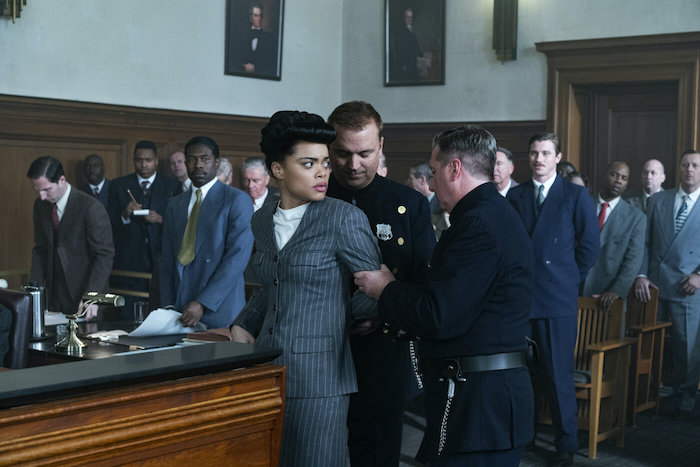
As the title so starkly conveys, the theme of Lee Daniels’ biopic of the woman who many believe to be the greatest jazz singer of all time is the constant struggle Billie Holiday endured just to exist, but the story that Daniels tells, while rooted in her drug addiction and the attendant scrutiny by law enforcement, ranges beyond the overt systematic racism of those in authority to focus equally on those Black men who kept her down at every turn, and not just sexually. For that reason, the movie is often a veil of misery and pain punctured occasionally by one of Andra Day’s stupefyingly redolent impersonations of Holiday in performance, so depending on what you bring to the movie, your appreciation may vary widely. For sure, this is not a hagiography, nor an appreciation of artistic genius, and it shouldn’t be. But it sticks Holiday in an unflattering box, removing most of the personal agency from her tale.

Daniels’ canniest choice is to build the plot around Holiday’s most indelible hit, “Strange Fruit,” a poetic but unblinking depiction of a lynching. The song was so controversial that eventually even federal agents forbade her from performing it lest it stir up bad feelings in Black audiences, who would then recycle the resulting resentment into non-compliance with laws designed to keep them “in their place.” Holiday knew this and, according to the movie, sang it for the express reason of provoking those emotions, so, in a sense, the FBI had a point by dint of their own racist fundamentals. The script, by Pulitzer Prize-winning playwright Suzan-Lori Parks, connects Holiday’s combative artistic sensibility to her heroin addiction, which she never really renounced even when she attempted to kick it, as well as her chronic choice of abusive partners. Some reviewers have griped that focusing on this aspect of Holiday’s emotional makeup shortchanges her as a human being for the sake of dramatic force, but there’s a lot to be said for the image of a strong black woman who refuses to bend to others’ wills even when that stubbornness might kill her. However, Parks miscalculates by centering much of this conflict on the relationship between Holiday and a Black federal agent, Jimmy Fletcher (Trevante Rhodes), who is tasked with finding dirt on her. That Fletcher is Holiday’s most avid fan first and her lover later adds too many subtexts to a movie that already feels top heavy with meaning, aside from whatever information you might glean about her actual life. Fletcher was apparently a real person who regretted his role in Holiday’s ongoing suffering, but the sex stuff was apparently all Parks’ idea. 

Consequently, the biggest problem some viewers will have is with the sexual violence and the drug use, which are explicit to the point of physiological repulsion. Day, an R&B singer who has never acted before, is, quite simply, astounding, and not just because of her vocal chops. If she deserved that Oscar nomination in the eyes of the Academy, it’s likely because very few other actors can imagine putting themselves through what she did to realize Parks’ and Daniels’ vision, regardless of whether you think that vision was worth pursuing.

Opens Feb. 11 in Tokyo at Shinjuku Piccadilly (050-6861-3011), Shibuya Cine Quinto (03-3477-5905).

The United States vs. Billie Holiday home page in Japanese

photo (c) 2021 Billie Holiday Films, LLC

Posted in Movies | Tagged , | Leave a comment