Media watch: Government demonstrates selective memory when it comes to Japan’s mining history

Chosei disaster memorial exhibit (Yonhap)

Last week, the Cabinet decided it would ask UNESCO to list a gold and silver mine on the island of Sado as a World Heritage Site. The government says the mine, which opened about 400 years ago and closed in 1989, deserves recognition as a prime representative of Japan’s “industrial heritage,” since at one time it produced more silver than any other mine in the world. However, South Korea has already challenged Japan’s version of the mine’s history, saying that the mining company used forced labor from the Korean peninsula during the time when Korea was a colony of Japan. According to a Bloomberg report, the Japanese government “has said little” about the “human rights conditions at the mine.” South Korea’s Yonhap news agency says it is believed that more than 2,000 Koreans worked there between 1910 and 1945. The difference in narratives surrounding the Sado mine mirrors the dispute the two countries had over another Japanese mine that eventually went on the World Heritage list: Hashima, an island off the coast of Nagasaki Prefecture. The South Korean government says that the coal mine on Hashima also used forced labor, but the materials and exhibits at the site claim that the Korean laborers were well-paid and well-treated. South Korea has accused Japan of whitewashing the mine’s harsh conditions.

The Japanese government’s selective memory when it comes to recounting the history of its mining sector isn’t limited to sites it hopes to make into tourist attractions. On Feb. 3, Yonhap reported on the 80th anniversary of a mine disaster off the coast of Ube in Yamaguchi Prefecture that killed 183 workers, 136 of whom were Koreans. The Chosei coal mine, located under the seabed, collapsed at about 9:30 a.m. on Feb. 3, 1942. 

None of the bodies have ever been recovered. A local citizens group has over the years recorded testimony and gathered documents about the disaster, and some of it indicates that as early as Nov. 30, 1941, the mine tunnel was showing signs of leakage. However, the company did nothing and kept sending miners into the tunnel. Yonhap says that, at the time, the Japanese media only gave cursory coverage of the disaster, which is one of the reasons the bodies were never recovered. The mining company and the country itself, which was still at war, preferred to forget about it. The South Korean government, however, has not forgotten, and its Truth Commission on Forced Mobilization Under Japanese Imperialism has cited the Chosei disaster as an example of corporate negligence that needlessly put Korean forced laborers in a dangerous situation. 

The local citizens group was established in 1991 and subsequently provided the South Korean government with the results of their research. They identified the victims of the disaster and contacted survivors of those who were Japanese nationals. In 1992, surviving families of the Korean victims established its own association. Every year since 1993, the two groups carry out a memorial service on Feb. 3 near the spot where the collapse occurred, though last year’s ceremony was cancelled due to the COVID pandemic. In addition, the Japanese group installed a plaque on the site with the names of the known victims and have worked to conserve the mine piers, which are the only relics still standing. In 2013, the two groups started a concerted effort to recover any remains from the site and repatriate them. The Korean side has been lobbying the South Korean government to positively negotiate with the Japanese government to carry out the recovery. However, according to the Japanese side no progress has been made in this endeavor since the Japanese government has not responded at all, either to South Korean entreaties or to their own. 

One member of the Japanese group told Yonhap that she believes if the two governments cooperate on the recovery effort “friendlier relations…will improve as a result,” which is a pretty optimistic view of the matter considering how stubborn the Japanese government has been about denying that there were any Korean forced laborers in Japan during the colonial period. There are also vested interests involved. The mining company behind the Chosei disaster eventually morphed into Ube Industries, the largest private employer in Yamaguchi Prefecture, which happens to be the home constituency of former Japanese prime minister Shinzo Abe, who has taken a personal interest in promoting the Sado gold and silver mine as a World Heritage site. The city of Ube also has a PR working relationship with the Yomiuri Shimbun newspaper, which, of course, has said nothing about the disaster or the groups working to recover remains of the victims, but, then again, no mainstream media have ever covered the matter in Japan, only a few independent journalists and Akahata, the organ of the Japan Communist Party. Some vested interests aren’t so easy to see.


Posted in Media | Tagged | Leave a comment

Review: Lansky

It was inevitable that Meyer Lansky get the gangster biopic treatment, and considering Lansky’s special place in the annals of the American underworld, Eytan Rockaway’s version of that life is disappointingly generic. A Jew and proud of it (but devoutly secular), Lansky was a financial wizard, a genius with numbers who parlayed his accounting skills into a position at the upper levels of organized crime for a large chunk of the mid-20th century. He single-handedly developed Cuba’s casino business before Castro dismantled it, and then had a hand in inventing Las Vegas with his protege Bugsy Siegel. More importantly, while he also allegedly had a hand in a lot of murders—at one point he led the wittily named hit squad Murder Inc.—he was never indicted for anything more serious than tax evasion, and died of lung cancer in his 80s in Miami. The movie, in fact, is about him soliciting a writer, a fictional conceit of Rockaway’s, to pen his biography, but according to his rules, which have less to do with making him look good for prosperity than with giving him at least some control over his legacy. 

In that regard, Rockaway’s best, perhaps only, good decision was hiring Harvey Keitel to play Lansky in his dotage. Keitel brings his own legacy to the role and commands every scene he’s in, emphasizing Lansky’s self-importance as a historical figure while refusing to whitewash his most atrocious actions. The actor plays up Lansky’s old-fashioned wit and belief that his presence alone should be intimidating enough, and you believe the character when he warms to his interlocutor, a down-on-his-heels writer named David Stone (Sam Worthington, made up to look like Tom Selleck, for some reason). The scenes between the two men, which often take place in a diner where Lansky knows all the waitresses on a first-name basis, get to truths about how certain men believe that intimidation is the right of a successful operator and give Lansky the kind of extra dimension that’s difficult pull off in these kinds of biopics. 

Unfortunately, the rest of the movie squanders this insight for the sake of cheap cliches. Stone is being blackmailed by the FBI into getting intelligence from Lansky about where he supposedly stashed $300 million. The writer is also trying to reconnect with his daughter after divorcing his wife. And the flashbacks, which recount Lansky’s rise and rise over the years are, despite whatever historical interest they provide, nothing more than opportunities to show how vicious the mob is when carrying out its prerogatives. Rockaway also implies that Lansky’s Jewish heritage was exploited twice, first by the US government, which allowed him to brutally eliminate the German Nazi influence on the docks of the middle Atlantic states in the years leading up to and including WWII, and later when he helped bankroll the new state of Israel, promising them weapons as well. Both subplots are used narratively to explain Lansky’s fortunes in that the governments of both the U.S. and Israel “betrayed” him, a supposition that, in Rockaway’s hands, is simplified to the point of irrelevance. Lansky the historical figure deserves better, and so does Keitel.

Now playing in Tokyo at Shinjuku Wald 9 (03-5369-4955).

Lansky home page in Japanese

photo (c) 2021 MLI Holdings, LLC

Posted in Movies | Tagged , | Leave a comment

Media watch: Justice ministry ties itself into knots attempting to simplify paternity determination

One of the purposes of Japan’s koseki (family register) system, if not the main purpose, is to provide the authorities with some control over what constitutes a family, which naturally leads to grey areas and points of contention, since it’s usually families themselves who define what they are, and they can differ significantly from one to another in terms of structure and makeup. One of the central means of exerting this control is for the government to insist on having the last say on who is the father of a child. Determining the mother is easy and incontrovertible: it’s the person who gives birth. Paternity, however, is more or less a matter of taking somebody’s word for it, usually the mother but sometimes the nominal father, and until DNA tests became practical there was no empirically effective way to determine paternity of a child, so the government made rules that would essentially give it the right to approve who the father is.

Under the circumstances that are considered “normal” by the authorities, meaning a married heterosexual couple who produce a baby through sexual intercourse, the process of determining paternity is straightforward and glitch free. But anything that veers away from this scenario invariably causes problems for the bureaucrats whose job it is to implement the government’s acknowledgement of paternity, and one of the most contentious situations in this regard is when a woman has divorced and then remarried within 300 days of the divorce’s finalization and, during this period, given birth. Under present law, the paternity of the child is acknowledged to be the previous husband, since the government has determined that the gestation period of a human baby is 300 days and thus there is the possibility that the baby could have been conceived on the eve of the finalization of the divorce. It doesn’t matter how long the couple in question had been separated prior to the finalization, nor how long the woman and her subsequent husband had been in a relationship before the baby’s birth. The government doesn’t want to bother with such uncertainties, and so formulated an arbitrary cut-off point that makes it easier for them to register the child’s father in the koseki. 

Continue reading
Posted in Media | Tagged , | Leave a comment

Review: Ghostbusters: Afterlife

It’s difficult to believe that the producers of the latest Ghostbusters reboot didn’t receive some kind of studio pushback for the subtitle of the movie. Obviously, the word “afterlife” can have some clever connotations when it comes to ghost stories, but given the rocky history of the franchise it also suggests that the series was already dead. Consequently, the meta aspects of Afterlife tend to overwhelm whatever charms the story and the presentation offer. For me, these considerations have less to do with the idea of connecting the reboot to the original series, thus leapfrogging Paul Feig’s previous reboot, whose well-meaning all-female casting coup turned out to be a PR nightmare, than it does with making the new Ghostbusters team one of children. Moreover, one of those children is played by Finn Wolfhard, the star of the hit Stranger Things Netflix series, thus making it appear that Afterlife isn’t so much milking the Ghostbusters brand as it is ripping off an entirely different property.

The narrative link to the original movie is Egon Spengler, the tech wiz member of the team played by Harold Ramis, whose own death in 2014 adds another meta layer. Spengler’s daughter, Callie (Carrie Coon), and her two kids, Phoebe (McKenna Grace) and Trevor (Woldhard), down on their economic luck, move to Spengler’s abandoned farm in the middle of a desolate plain somewhere in the Midwest. The kids, who never knew their grandfather, find all sorts of interesting things on the farm and in tinkering with them free the ghosts that have been locked up since the original series. By itself, it’s a serviceable plot, but director Jason Reitman—yes, the son of the original director, Ivan Reitman—seems determined to point hysterically at every connection between his movie and his father’s, and the effort gets embarrassing. The action scenes could be reliably laid over their cognates from the 1980s and there would be practically no distortion. Even worse, all the principals from the original eventually make an appearance, including the one who’s dead thanks to the kind of CGI that makes these endless franchises possible without actually making them fresh. Though Reitman junior does come up with a few new ideas that could be extrapolated in later installments, such as Phoebe’s total lack of social graces, there’s not enough here to inspire hope, if, in fact, you really are looking for the franchise to continue by any means necessary. But it really seems about time the Ghostbusters thing was properly laid to rest.

Now playing in Tokyo at Toho Cinemas Nihonbashi (050-6868-5060), Toho Cinemas Hibiya (050-6868-5068), Marunouchi Piccadilly (050-6875-0075), Shinjuku Wald 9 (03-5369-4955), Toho Cinemas Shinjuku (050-6868-5063), Toho Cinemas Shibuya (050-6868-5002), Toho Cinemas Roppongi Hills (050-6868-5024).

Ghostbusters: Afterlife home page in Japanese

Posted in Movies | Tagged , , | Leave a comment

February No. 1 Shimbun column

We’re now contributing a monthly media column to the No. 1 Shimbun. It should be pretty much the same as Media Mix in terms of content and style, but probably longer since No. 1 Shimbun is only published online, which means we don’t have a word limit. Also, it isn’t behind a pay wall. Here it is, about the recent scandal surrounding the Choose Life Project, a relatively new independent web channel devoted to current affairs.

Posted in Media | Leave a comment

Media watch: Bicycle accidents receive extra scrutiny from public, police and media

On Jan. 26, Tokyo District Court began hearing a case in which a bicycle delivery person is accused of riding recklessly and causing the death of a 78-year-old man in Itabashi Ward last April. Prosecutors are demanding a 2-year prison term for Junya Iwano, the rider who, at the time he struck the man, was carrying out deliveries for Uber Eats, the app-based service contracted by food establishments for their meal deliveries. Reportedly, Iwano was in the middle of a “quest,” which is a kind of challenge offered by Uber Eats and other companies to its delivery persons to complete a certain number of deliveries in a given period of time for extra money. It was raining when Iwano struck the victim, and Iwano did not have a bike light, though the accident happened around 7 p.m. Quests are usually offered during peak demand periods, such as when the weather turns bad. 

The coverage of the trial, which is expected to end on Feb. 18, was widespread and mostly focused on the quest aspect, since it is assumed that such incentives are what caused Iwano to ride recklessly in the first place. However, there are other factors that have received less attention and which Iwano’s defense may use to get him a suspended sentence (he’s already admitted his guilt and apologized). One is, of course, the rain. Iwano wears glasses and constantly had to wipe the moisture from his lenses while riding. Such an excuse by itself wouldn’t normally mean anything in court, but combined with the Uber Eats’ incentive and its attendant implication that delivery persons only make as much money as the number of deliveries they can achieve, there is a good chance the judges could be swayed that it was the system that caused the accident rather than the rider. Iwano, it should be noted, has a full-time office job and works for Uber Eats to make enough money to live on. It’s an old story and doesn’t excuse his actions, but it may have an effect. What’s particularly sad about the story is that bonus Iwano was working for was only ¥1,200, and it required him to make 12 deliveries in the space of 4 hours.

Continue reading
Posted in Media | Tagged | 2 Comments

Review: Crescendo

German-Israeli co-productions have emerged as an almost distinct subset of middlebrow art house cinema. Invariably, all the movies in this category deal either directly (Plan A) or indirectly (The Cakemaker) with the two countries’ fraught relationship owing to history, but they also use this dynamic to explore fairly problematic issues in the world at large. This 2019 film initially comes across as daring in this regard since it takes on the Israeli-Palestinian question, an issue the Germans would, understandably, approach delicately. Though perceived Israeli oppression of their Palestinian minority would likely alarm conscientious Germans who know from their own history what oppression of a minority can lead to, the fact is that the state of Israel rose from the ashes of the Holocaust, which was caused by the German nation. 

Crescendo couches its presentation of this problem in a fictional act of restitution: a German-lead orchestra made up of both Israeli and Palestinian musicians. The almost flip motto of the international project—Make music not war—would seem to signal a somewhat cynical attitude toward such endeavors on the part of the filmmakers, and, at least in the beginning, the project seems to be more of a PR gesture than a concerted effort to bring people together. However, director Dror Zahavi favors melodrama over seriousness of purpose, a contradiction that is best represented by the German conductor chosen to lead the ensemble, Eduard Sporck (Peter Simonischek), whose first utterance is that his country should be forgiven for its past sins. In any case, he is strictly a man of the arts, and will not tolerate any political hanky-panky on his watch. Such a character is central to Zahavi’s canny dramatic strategy: Depict all the various ways that people attempt to come to grips with international strife as a means of showing how institutions need to address person-to-person matters first.

It’s a cliche born out by the tense subplots that keep the movie interesting. The Germans audition musicians in both Israel and the occupied territories, with Zahavi focusing on  several players with markedly different backgrounds. There’s the Palestinian clarenetist who learned his instrument playing weddings and has never seen a French horn in his life falling in love with an Israeli who plays that instrument. Then there’s the proud, German-educated Israeli master violinist who bristles at the notion that he will have to compete with a proud female Palestinian violinist who he assumes has never studied as hard as he did. The maestro thus has to amend his normal working methodology against his will to account for these tensions, and he’s not always successful. Zahavi makes Sporck out to be a borderline asshole, which provides room for his own hackneyed redemption, but there’s an overdetermined quality to the dramatic arc as suicide bombings happen in the background and internecine conflicts wax and wane within the orchestra, which ends up relocating to Italy once the auditions end. One tends to wonder if the choice of program—Dvorak’s “New World”—is itself a cynical joke, but Crescendo is nothing if not forthrightly earnest, which is why it’s such a frustrating movie overall. 

In English, German, Hebrew, Arabic and Italian. Now playing in Tokyo at Shinjuku Piccadilly (050-6861-3011), Human Trust Cinema Yurakucho (03-6259-8608). 

Crescendo home page in Japanese

photo (c) CCC Filmkunst GmbH

Posted in Movies | Leave a comment

Review: Rockfield: The Studio on the Farm

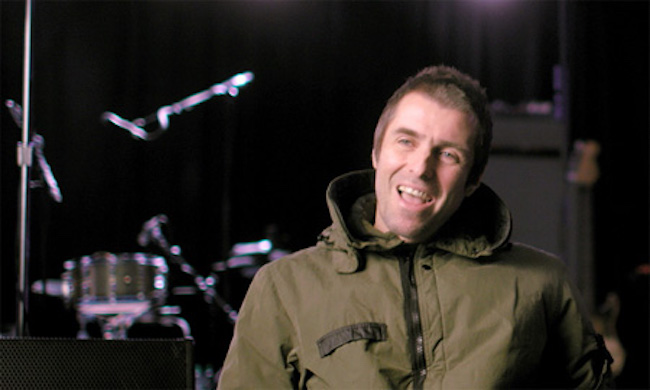
If you assess music documentaries by how many interviews with rock stars it contains, Rockfield, which is about the titular Welsh recording studio built on the premises of a working farm, will probably be right up there at the top of your list. The only caveat I would offer is that almost all of these musicians are British, and while Brit rockers are often more erudite and coherent than their American counterparts, they also tend to be more full of themselves, owing, I would imagine, to the special relationship they’ve had over the years with the British music press. Another caveat: An inordinate amount of screen time is given to Liam Gallagher.

In and of itself, Rockfield the recording studio is worthy of a documentary. The family farm, owned by two brothers, Kingsley and Charles Ward, rarely broke even as an agricultural enterprise but the idea of converting some of the facilities into a studio mainly sprang from the Wards’ own unsuccessful bid to become pop stars in the late 50s. They even did a demo for George Martin, but after it was rejected they decided to try and record their music themselves and set up a makeshift recording studio in one of the barns. It didn’t make a difference with regards to their musical dreams, but the studio attracted local talent who wanted to record and take their own shots at the big time. And then the brothers had a brilliant idea that just happened to dovetail with the ascendance of corporate rock in the late 60s: Make Rockfield a residential studio, a place where groups could work and live at the same time, thus allowing them to put all their efforts into the recording. Labels were shelling out good money at the time to attract and keep best-selling bands, but with the usual distractions, including drugs and groupies, getting in the way, it was often difficult to maintain their presence at London studios on an everyday basis. At Rockfield, they were not only ensconced in a beautiful, bucolic place where they could jam and record whenever they wanted to without interference, but they could party as much as they wanted to, as well, without interference. (The pub in the nearest village became a notorious watering hole for celebrity rockers.) 

Black Sabbath was one of the first major bands to record there, and Ozzy Osbourne (subtitled, of course) spins some colorful tales about how the focus afforded by the isolation made them think for the first time that they could create something great, all the while getting stoned and drunk to the extent where memories are pretty cloudy. In fact, one of the charms of the movie is that a lot of the stories sound like rubbish, but director Hannah Berryman doesn’t seem to be a stickler for detail. The woolier the story, the better, since it only goes to enhance the farm’s special aura. After all, while these groups were laying down tracks that would become stone classics, the Wards and their families were tilling the fieldss and milking the cows, and often the two missions would cross and blend. Robert Plant, always a brilliant raconteur, is particularly fluent about the pastoral effect the farm had on Led Zeppelin’s third album. 

However, Rockfield didn’t really come into its own until the 90s and the emergence of Britpop (after a relatively fallow 80s, when the Wards had trouble keeping up with the new technology). Everyone from Stone Roses to Coldplay recorded their best work there and the survivors are effusive about their admiration for the Wards and their little rural empire. There’s also the requisite drama: Rob Collins of the Charlatans famously died in a car crash on the road that connected the farm to the village. And for a good stretch, Kingsley and Charles didn’t speak to each other due to differences about the future of the farm, which was mostly run by Kingsley’s wife, Ann, and daughter, Lisa, anyway. Charles ended up setting up his own studio on the other side of the farm, though Berryman doesn’t delve into it very deeply. She seems to be considerate to a fault, allowing her interlocutors to say whatever they want and withhold whatever they want, as well. Fortunately, there are enough good stories to make Rockfield an entertaining if somewhat fawning documentary about British rock’s peculiar self-absorption. 

Now playing in Tokyo at Shinjuku Cinema Qualite (03-3352-5645), Human Trust Cinema Shibuya (03-5468-5551).

Rockfield home page in Japanese

photo (c) 2020 le le Rockfield Productions Ltd. 

Posted in Movies | Tagged , , , , | Leave a comment

Media watch: High court “forgives” trainee convicted of abandoning baby, but only up to a point

Vietnamese trainees in Japan

Technical trainees who come from overseas to work in Japan are subject to conditions that don’t necessarily apply to foreign workers who come to Japan with conventional work visas. There are many people who feel these conditions are unreasonable, especially given the general understanding that the technical trainee system, whose ostensible purpose is to “transfer technology” from Japan to so-called developing countries, was mainly put in place to provide Japanese employers with cheap labor. 

One such perceived condition is that trainees cannot be pregnant while they are in Japan. Any trainee who is found to be pregnant may be subject to deportation. This rule became headline news in December 2020 when the Kumamoto district prosecutor indicted a Vietnamese trainee on suspicion of abandoning not one, but two dead bodies. The trainee, a 21-year-old woman named Le Thi Thuy Linh, worked on a tangerine farm and had given birth to twin boys in mid-November 2020. The indictment says it was likely the twins were stillborn, and she placed the bodies in a cardboard box and put it on a shelf in the house where she lived in the town of Ashikita. A Dec. 29, 2020, Mainichi Shimbun story described Le’s situation and said she tried to hide her pregnancy from others by wearing loose clothing, afraid that if her condition was discovered she’d be sent back to Vietnam. She earned about ¥150,000 a month, of which ¥120,000 she sent back to family in Vietnam. She had arrived in Japan in Aug. 2018 and was hoping to stay and work until Aug. 2021.

Le gave birth by herself after working half-a-day in the fields. Two days later she was brought to a hospital where “the abandonment of the babies’ bodies came to light.” She was subsequently arrested and, according to Mainichi, said that she was afraid of being fired and sent back home, but there was no one she could talk to about it. Even when she had fallen sick a month earlier, she refused treatment due to fear that the pregnancy would be discovered.

Continue reading
Posted in Media | Tagged , | Leave a comment

Review: Silk Road

Writer-director Tiller Russell’s highly dramatized recreation of the rise and fall of the darknet website Silkroad.com takes a novel approach to the classic protagonist-antagonist dynamic in that the two main characters are really antagonists. In fact, it’s safe to call both Ross Ulbricht (Nick Robinson), the 20-something cyber genius libertarian creator of the website, and Rick Bowden (Jason Clarke), the seriously limited DEA agent who tries to bring Ulbricht down, assholes, since they tend to treat loved ones and confidantes like shit and decide early on that they’re special enough to be above the law in their respective ways.

Ulbricht’s idea is pretty simple, and immensely profitable in 2013. Create a space on the alternative web where people can buy and sell anything they want, though what makes him insanely rich is drugs, which can be delivered anywhere, including postal boxes, and remain undetected since the payment is in cyber-currency. The idea as presented, however, doesn’t interest Ulbricht because of the money he can make, but rather due to the fact that it completely sidesteps the authorities, which is kind of his life’s work. Ulbricht’s adventures in cyberspace are conveyed in parallel with Bowden’s saga, which starts with his release from a psychiatric facility in Baltimore where he was treated for addiction. He’s welcomed back into the agency but given a desk job in cybercrimes, an area he not only knows nothing about, but for which he has no affinity since he barely knows how to send a fax. 

What unites the two men is their obsessiveness, and while Russell does a fair job of showing how their parallel trajectories eventually come together, while charting those trajectories he needs to maintain a kind of dramatic tension that’s difficult to do when the crimes in question are taking place in the ether. So he gooses the story with, on Bowden’s part, a sub-tale about his estranged daughter’s difficulties in getting into a good school (which require more money than he makes); and on Ulbricht’s part, the notion that SilkRoad.com is growing beyond his control. For sure, the latter story is more interesting and the reason the movie was made in the first place, but for some reason Russell privileges Bowden’s, and the movie sputters as a result. As a movie about wannabe alpha males pissing all over themselves, Silk Road delivers a certain edgy Schadenfreude, but if you want to learn about the actual affair, you’ll have to read a book. 

Now playing in Tokyo at Shinjuku Wald 9 (03-5369-4955), Shibuya Human Trust Cinema (03-5468-5551).

Silk Road home page in Japanese

photo (c) Silk Road Movie, LLC

Posted in Movies | Leave a comment