
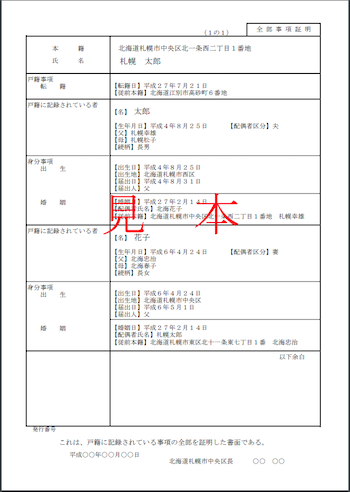
One of the purposes of Japan’s koseki (family register) system, if not the main purpose, is to provide the authorities with some control over what constitutes a family, which naturally leads to grey areas and points of contention, since it’s usually families themselves who define what they are, and they can differ significantly from one to another in terms of structure and makeup. One of the central means of exerting this control is for the government to insist on having the last say on who is the father of a child. Determining the mother is easy and incontrovertible: it’s the person who gives birth. Paternity, however, is more or less a matter of taking somebody’s word for it, usually the mother but sometimes the nominal father, and until DNA tests became practical there was no empirically effective way to determine paternity of a child, so the government made rules that would essentially give it the right to approve who the father is.
Under the circumstances that are considered “normal” by the authorities, meaning a married heterosexual couple who produce a baby through sexual intercourse, the process of determining paternity is straightforward and glitch free. But anything that veers away from this scenario invariably causes problems for the bureaucrats whose job it is to implement the government’s acknowledgement of paternity, and one of the most contentious situations in this regard is when a woman has divorced and then remarried within 300 days of the divorce’s finalization and, during this period, given birth. Under present law, the paternity of the child is acknowledged to be the previous husband, since the government has determined that the gestation period of a human baby is 300 days and thus there is the possibility that the baby could have been conceived on the eve of the finalization of the divorce. It doesn’t matter how long the couple in question had been separated prior to the finalization, nor how long the woman and her subsequent husband had been in a relationship before the baby’s birth. The government doesn’t want to bother with such uncertainties, and so formulated an arbitrary cut-off point that makes it easier for them to register the child’s father in the koseki.
Continue reading







 philipbrasor.com