
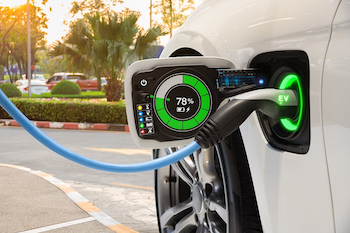
Here’s this week’s Media Mix about a press conference given by Akio Toyoda, the president of Toyota Motors and the chairman of the Japan Automobile Manufacturers Association, about the government’s plan to ban gasoline-powered vehicles by the year 2050. Though Toyoda’s remarks, which mostly take the government to task for its plan, are self-serving, he is correct in saying that the government is just as responsible as automakers for making the future they envision a reality. The reason that electric vehicles are selling well in Europe and China is that their governments have already started creating an environment where they can sell, mainly by helping set up networks of charging stations through subsidies and other incentives. As one of the pundits said on the Abema News program cited in the column, consumers generally don’t care much about the EV discussion, and probably less about the environment in general, at least when it comes to cars. They will only buy a certain type of car if it’s convenient in terms of their needs. In that regard, automakers’ main responsibility is getting EVs to travel longer distances on a single charge, which they are doing, but people who are buying EVs tend to use them for short journeys and errands. There’s still some resistance to EVs for use on long trips, which may be why sales in the U.S. aren’t as brisk as they are in Europe and China. In America, people still take long car trips, and when gas prices are low they travel a great deal. But now that GM has announced that they, too, will stop making gas-powered cars in the near future, it’s obvious that the U.S. is also reckoning with a sea change in its attitude toward transportation.
But there are other problems to address besides the lack of charging facilities. Toyoda focuses on the electric power grid, saying that Japan will need to produce a lot more electricity if all the cars on the road are EVs. That’s another thing the government has to do because the automotive industry can’t. And whether the increase in power output leads to more CO2 is a matter that must be considered in line with the move to EVs. But another problem is waste. All these EVs will run on batteries that don’t last forever, and disposing of them will create another environmental hazard. So far, there has been little discussion on what to do about battery waste or recycling. Another pundit on Abema News said that Japan doesn’t have the “ability” to make these kinds of batteries now that Panasonic no longer makes them for Tesla, the world’s leading EV maker. Battery technology will become much more important in the future and thus this pundit is worried that Japan will lose part of its technological edge unless automakers start making their own batteries. And while Toyoda also fretted about the negative impact a switch to EVs would have on employment, since much fewer parts go into an EV as go into a gas-powered car or a hybrid, he didn’t say anything about software, which will become the main manufacturing concern when EVs dominate. As one pundit said, EVs will be more like smart phones than like cars, meaning they have to be constantly upgraded. The tech companies that control this software will control the industry.
But one more consideration that probably has Toyoda worried is increased interest in ESG (environmental, social and governance) investments, which have boosted Tesla stock prices through the roof. Toyota, as a maker of gas guzzlers, does not benefit from such investments, and if it doesn’t get on the bandwagon now they could be left behind. Of course, Toyota is still working on hydrogen cell cars, but without a clear future in terms of sales no one is going to invest in such technology, no matter how “green” it seems. In fact, the pundits on Abema News said that the person who put the bug in Prime Minister Yoshihide Suga’s ear about going all-EV was Hiromichi Mizuno, a member of the Tesla board of directors and former chief officer of Japan’s government pension investment fund. One pundit wondered if Toyoda’s rant was not simply an angry reaction to this intelligence, which, apparently, everyone in the industry knows about.








 philipbrasor.com