Review: Song to Song

If timing is everything then it will be interesting to see how Terrence Malick’s 2017 feature fares at the box office in Japan during a pandemic. It has less to do with logistical issues — I predict the movie will be streaming before long — and more to do with the subject matter and the movie’s attendant air of laconic privilege. Reportedly the last in a trilogy of movies that takes place in our modern world (a theory that is somewhat proven by the fact that Malick’s latest film is set in the past, like almost all of his most famous titles) Song to Song nevertheless feels uncomfortably dated if only because of its ill-timed release in Japan. It is set in the world of commercial popular music and many scenes were shot backstage at the Austin City Limits Festival. Seeing hordes of people rocking to the likes of Iggy Pop and the Red Hot Chili Peppers feels sadly anachronistic, like, “those days are gone for good.” 

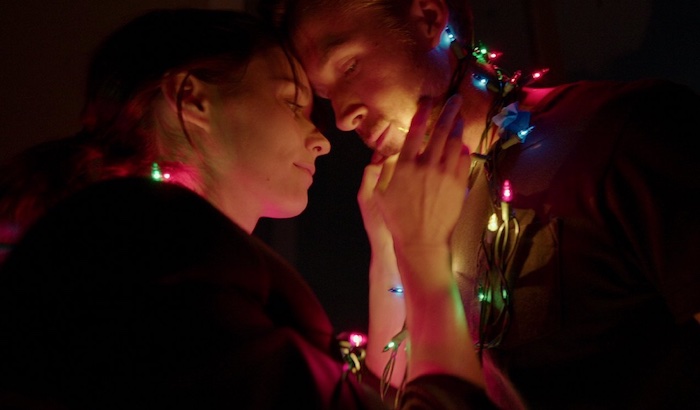
But even if you approach the film as happening in a distant past, its whole mood seems strikingly out of touch with conventional human experience. Revolving around a romantic triangle consisting of an up-and-coming singer-songwriter, BV (Ryan Gosling), an arrogant, self-centered record producer, Cook (Michael Fassbender), and a young woman, Faye (Rooney Mara), of drifting purpose and appetites whose own musical ambitions seem to be stunted, the story always seems to be passing by its subjects as it meanders on to the next fuzzily conceived anecdote. The viewer is a passenger in a car zipping by — just as they start to understand what they’re looking at out the window it’s on to the next scene. 

Most of these scenes come across as elaborate, almost childish renderings of romantic foreplay. There are lots of instances of either BV or Cook rolling around on a bed with Faye in some very high-end properties (BV lives for a time in a high-rise, while Cook’s abode is a rambling modernistic mansion on the water) while whispering sweet nothings (“just tell me a complete lie”). Since Malick’s script doesn’t follow any kind of chronological order, we often see the end of a relationship before the beginning or the middle, and, because the movie is long, the impression is that Faye was Cook’s plaything before she took up with BV, whom Cook is grooming for stardom but, in the end, betrays by stealing his copyrights. However, such a precis is way too generous in terms of plot dynamics. The movie is not really interested in story protocols like motivation of character development. If anything, the three principal actors seem to be playing off images they cultivated in previous films, which makes the whole “indie music scene” setting all the more preposterous. When you have these A-class movie stars rubbing shoulders with genuine rock musicians like Patti Smith, Tegan & Sara, and Lykke Li, it breaks down your ability to suspend disbelief. Add to that the fact that, except for a few times when he sits listlessly at a piano pecking out a melody, we never see BV actually doing music, not in a studio or, for that matter, in a live setting; a decision that, given the tenor of the film, feels like nothing more than laziness. 

But as always, Malick, thanks mainly to his long-time cinematographer Emmanuel Lubezki, manages to offer up some moving tableaux that brings the director’s penchant for the godly grandeur of the natural world to bear on a decidedly artificial one. The rich-and-famous atmosphere created here may be overly familiar and, due to the music biz references, hackneyed, but it can also be breathtaking, especially when it’s used to highlight certain dramatic points that would otherwise feel tossed-off, such as Cook’s impulsive marriage to a diner waitress (Natalie Portman, looking like anything but) that eventually destroys her and her mother (Holly Hunter); Faye’s brief fling with a French woman (Berenice Marlohe); or BV’s sojourn home to meet up with his estranged, dying father. It’s sort of maddening that these episodes are shoehorned in for the sake of dramatic credibility, but they work if only because Malick understands the appeal of dramatic conventions. It’s just that his conceptions in this case are fundamentally corny. A cameo by Cate Blanchett as a rich woman who takes up with BV is totally superfluous and makes you wonder what Malick wanted out of the character. Obviously he has no trouble attracting expensive talent, but given the enormity of his own you only wish he could find better uses for others’.

Now playing in Tokyo at Shinjuku Cinema Qualite (03-3352-5645), Human Trust Cinema Shibuya (03-5468-5551).

Song to Song home page in Japanese

photo (c) 2017 Buckeye Pictures LLC

Posted in Movies | Tagged , , , | Leave a comment

Media Mix, Dec. 20, 2020

Sugako Hashida

Here’s this week’s Media Mix about the stalled engagement of Princess Mako and Kei Komuro. In the column I cite an Asahi Shimbun Koron piece. Koron articles typically include personal essays by three writers, and I mentioned two of them in my column. The third was written by Sugako Hashida, the veteran teleplay writer, famous for the long-running “home drama” Wataru Seken Oni Bakari, a saga about several generations of a middle class Tokyo family. I’ve always found Hashida to be annoyingly verbose. She’s the type of writer who has her characters give long, unnatural speeches that attempt to explain everything, whether it be about a development in the story or about life itself. Like many big shots in show business, she gets away with a lot because no one edits her. Her imperiousness extends to her view of the world and, especially, the “Japanese family,” of which she is considered an expert, though her views are quite reductive. 

In her Asahi comment, she says she initially had no interest in Princess Mako’s marriage simply because she has no interest in the imperial family, but after she was asked to write about it she studied the matter as covered by the weekly magazines and she now thinks it is interesting. That’s because she can look upon Mako’s situation the way she would one of her home dramas, which are invariably filled with “meddlesome relatives.” She confesses that she started writing about fictional families in order to confront the problems taking place in her own family, in particular the bad notices her housekeeping and cooking skills received from her in-laws. She channeled her anger into her scripts, which explains the long-winded, often self-righteous speeches. 

Nevertheless, she says she tries to consider every angle of a problem that arises in her stories, meaning not just from the viewpoint of one person, but from the viewpoints of everyone affected. That said, she then confesses that as she gets older she automatically takes the sides of older characters, and in the case of Princess Mako’s floundering betrothal she takes the side of her father, the Crown Prince, and if that makes her a “gawking old lady,” then so be it. Since I’m not really sure how the Crown Prince really feels about his daughter’s marriage—as I said in the column, his comment sounded equivocal to me—I’m not really sure what Hashida is talking about, but the essay does read like something that one of her characters would say; i.e., very little about Princess Mako’s dilemma and a lot about Sugako Hashida. Maybe that’s what Asahi Shimbun wanted.  

Posted in Media | Tagged , | Leave a comment

Review: Book Club

In a time when going to the movies is considered by many an endeavor fraught with peril, the choices made by Japanese distributors and movie houses invite extra scrutiny. Here we have a frivolous American romantic comedy originally released in 2018 starring three of the 70s most reliable Hollywood female actors and a fourth who mainly made her mark in the 80s, thus appealing to a certain layer of Japanese boomers who might still want to see a film in a real theater, but I’m probably overthinking the matter. Most likely, the distributor bought the film more than a year ago and has just been trying to get it into a venue somewhere, and thus feels lucky they can actually get a theatrical slot in order to boost the inevitable VOD release, which is probably only weeks away.

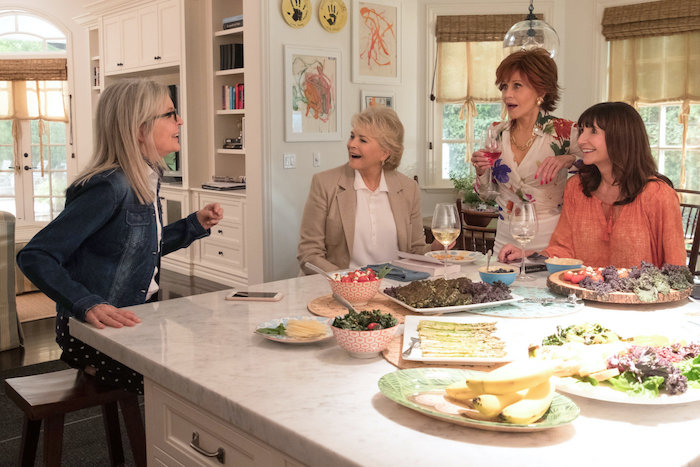
That said, the movie has its predictable but nonetheless peculiar charms, all of which are contained in the aforementioned casting of screen vets long in the tooth. In fact, it’s easy to get the impression that director/co-writer Bill Holderman didn’t actually develop his script until he knew which actors would be on board, because the characters are suspiciously tied to their players’ public images, which, of course, are mostly shaped by the roles they are known for in the past. Diane Keaton plays a cognate of herself who is conveniently named Diane, a recently widowed septuagenarian who wouldn’t mind getting back in the dating game but for her daughters’ queasy objections. Jane Fonda’s Vivian is a riff on Fonda’s Grace & Frankie character’s horny rich senior citizen, who may have lost her mojo in bed (though God knows she tries) but can still get it up for business. Candice Bergen takes the long view on the prim young woman she played in Carnal Knowledge, but for laughs this time. She is Sharon, a long-divorced judge who hasn’t had sex in 18 years and is perfectly OK with that. The outlier, Mary Steenburgen, seems to have been cast only because Jill Clayburgh is dead. Of the four central women, her Carol is the only one with a living husband (Craig T. Nelson), albeit one who isn’t interested in whoopie any more. 

The title refers to an excuse for getting all these characters together in one place where they talk not so much about the novels they’re reading but rather about their own thwarted dreams and hopes while under the influence of wine, which is the fifth long-toothed character in the story and the only one that seems to be in every scene. I approve if only because the alcoholism on display is never demonized but simply presented as a side effect of the privilege these people enjoy as women who had to navigate the shoals of unreliable men to achieve that privilege. The impetus for the late sexual soul-searching is E.L. James’ racy bestseller Fifty Shades of Grey, a book that the quartet initially pooh-pooh for its gratuitous salaciousness but nevertheless devour more readily than anything since Erica Jong’s Fear of Flying when it first came out, just so you can understand how long this book club has been operating. 

The subplots that show these women taking a chance on post-menopausal sexual intrigue (well, except for Vivian, who has been getting it all along, albeit without any kind of satisfying emotional investment) are much less interesting than the book club sessions themselves, which entertain through a combination of frank discourse on the indignities of aging and the actors’ skill at turning their respective screen iconographies into a compelling ensemble. In contrast, the veteran male actors (Andy Garcia, Richard Dreyfuss, Don Johnson) seem stranded on the reef of cliches endemic to this kind of movie. Holderman knew exactly what would appeal to the audience and focused on that, and, in a way, it’s nice to see a filmmaker go with what so obviously works, even if nothing about the end result has anything to do with real life.

Now playing in Tokyo at Human Trust Cinema Yurakucho (03-6259-8608), Human Trust Cinema Shibuya (03-5468-5551).

Book Club home page in Japanese

photo (c) 2018 Bookclub for Cats LLC

Posted in Movies | Tagged , , , | Leave a comment

Media Mix, Dec. 13, 2020

Here’s this week’s Media Mix, which is about Misako Obayashi, a homeless woman who was killed by a man who didn’t like her sleeping in a bus shelter near his home in Shibuya. As I wrote near the beginning of the piece, not much was really known about Obayashi’s living situation or how she became homeless. However, in the most recent issue of Aera there’s an article in which a former work colleague of Obayashi’s explains what she does know about the 64-year-old woman’s life. 

Initial news reports said that Obayashi was working at a supermarket until February. According to the acquaintance, she didn’t actually work for a particular supermarket, but instead was lent out by various temp companies to promote and give out samples of prepared foods inside supermarkets, and that she’d been doing this kind of work for a long time. Of course, once the coronavirus crisis hit last spring, supermarkets stopped giving out samples in-store, since the close contact and handling of foods involved in such work presents the risk of spreading the virus more readily. So that would likely explain why she stopped working in February. But as the unidentified woman points out, the kind of “day labor” that Obayashi was doing was already fraught with insecurity. She reckons that Obayashi made about ¥7,000 a day, and such work is never guaranteed. Often, in fact, assignments are cancelled at the last minute, and the worker receives no pay at all. The woman knows what she’s talking about because she worked for the same sort of temp company, doing the same sort of work, and that’s how she met Obayashi “about 10 years ago.”

She said also that Obayashi was good at her job, that she had a knack for salesmanship that the temp companies and their clients appreciated. Apparently, her sales experience went back further. Obayashi used to be a salesperson at a “major dapartment store.” What the woman wants the reporter to understand is that Obayashi was not some unskilled, useless layabout. She was a professional, but given the labor environment that has developed in recent years, she wasn’t treated as one. She was disposable. 

The woman remember Obayashi telling her a few years ago that she had received a bill for late tax payments. Because she mostly lived hand-to-mouth on her part-time wages, she had to pay the bill in piecemeal fashion over a period of months. Obayashi was always begging for work at the 3 temp companies where she was registered, and didn’t always get any. Eventually, she believes, Obayashi fell behind on her rent. She was living in one of those apartments that you rent by the day or week, places that are easy to move into because the management company doesn’t require deposits or guarantors. However, if you fail to pay your rent on time, you can be thrown out immediately, and apparently this is what happened 3 years ago. Obayashi came home and her key wouldn’t work. All her possessions had been removed and left on the street. 

The woman implies that Obayashi had probably been homeless ever since, and yet, whenever she saw her she was cheerful. She didn’t dwell on her misfortune, probably because she didn’t want to burden other people with bad feelings. However, such a living situation has to take its toll, and over time she noticed that Obayashi’s mental state became “unstable.” 

The woman had not seen Obayashi for many months, but she did stop by the bus shelter where she died to pray for her friend after she read about the killing. In a coda to the article, the reporter says that, statistically, the number of homeless in Japan is decreasing, but it’s probably because more homeless people are getting off the street and into shelters or paying for booths in internet cafes. In any case, almost all homeless people, contrary to common belief, work. It’s just that they don’t make enough to be able to move into a conventional rental unit due to prohibitive ancillary costs and conditions. This problem seems to affect women more seriously. Although women only account for 3 to 5 percent of street people, the percentage of women who have no fixed addresses is much greater, meaning they are either camping at internet cafes, sleeping on relatives’ floors, or paying on a daily basis for rooms in cheap hotels. According to Aera, “women’s poverty” is harder to see because it is “buried in the home,” meaning that women who may have been supported by a man and got divorced, or ran away from their homes due to domestic violence, are suddenly thrust into the work force without any preparation and resources. This may not have been the case for Obayashi, but for whatever reason she didn’t avail herself of the various public services and NPOs that are in place to help such women get back on their feet. Getting the word out is important, but, as the reporter says, many homeless people are too ashamed of their circumstances to ever seek that kind of help. 

Posted in Media | Tagged | Leave a comment

Far From Heaven

I am slowly adding reviews to this blog that I wrote for the Japan Times and the Asahi Shimbun in the 90s and early 00s and which are not currently on the web. This review from the Asahi was published in July 2003.

Continue reading
Posted in Movies | Tagged , , , | Leave a comment

Media Mix, Nov. 29, 2020

Kentaro Iwata

Here’s this week’s Media Mix about dueling narratives in the media regarding the COVID pandemic. Though the obvious problem inherent in this split is that the message of “what to do” gets muddled, it’s been obvious for at least twenty years that the media can’t be trusted, at least as an institution, to provide consistently useful information about an issue, even one that so directly affects public welfare, such as this virus. Viewed simplistically, the split is considered political in nature, either right vs. left, conservative vs. liberal, conventional vs. contrarian. But in essence it’s mostly an economic matter, especially in Japan. In the U.S., where the so-called cultural divide in the media is more conspicuous, the scramble for attention is also more pronounced than ever since the advertising model that traditionally supported news outlets has undergone such a huge, momentous change since the dawn of the millennium. Conservative types still like to talk about the liberal press, but, as always, conservatives are stuck in a past that they believe was more clear cut in terms of ideological commitments. Actually, the press has never been that “liberal” in the popular acceptance of the term, but the press did once find it easier to be objective about the stories they covered because they didn’t have to worry so much about the bottom line, and, liberal that I am, I think that the more objective you are about a story the more you see through the ideological filters. Conservatism follows a more strictly defined ideology than does liberalism, which I think is more committed to what is actually going on in life. Ever since Reagan did away with the Fairness Doctrine, the media has been freed from this kind of objectivity because, in the mind of conservatives, mandating strict adherence to objectivity isn’t objective at all but rather a violation of free speech rights, and all hell has broken loose as a result. The mud slinging that characterized the most recent presidential election, on both sides, is the culmination of this ad hoc, free-for-all doctrine, which economic changes over the past 20 years, brought about through the dominance of the internet and mobile technologies, has only exacerbated. 

In Japan, there are still laws to safeguard fairness in media coverage of political speech, but since Japan doesn’t have a genuine two-party system, these laws don’t really mean anything. The economic gamesmanship that’s a function of the ideological split in the U.S. is also in play in Japan, but there’s not enough of a political balance here to support a true center-left media force. The Asahi and Mainichi are not left wing news organizations, despite what conservatives want you to believe. For that matter, neither are CNN and MSNBC, and it has more to do with adversarial concerns than ideological ones. The inevitable battles are not over who is “right,” but who has more sway over the public imagination.

In the end, the public loses, especially during an ongoing crisis where useful information is not just helpful but sometimes a matter of life and death. No one can say for sure why Japan hasn’t suffered the kind of massive death rates that the U.S. and Europe have seen, but it’s not because the Japanese media has been better at clarifying what needs to be done. This week’s column implies that the media’s investment in the Olympics may be compromising its COVID message, but mostly it has to do with the kind of “objectivity” that says you balance all views. It’s just that the government’s view is so dominant that there might as well not be any other. In the Mainichi interview cited in the column, infectious disease expert Kentaro Iwata sums up this phenomenon rather well when he says that it’s the lack of “objective standards” that has made the reporting of the crisis so frustrating, and has led the populace to grow “tired” of hearing about COVID. Because the authorities are reluctant to tell people what to do, the public eventually realizes they are on their own, and unless they are peculiarly and uniformly civic-minded (and I think that Japanese people, for the most part, are) they will end up doing what they want, and Iwata sees that as a disastrous outcome. It’s up to the media to point out that the government line on the pandemic isn’t a line at all. It’s simply a scheme to shift the burden of responsibility on to the general public, so that, in the end, the government can’t be blamed when things go wrong.

Posted in Media | Tagged | Leave a comment

Stranger: the hero you never knew you needed

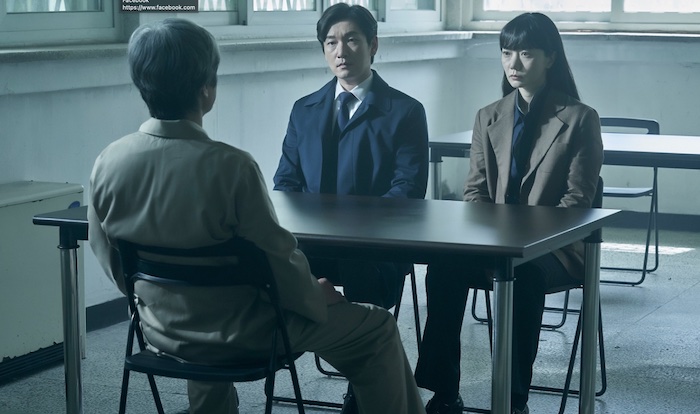
Having missed out on American “peak television” as it happened, I always felt out of the loop until I finally did get around to watching The Sopranos and The Wire and even Mad Men years after their original airing. Now that streaming is the norm and universal, I can be mostly in the loop, including for those series on premium cable that don’t have much lag time on their way to Hulu or Netflix or Amazon Prime. I resist the urge to binge, however, even when the storyline seems to reward bingeing. The exception during the past six months or so of self-isolation has been the South Korean drama series Stranger, whose two seasons are now available on Netflix. Originally broadcast on the Korean cable channel nTV, which also brought you the biggest binge phenomenon of the pandemic (at least in Asia), Crash Landing On You, Stranger‘s first season appeared back in 2017 and the second not until this past summer. I watched the first season in October and just as I finished it the second season was made available worldwide on Netflix, so I was able to watch both seasons in rapid succession. 

By “binge” I don’t want to imply I watched three or four episodes a day. I stuck to one a day, and for a specific reason. Stranger, which takes place in the South Korean Prosecutors Office, is dense with incident and exposition that is almost completely conveyed through dialogue, and that means I had to read a lot of subtitles. Reading subtitles is not a problem for me, but the plot layers of Stranger can overlap and intersect in often confounding ways, and if you’re not taking notes certain narrative points might drop from memory if too much time elapses between episodes. At the same time, since this density of information can be overwhelming at times, I often felt so exhausted after an episode, trying to keep up with the various threads, that I couldn’t bring myself to watch the next one right away, even if it ended in a cliffhanger. These aspects aren’t unique to Stranger, but because of the peculiar themes developed by the writer, Lee Soo-yeon, they made the experience of watching it unlike any I’ve ever had with a narrative TV series. 

Part of that feeling, of course, is that this is a Korean show, and while I’ve watched my share of Korean dramas, I’ve never been as partial to their particular charms as I am to those of Korean cinema, which is an entirely different animal. But Stranger doesn’t align with most Korean TV dramas, either, and from what I’ve gathered reading reviews of it, even Koreans don’t think it does. Like a lot of Korean dramas and movies, it’s “high concept,” in that its premise can be explained in one sentence: the hero is a prosecutor who literally lacks empathy. Hwang Si-mok (Cho Seung-woo) suffered from hypersensitivity to certain frequencies of sound as a child, often resulting in extremely violent behavior. He eventually underwent surgery to alleviate the sensitivity, and while the operation was successful enough for him to lead a normal life, he also lost the ability to empathize with others. This aspect is explained in the first five minutes of Episode 1 and almost never comes up again during the entire series, and it wasn’t until I was deep into season 2 that I realized why. The whole point of Hwang’s “condition,” in practical terms, is that he is unmoved by the power games that hold sway in any bureaucratic organization, especially in Korea, where one’s station is determined by myriad arbitrary details having to do with education, age, family background, and, most significantly, professional connections. None of these things matter at all to Hwang, which means he approaches his job in the purest manner, undistracted by peripheral concerns that may affect his career. In fact, he is the opposite of a careerist. He addresses his work, which, in essence, is the search for truth, as something that is only understandable in the here-and-now. This not only means he can’t be bribed. It means he doesn’t have the capacity to feel as if every human interaction is in reality a transaction for measuring one’s self-worth. The five-minute origin story is necessary as an explanation for his eccentric behavior, but once you see his methods, especially in terms of investigation—and Stranger is, basically, a mystery series—you buy into his unique world view.

Continue reading
Posted in Media | Tagged , | 5 Comments

Review: Tezuka’s Barbara

Macoto Tezka’s live action movie version of his father Osamu Tezuka’s early 70s adult manga combines pastiche and originality in a way that’s dramatically stimulating without being particularly memorable. The original comic’s outrageousness was a function of its time and the author’s fanciful imagination, and while Tezka knows this material inside-out and possesses his own imaginative gifts, he seems conflicted as to how this story and its characters speak to a contemporary audience. The setting is a Shinjuku that seems pretty up-to-date, but the main character, a famous novelist named Mikura (Goro Inagaki), still seems to live in the 70s, with a freighted male personality to match. At first, I was reminded of Robert Altman’s 1973 tribute to Raymond Chandler, The Long Goodbye, which directly inserted the late 40s version of private eye Philip Marlowe, complete with rumpled suit, chain-smoking habit, and wise-cracking attitude, into the Me Decade, which he couldn’t handle at all. But Tezka isn’t as interested in critiquing his father’s artistic sensibility as he is in showboating the attendant style. Altman showed how genuinely pathetic an ostensibly noble man like Marlowe was when removed from his natural context, but the post-millennial Mikura simply comes across as an anachronism: the hard-drinking, sexually dissipated, artistically self-obsessed writer who was once a kind of icon, especially in Japan. (Supposedly, he’s based on the hero of Tales of Hoffman) He’s Tanizaki with the coolest collection of vinyl in town; Dazai, but with the suicidal romanticism dialed down a notch.

As such, Mikuro requires a female muse, and he discovers the blonde Barbara (Fumi Nikaido) drunk on the streets of Kabukicho and invites her back to his pad to take a shower. Though Barbara, who can drink Mikura under the table while quoting Baudelaire, turns out to be a handful, to use a sexist term from the period the movie references, they become a kind of item, even while Mikura is half-heartedly engaged to the daughter of a powerful man. To his credit, Tezuka senior didn’t steer the story into James Cain territory, to which it was naturally headed, but rather kept subverting the natural flow of the plot into weirder and weirder spaces. Tezka follows him there with mixed results. Mikura’s life trajectory from literary lion to hack to political operative is upended by his obsession with Barbara, who, it turns out, may or may not have supernatural powers (a lot of the kinky fantasy stuff might only be Mikura’s mind breaking down) but in any event the relationship veers off on a highway to hell whose destination is shocking in theory but, thanks mainly to Christopher Doyle’s (and, in some spots, Tsoi Kubbie’s) expressionistic cinematography, merely interesting in practice. 

The ringer, at least for me, is Inagaki, whose one-time image as the member of boy band SMAP with the smallest reserve of artistic resources is difficult to shake. Seeing him naked and involved in fairly explicit sex scenes, all I can wonder is how his loyal fan base will react. Given that he’s a middle aged free agent now, I imagine those who are still with him approve highly. Whatever its value as a creative artifact, Tezuka’s Barbara is decidedly an art house movie. But like its star’s uncharacteristic turn as a literary bad boy, the film itself is more of a curiosity than anything else. 

In Japanese. Now playing in Tokyo at Cinemart Shinjuku, Euro Space Shibuya.

Tezuka’s Barbara home page in Japanese

photo (c) 2019 Barubora Seisaku Iinkai

Posted in Movies | Tagged , | Leave a comment

Review: About Endlessness

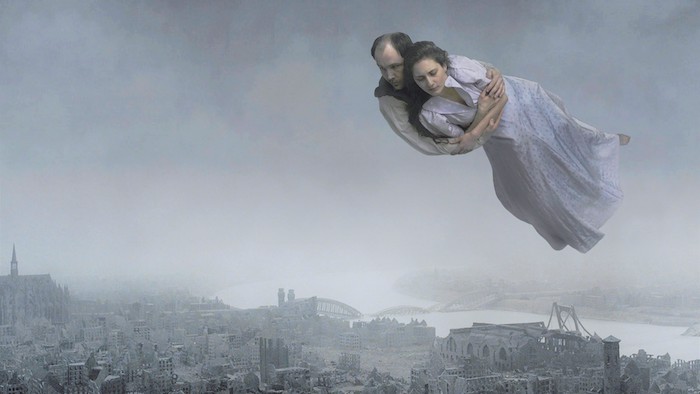
Swedish director Roy Andersson’s gift, if you can call it that, is how perfectly he envisions existence, a trait that’s interpolated cinematically as meticulously blocked scenes, uniformly stark lighting, and little if no camera movement. The mood is minimalist black comedy, but it’s often difficult to laugh at actors who seem to have been chosen for their homeliness, as well as situations in which cruelty is presented so matter-of-factly. There’s little difference between his latest movie and the previous three, which constituted a trilogy, except that there’s an even greater tendency here to mix in the surreal, including an opening vignette that shows a couple in a tight embrace flying over a devastated city. If the trilogy was about death, then About Endlessness is obviously about the afterlife, which makes you wonder where Andersson plans to take this progression next.

What links the vignettes of everyday people suffering everyday torments and emotional setbacks is a mood of muted hopelessness, characterized by an absurd scene of a waiter pouring an endless glass of wine that spills out onto the table cloth, seemingly oblivious to the mess he’s making. Though a few tableaux have repeated storylines, like the one about the medically challenged priest and another with a middle aged man suffering years later for slights he received as a schoolboy, most are stand-alone jokes that work as jokes, but mainly in hindsight. As they’re happening the viewer tends to be busy pondering the meaning of it all. 

And that seems to be Andersson’s purpose, though I, for one, ended up drawing no conclusions, either serially or comprehensively. That said, I’ve always enjoyed Andersson’s films, and not just because his style is so provocative; but rather because as a filmmaker he seems so assured of that gift I mentioned above. There’s nothing self-conscious about his attitude toward humanity or his audience, which he assumes is as concerned for the average zhlub as he is. His is not a world I would like to occupy, and I sincerely hope his depiction is not an approximation of what Swedish life is really like, but from the constantly overcast skies to the painfully functional architecture, it’s a world you can identify with and fall into, if only for 76 minutes, which is a blessing. The “endlessness” he refers to, I assume, is the eternity of death, not that of being stuck in the cinema all day. 

In Swedish. Now playing in Tokyo at Human Trust Cinema Yurakucho (03-6259-8608), Shinjuku Musashinokan (03-3354-5670).

About Endlessness home page in Japanese

photo (c) 2019 Roy Andersson FilmproduktionAB, Essential Filmproduktion, Societe Parisienne de Production, 4 1/2 FiksjonAS, ZDF/ARTE, Arte France Cinema, Sveriges TelevisionAB, Film Capital Stockholm

Posted in Movies | Tagged | Leave a comment

Media Mix, Nov. 15, 2020

Here’s this week’s Media Mix about the government’s plan to allow couples to use national health insurance to pay for fertility treatments. We’ve written about related topics in the past, so here is a list of articles that address fertility, giving birth, abortion, and birth control. Some of the information may be dated, of course. Also, it’s important to remember that childbirth is also not covered by national insurance, though central and local governments tend to provide subsidies to women who have babies.

1999: Legalizing the birth control pill

2004: Stem cell research and abortion

2006: Foster parenting

2011: Morning-after pill

2012: Abortion as an economic issue

2016: Women who don’t want to have children

2018: Sex education in schools

2019: Contraception and women’s reproductive rights

Posted in Media | Leave a comment