
 Romantic melodramas adapted from real-life incidents can often feel doubly phony, since the viewer’s consciosness that these things really happened makes the contrivances feel all the more stagey. Adrift, which is adapted from a memoir by Tami Oldham, has a lot of that loose feeling of stretching the truth for the sake of emotional provocation, but since the basic story is dramatic by definition the viewer allows leeway for their reactions.
Oldham (Shailene Woodley) is a young, freedom-obsessed woman who is traveling the world on her wits and her charms, securing employment in one place before accumulating enough money to go to someplace else. In Tahiti in 1983 she’s working on the docks when she meets Richard Sharp (Sam Claflin), a charismatic Englishman circumnavigating the world in his own hand-made sailboat. Despite what feels like a marked difference in age that makes Oldham suspicious of Sharp’s attentions, they fall in love, a development that puts a crimp in Oldham’s plans because her goal is to do this beach bum thing for as long as she can, and by herself. The idea of real life beckoning from the near future terrifies her. But Sharp already has the future in hand, and while the source of his income remains fuzzy, he’s obviously got life licked, and when he invites Oldham to help him deliver a yacht for a wealthy couple to their home in San Diego, she takes him up on the offer.
Director Baltasar Kormakur jolts back-and-forth between the idyllic time in Tahiti as Oldham and Sharp get to know each other intimately and at their own pace, and the time they spend alone together on the yacht going across the Pacific. Since Oldham chronicled this journey in her best-selling book, it’s not spoiling anything to say that they run into trouble in the form of a storm that destroys much of the yacht and seriously injures Sharp. Much of the yacht-bound portion of the movie is about Oldham coming up with ways of keeping the yacht seaworthy and staying alive. It’s a movie about physical and emotional extremes, and that makes the melodramatic love story that much more potent. The survival sequences are as good as such sequences get, but they are intensified by the undercurrent of Oldham’s desperation in the face of losing a man she has come to love. Whereas most directors tend to focus on the elements in such movies, showing how small we are in comparison to nature, Kormakur zeroes in on Oldham to show how love is the greatest of all powers.
Now playing in Tokyo at Shinjuku Wald 9 (03-5369-4955).
Adrift home page in Japanese.
photo (c) 2018 STX Financing LLC
 Julius Onah’s 2019 American film, based on a play by J.C. Lee (who wrote the screenplay with Onah), proves, if anything, that Hollywood and its lesser lights are not afraid to address thorny issues for the sake of provocation. Luce, which tackles racism, white guilt, and aspects of the #MeToo movement, will leave most people confused as to where they are expected to stand on the matters put forth, and one can feel either edified or manipulated by the results without necessarily being wrong about those feelings.
 Caveat to Sia fans: Don’t go see Vox Lux just because you want to hear your idol’s compositions. The movie does end with an extended concert sequence featuring several Sia songs written expressly for the movie, and they’re not bad, but before that you have to sit through a lot of screaming and weeping and bad feelings that no amount of angtsy pop music can make up for. In theory, the movie, about the unusual rise of a mainstream female pop star named Celeste (Natalie Portman), has an interesting premise, and for a while you seriously wonder where director Brady Corbet is going with it. As a child, Celeste was involved in a school shooting and barely got out with her life. As she recovers from major surgery, she (played as a child by Raffey Cassidy) and her older sister, Eleanor (Stacy Martin), write songs together and then perform one of them at a memorial for students who were killed in the attack. A record producer hears something in the song and has Celeste rerecord it with slight changes in the lyrics to make the pain of the incident resound in a country that is itself suffering from some kind of inchoate trauma. A star is born.
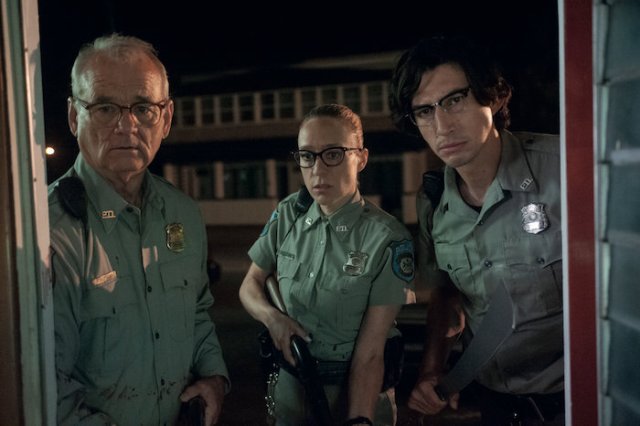 Without a doubt, zombies are the prime pop culture metaphor of our age, distilling the idea of a population zapped out on consumerism down to deadeyed cannibalism. Jim Jarmusch’s comedy is clearly in on the joke and while portions zip by with the kind of laid-back frisson he’s famous for, the theme is way too obvious. In the end, there’s something cheap about Jarmusch’s ambitions for the film.
 A biopic of Harriet Tubman is way overdue, though one could make the argument that the timing of Kasi Lemmons’ movie takes full advantage of the prevailing public sentiment of Black Americans at the moment. When the movie was released in the U.S., Tubman, who helped free many slaves before the Civil War, was being touted as the only correct choice for an historical figure to replace Andrew Jackson on the $20 bill, a move that has been held up by the know-nothing contrariness of the Trump administration. In Japan, the timing is even more appropriate. Originally slated for release here in late March, it was delayed indefinitely by the COVID-19 pandemic, and now is out in theaters the same week that Black Lives Matters demonstrations have circled the globe.
 You have to hand it to Jean-Pierre and Luc Dardenne, the Belgian filmmaking brothers whose dramas make difficult socioeconomic issues relatable on a personal level. Despite the dozens of awards they’ve received and a reputation for unsentimentalized realism that even Ken Loach can’t approach, they forge ahead by trying to find ever more difficult subject mattter. Young Ahmed may be the most problematic theme they’ve ever tackled, which is probably why it’s also one of their most frustrating movies.
 Greta Gerwig made a bold decision to tackle for her second directorial effort not only one of the most beloved classic novels of the 19th century, but one that has been adapted as a movie about a dozen times already. And it’s not as if these adaptations needed improving upon. The idea was that each generation of girls needed their own film version with contemporary actors for identification purposes, and in that regard Gerwig hits her marks admirably, but there’s something else happening in this version that never happened before, something that’s both bracingly fresh and slightly irreverent.

 philipbrasor.com