Media Mix, May 24, 2020

Here’s this week’s Media Mix about stories in the press that focused on the spread of the coronavirus within households and how people coped with the danger. Much has been written about how Japan dodged a bullet with regard to COVID-19, and while we’re not out of the woods yet, it appears that most of the decisions made by the authorities were good ones. I have nothing profound to add to the argument, but based on what I’ve read and seen it doesn’t seem to be a big mystery. Essentially, the Japanese people did what they were supposed to do—they self-isolated to the best of their abilities until they were told it was safe to come out. Did the government act too late? I think so, but hindsight isn’t very helpful in this case, and comparing Japan’s actions and results to, say, South Korea, which acted sooner, has its problems. I believe that nervousness about the Olympics did affect the authorities’ decision-making. They didn’t really become serious about a possible state of emergency until some countries said they would not send athletes. But in the end they did take action, and the effectiveness of that action was reflected in where the virus was concentrating, i.e., in hospitals and among family members, the two places where it was very difficult to prevent contact between the infected and the non-infected. That tells me that people were doing as they were told, but whether this is due to some inherent virtue of the Japanese people I won’t say. Unlike in the U.S., those who feel unfairly put out by orders to shut down the economy didn’t raise their voices as much. The biggest problem in bringing the disease under control was systemic. As we pointed out in a previous column, Japan was perilously unprepared for the pandemic because of the government’s health service cost-cutting campaign, which has been going on for decades. Many hospitals teetered on the verge of operational collapse, and there were many stories in the media about people desperately trying to get medical attention and who were refused simply because they had to be almost on death’s door before a doctor would see them. Luckily, these cases were minimized thanks to the public’s efforts at social distancing and local public health centers’ individual efforts, which may or may not have had anything to do with central government directives. But the truth of the matter is obvious: Japan did as well as it did because it has universal health care and the government, once it made up its mind, acted in a concerted manner. In that regard, its response wasn’t really that much different than South Korea’s or Taiwan’s or other countries that didn’t see the kind of misery you see in the U.S., which does not have universal health care and where the response was woefully uncoordinated. Japan, of course, is going to suffer economically for quite a while, but a lot of people are alive who otherwise wouldn’t be if different decisions had been made. And obviously, Japan doesn’t need to change its constitution to effectively respond to the next pandemic.

Posted in Media | Tagged | 1 Comment

Media Mix, May 10, 2020

Here’s this week’s Media Mix, which is about the main reason behind the Japanese government’s improvisational response to the COVID-19 crisis. We’ve been covering this general topic for years now. The gist of our interest is that Japan has a national health insurance program that provides excellent, affordable care to every resident, but the government’s obsession with market dynamics combined with the medical industry’s profit-making impulses, can undermine the fundamental purpose of health care, which is to improve lives. In this column we explain how ongoing cost-cutting measures first implemented in the 1980s created a situation in which Japan was unprepared for the pandemic. For anyone who is interested, here are links to some other articles we have written on the same general theme.

The cost of reining in costs

Ballooning medical costs = higher premiums

Japan’s dialysis industry

Generic drugs

Private care insurance

Abortion as an economic issue

Who actually pays for care?

Psychiatric care as a growth business

Also, near the end of this week’s column we mention JCP lawmaker Tomoko Tamura, who we should point out has been prosecuting the government’s approach to medical care for some time. She may know more about Japan’s health care system than any current lawmaker, and the media should be paying closer attention to her work. Mostly they treat her as an opposition force who is effective at making the ruling party squirm, which is fine. We need more people who can do that. But what she’s really after, which is to improve the health care system rather than make it merely cost effective, is really what the press should be covering.

Posted in Media | Tagged , , | 2 Comments

Media Mix, May 3, 2020

Takashi Okamura

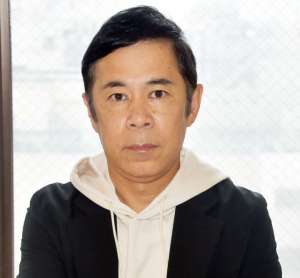
Here’s this week’s Media Mix, which is about emergency government payments to people in the so-called water trade for losing income due to the coronavirus pandemic. As mentioned in the column, sexual services are considered part of the water trade and comedians tend to use such services as fodder for jokes, thus indicating a certain familiarity, be it real or suggested. After we submitted the column Takashi Okamura of the manzai duo Ninety-nine made a remark about sex workers on his midnight radio show that got him into hot water. A listener had written in saying that the state of emergency had inconvenienced him a great deal because it had caused the shut-down of sex services he patronized. Okamura commented that the listener should just be patient because once things get back to normal there will be plenty of beautiful women in the sex trade because they’ll be desperate for employment.

The broadcaster, Nippon Broadcasting System, apologized for the remark first and then Okamura himself apologized. Of course, given the context of the remark—a midnight talk radio show hosted by a comedian who is already known for off-color humor—Okamura was just doing his job. Some producer obviously chose that listener’s message for Okamura to read on the air with the idea that he would say something humorously salacious. Over the years I’ve heard many comedians make similarly crass comments without getting criticized for it, so you could say that the backlash against Okamura, not to mention the pushback against Hitoshi Matsumoto, which we talked about in the column, are signs of progress, but the matter is very touchy for a number of reasons, not all of them having to do with sexism. Generally speaking, comedians in Japan play up their childishness, which means sexual issues are automatically addressed from an immature standpoint. Most of them can’t readily leave that mindset.

Posted in Media | Leave a comment

Media Mix, April 26, 2020

Here’s this week’s Media Mix about reviving the discussion of decentralizing government and financial functions in Tokyo as the COVID-19 crisis reveals how vulnerable Japan is when everything is concentrated in the same place. The argument for decentralization has two compelling points here. Concentration of these functions makes it more difficult to self-isolate and carry out physical distancing measures in a bid to alleviate the spread of the virus; and the attendant disruption of business-as-usual becomes more acute when everybody is in the same place, especially in the case of the public sector, which should be coordinating an effective response to the crisis.

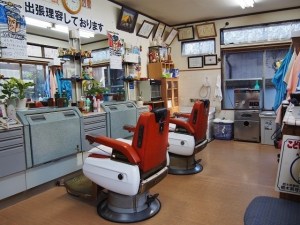
The point about hair grooming businesses at the end is offered with tongue in cheek. The Huffington Post article that brought up the matter was essentially looking at one industry whose very nature is directly affected by physical distancing, since cutting hair requires close contact between service provider and customer. Consequently, the barbers interviewed in the piece are of two minds—they have been trying to address the circumstances of their profession in order to minimize infection vectors, mainly by incorporating stringent disinfectant practices and scaling back on patrons. But they know that there is only so much they can do in their particular situation, and at least one of them believes barbershops should be closed and business owners compensated in some ways by the government. In a sense, she’s actually angry that the central government declared barbershops and hair salons in Tokyo “essential services” because that means if she closes her shop voluntarily for the good of her community, she has to take a loss in income. If the government ordered her to close, they would, logically, at least, be expected to provide subsidies.

The Huffington Post makes a comic jab at the LDP in its headline for the article, which says, in effect, “Politicians, are you really going to go to your barber now?” What this says to me is that Diet members are still in the public eye and therefore need to keep up appearances, so when they say that hair cutting services are essential, they mean for themselves. From what I understand, there are dedicated barber shops in Kasumigaseki and Nagatacho that cater only to government people, be they elected officials or bureaucrats. As I said in the column, the LDP has not insisted on keeping barber shops open in other cities, so the focus on Tokyo becomes a bit more suspicious. We wouldn’t want any cabinet members walking around with fly-away pompadours and unruly ear hair.

Posted in Media | Tagged | Leave a comment

Media Mix, April 19, 2020

Here’s this week’s Media Mix, which is about the state of employment during the current crisis and how some financial media outlets have addressed the matter. Though what drew us to this topic in the first place was the focus on suicides, which we only noticed in the financial press, we should stress that these media are in no way trying to make a case for “reopening” the economy prematurely. The news changes every day, perhaps more rapidly under such circumstances, and at the time we started researching this subject there was not the widespread contrarian opinion that we see today in the U.S. that lockdowns are authoritarian overreactions which impinge on individual liberties. This sentiment has not really taken hold in Japan, which is just now waking up to the realization that it did not act soon enough to prevent a worst-case scenario. But while the idea expressed by Tatsuo Yamakawa in Nikkei Business that the increase in suicides resulting from the coronavirus-caused recession could be just as bad as the number of deaths resulting from the disease itself sounds somewhat contrarian, he was expressing this idea as a means of advocating for greater government support for small businesses and workers in general. As pointed out by Tokyo Shimbun, major Japanese companies have plenty of cash in reserve to keep their employees safe either by having them work from home or not working at all—meaning not commuting to the office—but for the most part they haven’t cut back significantly on business activities, and the government, despite its calls for greater social distancing and the like, is loath to make any demands on the private sector, which is why infection rates are set to multiply drastically. On April 9, Asahi Shimbun ran a useful article about existing measures that the government and employers can use to keep workers both financially secure and physically safe, things like paid leave for childcare (a matter we plan to address in a future column), unemployment insurance, and even national health insurance. Unfortunately, many of these programs are not being taken advantage of fully, either because of red tape, dodgy qualification terms, or just plain ignorance. Instead, you have employers forcing workers to take paid holidays if they decide (or, for that matter, are asked) to not come to work. There are even programs that the self-employed can tap into in order to stay afloat, but employers and politicians don’t talk about it that much because of the settled notion that it isn’t cool to get paid for not working. It goes without saying that during extraordinary situations, settled notions don’t always count for much.

Posted in Media | Tagged , | Leave a comment

Adam Schlesinger

I was stunned this morning when I read that the Fountains of Wayne’s Adam Schlesinger had died due to complications from COVID-19. I have written about the group and Schlesinger’s music a number of times over the past two decades. Here are three related pieces from the Japan Times and a blog post. Apologies for the self-plagiarizing, but sometimes when you hit on a nice idea you just want to keep on using it.

Interview with Adam Schlesinger

Review of Ivy’s “Guestroom”

Review of Fountains of Wayne’s “Welcome Interstate Managers”

Review of a 2012 FOW show in Tokyo

Posted in Music | Tagged | Leave a comment

Media Mix, March 29, 2020

Shiori Yamao

Here’s this week’s Media Mix about the government’s campaign to squelch any media stories that conflict with its own narrative about the coronavirus crisis. Since we first started working on this column several weeks ago, the situation has been even more fluid than we expected, and, not surprisingly, some of what we talked about may seem already dated. The Diet has, of course, passed the legislation that gives the prime minister power to declare a state of emergency to address the virus. He already had that power, but because it had been granted by a government that was not headed by the Liberal Democratic Party, Abe wanted newer, fresher powers, including those to control the media, so that it would look like something he came up with himself. The opposition parties, many of whose members used to belong to that previous government, grudgingly voted for the bill because they didn’t want to look as if they were uncooperative with measures to fight the spread of the virus, but one opposition lawmaker, Shiori Yamao, openly criticized the bill, saying its time limit for a declaration of emergency was too long and that it did not require Diet approval, so she voted against it. That move has made her something of an outlier even within the Constitutional Democratic Party of Japan, and there was speculation that she might leave the party and join another opposition force. Yamao has always been an iconoclast, even when she was mired in scandal, but her isolation from her peers due to her views is troubling.

In a sense, her situation mirrors that of those media entities who seem to be pushing back at the government PR campaign. Strangely enough, it’s been TV this time that has been the most resistant to government control. As the crisis becomes more serious, there is a kind of paradox that has left many journalists confused as to how they should report it. Abe now has the right to declare the kind of wide-sweeping powers that haven’t existed since World War II. The residue of that regime still lingers in people’s consciousness, even if they weren’t born yet, which is one of the reasons why the government has been hesitant to declare a lockdown even though many experts have called for one. During the debate over the emergency bill, it was TV that paid close attention to the preservation of individual rights, with TBS’s “News 23” leading the charge. The newspapers, despite Yoshiko Sakurai’s complaint, described in the first paragraph of the column, mostly held back. Now, everyone seems unsure of what to do, including the government. Though Tokyoites, for example, haven’t been heeding Governor Koike’s “request” to self-isolate and avoid crowds as much as they should, there remains a strong hesitation to invoke emergency powers, but now that the Olympics is postponed it isn’t clear if that hesitation is due to nervousness over the state of the economy or to the aforementioned queasiness of being seen as returning to authoritarian tactics. It could, of course, be a combination of both or something entirely different, but with the media in self-imposed caution mode, it’s difficult to know.

Posted in Media | Tagged | Leave a comment

Review: El Pepe – A Supreme Life

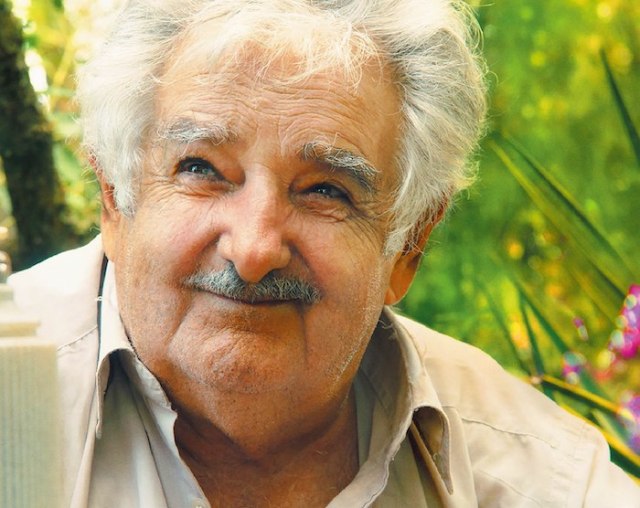
There’s something wonderfully encouraging about Emir Kusturica’s filmic fascination with Latin America. The Serbian director’s reputation as a polymath who makes a decent if not outstanding living as a filmmaker, writer, and musician is enhanced enormously by his tendency to work well outside his wheelhouse on subjects that simply fascinate him. His documentary on the soccer god Maradona was so personal that he titled it Maradona by Kusturica, and while that personal angle sometimes made the narrative impenetrable, it held up as a kind of primer for how to watch South American football, which is like no other pastime in the world. The cigar-chomping director brings this same element of indescribable love for his subject to his portrait of Jose “Pepe” Mujica, the former president of Uruguay who is now comfortably retired on a farm he runs with his forever partner Lucia Topolansky. Now in his 80s, Mujica has lost none of his left-wing fervor (since Topolansky was, at least at the time of the shooting, Uruguay’s vice president, he still has skin in the game) nor his biting, clear-headed intelligence, and though most of the movie involves Kusturica in conversation with him, it’s basically a monologue, because once Pepe starts a story you don’t want him to stop.
And what a story! As with many South American leftist politicians, Mujica started out as a guerilla, fighting against the Uruguayan dictatorship that dominated the country through most of the 20th century. He spent 12 years in prison and then was miraculously elected to the presidency in 2010. Internationally, Mujica was known more for his “neo-stoic” lifestyle than his politics or policies, and Kusturica was no exception, since his metier as a filmmaker has been chronicling the earthy lives of his fellow Serbs, especially those at the bottom of the economic pyramic. As any good journalist would, Kusturica is careful to show that this lifestyle may not be as ascetic as the tabloids would have you believe, but compared to most presidents in Latin America, or in the world, for that matter, it’s practically monkish. What’s refreshing about Mujica is that he doesn’t live this way to set an example. He just prefers it, since living with less removes an entire set of useless obligations from his shoulders, and the movie makes a grand case that it is also the secret to the longevity of both his life and his lucidity.

But the movie also has something for hardcore documentary fans, a deep dive into Uruguayan revolutionary history, with plenty of fascinating archival footage and living testimonies from other players, including Mujica’s fellow leftist inmates Mauricio Rosencof and Eleuterio Fernandez Huidobro, who describe the conditions of their solitary confinement. And while Kusturica’s approach veers into hagiography at times, his decision to outline Mujica’s people-first policies without simplifying them makes the scenes showing those people’s love for their leader—then and now—less sentimental than they seem on the surface. Kusturica admits openly that he is a sucker for the kind of charisma that Mujica wields so effortlessly, but he has the smarts to know that there will be skeptics in the audience. Even skeptics will have to admit that the director understands implicitly how the personal is always the political.

In Spanish and English. Opens March 27 in Tokyo at Human Trust Cinema Yurakucho (03-6259-8608), Shinjuku Musashinokan (03-3354-5670).

El Pepe: A Supreme Life home page in Japanese.

photo (c) Capital Intellectual S.A., Rasta International, MOE

Posted in Movies | Tagged , | 1 Comment

Media Mix, March 22, 2020

Naoto Kan

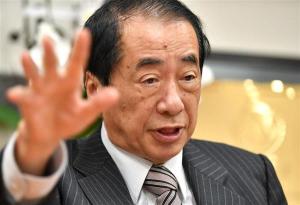
Here’s this week’s Media Mix about the theatrical feature Fukushima 50. Part of the column discusses the portrayal of Naoto Kan, who was prime minister at the time of the Fukushima Daiichi disaster depicted in the movie. Kan comes off badly, and, in real life, the disaster destroyed his party and has made him, in many people’s eyes, representative of the authorities’ ineptitude. Therefore, it’s useful to look at Kan’s legacy, especially with regards to the nuclear power issue. In 1998, when he was the leader of the opposition Democratic Party of Japan, he submitted a bill to the Diet that was meant to facilitate recovery after a chain reaction of bank failures. The ruling Liberal Democratic Party passed the bill and as a result a crisis was averted when banks on the verge of collapse were nationalized. By the same token, Kan thinks it’s important for the central government to take over the job of decommissioning nuclear power plants. He has said that nuclear plants are assets for power companies when they are in service, but once decommissioning starts they become liabilities, and if the company doesn’t have enough money to decommission the plant, their debts will exceed their assets. Nuclear power should thus be nationalized so that decommissioning can go ahead smoothly and at a reasonable pace. Apparently, Kan is still trying to enact such a law, which is, of course, difficult since the LDP wants to restart as many nuclear plants as possible. In a recent interview with Tokyo Shimbun, Kan said that if Abe had been prime minister during the Fukushima incident, things might have turned out differently since it was the LDP’s policy to support nuclear power, meaning that it would have supported Tepco’s efforts, which we have since learned were borderline disastrous and might have let to untold destruction if they had had their way. Kan believes that there is no way his bill could pass under the current administration the way his banking crisis bill did under a previous LDP government. It’s obvious that, whatever Kan’s feeling about nuclear power before 2011, he thinks that the country should move away from it now, albeit slowly and methodically.

As legacies go, this one is perhaps more tenacious than Kan’s detractors would like to imagine. If public sentiment is the main reason why the LDP has failed to get nuclear reactors back online despite the obvious environmental problems created by their replacements, fossil fuel-burning power plants, Kan may be the most central figure in creating that sentiment. Lost in the current flurry of news coverage of a very different emergency, the coronavirus pandemic, news stories about the Fukushima disaster have been necessarily muted, but TBS’s invaluable Hodo Tokushu‘s deep dive into the nine-year anniversary of the meltdown, broadcast February 26, included points that deserve greater attention. Perhaps the most revealing one was how much Taiwan learned from the disaster and incorporated into their own energy policy while Japan has essentially maintained the policy it had prior to the disaster. As the cleanup of Fukushima proceeds at a snail’s pace and the government puts efforts into reopening other reactors, Taiwan, whose geology is very similar to Japan’s, has been busy decommissioning nuclear reactors that are 40 years old (Japan is thinking of extending the expiration date of its reactors) while beefing up its safety precautions with more simulation drills. One of the main contentions of Japanese citizens groups who are suing to prevent reactors from going back online in their vicinities is that the government has not implemented effective safety improvements, which it promised to do after the Fukushima disaster. Essentially, the government has relied on the courts to overlook its negligence in the matter of creating evacuation plans and the like. In contrast, Taiwan passed a law saying that all nuclear power stations will be closed by 2025, the first place in Asia to make such a pledge, though power companies are trying to convince the public that it is too dangerous to abandon nuclear power so quickly without sufficient capacity in other energy sectors. Consequently, it is the aim of the government to increase renewable energy capacity from 6 to 20 percent by 2025, and, according to TBS, they seem to be on track to accomplish that. What’s more, 90 percent of the equipment and facilities used for renewables in Taiwan are made in Taiwan, so the changeover is a source of economic stimulus. Japan is still arguing over which is more practical at the moment, fossil fuels or nuclear. Taiwan obviously learned more from the Fukushima disaster than Japan did.

Posted in Media | Tagged , , | Leave a comment

Review: Capital in the Twenty-First Century

Though I was initially interested in reading Thomas Piketty’s big bestseller about income inequality as a permanently expanding fixture of economic life, I eventually concluded that the book would probably teach me little. Anyone with a decent grounding in social history who follows the news with any kind of regularity already understands most of Piketty’s most salient points: the growth of the middle class, as well as its doom, was predicted by Marx, stockholders eventually eclipsed stakeholders as the drivers of capitalism, late 20th century deregulation meant the end of upward mobility regardless of what the ruling classes told you, the financial industry would dominate all others, and China’s rise was just another victory for the oligarchy. The movie version of Piketty’s tome lays all of these elements out in a convenient timeline spiced up with eye-catching graphics and animation, peppered with tasty sound bites by some of the most charismatic economists presently pontificating, and presented at a crisp pace that will keep you riveted without breaking your brain.

What surprised me more than anything is how much things have not changed in the past three hundred years. The 1 percent, it turns out, has always been around, which I suppose isn’t news, but the thrust of Piketty’s narrative is that they’ve simply changed spots without altering their souls. Also, the cultural bon-bons make the documentary fun without watering down the message—comparing the economic undercurrents in the novels of Austen to those of Balzac, the creation of Christmas as an “industry,” the transformation of the image of Main Street into that of Wall Street. In fact, there is so much stuff to learn about capitalism in the 19th and 20th centuries that you wonder if there will be anything left over for the 21st, and though I knew where Piketty was going, it was still something of a shock to see how the end point of our great capitalist experiment was a world that not only didn’t need workers, but didn’t really want them either. The once hopeful idea of “workers as assets” was always a glorious lie, it turns out, even during that brief window of union-led progressivism after World War II, when the working classes thought they’d turned into the middle classes. Production determined the Allies’ victory during the war, and we all thought that would also determine a brighter future for everyone, but the 1 percent had different plans. For sure, except for some interesting trivial details, I learned nothing new from Capital in the Twenty-First Century, but I did find new ways to feel depressed about it all.

In English and French. Opens today in Tokyo at Shinjuku Cine Qualite (03-3352-5645).

Capitalism in the Tweny-First Century home page in Japanese.

photo (c) 2019 GFC (Capital) Limited & Upside SAS.

Posted in Movies | Tagged | Leave a comment