
Last week the Diet enacted a bill that would reinstate former lines of the imperial household into the chain of succession so that male descendants can be adopted and fill out the ranks of possible future emperors. In addition, female members of the imperial family will be allowed to remain as royals after they marry. The former measure would help ensure that there would be enough male candidates for the Chrysanthemum throne, since it is the ruling Liberal Democratic Party’s (LDP) intention to not allow a female emperor. Much has been made in the media about how neither the public’s nor the imperial family’s opinion has been solicited in deciding these matters because surveys have shown the Japanese people overwhelmingly like the idea that the present Emperor’s daughter, Aiko, could be Emperor someday. As for the imperial family’s opinion, the Emperor has hinted indirectly that it’s a choice the citizenry should make in accordance with the Constitution, a document the LDP tends to consult only at their convenience.
The media has paid less attention to the part of the bill that allows female members of the imperial family to remain in the palace after they marry, presumably to a commoner since there are so few male royals on the dating market. These female members, if they were progeny on the male side of the imperial family, could then produce heirs to the throne, but according to several media there’s a more pressing issue at stake.
Because the imperial family is dwindling, there are fewer royals to carry out komu, or “official duties.” These tasks are distinct from kokuji, work that the Emperor does in line with his hallowed brief: opening a new session of the Diet, or carrying out religious rites associated with the throne. Komu is also distinct from diplomatic activities, such as the recent trip that the Emperor and Empress took to Europe to visit counterpart royalty in the Netherlands and Belgium.
But what komu is exactly is not properly understood. According to the business magazine President, “komu” refers to activities carried out by members of the imperial family that have been decided by the Imperial Household Ministry (IHM) after receiving requests from outside parties. The IHM decides whether to involve the royals in these public activities based on whether they “contribute to society,” an explanation that’s as vague as they come. In practice, an event organizer makes a request to the IHM for the presence and participation of a member of the imperial family. The IHM studies the event and the organizer in terms of past work and security aspects. If the IHM approves of the event, it then submits a proposal to the Cabinet, which has the final say. If the Cabinet approves, a schedule is formulated.
The events that are more likely to be approved are charity-related or have something to do with international relations. The IHM’s main criterion is whether the tenor and purpose of an event seems appropriate for the imperial family. It should be noted that activities deemed “private entertainment,” such as concerts and sporting events, are usually not approved, since the IHM deems that the royals should buy tickets for them just like everyone else, but it’s difficult to imagine that if the Emperor, who loves classical music, wants to see the Berlin Philharmonic perform Beethoven’s 3rd Symphony at Suntory Hall, he’s going to have wait on line just like any other punter.
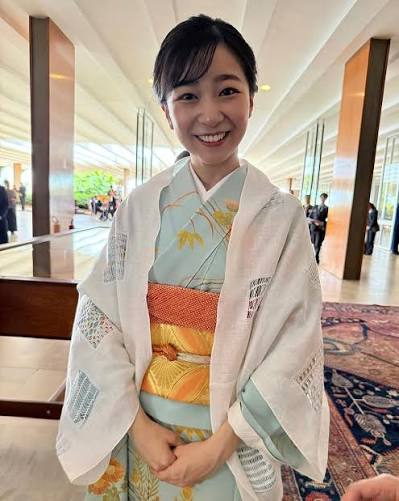
In its July 16 issue, the weekly magazine Shukan Post wondered how the new bill would affect the life of Kako, the daughter of Crown Prince Akishino. Kako, who is unmarried and 30 years old, was raised under the belief that she would eventually leave the imperial family when she married. However, according to the provisions of the new bill, she can remain. The difference is that her childhood education did not include specific training as a lifelong member of the imperial family. In contrast, her cousin Aiko, the only child of the Emperor, was trained in such matters since it was still possible that she could someday become Emperor herself.
But while the implied reason for allowing females to remain in the imperial family after they marry is to provide more possibilities for male heirs, these women can also continue to perform komu, which, according to the Post, may be a more important consideration. Just as the bill helps solve the problem of dwindling stable of male heirs to the throne, it also helps solve the problem of a dwindling pool of royals who can carry out komu. The Post says that Kako, who already participates in komu activities, will continue to do so even after she gets married.
There is also the possibility that Kako’s future husband and children would qualify to do komu, though it isn’t completely clear. After all, LDP kingpin Taro Aso’s sister, Nobuko, became a member of the royal family after marrying one of the Showa Emperor’s nephews, who has since died. Nobuko, who has a daughter, Akiko, effectively started a new imperial line even though the law is sketchy about the matter, but in any case Akiko is an official royal who can also carry out komu. Moreover, under the provisions of the new bill, Nobuko can adopt a former member of the royal family, thus adding to her line, though to what end remains unknown.
It should be noted that right wing elements hate komu, especially as defined by the royals themselves, since it dilutes the Imperial family’s divine status. They would prefer the family remain behind closed doors and limit their activities to praying for Japan and carrying out sacred, arcane rituals.
But even for people with no overt ideological axe to grind, the question of what exactly is the purpose of komu can be a difficult one to answer. The most obvious answer is that event organizers and charities can gain valuable PR, since it’s assumed if a royal is present at an event, the media will provide coverage, but that also implies the benefit falls outside the imperial purview. In that regard, a theory that makes more sense is that komu itself justifies the existence of the imperial family. Since the war, the Emperor has been designated as the symbol of the Japanese people with no political power or standing. It costs a lot of money to keep him and his family living in the kind of luxury his position would seem to demand, but at the same time they should be seen as doing something in return for that money.
This point was implied by Koichi Nakano, the iconoclastic Sofia University political science professor who often explains Japanese society to Western media, during a recent discussion on the web news program Democracy Times. He said it almost as a joke, but if you think about it, it makes sense.
It also can make it sometimes seem like an unpleasant obligation. In April, the government held a kind of anniversary ceremony to celebrate what would have been the 100th year of Showa had the Showa Emperor, Hirohito, not died in 1989. It was conceived as a festive event, though videos also show that it was kind of tacky, with lots of nameless singers in military uniform performing famous pop songs from the era and Prime Minister Sanae Takaichi swaying and singing along in her patented artless, emotive manner. None of this would have garnered much attention if the Emperor and the Empress weren’t in attendance, sitting at a special dais and smiling stiffly at the goings-on, as if it were all expressly being done for their entertainment. I’m not sure if their presence can be classified as komu, but it definitely looked like work.
 philipbrasor.com