
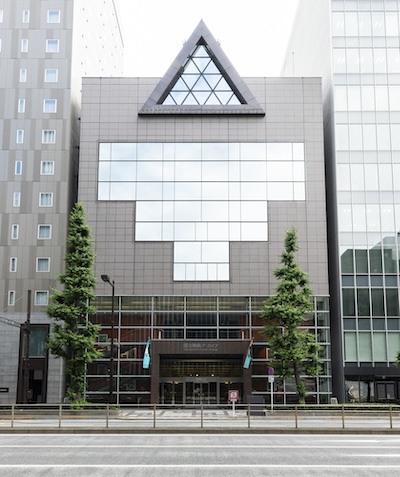
On June 25, the National Film Archive of Japan (NFAJ) announced it was launching a crowdfunding campaign to raise money for its continuing operations and existence. The initial goal is ¥100 million, which is not nearly enough to keep the organization running. According to a recent article in the Nihon Keizai Shimbun (Nikkei), the government cut its subsidy for the archive by more than 40 percent for fiscal 2026 to ¥358.56 million (from ¥682.92 million in 2024), which means the archive will need to raise at least ¥249 million to cover expenses. The NFAJ has said that meeting this target only through admission fees and other revenues will be “extremely difficult,” since fixed costs for the archive exceed ¥400 million.
The NFAJ is the only institution in Japan whose job it is to preserve and exhibit Japanese films. That means not only collecting films, but storing and digitizing them for future use as cultural and historical artifacts. Without the NFAJ Japan’s film heritage would likely disappear, not only because film stock degrades easily over time, but because Japan’s film heritage is not considered a purview of the cultural agency. Regardless of lip service provided by the government with regard to Japan’s storied cultural uniqueness, it does not actively encourage the preservation of Japanese culture, preferring to assign that task to the private sector. This is true not only for film but for institutions like museums and zoos, which increasingly are called upon to support themselves; and, in a sense, they have an easier time of it since art exhibits, for instance, can easily find corporate and media sponsors, and zoos can publicize their charges—the global popularity of Ichikawa City Zoo’s orphaned monkey Punch is a good example. Film is more difficult since the public’s interest in a movie is by definition fleeting. Only a dedicated archive can keep films presentable so that anyone can see them at a later date, whether they be scholars or members of the general public. It’s assumed that government financial support for the NFAJ will eventually dwindle to zero.
In a June 30 article Nikkei outlined what’s at stake. Though the public interface for the NFAJ is its theater and viewing facility in the Kyobashi area of Tokyo, its actual archive is in Sagamihara, Kanagawa Prefecture, where the NFAJ maintains three storage buildings. Film preservation requires strict climate control in terms of temperature and humidity to keep both film stock and negatives viable. The Sagamihara facility spends ¥58 million a year only on utilities, and the air conditioning system there is considered superannuated. There is no budget to update the system.
Sagamihara also carries out digitization, which is now the standard means for preserving films. Due to improvements of the process, requests to the archive to digitize films has also greatly increased, not only from film production companies, but other commercial and academic endeavors that want to preserve industrial and other films in their possession. But digitization takes time, and since the NFAJ is the only such facility that carries out film digitization in Japan, it can never keep up with the demand. The Sagamihara facility employs only ten people, nine of whom are on yearly contracts. In addition to digitization, the staff inspects and lends out films. Nikkei says that tens of thousands of films in cannisters are waiting to be inspected and analyzed. Generally speaking, when the archive receives a film for preservation, it first makes a physical copy, which is not only time consuming but expensive. Priority goes to new works, which the archive buys in order to keep them preserved from the start, but in the process older films waiting to be preserved often suffer.
National art museums regularly purchase high-value art, which in turn becomes a financial asset for the museum. The situation is different for films, which have no intrinsic value as an asset, especially copies of films. Consequently, the archive has to pay out of its own funds for all copying and digitization expenses.
As already noted, the archive’s brief extends beyond creative films to documentary footage. One of the NFAJ’s signature accomplishments is its comprehensive digital archive of moving and still images from the 1923 Great Kanto Earthquake. Scholars and documentarians, including TV production companies, that cover the disaster can have free access to these resources.
With this mission in mind, the crowdfunding gambit becomes even more vital. The reduced grant from the government of ¥358 million will not even cover utilities, maintenance, and payroll, so the archive has already started cutting back on whatever expenses they can cut back on. That means reducing the number of new prints it is making, limiting the distribution of flyers and posters that publicize film screening programs it regularly carries out in Kyobashi (many of which have English subtitles), and suspending publication of its newsletter. In addition, it will ask venues and exhibitors who want to screen their films to bear the cost of transportation. Cleaning and maintenance of facilities, which is outsourced, will also be cut to the bone. With these reductions, the archive believes it can reduce its overhead by as much as 60 percent, but even at that rate they will be short ¥180 million.
Another solution would be to increase admission fees for screenings in Kyobashi, which now cost ¥1,300. Ironically, however, they would need permission from the culture agency to increase admission fees. They could also expand streaming services and charge for it, as well as put more effort into merchandising.
These solutions are, of course, exactly what the government is tacitly mandating by cutting the archive’s grant. The central problem is that the archive is not structured as a money-making organization, which usually needs to expand services and improve the quality of those services in order to realize growth. The NFAJ has to first achieve stability as an ongoing endeavor, which means growth is impossible for the foreseeable future.
In February, the culture agency announced a new policy that will force all national museums to cover at least 65 percent of their operating costs themselves by 2030. Any institution that fails this mandate will be forcefully “reorganized.”
Though not strictly a museum, the NFAJ will broadly fall under this directive, a situation that one professor of public policy told Nikkei was unfair. “The Kyobashi theater only seats 600 persons,” he said. “The National Western Art Museum and the National Modern Art Museum receive up to 10,000 paying patrons a day. The scale is completely different.”
But mainly it comes down to mission. Though many art museums do keep works in storage, the main job of the NFAJ is preservation,. The professor points out that in Europe especially, film culture is preserved at the national level. The Takaichi administration, on the other hand, is currently revamping its entire budget plan in order to come up with more money to pay for security, in particular weapons systems. Culture is way down on the list of government priorities, even while it has called for ¥34 trillion in public and private funds to sell “J-content”—mainly games, anime, and manga— overseas. Conserving J-content for its own people seems to be of secondary concern.

