
Bruce Lee places 53rd on Variety’s new list of the 100 Greatest Movie Stars of all time. The list is the result of a survey of movie critics whose criteria for selection was “screen presence and cultural impact,” which makes Lee’s standing all the more extraordinary since he only starred in four films in his lifetime (not counting the posthumously released Game of Death, which contained only 15 minutes of Lee, the rest padded out with body doubles). In that regard, the only comparable movie star is James Dean (14 on the list), who made only 3 features. David Gregory’s documentary about the “Bruceploitation” craze that followed the martial arts star’s death from a cerebral edema at the age of 32 in 1973 ably shows how his impact on the industry and audiences was inflated by the nature of cheap, exploitative cinema and the lack of copyright protections in Asia at the time. True Bruce aficionados surely know about this trend since they probably have seen all the knock-offs the doc presents, but those who possess only a passing familiarity with 1970s Asian exploitation cinema will be amazed at the lengths producers would go to in order to make a buck, because the quality of some of this stuff is pretty awful.
And it’s this cheese factor that makes the documentary both enlightening and extremely entertaining. Through a mixture of vintage and relatively new interview excerpts and inserts of actual movie clips, Gregory provides a pretty smooth summation of the seemier side of Hong Kong filmmaking in the late 70s. For the most part, producers grabbed at the sudden worldwide fascination with Lee’s star power after Enter the Dragon hit big following his death by scouring Asia for every martial arts “performer” they could reasonably pretend was Lee’s stylistic heir. Though most people would never be fooled by these guys, some were game enough mimics to be able to nail Lee’s signature moves in a clinch, and with a bit of makeup and hairstyling they actually did fool a great many people who had come to kung fu action rather late. Gregory runs down a list of Bruce Lee manques with names like Bruce Li, Dragon Lee (aka Bruce Lei), Bruce Le, and Bruce Lo. Few of these guys were English speakers, but since dubbing was the practice in Hong Kong movie-making at the time, no one noticed or cared. More interestingly, they were scouted far and wide, with one repeat player coming from Korea, another from Japan, another from Thailand, even one from Burma. African-American Ron Van Clief, who had performed with Lee in Enter the Dragon, was touted as the Black Dragon; Sammo Hung, who later became a superstar by his own lights and a master director/choreographer, was the Fat Dragon, and Taiwanese Angela Mao was the Female Bruce Lee. Using interviews with insiders and stone fans, Gregory points out, almost derisively, that these “clones” were the whole point, since the technical aspects of the Bruceploitation vehicles were the cheapest money could by and producers weren’t above stealing footage from, say, Lee’s funeral to pad out the running time. And even these sub-B features were later reedited and reissued as new movies. One former distributor estimates there may have been as many as 200 such productions over the years.
In fact, the person who effectively put a stop to the Bruceploitation craze was Jackie Chan, who was effectively the anti-Bruce Lee because his overall effect was comedic. Chan ushered in a whole new approach to kung fu that eventually eclipsed the stiff, studied intensity that Lee embodied. The actors who once made a short, modest living trying to capture that intensity are now in their dotage, but their recorded reminiscences are not only edifying, but funny and warm. Overall, Gregory’s film is a bit of a mess since it seems to have been tossed together quickly, almost as if he were trying to recreate the makeshift feeling of those 70s martial arts exploitation flicks, but it’s difficult to deny that it may be the last non-academic word on Bruce Lee’s actual impact on cinema and the world at large.
In English, Cantonese, Korean, Japanese and French. Opens Nov. 27 in Tokyo at Kino Cinema Shinjuku (03-5315-0978). (Note: The 4K remaster of an actual Bruceploitation film, The Clones of Bruce Lee, will be released at the same theater starting Dec. 4.)
Enter the Clones of Bruce home page in Japanese
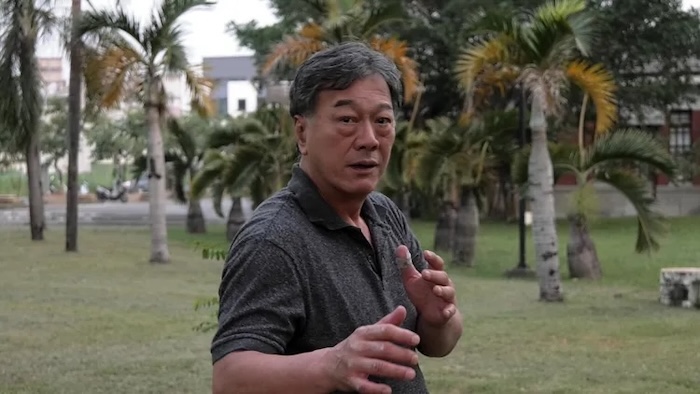
photo (c) 2023 Severin Films Inc.

