
Review: Eric Clapton: Life in 12 Bars

Artist biodocs would seem to be easier to pull off than artist biopics, as long as there’s enough available footage. Eric Clapton has been more or less a star since he emerged in mid-60s England as a blues guitar prodigy and purist, and this career review makes ample use of film and photography, not to mention audio recordings of friends and family who offer insight into Clapton’s mindset at specific junctures in his life. There’s a lot to chew on, and in the end we get a very good idea of the kind of person Clapton is but are not much closer to understanding his sensibility as an artist than we were before we watched the movie.

The overriding theme is Clapton’s sensitivity. A shy kid who buried himself in African-American blues music as a means of co-opting others’ marginalized status to make sense of his own, he admits in voiceover that he had a happy early childhood being raised by two people who he thought were his parents. At age 9, however, he discovered that the woman he called his mother was really his grandmother, and that his real mother had abandoned him after a one-night-stand pregnancy and moved to Canada. Twice during the film, at suspiciously opportune but awkward junctures in the narrative, director Lili Fini Zanuck returns to Clapton’s childhood to point out how damaging his mother’s “cruel” rejection of him as her own flesh and blood was to his psyche, and how it colored his self-image. Zanuck conveniently uses these incidents to explain his addictions but in terms of Clapton’s artistry all she does is point to his identification with the blues as a balm, and leaves it at that for the rest of the film.

This strategy is particularly frustrating given the film’s length, its leaden pace, and its obsessive focus on Clapton’s crush on Patti Boyd, the wife of his best friend George Harrison, and the inspiration for his greatest work of art, Layla and Other Assorted Love Songs. But while Zanuck does show how a fortuitous meeting with Duane Allman helped crystallize Clapton’s vision for the album, she completely disregards his post-Blind Faith work with the seminal Southern R&B couple Delaney & Bonnie Bramlett, who, more than anyone else, helped him become the singer who was as vital to Layla‘s success as his guitar playing and writing were. (She also excises his first solo album, produced by Delaney, which was a seminal transitional work between the excess of the 60s and the more “authentic” music of the 70s.) Essentially, all Layla is to the movie is the last great creative push before his quick descent, sparked by Boyd’s paranoid rejection of the album, into years of heroin and alcohol abuse. Though, personally, I found his music much less interesting during this troubled period, it sold well and kept him rich, but Zanuck doesn’t even address the music, just the drinking and the inconsistent stage demeanor, which peaked with that infamous racist tirade at a concert in London, an incident he speaks to directly here with great regret. Given Clapton’s obvious sensitive nature and what he owed the great American blues musicians he idolized as a boy, no one could take the tirade as anything other than the ramblings of a self-hating drunk. Zanuck knows this but throws the incident off as if she herself is embarrassed by it.

The last half hour zooms through Clapton’s recovery, the death of his son, and his subsequent success as an MOR superstar, though, again, by not saying much about the music except that it was finally recognized by the Grammys she short changes both his stature and his influence. His story here is that of a survivor of emotional trauma. Leave it to others to analyze his place as an innovator in the annals of rock and roll.

Now playing in Tokyo at Toho Cinemas Chanter Hibiya (050-6868-5001).

Eric Clapton: Life in 12 Bars home page in Japanese.

photo (c) Bushbranch Films Ltd. 2017/Ron Pownall
Posted in Movies | Leave a comment

Review: It Comes at Night

At first blush, this fairly modest horror movie by upstart Trey Edward Shults feels like a pale reflection of A Quiet Place, which is probably this year’s most successful horror movie. Both films are about families hiding out in the woods from unseen menaces. In the case of It Comes at Night, it’s a kind of plague, while in A Quiet Place it’s some sort of invading species of predator, but the main theme is survival against very bad odds. What eventually gives Shults’ film the edge in this regard is that the central family—Paul (Joel Edgerton), Sarah (Carmen Ejogo), and their 17-year-old son Travis (Kelvin Harrison Jr.)—can’t see the menace clearly, since it can only be transferred via another living being. Their paranoia is practical but not empirically based. In the haunting opening scene, they literally cart Sarah’s father (David Pendleton), covered in lesions and mumbling incoherently, to a ditch where they shoot him and set his body on fire.
The father, somewhat cruelly named Bud, is an obvious threat. But when a straggler tries to break into their remote house, thinking that it’s abandoned, the family has no choice but to handle him roughly and tie him to a tree overnight. Paul, a preternaturally nervous but stoical head of household, has to make sure this younger man, named Will (Christopher Abbott), is not carrying the disease, and it takes a lot of convincing. Once it’s established he’s not infected, he pleads with Paul to help him, since he has a wife and son at an abandoned house some miles away. They have food, but almost no drinking water. Eventually, a deal is made, and Will and his wife, Kim (Riley Keough), and son, Andrew (Griffin Robert Faulkner), move into Paul’s spacious but decidedly creepy house.

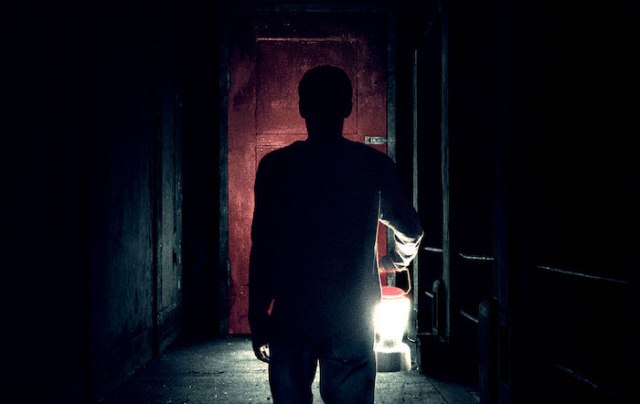
Conventional horror films tend to trade in concrete terrors, but despite the pronoun in the title, It Comes at Night rarely delivers a material threat. The few times that something rudely intrudes on the space so covetously protected by the protagonists, the danger is never confirmed. While driving through the woods, Paul’s truck is shot at and he responds by savagely killing the shooter and the shooter’s companion without bothering to find out why they shot at him and if they’re infected. The movie’s title mainly describes Travis’s awful dreams. Constitutionally an insomniac, Travis has terrible visions when he does manage some shut-eye and Shults cleverly alternates these nightmares with the boy’s midnight ramblings through the hallways with only an oil lamp to guide his way. By refusing to name or even show the menace all around the house, Shults makes terror more realistic and thus more unsettling.

The movie’s structure is clearly bifurcated between setup and delivery, and though these purposes are brilliantly carried out, they may feel a little too on-the-nose given how much Shults thinks he has to withhold. In the end, the movie’s horror component is invested in the characters’ capacity for mistrust and how that mistrust can blossom into deadly intent, especially where there’s lots of guns on hand. But horror movies in particular require some sort of resolution to make their point, and It Comes at Night doesn’t really have any. It’s bleakness is almost immoral.

Opens Nov. 23 in Tokyo at Cinema Qualite Shinjuku (03-3352-5645).

It Comes at Night home page in Japanese.

photo (c) 2017 A24 Distribution, LLC

Posted in Movies | Tagged | Leave a comment

Review: A Ghost Story

Though not a Hollywood film in the least, David Lowery’s A Ghost Story plays with ideas about the paranormal that are fashionable among the bean counters of tinsel town, except that they’re in service to a story about loss and the persistence of love. And in that regard it’s compelling up to a point. What fails to get through is any real reason for caring about the people on screen.

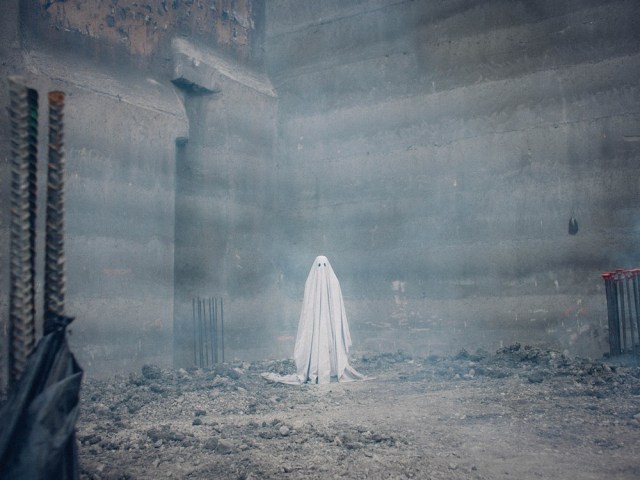
Though Casey Affleck gets top billing, he’s barely in the film. His character, referred to in the credits only by the initial “C,” is a marginal singer-songwrter living with a young woman of indefinite employment called “M” (Rooney Mara). The initial presentation of their relationship of one that isn’t fully consummated emotionally is one of the few elements that Lowery gets right dramatically, but it also points toward a problem with his basic premise. When C is killed in a car crash not far from their cheap Texan suburban ranch house, there’s not much emotion to dissipate during M’s mourning period, and Lowery is reduced to expressing her feelings by having her eat a whole pie in one sitting. Though the relative lack of dialogue from here on out is naturalistically justifiable, it renders the plot mostly impenetrable and open to interpretations that don’t flatter the film. C remains in the “picture” as an unseen ghost, complete with bed sheet and two eye holes, and since he doesn’t talk Affleck is hardly needed except maybe on the marquee. Mara doesn’t fare much better, and M eventually moves out of the house, having gotten over C’s death.

Lowery’s purposes become clear almost too quickly, as others move into the quietly disintegrating structure, with implications that the place is haunted and was so even when C was alive. Occasionally, the director throws a bone to the viewer, as in a needlessly protracted monologue by a partygoer at the house (Will Oldham) who rhapsodizes over the history of the human race as people listen with the kind of raptness associated with religious fervor. This is followed by a kind of enervated time travel sequence that involves moving into the future (house is demolished, replaced by office building) and the past (white settlers slaughtered by Indians). What Lowery is essentially doing is explaining the metaphysics of paranormal phenomena, or, at least, his own simplified version of such. An avowed admirer of Asian directors like Tsai Ming-liang, Lowery knows how to stage long takes and wordless expositions for maximum visual effect, but the kind of ambiguity Tsai made interesting escapes him. He may scorn Hollywood trappings but he seems unable to shake the need for Hollywood-style explication.

Now playing in Tokyo at Shibuya Cine Quinto (03-3477-5905), Shinjuku Cinema Qualite (03-3352-5645), Human Trust Cinema Yurakucho (03-6259-8608).

A Ghost Story home page in Japanese.

photo (c) 2017 Scared Sheetless LLC

Posted in Movies | Tagged , | Leave a comment

Media Mix, Nov. 11, 2018

Jumpei Yasuda

Here’s this week’s Media Mix about the flack that freelance journalist Jumpei Yasuda has received since being released from captivity by a militant group in the Middle East. The column focuses on media criticism that mirrors public resentment towards Yasuda for not being careful enough and getting captured while covering the Syrian civil war. Much of this resentment springs from the notion that the government is obligated to work for his release, actions that are perceived as being inconvenient for the government, as well as unnecessary if Yasuda hadn’t been in that conflict zone in the first place.

The column discusses why he was there using unremarkable logic—he’s a reporter, and that’s what he does, end of story. However, if part of the rationale for condemning Yasuda’s behavior is that he’s making the government’s job more difficult, it’s important to scrutinize just what the government did do to try and secure his release. Not many media outlets did that, but the few who did uncovered some uncomfortable bits of information.

The tabloid Nikkan Gendai, which, temperamentally at least, wouldn’t be expected to take Yasuda’s side, claimed in an Oct. 26 report that the government’s version of events leading up to Yasuda’s release earlier that month were sort of fishy, at least as conveyed to the press by Chief Cabinet Secretary Yoshihide Suga, who said the effort was spearheaded by the prime minister’s office. Gendai characterized Suga’s tone as being “self-congratulatory” because the government had worked with Qatar and Turkey to negotiate with the militants holding Yasuda, a move that Gendai called a no-brainer and the very minimum of what was required of Japan. Another freelance Japanese journalist who knows Yasuda told Gendai that the very fact that it took three-and-a-half-years to secure Yasuda’s release calls the government’s actions into question. It seems they did nothing for the first year, perhaps assuming he was already dead, and were then forced to at least seem to be taking action when the video of Yasuda pleading for his life appeared in March 2016. At that point “private supporters” went to Turkey on their own to discuss the matter with individuals who may have had contact with the militants holding Yasuda. It was these supporters who supplied the foreign ministry with information it could use, including the intelligence that the Turkish president had “some influence” over the militant group. Gendai said it found no evidence that the foreign ministry did anything with this information at the time.

This is, of course, mostly speculation, but what caused Gendai to question Suga’s sincerity was the claim by an anti-Syrian government human rights monitoring group that Yasuda was released four days earlier than the date Suga claimed. Why the time lag? Gendai suggests that the government needed more time to create a link between their actions and the release, and played up talks with Turkey and Qatar, who are desperate for Japanese recognition. Yasuda didn’t address this time lag, perhaps understanding that if he did it might be perceived as criticism of the government. He didn’t need to make a bad situation any worse.

Posted in Media | Tagged | Leave a comment

Review: Mandy

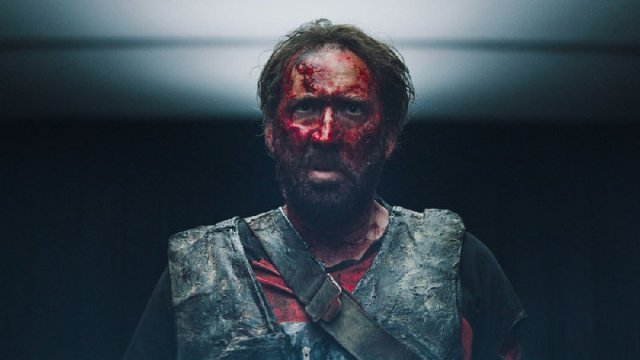
Panos Cosmatos’s violent revenge thriller is like every other violent revenge thriller and yet unique, owing mainly to its stubborn insistence on describing a specific place and time that has no discernible purpose. Set somewhere in the California wilderness in 1983, Mandy could have been set in a suburb of Indianapolis in 2010 with no change in theme or plot, and yet Cosmatos keeps throwing signifiers at us, as if he expects the viewer to pick up allusions that might explain the protagonist’s disturbing behavior. In that regard, the only thing that makes sense is the casting: Nicolas Cage may not have been born to play the grieving lumberjack, Red, but given his recent tendency to take every part offered to him, including terrible ones, he seems preternaturally suited to play this sympathetic monster.

The title character is Red’s lover (or wife? it’s not clear), played by Andrea Riseborough. If the time frame means anything, it forces this couple to live in true isolation, before the Internet and social media, but because they seem to be living in a cabin far from even the smallest rural town, their situation is already that of outcasts, and it’s easy to form the opinion that Red’s desultory but often creepy demeanor means he can’t live with other humans comfortably. His love for Mandy, perhaps as a corollary, is pure and direct. It eventually becomes obvious that Red is a recovering alcoholic, allowing Cage to channel some of the latent self-loathing from his Oscar-winning gambit in Leaving Las Vegas. The age difference is also played up. Red’s peculiar form of damage could be PTSD (Vietnam?) or simply the healing of scars from a time when men were supposed to be men, while Mandy has a kind of post-hippie chic about her, with her vintage rock T-shirts and flair for nature.

This idyll is compromised formally by Cosmatos’s use of a harsh synth score by the late Johann Johannsson and a muddy palette overflowing with deep reds and oranges, and soon enough the idyll is shattered narratively with an unannouced and seemingly random home invasion by a religious cult headed by a Jesus-wannabe named Sand Jeremiah (Linus Roache). They kidnap and drug Mandy while Red is away, torture and expose her to Jeremiah’s misogynistic brand of spiritual redemption and then kill her for making fun of it, an extremely clever way of getting the viewer to identify with the victim, since Sand is a ridiculous figure from the get-go. Still, he seems to have some sort of conduit to genuine demons, who double as a biker gang. When Red exacts his very messy revenge using everything from chainsaws to a kind of mystical axe he forges himself, it’s as much a release from the self-hatred he’s contained as a former addict as it is a righteous unleashing of Biblical might. It’s also supremely macho but not in an off-putting way, since it’s presented as a kind of bad LSD trip and thus beyond the purview of sexual politics—heavy metal culture for woke aeshetes, and it’s powerful while being totally ludicrous.

Now playing in Tokyo at Shinjuku Cinema Qualite (03-3352-5645).

Mandy home page in Japanese.

photo (c) 2017 Mandy Films, Ltd.

Posted in Movies | Tagged | Leave a comment

Review: Bohemian Rhapsody

In it’s own limited way, the biopic of the British band Queen is as narratively compromised as the group’s creative output was musically compromised. Leader Freddie Mercury was always open about how his approach to rock was not doctrinnaire; that while he loved rock music and what it had undergone in the post-Beatles world of English pop, he loved theatricality even more, and so many of Queen’s best-loved songs combine prog-rock technique with Broadway glitz, and the movie honors this legacy by avoiding anything that smacks of subtlety or even verisimilitude. When people say that Rami Malek’s impersonation of Mercury is the best thing about the movie, what they’re saying is that the actor falls for Mercury’s preternatural need to show off. Even in the expository passages, showing how Mercury overcame his immigrant insecurities, his self- esteem problems, and, eventually, his hesitancy to acknowledge his homosexuality, you almost expect him to break into song in a bid to make these scenes even more emotionally fraught. Queen fans will love it, and Queen skeptics still won’t get it for the same reason.

As such, the script by Anthony McCarten sidesteps its narrative holes with its feet in big, clunky platform shoes. We go from Mercury shuttling luggage at Heathrow to muscling his way into a working band that has just lost its lead singer to the vicissitudes of ambition. The joke here is that no one is as ambitious as Freddie Mercury, and before you can say “Galileo” they’ve not only snagged a recording contract with a big company but are busting the balls of their producer and A&R guy, who, as the saying goes, “just wants the next hit single.” McCarten isn’t really interested in Mercury’s vision or even his creative process, because that would only interfere with the film’s relentless forward motion. Talk about a “meteoric rise” to fame.

What McCarten does get right is the group dynamic. This really is a biopic of a band, and when Mercury, two-thirds of the way through, launches an unwise solo career during a particularly difficult point in his personal life, you understand exactly why he flounders creatively. Director Bryan Singer (or whoever, since he was famously dismissed near the film’s completion) doesn’t have much patience with this part, settling for the usual drugs-and-sexual-excess montages to get him through it, thus gliding rather conveniently through Mercury’s realization of his sexual desires and how they upended his life. But once the band comes back into that life they not only save his career and his peace-of-mind with an exceedingly well received set at Live Aid—and one that Singer-or-whoever pulls off with the perfect measure of theatrical bombast—but the movie as a whole. I still don’t particularly care for Queen’s music, but the ending to Bohemian Rhapsody at last makes me understand why so many people do.

Now playing in Tokyo at Toho Cinemas Hibiya (050-6868-5068), Toho Cinemas Shinjuku (050-6868-5063), Toho Cinemas Nihonbashi (050-6868-5060), Toho Cinemas Roppongi Hills (050-6868-5024), Toho Cinemas Shibuya (050-6868-5002), Shinjuku Wald 9 (03-5369-4955), Shinjuku Picadilly (050-6861-3011), Cinema Sunshine Ikebukuro (03-3982-6388).

Bohemian Rhapsody home page in Japanese.

photo (c) 2018 Twentieth Century Fox

Posted in Movies | Tagged | Leave a comment

Review: Ten Years Japan

The “Ten Years” series started in Hong Kong in 2015 with an omnibus of shorts depicting the former British territory ten years into the future, and was notably dystopian in tone, which is to be expected, and not just because of the city’s special circumstances of being stuck halfway between a Western-influenced conclave in Asia and the point-of-the-spear for China in the international economic order. Any movie that attempts to specifically predict what’s going to happen in the future is probably going to have cautionary aspects. In any case, Beijing was quite alarmed at the film, and it may have been that aspect which sparked similar productions using the concept in Taiwan, Thailand, and Japan.

All three of those films were screened at the Busan International Film Festival in October. Japan’s has just opened domestically, and while it follows the dystopian model, it does so in a way that’s only somewhat alarming. The five shorts mostly address techno-commercial extrapolations on current trends, and only one, Akiyo Fujimura’s “The Air We Can’t See,” falls flat. A nuclear catastrophe had driven all of Japan, it seems, underground, and the story focuses on a little girl who, influenced by an iconoclastic friend, longs to see the blue skies and green vegetation of the surface world. Her mother, acting as if she were brainwashed, absolutely forbids her from going anywhere near fresh air, and even scolds her for playing with insects that might be contaminated. Though it’s obvious where Fujimura is going with this tale, the alarmist quality of the writing demonizes the mother and inadvertently politicizes the theme of simply wanting to be in the natural world. It doesn’t really consider the idea of nuclear contamination as anything other than a convenient plot device. Besides that, the girl’s innocence is trite.

The other four films are much better, mainly because they don’t take themselves that seriously. The most subtle is “Data” by Megumi Tsuno, which traces an adolescent girl’s investigation into her late mother’s life with the help of a “digital inheritance” program that puts her in possession of all of her mother’s cell phone and computer data. What she finds is surprising and a little disconcerting, but the most interesting aspect of the film is the girl’s interaction with her widowed father, whom she effectively takes care of in her mother’s absence. The father, who should be bothered by the discoveries, seems fine with it. Though Tsuno could be accused of downplaying the loss of privacy enabled by such a program, what’s more striking is how the story celebrates the richness of the average person’s life.

“Mischievous Alliance” by Yusuke Kinoshita also focuses on children and a truly dystopian technology: an AI system plugged directly into students’ brains that endeavors to shape their behavior. Naturally, there is one boy who bucks the system and embarks on an adventure with two converts. The mood is a bit too cheery in the end, but the sci-fi elements and the overall rebellious mood are handled with a deft touch.

The bookend films are the ones that will likely bother the Japanese authorities the most. “Plan 75” by Chie Hayakawa describes a public program that encourages euthanasia to rid the country of elderly, poor, unproductive citizens. What makes the film compelling is how it incorporates what some will call very Japanese ideas of compassion and conformity into what is at base a monstrous policy. It’s wholly disturbing for how innocuous it seems.

“For Our Beautiful Country,” Kei Ishikawa’s short about one way the current administration’s desires to “normalize” Japan’s Self-Defense Forces could work out, is the only contribution that attempts levity. A young employee of an ad agency is charged with telling a respected artist that her designs for a government campaign to promote the new military draft are a little too…artistic, and that the campaign is being scrapped for something more conventional. The artist, played by Hana Kino, is iconoclastic for various unexpected reasons, not the least of which is that her father died in World War II. Ishikawa isn’t trying to scare the viewer into thinking about what the ruling party is really trying to do. Instead, he genuinely wonders about the possibilities that such attitudes could give rise to. It’s not so much dystopian as it is truly speculative.

In Japanese. Now playing in Tokyo at Theatre Shinjuku (03-3352-1846).

Ten Years Japan home page in Japanese.

photo (c) 2018 “Ten Years Japan” Film Partners

Posted in Movies | Leave a comment

Tokyo International Film Festival 2018

Here are reports I filed for events at TIFF this year.

History Lessons press conference

Before the Frost press conference

The Bra press conference

Three Husbands press conference (ignore the title)

The Father’s Shadow press conference

Just Only Love press conference

Crosscut Asia symposium


Posted in Movies | Tagged | Leave a comment

Review: Fahrenheit 11/9

The pleasures and edifications of Michael Moore’s latest broadside attack on the power elite comprise more of a mixed bag than any of his previous polemics, which tended to focus on a specific, albeit broadly characterized, subject matter. Though Donald Trump is the ostensible target, Moore ranges far and wide to explain the forces that he thinks conspired to get Trump elected, taking in everything from establishment Democrats to the mass media and even Gwen Stefani. And while Moore’s explications don’t always stand up to rigorous scrutiny as journalism, there’s less of his patented working-guy-confrontation shtick, which had been getting old more than a decade ago, and it makes all the difference in the world.

That isn’t to say the movie doesn’t have it’s humorous moments. Anything having to do with Trump must by necessity trade in the ridiculous, and Moore has a field day with the president’s TV career, his queasy regard for his daughter, and, most tellingly, the theory that he never wanted to be president in the first place. The timing of the doc’s release is meant to coincide with the midterm elections in the U.S., which suggests that the movie will be dated by Christmastime. However, I have a feeling that Fahrenheit 11/9 will probably be Moore’s most enduring film if for no other reason than the way he incorporates the tragedy of his hometown of Flint, Michigan, into the overall anti-Trump narrative.

As most people know, Flint has been suffering from a drinking water crisis for almost half a decade owing to the venal policies of the state’s Republican governor, Rick Snyder. Moore describes the scandal with a mix of disgust and profound sadness, since Flint was already one of the most depressed cities in America owing to its loss off jobs when various car companies and their suppliers closed their factories. Moore is able to get to the heart of the tragedy simply by being Moore, a native whom more people trust than they do the authorities. Though the idea that Trump learned everything he needed to know about dishonest politicking from Snyder at first seems a stretch, by the end of the film—after Moore reveals the pinnacle of the tragedy, when President Obama came to Flint and basically sidestepped his own responsibility—it’s a credible story if only because the kind of venality that Snyder and Trump share is so inescapable. 

Beyond the Flint analogy, which he weaves in an out of the doc with the facility of an automated loom, Moore tackles the Florida school shootings, the democratic socialist movement, the rise of American fascism, and racism. The scattershot approach only hits its marks on occasion, but the quickness of the editing, the fluency of the prosaic narration, and the inventiveness of the images is never less than exhilirating. Persons of a more critical mien will accuse Moore of playing fast and loose with facts by dazzling the viewer with his accomplished filmmaking chops, but any intelligent person—and Moore always treats his audience with respect, to the point of owning up to his own past failures—will be able to take away what they need from this overstuffed documentary, and I predict they’ll take away a lot.

Now playing in Tokyo at Toho Cinemas Chanter (050-6868-5001), Toho Cinemas Shinjuku (050-6868-5063), Toho Cinemas Roppongi Hills (050-6868-5024), Human Trust Cinema Shibuya (03-5468-5551).

Fahrenheit 11/9 home page in Japanese.

photo (c) 2018 Midwestern Films LLC

Posted in Movies | Tagged , | Leave a comment

Review: Hotel Salvation

There’s an over-familiar quality to this movie about an elderly man coming to terms with his mortality that is both exacerbated and dismissed by its Indian setting. The story’s particulars—a man’s reckoning with the inevitable, his son’s reactionary intransigence, the comic second act that attempts to soften the blow of death before giving in to its terrifying inevitability—don’t differ substantially from other films of this sort, but by placing it all in the context of the holy city of Varnasi on the sacred Ganges River, it becomes more edifying, even, presumably, to Hindus.

The old man, Daya (Lalit Behl), is a grumpy former school teacher who realizes one day, despite what seems exceptionally fine health, that his time has come. He lives with his son, Rajiv (Adil Hussain), and Rajiv’s wife and college-age daughter, in an arrangement that is civil but hardly comfortable. Rajiv is the kind of nervous businessman who can’t stop thinking of work even when more pressing family problems come forward, like his father’s insistence on traveling to Varnasi so that he will be there when he dies. As it happens, there’s a hotel there that caters to such needs, though there’s a time limit to how long a guest can stay. If the guest does not die within this time period he has to leave, or re-register under a different name.

Rajiv, under the impression that it would not look good if he let his father go on his last journey alone, grudgingly accompanies Daya to Varnasi, where he will attend to his business by remote devices that don’t always work the way they’re supposed to. Complicating the matter is the fact that his daughter, Sunita (Palomi Ghosh), has been promised to another in an arranged marriage but is resisting mightily. Rajiv’s wife, Lata (Geetanjali Kulfarni), accuses Rajiv of “taking a vacation” and leaving her to deal with this domestic crisis by herself. Needless to say, while in Varnasi, Rajiv has much to distract him, which is fine with Daya, who didn’t want him to come in the first place.

Director Shubhashish Bhutiani has obviously seen enough Western movies to understand how these kind of uncomfortable situations can be spun into comedy, but by presenting them in what is basically a documentary about the traditional Hindu way of dying he raises not only the film’s profile as a work with something to teach, but also its dramatic potential. As days turn into weeks and Rajiv is forced to improvise in order to be with his father on his deathbed but also keep his family and livelihood afloat, we meet others in similar situations whose contrasting experiences give the story a fully realized, multidimensional character. And like a good orchestra conductor, Bhutiani brings it all to a harmonious coda that is satisfying without being predictable. It’s a subtle film that truly earns its sentiments.

In Hindi. Now playing in Tokyo at Iwanami Hall, Jimbocho (03-3262-5252).

Hotel Salvation home page in Japanese.

photo (c) Red Carpet Moving Pictures

Posted in Movies | Leave a comment