

Rendering of the proposed nuclear power plant on Anglesey Island, Wales
Here’s this week’s Media Mix about remarks made by Hitachi’s chairman, Hiroaki Nakanishi, about the future of nuclear energy in Japan, and the world, for that matter. As pointed out at the beginning of the column, Nakanishi made the remarks mainly as the chairman of Keidanren, Japan’s main business lobby, though it was obvious that he was answering a specific question as the head of one of Japan’s biggest nuclear plant providers, or “vendors,” as he put it. The gist of his remarks was that the government needs to do more to make nuclear energy commercially viable, since it’s national policy, despite the fact that Hitachi itself was about to pull out of a big nuclear project in the UK due to the insurmountable costs involved. In a sense, the difficulty in getting assistance guarantees from the UK government for the project aligns with Hitachi’s annoyance with the Japanese government for not being able to convince the public that nuclear is the way to go. The central government has done little work to persuade the citizenry that nuclear is fine. Its safety plans since the Fukushima meltdown have been rather half-hearted, and accepted as such by people who currently live near nuclear plants, most of which remain offline. Obviously, the government doesn’t need the people’s “permission,” but it nevertheless seems sensitive to criticism, which it would prefer to ignore. Nakanishi may simply be giving lip service to the presumed will of the people with his remark that public opinion needs to be swayed, but he has that luxury as someone whose direct stake in the matter is not dependent on public opinion.
Hitachi’s concerns are completely of the financial sort. It is leaving the Anglesey Island nuclear reactor project in Wales because costs are too high, but despite the promise of some 9,000 jobs that would have been generated by the plant construction, local support wasn’t necessarily forthcoming and might have added more obstacles in terms of lawsuits and court costs. For one thing, the island is a bird sanctuary, and plant construction would have necessitated extensive landfill work. Much of the industry in the area is in agriculture, and reportedly farmers were united in their opposition to the plant. But even in terms of economics, the rationale for the plant has changed since Hitachi first became involved around 15 years ago. Originally, the UK’s energy policy was to increase its nuclear output from 9 gigawatts to 16 gigawatts by 2030, but since 2005 electricity consumption has decreased significantly and will continue to do so. At the same time, the cost of buying electricity from renewable sources has also decreased significantly, to about 57 pounds per megawatt/hour. In order for Hitachi to make money from the plant it’s building, the price of the electricity it sells would have to be at least 92 pounds per megawatt/hour. In addition, the UK’s committee on climate change says that the country can reach its CO2 reduction goals with the nuke plants it already has. It should be pointed out that Hitachi never really wanted to operate the plant it’s building, but was forced to do so since it couldn’t find a third party operator. Now that operations have become irrational, Hitachi has decided it’s not worth building. So, yes, without government support, the nuke business isn’t a business. The question remains: are the climate change advantages of nuclear beneficial enough for a government to completely subsidize it? In that regard, only socialist arrangements make nuclear power viable.
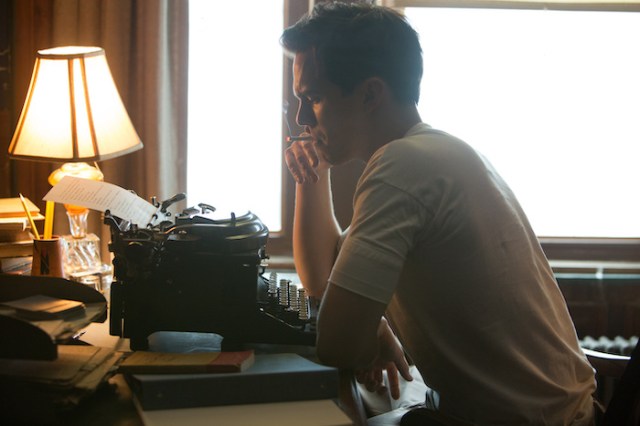 Whether couched in prose or celluloid, literary biographies are a dodgy enterprise, but prose at least has the luxury of length for people who are probably pre-disposed to sitting for long periods of time reading a book. Danny Strong’s rather precise film about the development of J.D. Salinger (Nicholas Hoult) into one of the most iconic American novelists of the 20th century isn’t really that long, but it feels over-stuffed with details that could have been conveyed in different, more economical ways. It’s likely that most people with any interest in Salinger know that he was a difficult artist, that editors had their hands full with a writer who knew exactly what he wanted to accomplish even if that vision didn’t jibe with conventional publishing wisdom at the time. However, they may not have known about his PTSD as a result of his service in WWII, his crush on Eugene O’Neill’s daughter, Oona (Zoey Deutch), or his brief but seminal interest in Buddhism, and while Strong was right to explain these matters, he treats them as milestones on Salinger’s road to success and self-exile without distinguishing them in terms of relative impact.
 The cautious tone and austere aesthetic of Nanako Hirose’s debut feature was what most likely got it placed in the New Currents section of the most recent Busan International Film Festival, where it had its world premiere. New Currents is the only section of the festival with a dedicated competition, and it’s limited to films that are the first or second feature of their respective directors. They are also limited to Asian films, and over the years a certain type of film has ended up in the section, and they tend to look and sound a lot like His Lost Name. They also tend to be more interesting or, at least, more exciting. The fact that this was the lone Japanese entrant in the category says more about Japanese indie films than it does about new Asian directors.
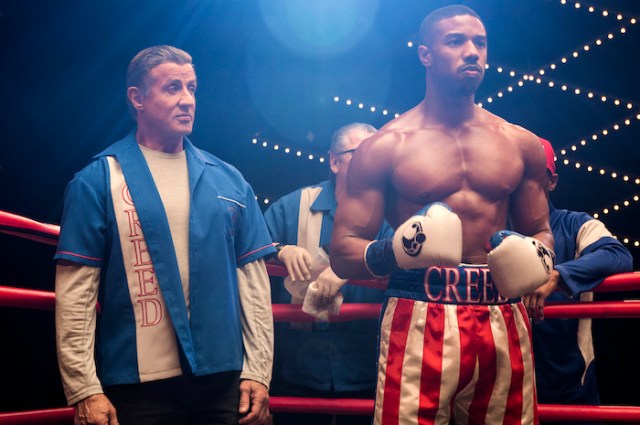 As a gambit to legitimize the reboot of a franchise that should have been put to rest years ago, this sequel to the potently effective Creed works surprisingly well, but probably for the wrong reasons. Though it continues the story of fighter Adonis Creed (Michael B. Jordan), the illegitimate son of Apollo Creed, the early nemesis and then BFF of Rocky Balboa (Sylvester Stallone), who has made his own name as a professional boxer thanks to the ministrations of Rocky, it flatters moviegoers with long memories, since it basically revisits the original Rocky series’ most gaga installment, Rocky IV, in which Apollo Creed was killed in the ring by the Soviet-engineered bruiser Ivan Drago (Dolph Lundgren), who then had to fight Rocky in what everybody understood was a revenge match. In Creed II, Adonis, who has recently won the heavyweight title, is pretty much forced to fight Drago’s son, Viktor (Florian Munteau), to defend that title.
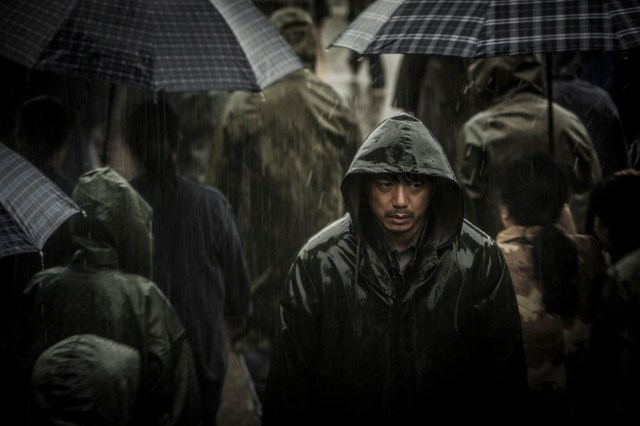 Film noir is defined as much by atmosphere as by any other visual or narrative attribute. The first film by director Dong Yue, a noted cinematographer, is drenched in heavy weather per the title. Ostensibly a murder mystery, The Looming Storm tries to say many things about its milieu—a factory town that’s slowly dying—and how it affects people who have perhaps had their hopes elevated too high.
 Here’s
  There’s nothing like a cleverly made documentary to bring up the obvious and somehow make you believe you’re hearing it for the first time. The general purport of David Batty’s nostalgic romp through 1960s Swinging London is that the milieu announced the triumph of the working class over the gentility that dominated British culture up until that point. As their mouthpiece, Batty and screenwriter Dick Clement and Ian L Frenais use Michael Caine, who’s more than game to make the case that he and his Cockney-inflected cohort changed England for the better and forever. No one who has owned a pulse for the past fifty years is going to argue with that, and while the film’s visual design and pacing makes for lively discourse, the narrative rushes through so many sub-themes—pirate radio, sexual liberation, revolutionary fashion photography—in its brief 85 minutes that you wonder why they just didn’t make a TV series out of it. Actually, maybe they did, given how ubiquitous feel-good 60s nostalgia is at the moment…for the third or fourth time.
 The album as a delivery device for music has been dying for more than a decade now, or, at least, that’s what the pundits say. What struck me more than anything about the way new music was presented this past year is how the album form was adapted to the way streaming has changed our mode of listening. This is only partially due to technological changes. The idea of the album as a unified work of art that developed in the late 60s changed organically over the years as the sheer volume of available music has grown exponentially. Two of the “albums” on my list would, under old rules, be categorized as EPs, but were nonetheless presented to the public as albums in the sense that they were designed to be heard in one sitting. The fact that they’re brief could be taken as a sop to the shorter attention spans brought about by online lifestyles, but I’d like to think they turned out the way they did because of a particular vision.
 I lost my last paying gig as a movie reviewer this year, which means I now watch movies for free, in every sense of the term. I still get invited to press screenings, and attend one or two a week, but writing about them has become more or less a hobby, though publicists and distributors seem to pay attention when I post the reviews on this blog. What’s that worth, I’m not sure, other than the notion that they’ll keep me on their mailing lists. Maybe they’re just being polite. God knows, I feel sort of silly if I tweet links to movie reviews. I have no idea who’s reading them, and haven’t really checked to see how many people are.
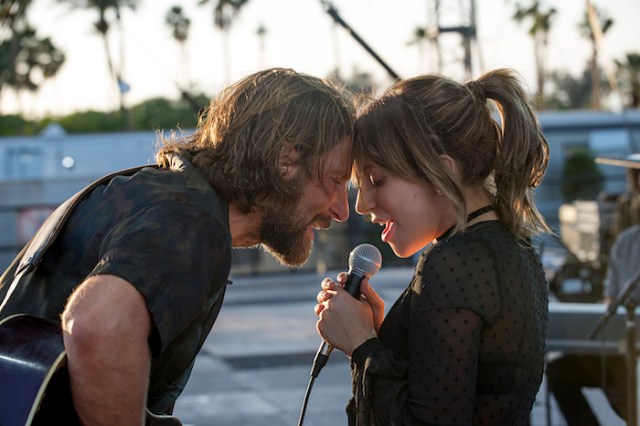 It didn’t take much to make the latest iteration of A Star Is Born better than its immediate precedent, the Streisand-Kristofferson vehicle, which has become something of a camp classic while retaining its critical rep as a dog. Nevertheless, there are parallels worth exploring, the most obvious being the provenance of their four respective leads. In 1976, Kristofferson was probably better known to the general public as an actor than he was as the singer-songwriter that first brought him fame. Casting him as an arena rocker seemed predicated on his particular hirsute handsomeness, but his naturally gruff amateurism made the character, if not the performance, more sympathetic than it should have been. Streisand, on the other hand, was playing as furiously against type as her own immediate forebear, Judy Garland, had been in the 1954 remake: one of the hugest stars of the moment pretending to be an ingenue. This push-pull between her image and Kristofferson’s at the height of rock’s ascendance in pop culture was ridiculous to behold, despite a script by Joan Didion and John Gregory Dunne that turned the melodrama back on itself.
