
 What’s immediately compelling about Aneesh Chaganty’s thriller is its cleverly curated mise en scene, which takes place on a computer desktop. The story unfolds in a series of screenshots depicting photo files, browser searches, chat messages, Tumblr posts, Facebook timelines, and, most provocatively, Skype conversations. By obviating the need for placing the viewer’s POV directly into the action, Chaganty has more control over the mystery elements of the story, which is just as well because that story is pretty trite.
The computer usually belongs to college student Margot (Michelle La), whose widowed dad, David (John Cho), tends to be preoccupied with work and doesn’t really have much of a clue as to what Margot is really about. One day she doesn’t come home from a meeting with her study group and David is unable to get in touch with her by cell phone. When hours stretch into days and the police detective (Debora Messing) assigned to the case is unable to move the investigation along quickly enough, David unlocks his daughter’s computer and starts his own investigation. What he finds out is surprising and disturbing, since it would seem he doesn’t know as much about Margot as he thought he did. Chaganty’s point—that the technology which makes our lives easier also works to hide us from one another—isn’t particularly original, but he works the conceit with flair. Since the director jumps from one device to another, the movie occasionally loses focus along with a good measure of tension. Though the mystery is involving as long as it remains a mystery, there aren’t a lot of thrills along the way. Essentially, with each piece of the puzzle that David finds our anxiety increases, but without any feeling of physical presence, Searching remains a mouse click away from relevance. It’s innovation in the service of the banal.
Now playing in Tokyo at Toho Cinemas Nihonbashi (050-6868-5060), Toho Cinemas Hibiya (050-6868-5068), Toho Cinemas Shinjuku (050-6868-5063), Shibuya Cine Quinto (03-3477-5905), Toho Cinemas Roppongi Hills (050-6868-5024).
Searching home page in Japanese.
 Jackson Heights, located in the western part of Queens and serviced by numerous subway and bus lines, has been called the most ethnically diverse neighborhood in the world. Add to this legend the fact that it was the first place in New York City to launch an annual Gay Pride parade in the wake of the murder of a gay Latino man, and you’ve pretty much got the reason for why Frederick Wiseman spent the better part of 2014 patrolling the streets, hanging out at community meetings, and visiting the myriad small businesses that service the area. In Jackson Heights runs more than three hours, and yet you get the feeling that Wiseman only scratched the surface. His main concerns are commerce and ethnic dignity. He loves just pointing his camera at store fronts and dropping into nail salons, tattoo parlors, and gay bars just to see what’s going on. He also spends a lot of time with a group of Spanish-speaking business owners trying to come up with a strategy in their battle against developers who are finally targeting the neighborhood because it seems to be the last low-rent but vital commercial stronghold in not only New York City, but the whole New York metropolitan area. These confabs are fascinating in the way they not only explain what these people are up against, but also their philosophy about making business something that gives as much to the community as it takes.
 Though the sardonic comic style that drives the best parts of this feature has become the default mode for Hollywood animation of late, the physical gags are more in line with the classic Looney Toons shorts of yesteryear, so it’s no surprise that Warners produced and distributes Smallfoot. Set in the Himalayas, the movie is given plenty of opportunity for characters to drop long distances into the snow, screaming all the way.
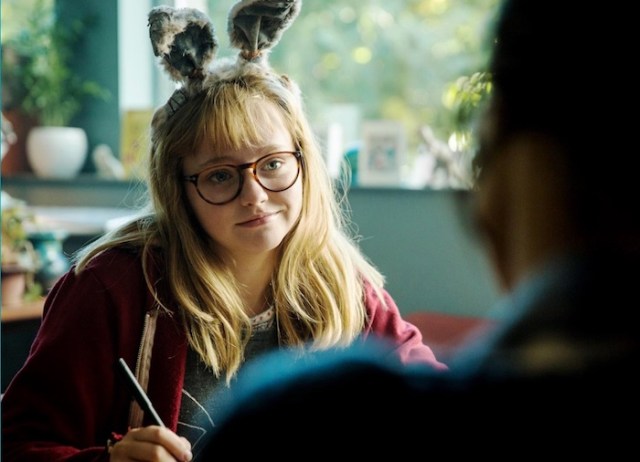 Barbara, the preteen protagonist of this earnest work of empathy, played by newcomer Madison Wolfe, is one of those troubled free spirits who channels her anxieties into flights of fancy that threaten to spin out of control. She wanders forests and beaches with a pair of rabbit ears on her head and clutching an old, worn purse, gathering mushrooms and laying bait for giants, which she believes exist. As the title of this movie, adapted from a graphic novel, suggests, Barbara thinks it is her mission to slay these creatures, and even though the director, Anders Walter, depicts them on screen, the viewer is constantly reminded by other elements in the story that they represent something darker in Barbara’s unconscious.
 Though based on a best-selling kids’ story written in 1973, The House with a Clock in Its Walls feels overly determined as a film, as if it were conceived and developed from scratch by a bunch of Hollywood executives. Some find it curious that torture porn maven Eli Roth directs what is basically a Harry Potter concoction with a few more jump scares and less literary ambition, but by now Roth is firmly in the establishment, and the movie has already proven to be his biggest box office hit to date.
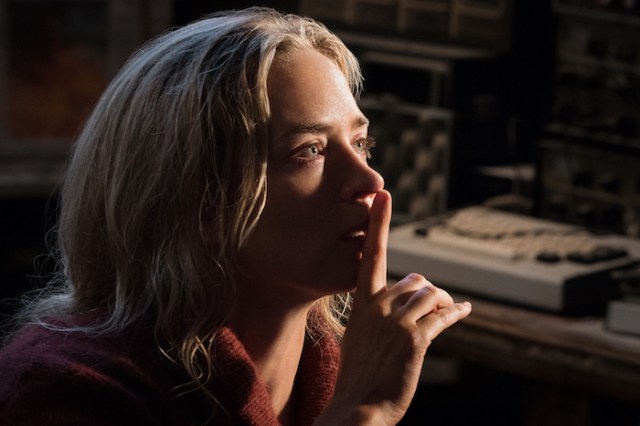 The jump scare has become a tired cliche of horror films, a method that was never that necessary in the first place. Suspense and terror are often more potent when the viewer is allowed to perceive threats in an organic way. In a sense, John Krasinski’s A Quiet Place takes off from this premise, but that’s not its primary appeal. He and his scriptwriters don’t provide a lot of back story, and it takes a little time for the viewer to fully understand the danger at hand. It’s not clear where the monsters who kill and eat humans came from, though indications imply that they’ve been around for three months as the movie starts. These creatures have no sense of sight, and can only locate prey through sound, so the movie is by necessity quiet. Even the music, when it’s used, is subtler than what you normally hear in horror films—most of the time, anyway.
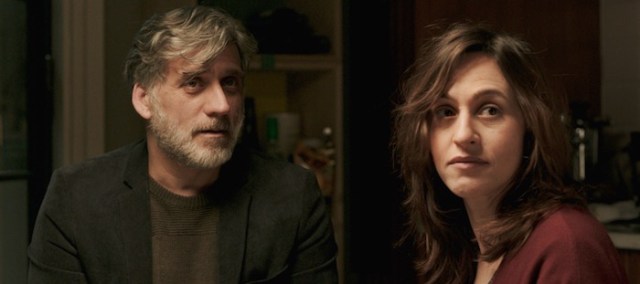 Whatever one thinks of Israeli policy and militarism, Israel’s filmmaking contingent more often than not addresses the country’s sticky matters with imagination and verve; which isn’t to say they necessarily confront their problems head-on, but they don’t ignore them. Samuel Moaz’s Foxtrot is built around a unique narrative that bookends an absurd tragedy with a play-like dramatic comment on that tragedy. Michael and Daphna Feldman (Lior Ashkenazi, Sarah Adler) live in a nice Tel Aviv apartment whose privileged air of complacency is shattered when they receive news that their son, carrying out his obligatory military service, has been killed. Immediately, the couple becomes disoriented and incapable of providing each other with the consolation they so desperately require. It’s obvious the relationship has been strained for some time, but instead of bringing the parents together, the news drives them further apart, partly owing to the nature of the tragedy. Michael, it turns out, was deeply traumatized by his own military service, and news of his son’s death only works to make the past come back with unexpected fury.
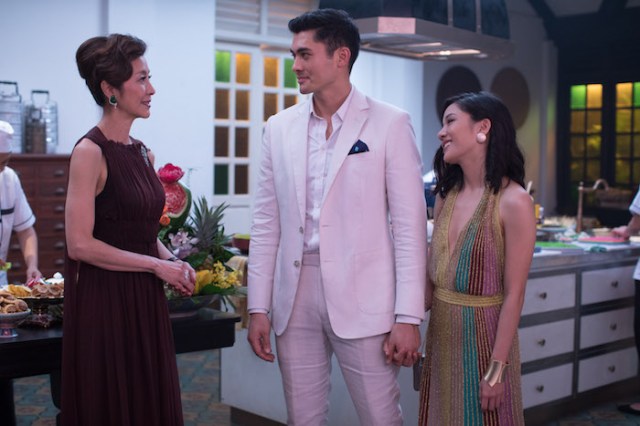 As some of my colleagues have noted, the Japanese arm of Warner Bros. has dropped “Asians” from the title of this surprise box office hit, and while we can probably surmise the reason for the elision, the Japanese socio-historical relationship with its continental neighbors is so fraught with problematic baggage that any attempt to parse it would likely result in the inflation of bad stereotypes.
 It’s no scoop to say that the IMAX format dictates the production of certain movies, since it’s difficult to imagine a Hollywood conference call where, after a movie has been greenlighted and cast, someone thinks out loud, “Hey, maybe this would work on a towering screen!” The latest Dwayne Johnson vehicle, in which the former wrestling hulk shares top billing with a 4,000-foot CG Hong Kong office-and-residential building, was obviously made with the IMAX format in mind, and after you think carefully about it, Johnson is the only A-list actor at the moment who could have starred without wilting in the shadow of the titular edifice.
