Media Mix, Jan. 8, 2012

Aya Ueto, doing what she does best

Here’s this week’s Media Mix, which is about the ever-increasing incidence of celebrity marriages precipitated by unplanned pregnancies. These “dekichatta” unions have become so common that whenever a famous person announces he or she is getting married a spokesperson usually has to clarify whether or not the bride in the equation is already with child, since it’s the first thing the show biz press thinks about. Beyond notions of prurience, it’s something that begs discussion, and for several reasons. Though I only touched on the matter, and in a rather flip way, the effect such “happy news” has on society can’t be underestimated, and the general acceptance of dekichatta marriages implies that the people involved aren’t very careful about their sexual activity. While surveys indicate that most people frown upon dekichatta unions and talent agencies don’t really like them either, the media ignore the whole sex education aspect of the phenomenon, probably because, for one, it’s not really in their purview to make such pronouncements (even if the tabloid side always tsk-tsks about it); and, second, any news about having babies must be met with congratulations and good wishes, because that’s just common courtesy. (Footnote: Kumi Koda, the main focus of the column, already proved her lack of gynecological knowledge several years ago when she remarked on a radio show that women had to have babies before they turned 35, at which point their amniotic fluid became “spoiled.”) Continue reading
Posted in Media | Tagged , , | 1 Comment

January 2012 albums

Here are the album reviews I wrote for the Jan. 2012 issue of EL Magazine, which was distributed in Tokyo at the end of last year.

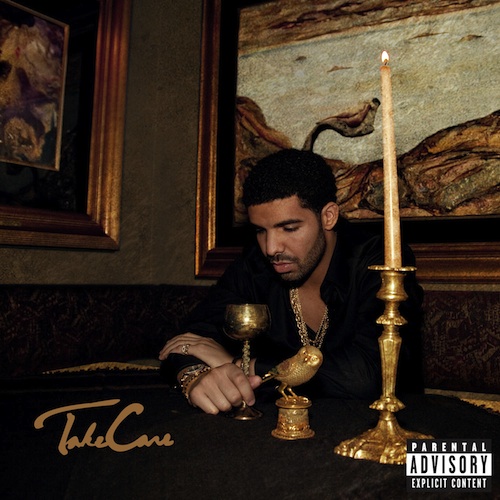
Take Care
-Drake (Cash Money/Universal)
Talk That Talk
-Rihanna (Def Jam/Universal)
For some reason those members of the hip-hop and R&B community who toil for major labels always wait until the end of the year to release albums, confounding lazy critics who want to finish their 10-best lists by Christmas. I didn’t get to My Beautiful Dark Twisted Fantasy until January, and with the delay Japanese labels usually add to releases, I didn’t get to Drake’s and Rihanna’s new joints until late November—forget Mary and The Roots. In Drake’s case it’s particularly problematic because his second album is 79 minutes long and dense with the kind of self-regard that often takes weeks to penetrate. Recorded in the same studio where Marvin Gaye did much of his late work—there’s even a track called “Marvins Room” that sounds nothing like the late soul great—Take Care is one long rant against past loves who had the nerve to leave the Canadian rapper for somebody else. Since Drake is markedly wittier than most of his peers, including Weezy, the solipsism is tolerable if not always enlightening, but I myself would prefer less insight into his love life and more into his quotidian affairs. “I’m sure there’s some taxes I’m evading,” he reveals on “The Ride,” “but I blew six million on myself and I feel amazing.” It’s an interesting contrast to his first album, which erred on the side of caution, musically as well as lyrically. Lusher without being enveloping, the production prettifies even the most caustic observations (“brand new titties/stitches still showing”) and makes it all (pardon the expression) go down easy; which is important for a 79-minute album. And if the record says anything about Drake’s work ethic it’s that he obviously takes his sweet time. Rihanna, on the other hand, always seems to be in a rush. Since the restatement of purpose Rated R, the Barbados-born singer has frantically reasserted her position as the world’s #1 R&B diva, releasing stellar singles and mediocre albums to deliver them. Last year’s Loud was generally received as a holding motion, something to keep Rihanna’s name in the public consciouness while she plotted her next move; which hardly seemed necessary when she was appearing on every other major urban artist’s records (she does a duet with Drake on the aforementioned opus). The subtext of Talk That Talk is raunch, a topic that’s as fresh as limburger but one that Rihanna may have thought was outside her comfort zone given her Top 40 rep and that unfortunate incident involving Chris Brown. The Eurobeat single “We Found Love” is probably the most heartfelt, innocent song she’s recorded, carried by a lovely, lilting vocal line. Once that’s out of the way, she unleashes the growl and the suggestive lyrics (“Cockiness”?), but the only convincing sex talk is Jay-Z’s bragging during the title track. As the album progresses the interest level, both hers and ours, flags. Obviously, somebody came too early. Continue reading

Posted in Music | Tagged , , , , , , , , , , , | Leave a comment

January 2012 movies

Here are the movie reviews I wrote for the Jan. issue of EL Magazine. They cover films that were released in Tokyo between late Dec. and mid-Jan.

Animal Kingdom
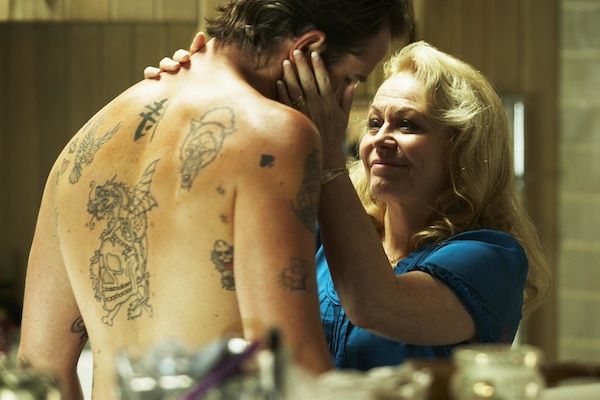
The title of Australian director David Michod’s debut feature suggests an environment ruled by the laws of nature, but the world it describes is a small one and the game is actually rigged. The Cody family is a band of hardened criminals, and based on the attitude of the clan’s matriarch, Smurf (Jacki Weaver), it lays claim to some sort of pedigree. Her boys are bank robbers, a line of work as specialized as arc welding, but each brother has his own personal peccadillo that makes the work even more perilous. Around the time that Smurf’s teenage grandson, Joshua (James Frecheville), enters this volatile household, the Codys are under close surveillance by the local police, whose main object of desire is the eldest boy Pope (Ben Mendelsohn), who’s on the lam and off his medication. Josh’s mother, who had been estranged from Smurf since Josh was a little boy, has just OD’d on heroin in one of the most shockingly matter-of-fact scenes in the history of cinematic drug abuse. Shortly thereafter, a rogue band of cops offs a member of the Cody team, and the killing sets in motion a series of tit-for-tat reprisals that spirals out of control. Scorsese should probably sue for a royalty, but the defense would counter that Marty could never have countenanced Josh’s enervated voiceover. This is a kid whose damage goes way back and has rendered him a walking blank stare. The contrast between the adolescent’s open-mouthed incomprehension and his uncles’ macho bluster and drug-fueled desperation is so stark as to be antithetical. The contrast also gives Michod a plot device that brings out the worst in both sides of the battle. The brothers use their nephew’s passivity to their advantage, while the main cop (Guy Pearce) senses a hesitancy that he can tap once it becomes clear to Josh that his family isn’t looking out for his best interests. In the film’s most gratuitous display of depravity, Pope forces his survival prerogatives on Josh’s girlfriend, and you realize that the movie can’t go any lower, until Smurf, the very picture of a nurturing female, decides to sacrifice her grandson for the sake of her sons. After all, he’s not really a full-fledged member of the family. By over-reaching Michod squanders the viewer’s trust, since Josh is the only character with any recognizable moral perspective, and that includes Pearce’s detective, who understands what it means to lose your soul but doesn’t seem particularly troubled by the fact that he sold his long ago. Weaver got the Oscar nod mainly because of the character, but Pearce is the amazing one. At this point, his range seems boundless. (photo: Screen Australia, Screen NSW, Film Victoria, Premium Film Partnership, Animal Kingdom Holdings and Porchlight Films) Continue reading

Posted in Movies | Tagged , , , , , , , , , , , , , , | 1 Comment

Best albums 2011

During a year when my opportunities to hear live music decreased considerably, I would like to think I actually listened to more music. Having shifted my daily constitutionals from the morning to the evening in order to take advantage of the huge sky and dramatic sunsets in the place we moved to last June, I made more use of my iPod than I did of my stereo, thus creating a whole different set of circumstances for listening to recorded music for the purpose of actually listening to it. The difference was startling and for a while I was thrown off. As I said in last year’s best-of-year essay, while age hasn’t depleted my critical faculties it is has certainly made it easier to fall prey to distractions, but walking through the by-ways of Inzai I found myself more engaged by whatever it was that came through my earphones. In past years when compiling my Top Ten I usually had to take time out in late November to sift through the records I liked until I determined which ones I actually loved, or which ones actually made a deep impression. This time I pretty much knew what I loved because those long walks had the effect of focusing my attention on the things that did make a deep impression, over and over. The only real change in my short list was the exchange of numbers one and two. FOW was pretty much my summer jam, especially after seeing them at Fuji Rock, but I revisited Ms. Garbus’s album, originally released back in February, in November and it re-blew me away. Also, had I stumbled upon the Little Dragon sooner—I didn’t hear it until a few weeks ago—it might have ended up in the Top Ten rather than in the HMs. Continue reading

Posted in Music | Tagged , , , , , , , , , , , , | 1 Comment

Best movies 2011

Here are my ten-best-plus movies of the year, which I wrote for the Jan. issue of EL Magazine. All were released in Japan during the 2011 calendar year. Though I saw fewer movies than I did in 2010, I believe 2011 was also a better year for movies. Since I no longer write for the Asahi Shimbun I was not compelled to see a lot of American movies that I wouldn’t have normally bothered with in the first place, so maybe my slightly brighter opinion had something to do with that. Nevertheless, there are still a lot of films that I would like to see that haven’t received distribution in Japan and don’t seem likely to receive any in the near future. And if I allowed the inclusion of TV movies on this list it would certainly contain Todd Haynes’ mini-series adaptation of James Cain’s Mildred Pierce, which was shown on WOWOW. It might have even topped The Tree of Life, in my estimation. (To those who wonder why there are no Japanese movies on this list, refer to the essay I wrote last year, which still applies.)

Speaking of WOWOW, they did a good thing by expanding to three channels full-time and dedicating one of those channels exclusively to movies. And while in terms of foreign films I would prefer less American low-brow content and a bit more edgier stuff from all countries (including the US) in order to take up the slack that’s resulted from the demise of so many theatrical distributors, they occasionally do good deeds, like that Bresson retro that keeps recurring every month. Now, how about one on Haneke? I still haven’t seen Code Unknown and Hour of the Wolf, and the DVD rental service nearest to my new apartment is basically a vending machine stuffed with episodes of 24 and Prison Break. Continue reading

Posted in Movies | Tagged , , , , , , , , , , | Leave a comment

Media Mix, Dec. 18, 2011

Masato Uchishiba (Kyodo)

Here’s this week’s Media Mix, which is about the arrest of gold medalist Masato Uchishiba for allegedly raping a member of the university judo team he coached. Though the column references comments by journalist Yukari Yamada on the problem of coaching philosophy in Japan, which she believes is at the root of the Uchishiba affair, sex harrassment and sex abuse in sports, as indicated by the International Olympic Committee’s 2007 announcement, is a worldwide problem. The most prominent case is probably that of Paul Hickson, the swimming coach for the British Olympic team who was convicted of child molestation in 1995, since it led to the establishment of guidelines, in Britain, for how coaches should conduct themselves with younger athletes. The guidelines that Japanese sports organization are considering follow a similar way of thinking.

Such guidelines sound like common sense, though some people in the sporting world consider them interference in the special relationship that exists between coaches and athletes. Moreover, as the comments by Dewi Sukarno suggest, a lot of people think that the scrutiny of sexual relations that has become more widespread in recent years has led to an increase in sex harrassment allegations for behavior that is no big deal. Uchishiba, who is married and has a family, admitted that he had sex with his accuser, but insists that it was consensual. If the case proceeds to court, a judge will have to determine if it was, but lately there has been a lot of controversy about what constitutes actionable improper sexual behavior, prompted by the Dominique Strauss-Kahn and Julian Assange arrests. In both cases, famous men were accused by women of forcing them to partake in sex against their will. Strauss-Kahn has since had the charges dropped due to the unreliability of his accuser, a hotel maid; while Assange is still under house arrest. In relation to their predicaments, both men had supporters and detractors, with the former essentially taking the same tack as Sukarno but with more rhetorical rigor. Sometimes, this situation makes for strange–pardon the expression–bedfellows. For instance, the well-known writer Naomi Wolf, who calls herself a feminist, has received a certain amount of backlash for her support of Assange, which entailed denigrating the stories of his two accusers. The feeling is that Wolf is being swayed by her belief in Assange’s mission as the founder of Wikileaks, and so has to justify that belief by dumping on women who she feels are delusional about their sexual relations with him. This is not much different in substance than Dewi Sukarno imagining that the female judo-ka accused Coach Uchishiba of rape because he spurned her affections after sleeping with her during a night of drinking, since Sukarno seems somewhat in awe of Uchishiba for his Olympic accomplishments.

The fact that there is a controversy over the definition of sexual abuse in these cases points to their political nature; which is why they should be discussed in the media. If all the relationships at issue were, in fact, consensual, maybe the rest of us have no business passing judgment, but it’s difficult not to do so when powerful men are involved. If Strauss-Kahn’s, Assanges’s, and Uchishiba’s behavior still seems repugnant to some of us, regardless of their respective sex partners’ consent, then it only goes to show that there’s a long way to go before men get the message that just because they can have sex exclusively on their own terms it doesn’t mean they should.

Posted in Media | Tagged , , , , , | 1 Comment

Mission accomplishable: Tom Cruise draws a crowd

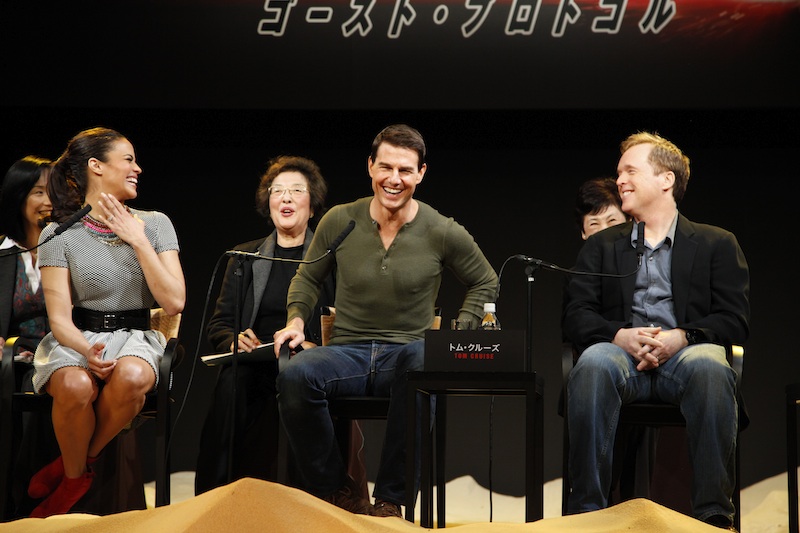
Entertain me: Patton, Toda, Cruise, Bird at Mission Impossible Ghost Protocol press conference, Ritz Carlton Hotel, Tokyo, Dec. 1, 2011 (photo Lucian Capellaro/Paramount Pictures Int'l)

Who’s the biggest movie star today? If you say Tom Cruise or Will Smith, it’s not because they’re the biggest box office draws, but rather because they act like movie stars, and that’s because they love being movie stars. It’s what they always wanted to be and now that they are they’ll do whatever it takes to remain movie stars. It’s why they throw themselves so fully into promotion, why they answer every dumb interviewer’s question as if it were a matter of life or death, why they spend that extra few minutes with fans and give photographers whatever they ask for. Julia Roberts looks upon reporters the way the rest of see tax auditors, and while Brad Pitt and Johnny Depp do the press conferences, photo sessions are like dentists’ appointments, necessary but highly unpleasant. One assumes that they like being movie stars but would prefer the old-fashioned protocols, when personal appearances were purposely limited to preserve the mystery of personality. That model went out with the studio system and the subsequent stars of the 60s and 70s were born too early for the press junket. Tom Cruise was practically born into it. Except for the occasional European who somehow thinks that drilling him about his status as an alpha dog Scientologist counts as serious journalism, the press treats Cruise like a king because he treats them like old pals. Most Hollywood actors as seasoned as Cruise would cringe at the idea of the current whirlwind world press tour to promote Mission: Impossible-Ghost Protocol — 9 cities in 14 days, and Tokyo was the first. To Cruise, such a schedule is a challenge, something, he’ll be quick to tell you, that he thrives on.

Locals may grumble that Tokyo is the only one of these cities that isn’t getting a premiere, but actually Cruise did even better: He set up a fan meeting/screening at Roppongi Hills on Dec. 1, probably because he knows more about Japanese fans than most American movie stars. Whenever he’s in town to promote a movie, Cruise not only does the press conference, the interviews, and the premiere, all with that huge, sparkly smile and the sincerest form of flattery, but also a few TV shows where he invariably rubs shoulders with local celebrities and not-so-celebrities, happily making just as much of a fool of himself as they do.

Because he, as star and producer, along with director Brad Bird and costar Paula Patton, had to be in Seoul the next day, he didn’t have time for the variety shows this trip, so that’s why the fan meeting trumped a premiere. I didn’t make it to the fan meeting, and not because I’m not a fan, but because I saw the movie that morning and then went to the press conference, and there’s only so much Tom Cruise you can take in one day. Continue reading

Posted in Media, Movies | Tagged , , , | Leave a comment

December 2011 movies

Here are the movie reviews I wrote for the Dec. issue of EL Magazine, which was distributed in Tokyo on Nov. 25. The movies open in Japan between late Nov. and mid-Dec.

The Adventures of Tintin
Herge’s boyish Belgian reporter-adventurer and his terrier Snowy are brought to animated 3D life by Steven Spielberg, who looks to be making another Indy Jones franchise. The difference is worth noting. Whereas Jones was a completely original character, albeit one cobbled together from numerous pulp models, Tintin is somebody else’s creation, a comic book hero beloved by millions the world over since 1929. Not being a fan, I have no problem with Spielberg’s rendition, and while I doubt that followers will begrudge the changeover to English, will they tolerate the alteration of names that goes with it? The bumbling twin police detectives are no longer named Dupont but rather Thompson. More significantly, the script by Edgar Wright and Joe Cornish inserts jokes that seem concoted for English accents and the Anglo behaviorisms attached to them. Consequently, the whole enterprise comes off as a generic action movie—a very well made action movie, but missing the bold eccentricity that made the Indy series special. What registers is that Tintin, voiced by Jamie Bell, is earnest and cocky, but nevertheless without his dog he’d be dead meat before the first reel is finished. In this presumably first installment, subtitled “The Secret of the Unicorn,” Tintin’s purchase of a model ship pulls him into a scheme by the evil Sakharine (Daniel Craig), whose ancestor, it seems, was the nemesis of the ancestor of alcoholic seafarer Capt. Haddock (Andy Serkis). The model contains a clue to the whereabouts of a sunken treasure that the two forebears fought over. Tintin and Haddock join forces in chasing Sakharine to several exotic locations, which was the main purpose of the Tintin stories during those days when overseas travel was impossible for most people. Except for the exaggerated noses, the CG/performance-capture figures look too much like real people to make the sort of funny impression the comic books are famous for, but Spielberg knows his action grammar, and with Peter Jackson lending production assistance this is certainly the best use of the technology for purely action purposes. Chase scenes on land, sea, and in the air are dialed up for maximum peril and drawn out with ridiculously outrageous detail. As a result, all the characters except Haddock seem that much smaller. Tintin could be any plucky kid, and Sakharine any snarling bad guy. Serkis, who’s had more experience with performance-capture than anyone, has learned how to dominate the pixels, and Haddock is such a believable drunk you hope the kids who lap this stuff up don’t get the wrong idea. The ending leaves matters open to a sequel (the story is based on three Tintin volumes), which will supposedly be directed by Jackson. He tends to have a better grasp of source material. (photo: Paramount Pictures) Continue reading

Posted in Movies | Tagged , , , , , , , , , , | 4 Comments

December 2011 albums

Here are the albums I reviewed for the Dec. issue of EL Magazine, which was distributed in Tokyo last week.

Crazy Clown Time
-David Lynch (Sunday Best/Beat)
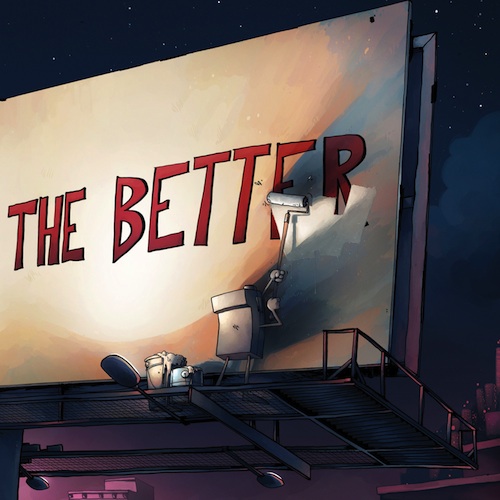
The Less You Know, the Better
-DJ Shadow (Island/Universal)
If you came of age in the 90s you would know of David Lynch as a filmmaker but might think of him as something more due to his selfless promotion of transcendental meditation and advocacy of really good coffee. Whether purposely or not, Lynch is as much of a character as the characters in his films are, which is saying a lot if you’ve seen Blue Velvet or Twin Peaks. Though Crazy Clown Time is his first nominal solo record album, music has always been central to his films and he’s been central in the way they’ve been used. However, unlike the classic pop he utilizes to intensify creepy particulars, the music on CCT is forced to stand alone, and while one can be creeped out by the old man voice on “I Know” or the bizarre positivity of “Good Day Today” and “So Glad,” they aren’t resolute enough as songs and thus don’t stick in the imagination as tenaciously as, say, the Roy Orbison renditions in Velvet and Mulholland Drive did. Though not averse to melody, Lynch is overly fond of repetition that renders melody inconsequential, and since his vocals are heavily processed throughout the effect is more curious than inviting. He calls it “modern blues,” a description adhered to by guitarist Dean Hurley but hardly reinforced by Lynch’s lyrics, which are either sunny or schematically descriptive, like the droning essay “Strange and Unproductive Thinking.” The closest the album comes to the signature soundtrack work Lynch did with Angelo Badalamenti is not the Karen O-assisted “Pinky’s Dream,” but the actual blues “The Night Bell With Lightning,” which Lynch describes in the publicity material as inspired by Kafka. The fact that it has no vocal and therefore no physical input from the director has something to do with its unsettling power. Lynch himself isn’t half as disturbing as his thoughts are. DJ Shadow’s thoughts have always been congruent with his musicianship, and if it’s likely he will never top his first album Endtroducing, it has to be said that it’s impossible to top a work of art that is definitively sui generis. On the few albums he’s released since that 1996 monument he’s moved away from sample-heavy constructs toward straight production, and most of the cuts on The Less You Know are, like the cuts on the Lynch album, fully realized songs. The notion that half of them aren’t hip-hop shouldn’t be a problem, but Shadow’s taste in metal, acid jazz, and the sort of old-timey pop that Lynch probably dug first-hand is baffling in that he doesn’t seem to add anything to these tracks. When he invites Talib Kweli and Posdnous in for a rap, his value as a soundmaker comes to the fore; not so much when he teams with Tom Vek for standard 80s new wave album filler. The Little Dragon cut I like, but mainly because I think Yukimi Nagano is an arresting singer. David Lynch should call her. Continue reading

Posted in Music | Tagged , , , , , , , , , , , , , , | Leave a comment

Media Mix, Nov. 27, 2011

Takarajima's anti-eBook polemic

Here’s this week’s Media Mix, which is mainly about eBooks, though near the end I also comment on newspaper companies’ relationships with their delivery agents. I talk about digital newspaper subscriptions in more detail in our Yen for Living blog, but publishers’ connections to their distributors have always been special in Japan. My partner worked in a bookstore when she was a lot younger and it seems each publisher had its own peculiar way of handling things like remainders and returns. Iwanami, in line with its somewhat stuffy image, didn’t even accept returns. If a retailer bought books from them they were bought. That’s why Iwanami books always came with those distinctive thin plastic covers, just in case they sat on the shelf — or back in the storage room — for years. And because of the resale price maintenance system I mentioned in the column, bookstores couldn’t reduce the price to clear their inventories. The fact is, publishers have it good with the retail system since many are practically guaranteed a good return — as long as sales remain stable. eBooks erode that guarantee, and though it would seem that publishers could make even more money with digital content, since so much overhead would be eliminated, the publishing industry, like all businesses in Japan, is averse to change.

But it’s the newspaper business that really relies on distribution, and not just to get their product to readers. The Shincho-Yomiuri suit mentioned in the column (Asahi, I believe, also sued the magazine) implies a relationship that goes beyond distribution. Ever since I first started working as a freelance writer in Japan I’ve heard about the oshigami scheme, which basically uses distributors to push up circulation numbers that are shown to advertisers as justification for the rates they pay. The media in general — most TV stations are either owned by or have strong connections to publishers — have ignored this alleged practice, so Shincho probably knew they would be sued. This is ironic since Shincho is itself a publisher and thus also has a stake in distribution. The main point seems to be that newspapers, because they deal with so many independent delivery agents, are more reliant on oshigami. Each delivery agent, though affiliated with a specific newspaper, is its own company. Some are family owned and even have dormitories for delivery personnel and salespeople. Where I’m from in the U.S., home delivery of newspapers was carried out by elementary school kids on bicycles to earn spending money. Here, it’s traditionally been high school graduates. In fact, many agents have systems set up with newspapers for delivery personnel who want to attend university while they work for the agents. Or, at least, they used to. The bad economy has driven more people to seek employment as delivery persons so there isn’t much incentive to attract younger workers, but in any case digital newspapers would mean the end of delivery agents, and I’ve heard rumors that some are demanding that newspapers reimburse them for every digital subscription they sell. How can they do that? Obviously, the oshigami system, if it exists, would indicate collusion between agents and publishers to defraud advertisers, so publishers are not going to want to make their distributors angry. The thing is, agents benefit from oshigami as well, since much of their revenue is derived from putting advertising inserts in the newspapers, and they charge by the number of papers they deliver. Too many people are making money from physical newspapers, so publishers are making it more difficult for readers who would prefer to receive their news online.

Posted in Media | Tagged , , , , , | Leave a comment