

Isoko Mochizuki
Here’s this week’s Media Mix, which is mainly about the lack of women’s voices in the Japanese mass media, especially with regard to the press. I understand that some people, aside from the issue of fairness in employment, may be uncomfortable with the idea of a female point-of-view when covering news stories, since journalism should be totally objective, but that professional ideal is unrealistic. In fact, one of the biggest problems with journalism in Japan is that many reporters who work for the major media companies approach their jobs too objectively. If they consider anyone’s feelings in their approach to the story it’s either that of their editors, that of their subjects, or that of the target audience. They rarely bring their own sensibility and experience to bear on their coverage, probably because these aspects weren’t cultivated when they were in school. The most famous mass media reporter right now is probably Isoko Mochizuki because she is seen to be challenging to people in power. However, all she is doing is asking the questions that need to be asked in order to get at the truth in the story she is pursuing. Does the fact that she’s a woman have anything to do with her seeming iconoclasm? Maybe. She doesn’t cover nominally “women’s” issues, and her writing doesn’t necessarily betray a woman’s point of view, but few men who are employed as reporters for major publications and TV stations are as aggressive in their approach to getting a story. By that token, it should also be mentioned that Mochizuki is a wife and a mother, and such responsibilities seem to have no particular effect on her journalistic capabilities. And, of course, they shouldn’t.
One of the reasons male reporters in general may not be as aggressive as Mochizuki is that they are thinking about advancement. If they piss off someone in power and that person complains to their editor or someone even higher up in the media company where they work, it might make it difficult for them to be promoted down the line. As mentioned in the column, there are few women editors at the dailies and TV networks, and I have to wonder what Mochizuki’s chances are of climbing the ladder within even a left-leaning organization like Tokyo Shimbun. From what I’ve read and heard, she gets by with what she does at the company mainly through force of will and the unexpected celebrity that has attended her unusual approach (in Japan, at least) to her job. She is supposedly resented by some of her colleagues and editors, but she’s a star so they aren’t going to do anything about it. Still, I doubt if she is going to be promoted, and, again, that doesn’t necessarily mean she is being held back because she is a woman, but the fact remains that she is a woman and an exceptionally effective reporter. And I don’t think those two attributes are unrelated in a media milieu like Japan’s. In the Asahi Shimbun article I mention in the column, Tomohiko Nezu cites two reporters who hit glass ceilings in their companies because they were women. The late Reiko Masuda was the first woman to be named an editor at the Mainichi Shimbun, but her dream was to head the political affairs department, the most important editorial post at the paper. Men who entered the company after she did ascended to that desk instead. The late Yayori Matsui was a force to be reckoned with at the Asahi Shimbun, but because she wanted to cover the comfort women issue in depth she made her male colleagues uncomfortable and so had to quit the newspaper in order to work on the issues that meant the most to her, in particular gender inequality and sexual violence against women. The question thus becomes: If Isoko Mochizuki became a powerful editor at a major newspaper, would she carry out her responsibilities in a way that was different from other, presumably male, editors? Probably, but then you’d have to wonder whether such actions were due to her experience as a journalist or due to her experience as a woman, and when you think about it carefully, you know you can’t separate the two.
addendum (Sept. 27, 11 p.m.): This afternoon I learned that Mainichi Shimbun employs more women reporters than any of the other national dailies. I discovered this because I am now writing a column about Shiori Ito’s defamation lawsuits and Mainichi’s coverage of Ito’s situation has been thorough since she first came forward with her rape accusation. It turns out that women reporters at the paper have made a point of covering the topic, which essentially proves my point about having more women in editorial and reporting positions. However, I should also mention that Mainichi pays less than any of the other national dailies. The average annual salary, in fact, is about ¥2 million less than that at the Asahi Shimbun, which pays the most. Make of that what you will.
 Mainland Chinese cinema was relatively late to film noir, especially in relation to Hong Kong and other Asian countries like South Korea, Japan, and the Philippines, all of which have reshaped the genre in distinctive ways. But once a younger set of directors applied film noir tropes to their local circumstances, it became almost a national obsession. Diao Yinan’s The Wild Goose Lake has pretty much become the standard to which all Chinese noir will be compared until something better or more original comes along, but that seems unlikely owing to how thoroughly Diao has applied these tropes. It’s a pretty stunning achievement, even if it can sometimes feel like a trial.
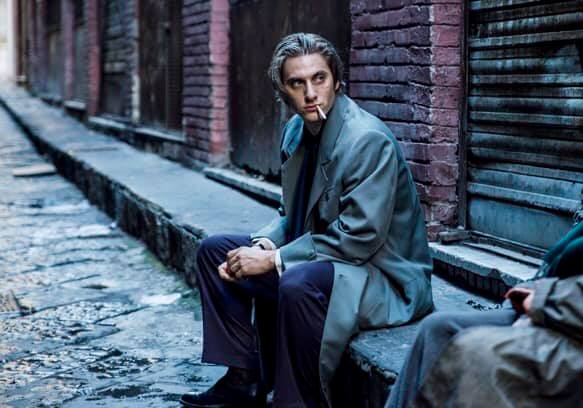 I haven’t read Jack London’s novel, which is supposedly an autobiographical affair outlining his genesis as a writer, but based on his other writings that I have read and the general tenor of autobiographical novels by writers, I can probably guess what the main theme is: the triumph of the individual sensibility over that of the crowd, and the suffering that comes with it. Pietro Marcello relocates the book’s setting from Oakland to Naples in a time that feels as if it’s early to mid-20th century (but since there are no references to any world wars, it may simply be a time out of mind). Martin (Luca Marinelli) is a sailor, a proletarian by birth who is uneducated but hungry for knowledge. He meets the socialite Elena (Jessica Cressy) after saving her brother from a beating, and develops a crush both on her and her bourgeois living situation. After a conversation with Elena about the poet Baudelaire, he decides to become a writer in a language, Italian, he’s not fluent in. Martin’s mission is simple and almost sad in its trite dramatic essence. He wants the respect of the better classes, initially so that he can marry Elena, since her parents can barely remain in the same room with him, but inevitably so he can get revenge on his own lowly past.
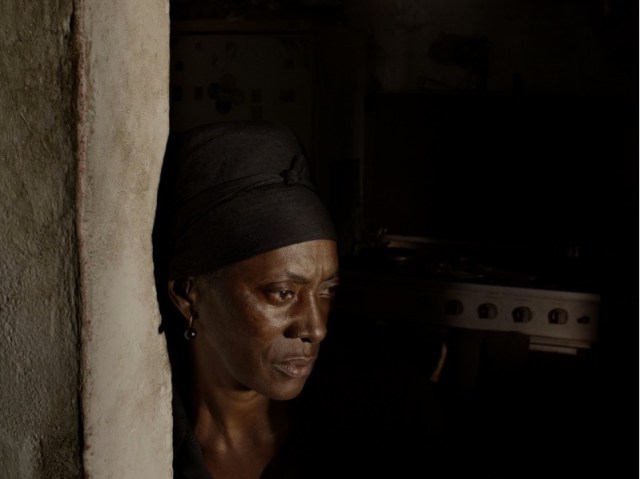 There’s a subset of narrative film directors who work almost exclusively with non-professional actors, which may sound like an oxymoron since these performers are in all likelihood paid for their efforts, but in most cases they only appear in one movie and otherwise live lives that have nothing more to do with film. The Portuguese filmmaker, Pedro Costa, belongs to this group, but his methodology is even more refined. For 20 years he has focused on immigrants to Lisbon from the former Portuguese colony of Cabo Verde, off the Atlantic coast of Africa. More to the point, he centers his stories in a small, warren-like Lisbon slum where these people live their lives of quiet desperation, and while that sounds like a cliche, Costa’s use of space and narrative is highly unusual, not so much because it follows documentary procedures, but rather because it plucks its protagonists’ stories out of a strip of their lives as a means of illuminating what it’s like to pass most of one’s existence in the shadow of an alien culture.
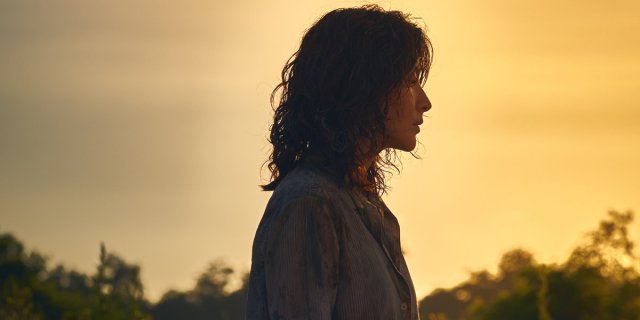 Bring Me Home is, I think, the third missing child movie I’ve seen this year, which, given the attenuated nature of my moviegoing pastime in the COVID era (I tend to watch TV series at home), practically makes it a subgenre. Compared to something more cerebral like the Spanish movie, Madre (opening here next month), this Korean thriller is pretty straightforward, and because it’s Korea it’s also more viscerally stimulating. First of all, there’s the social elements to contend with, which are always more potent in Korean movies, whether mainstream or indie. Then there’s the violence and emotional extremism, which is also a given in any Korean movie that even touches on criminal behavior. In other words, it’s quite a ride to begin with, and that isn’t even taking into account its questionably exploitative handling of children.
 Right away, I should mention that this documentary about the pioneering Black-owned independent record label was authorized and to a certain extent supervised by Motown’s founder Berry Gordy. It’s essentially a PR gambit and looks like it. The narrative emphasis is on the label’s enormous success and historical importance, neither of which can be denied. Whatever frictions it covers are good-naturedly glossed over with a smile and/or a shrug, and some of the biggest surviving beneficiaries of Motown’s success, most conspicuously Diana Ross, don’t participate.
 Last week, the organizers of the 25th annual Busan International Film Festival announced somewhat abruptly that the festival, originally scheduled to take place Oct. 7-16, would be postponed for two weeks and would instead begin on Oct. 21. It has already been decided and announced that, due to the COVID crisis, the size of Asia’s biggest film event would be scaled back considerably. For one thing, there would be no foreign guests in attendance due to government rules stipulating a 14-day quarantine for anyone entering South Korea. That includes, of course, the usual invited press, of which I have been a member since 2001. It also means that most if not all the non-Korean filmmakers whose works will be shown at the festival will not be able to attend in person. However, the organizers were, and still are, intent on having a live event, with real people attending screenings in real theaters, because that is what a film festival is about and BIFF considers itself a real film festival, i.e., one for the local fans. The two-week postponement was implemented because of uncertainty over the Chuseok holiday period in the first week of October, when many Koreans visit family and friends. The fear is that such activities could result in another spike in infections. If that happens, the two-week lag time might be enough to flatten the curve.

 Given the enormous output of the South Korean film industry, even during its occasionally fallow times, it’s not surprising that certain genres and subjects get covered to death. One is the storied Joseon Dynasty, when a good deal of what we know now as Korean culture developed. It was also a fraught time both politically and socially, as the class system that ruled the kingdom resulted in mass starvation and the tribute the court paid to their Ming overlords in China exacted a heavy price, especially in retrospect. In that regard, Hur Jin-ho’s Forbidden Dream is enormously ambitious. It attempts to be the last word not only on the Joseon Dynasty, but on movies about the Joseon Dynasty, even if it focuses on the relationship between two men.
 philipbrasor.com