
 Spike Lee’s most obvious touchpoint as a major film director is his obsession with the African-American experience, which he translates to the screen in the most uncompromising terms. For that reason, he often oversteps his subjects when it comes to form and style. The manic qualities that made critics notice him early on have never receded, and are often at odds with what seems to be his purpose in making a particular film. Certainly, Do the Right Thing is the clearest example of this mode of presentation when it works sucessfully. Malcolm X proves that he can also pretty much address his obsession in more conventional ways and produce something worthwhile, but it feels more like an exception rather than the rule.
BlacKkKlansman is Lee in full-on Spike mode. The obsessions are worked fully from the very first scene, which features Alec Baldwin as a white supremacist delivering racist talking points to a sympathetic audience. The casting seems as vital to the movie’s theme as any other element, since Baldwin, both publicly and privately, has a reputation as a risk-taker and a blowhard, so you carefully listen to the offensive gibberish dressed up as some kind of scientific treatise. It’s 1979, more than a decade after the Civil Rights Movement had made its most powerful statements, and the Klan is still a force to be reckoned with. Based on a book by retired African-American cop Ron Stallworth, the movie chronicles Stallworth’s infiltration and exposure of a Klan recruitment drive in Colorado Springs. Given the above-mentioned style preferences, the script is conceived as the kind of broad comedy you might have seen at a theater in the year it takes place, and Lee revels in ancillary business, like an all-Black disco night, extreme Afro hairstyles, and whether or not Black Power was still a righteous thing in 1979 or more of a fashion trend. Some African-Americans, like the rapper-film director Boots Riley, have taken issue with Lee’s version of events, saying that BlacKkKlansman seriously misrepresents Stallworth’s book, but it’s obvious from the start that Lee means to make of Stallworth’s story something more incendiary, something that speaks to the Trump era with the kind of force that Do the Right Thing did in the midst of the Reagan-Bush years.
The absurdist tack of the film is best represented by the relationship between Stallworth (John David Washington), an obviously tokenized member of the Colorado Springs police department, and his white Jewish colleague, Flip Zimmerman (Adam Driver). Though Stallworth devises the strategy to take down the Klan in his town and even gets the ball rolling by faking a “white accent” while asking about joining the organization, he can’t possibly do the real undercover work, and so recruits Zimmerman with the hook that the Klan hates Jews, too. Meanwhile, Stallworth is dating a woman, Patrice (Laura Harrier), who is fully invested in the local Black Power movement and suspicious of Stallworth’s career trajectory, a situation that allows Spike to air all the conflicting arguments of whether Black Americans can trust any aspect of the white power structure.
Spike never quite gets these two aspects—the didactic, meat-and-potatoes race conversation and the entertainment content, which slides back-and-forth between standard sitcom jokes and police procedural—to sync as well as he thinks they do, but the movie’s relentless pace and insistence on being edgy to the point of outrage make the ride worthwhile. It’s certainly Lee’s most potently effective film in a long time, but anyone who knows his work well should automatically take that recommendation with a grain of salt.
Opens March 22 in Tokyo at Toho Cinemas Chanter (050-6868-5001), Toho Cinemas Shinjuku (050-6868-5063), Shibuya Cine Quinto (03-3477-5905), Toho Cinemas Roppongi Hills (050-6868-5024).
BlacKkKlansman home page in Japanese.
photo (c) 2018 Focus Features LLC
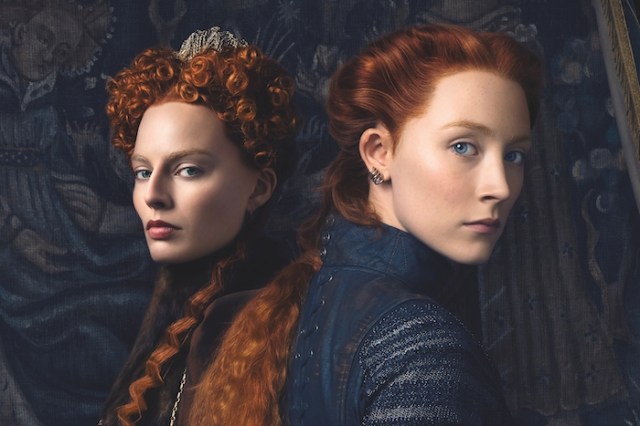 The rapid rise and fall of Mary Stuart has been filmed a number of times before, so director Josie Rourke needs a damn good reason to stick our noses in the tragedy once again. Her revisionist take, turning the rivalry between Mary (Saoirse Ronan), who, when her husband, the king of France, dies, returns to reclaim her throne in Scotland at the age of 18, and her cousin, Queen Elizabeth I (Margot Robbie), into a cautionary feminist tale about two strong-willed women struggling to navigate a world of men who don’t trust them, is interesting up to a point, but it still has to contend with certain inalienable facts that have to be explained if anything is to make any sense, and, as a result, Mary Queen of Scots comes across as schematic and dramatically anemic.
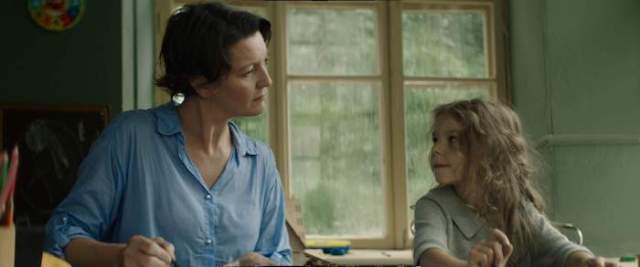 It’s interesting that Jodie Foster is thinking about doing a Hollywood remake of this extraordinary Icelandic fantasy, because it seems so resistant to the kind of pat familiarities that Hollywood trades in these days. The hook is understandably appealing: Unassuming single middle-aged woman looking for purpose in her life becomes an underground eco-terrorist who garners headlines and stirs controversy aboveground. And while director Benedikt Erlingsson handles the action portions of the tale with flair and humor, he’s more interested in the philosophical ramifications of our hero’s quest. Altruism is many-sided and complicated to a fault. Sometimes you have to give up one good thing in order to get another.
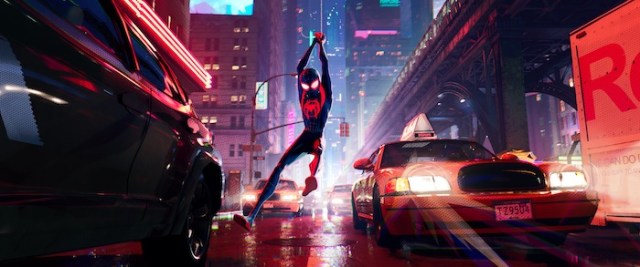 As we prepare ourselves for another spring-summer of superhero schlock, it’s best not to make too much of a distinction between Marvel and DC. Obviously, the former trumps the latter in most departments, but the late Stan Lee’s runaway train of pop culture signifiers has become so obsessed with outdoing itself movie after movie that the effort becomes a slog for everyone involved, including the viewer. The Spider-Man franchise has always managed to set itself slightly apart from the crowd, and I have no idea if it’s because the brand is handled by Sony rather than Disney, but reportedly the makers of this ambitious animated take on the series had problems selling the studio on their concept, and it’s easy to see why: It’s a genuine kids’ movie, but for kids who are brainier than your average superhero fan, since it deals with multiple dimensions that incorporate parallel plots requiring the viewer to process characters on-the-go. Eventually it was greenlighted, and Sony/Marvel got more than they expected: a huge box office hit and the Oscar for Best Animated Feature.
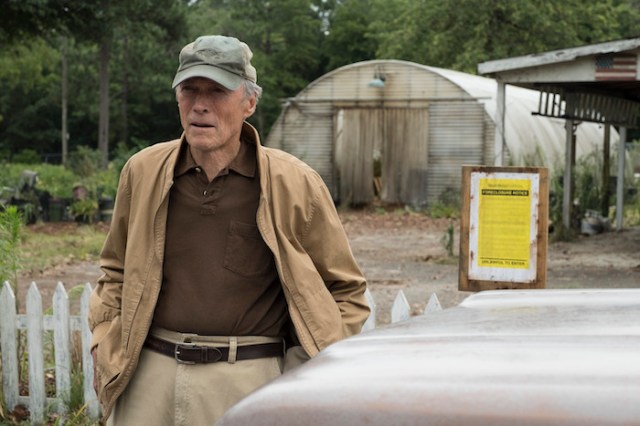 For reasons that are easier to understand than explain, Clint Eastwood is probably considered the most important American director by the Japanese film cognoscenti. Even his minor works, the ones that obviously play to the rafters, get listed on annual top ten lists as a matter of course. The Mule will certainly be no exception, despite the fact that its ambiguous take on the War On Drugs clashes starkly with the Japanese attitude toward illicit drugs in general. That’s not necessarily a demerit when it comes to cinematic depictions, but locals might take away conclusions that weren’t intended.
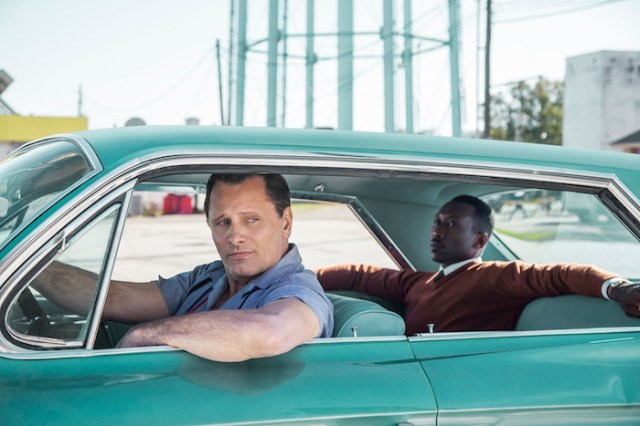 A lot of critics are calling this road movie about a black musician touring the South in 1962 with a white driver the most embarrassing Best Picture Oscar winner since Crash. Such critics take the Academy Awards too seriously, and for what it’s worth, Green Book has a certain savvy charm that has nothing to do with its racial friendship theme. If anything, Mahershala Ali’s gay, classically trained pianist and Viggo Mortensen’s almost-made-guy club bouncer start out as cartoons and mostly remain that way, even as they both warm to each other’s pecadillos over the course of their journey. It’s not likely that anyone will take it at face value, though, it’s supposed to be based on a true story.
 Based on Marguerite Duras’s 1985 novel, La douleur, Emmanuel Finkiel’s film removes the fictive conceit and presents the story as a fairly straightforward memoir of Duras’s experience in occupied Paris during World War II. It’s easy to understand why Duras boosted the book as a novel and not a memoir: removed from their circumstance by forty years, her memories of that time had been clouded by doubts and second thoughts brought on by trauma and repression, especially given the dramatic impetus of the so-called plot. Duras kept diaries, but since she claimed she had no recollection of actually writing things down their context is virtually meaningless except as exegesis.
 Reportedly, Barry Jenkins wanted to do an adaptation of James Baldwin’s 1974 novel before he directed Moonlight, and the consensus seems to be that the only reason he got a green light to tackle Baldwin’s tricky story of tender love in the jaws of gross injustice was his previous movie’s Best Picture Oscar. By most measures, If Beale Street Could Talk is the superior film, though it likely won’t gain the same amount of attention; which isn’t to say both films are significantly different in terms of style and mood. Jenkins might be too tasteful, in fact, but then so was Baldwin despite the undercurrents of anger that course through his writing. There are moments of such incandescent beauty in Jenkins’ film that you almost can’t believe it’s about a man being railroaded for the crime of rape.
 philipbrasor.com